Meni

Osnovne informacije

  • Copyright status: Under copyright
  • Also known as: renzo faggioli
  • Museums on APS: Payne Gallery
  • Art period: Modern
  • Nationality: United States of America
  • Prikaži više…
  • Color intensity: monochromatic
  • Born: 1940, Bethlehem, Pennsylvania, United States of America
  • Top-ranked work: Benigna Zinzendorf
  • Works on APS: 3
  • Top 3 works:
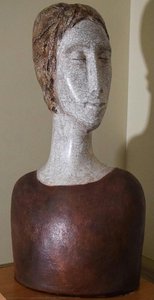
    • Benigna Zinzendorf
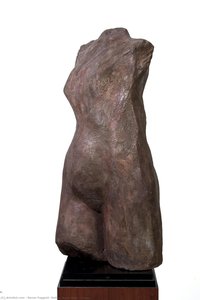
    • Torso
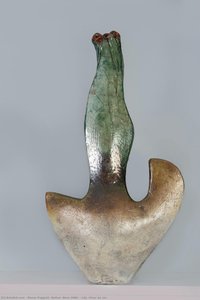
    • Lily (Fleur de Lis)

Renzo Faggioli: Sculptor of Elegance and Tradition

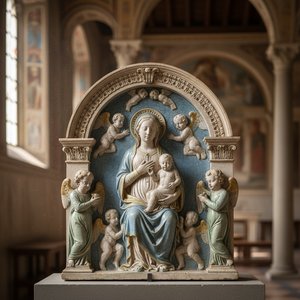
Renzo Faggioli (born 1940 in Bethlehem, Pennsylvania) stands as a prominent figure in contemporary Italian ceramics and sculpture, recognized for his masterful blend of classical influences with modern sensibilities. His artistic journey began amidst the vibrant cultural landscape of America, yet he firmly rooted himself in Italy’s rich artistic heritage, particularly the traditions of Robbia pottery – a technique characterized by intricate relief sculptures glazed in brilliant colors—which profoundly shaped his distinctive style.

Early Life and Education

Born to John Payne, a celebrated film actor, and Anne Shirley, an actress who achieved early success in silent films, Faggioli’s upbringing instilled in him a deep appreciation for artistic expression from a young age. He pursued formal education at Ludgrove School and Eton College before embarking on his studies at Christ Church Oxford, where he honed his intellectual curiosity alongside developing foundational skills in art history and theory. Notably, he studied at the Scuola Ceramica della Robbia in Florence, immersing himself in the revival of this historic technique—a deliberate choice that would become a cornerstone of his artistic practice.

Ceramic Mastery: The Robbia Legacy

Faggioli’s artistic philosophy centers around honoring tradition while pushing creative boundaries. He expertly utilizes the Robbia method – applying colored glazes over sculpted terracotta – resulting in luminous vessels and sculptures imbued with an ethereal beauty. This technique, perfected centuries ago, demands meticulous craftsmanship and a profound understanding of material properties; Faggioli's dedication to mastering this art form is evident in every piece he creates. His work frequently explores themes of spirituality and contemplation, reflecting the influence of Benedictine monastic traditions prevalent in Tuscany – where he resides—and fostering a connection between artistic creation and philosophical inquiry.

Sculptural Achievements: Forms Inspired by Nature

Beyond ceramics, Faggioli’s sculptural output showcases his ability to translate natural forms into elegant, expressive shapes. Pieces like ‘Torso’ and ‘Benigna Zinzendorf’ exemplify his commitment to capturing the essence of organic matter—often inspired by botanical motifs—with remarkable precision and sensitivity. He employs a restrained palette of earthy tones combined with subtle glazing effects that accentuate texture and luminosity. These sculptures are not merely decorative objects; they invite viewers into a dialogue about beauty, permanence, and the interconnectedness of life.

Recognition and Influence

Faggioli’s enduring presence in the art world is marked by numerous exhibitions across Europe and America—including prominent venues like Allentown Art Museum and Payne Gallery at Moravian University—and awards recognizing his contributions to ceramic artistry. He has served as a faculty member at Baum School of Art for nearly 50 years, fostering generations of artists and mentoring students such as Lisa Fraenkel. His influence extends beyond the classroom, shaping artistic discourse and inspiring new approaches to sculptural expression. Renzo Faggioli continues to sculpt and teach, ensuring that the legacy of Robbia pottery and its timeless aesthetic persists into the future.

Kviz o umetnosti

Svako pitanje ima samo jedan tačan odgovor.

Pitanje 1:
Where was Renzo Faggioli born?
Pitanje 2:
What is Renzo Faggioli known for creating?
Pitanje 3:
Renzo Faggioli studied at:
Pitanje 4:
How long has Renzo Faggioli served on the Baum School of Art faculty?
Pitanje 5:
Which artist mentored Renzo Faggioli for over 20 years?