The Ethereal Glow of the Moonlight Pethers
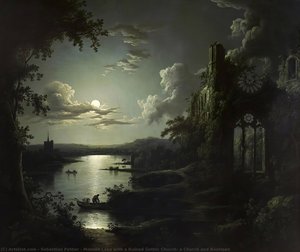
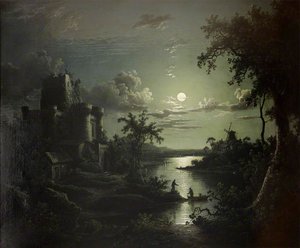
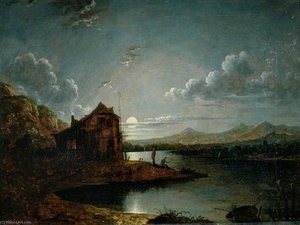
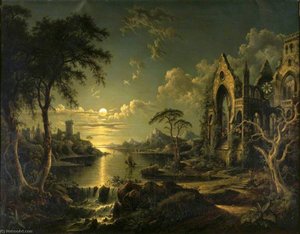
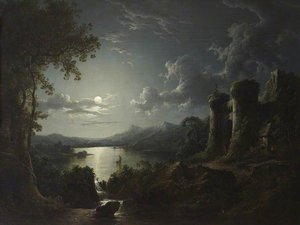
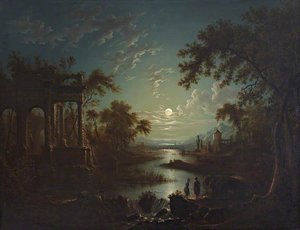
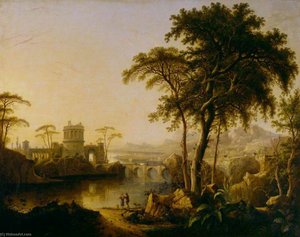
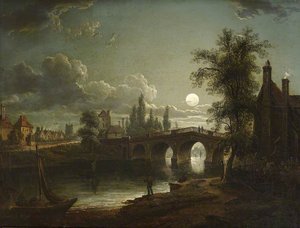
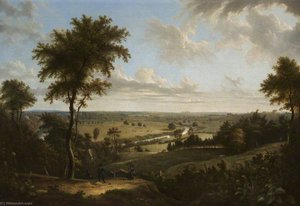
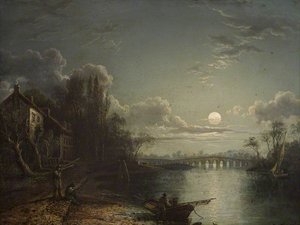
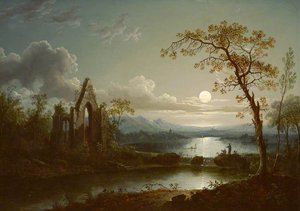
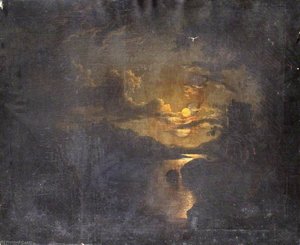
In the annals of Victorian landscape painting, few names evoke as much nocturnal mystery as Sebastian Pether. A master of the atmospheric and the ephemeral, Pether carved out a niche that was both visually arresting and deeply melancholic. He belonged to a rare lineage of artists known collectively as The Moonlight Pethers, a trio comprising his father, Abraham, and his brother, Henry. Together, they dedicated their brushes to the study of light in its most elusive forms: the silvered glow of the moon, the fiery descent of the sunset, and the flickering, unpredictable dance of firelight. Pether’s work does not merely depict a scene; it captures a mood, often characterized by a distinctive palette of greenish hues that lends his landscapes an otherworldly, almost spectral quality.
Born in November 1793, Sebastian William Thomas Pether was immersed in the language of light from his earliest years. As the eldest son of Abraham Pether, he was trained within a family workshop where the boundaries between art and scientific observation often blurred. This intellectual curiosity was a hallmark of his character; beyond the canvas, Pether possessed a brilliant mind that reportedly led him to propose the concept of a stomach pump to the surgeon Andrew Jukes. Yet, despite this capacity for innovation, his life was defined by a profound struggle to balance creative passion with the heavy responsontibilities of a large family. Raising eleven children in an era of limited patronage meant that Pether often found himself at the mercy of art dealers, working for low wages that rarely reflected the sublime quality of his output.
A Legacy Written in Shadow and Light
The technical brilliance of Pether’s work lies in his ability to manipulate contrast. His compositions frequently feature dramatic, billowing clouds that act as vessels for moonlight, casting long, haunting shadows across rugged terrains or tranquil waters. While his father and brother often leaned toward the imaginary, Sebastian possessed a keen eye for capturing the essence of the natural world, even when imbuing it with a sense of romantic decay. His notable works, such as the View from Chelsea Bridge of the Destruction of Drury Lane Theatre (1814), demonstrate his ability to merge urban drama with nocturnal atmosphere, turning a moment of destruction into a poetic study of light and shadow.
His career was marked by rare moments of significant recognition, most notably through commissions from patrons like John Fleming Leicester. The painting A Caravan overtaken by a Whirlwind (1826) stands as a testament to his ability to capture movement and the raw power of nature under the shroud of night. Despite these triumphs, Pether’s life was shadowed by personal tragedy. The loss of several children to illness and the financial strain of supporting his vast household left him in a state of perpetual struggle. Upon his death in 1844 at the age of fifty-one, the art community responded with a subscription to support his grieving family, a final tribute to a man whose life was as much about endurance as it was about beauty.
Today, the historical significance of Sebastian Pether resides in his contribution to the Romantic movement within British landscape art. He remains a vital figure for those studying the evolution of light in the 19th century, offering a window into a period where the sublime was found not just in the grand scale of mountains, but in the quiet, silvered ripples of a moonlit lake or the dying embers of a sunset. His work continues to resonate with a timeless, haunting elegance that transcends the era of its creation.