

A Tapestry of Young Visions: The Legacy of the Children's Museum of the Arts
In the vibrant heart of Manhattan’s South Village, where the pulse of New York City’s creative energy has always beat most fiercely, there once existed a sanctuary for the uninhibited imagination. The Children's Museum of the Arts (CMA) was far more than a mere repository for works by young hands; it was a living, breathing testament to the transformative power of creativity. Nestled at 103 Charlton Street, this 10,000-square-foot haven served as a bridge between the raw, instinctive impulses of childhood and the sophisticated dialogues of the contemporary art world. For over three decades, since its founding in 1988 by Kathleen Schneider, the museum functioned as an artist’s studio expanded into a public institution, fostering an environment where the boundaries between student and master were perpetually blurred.
What truly set the CMA apart from any conventional gallery was its extraordinary, global collection—a breathtaking mosaic of perspectives that transcended borders and generations. Spanning back to the 1930s, the museum curated over 2,000 pieces of international children’s art sourced from more than fifty countries. To walk through its halls was to embark on a journey across continents; one might encounter the rhythmic, hypnotic patterns of Aboriginal dot paintings alongside the delicate, disciplined precision of Japanese origami. These were not merely charming artifacts of childhood, but profound expressions of empathy and human connection. By documenting each work alongside the biographical stories of the young creators, the museum invited visitors to contemplate the universal language of art, finding shared hopes and dreams within the diverse textures of paint, sculpture, and textile.
Architectural Whimsy and the Art of Engagement
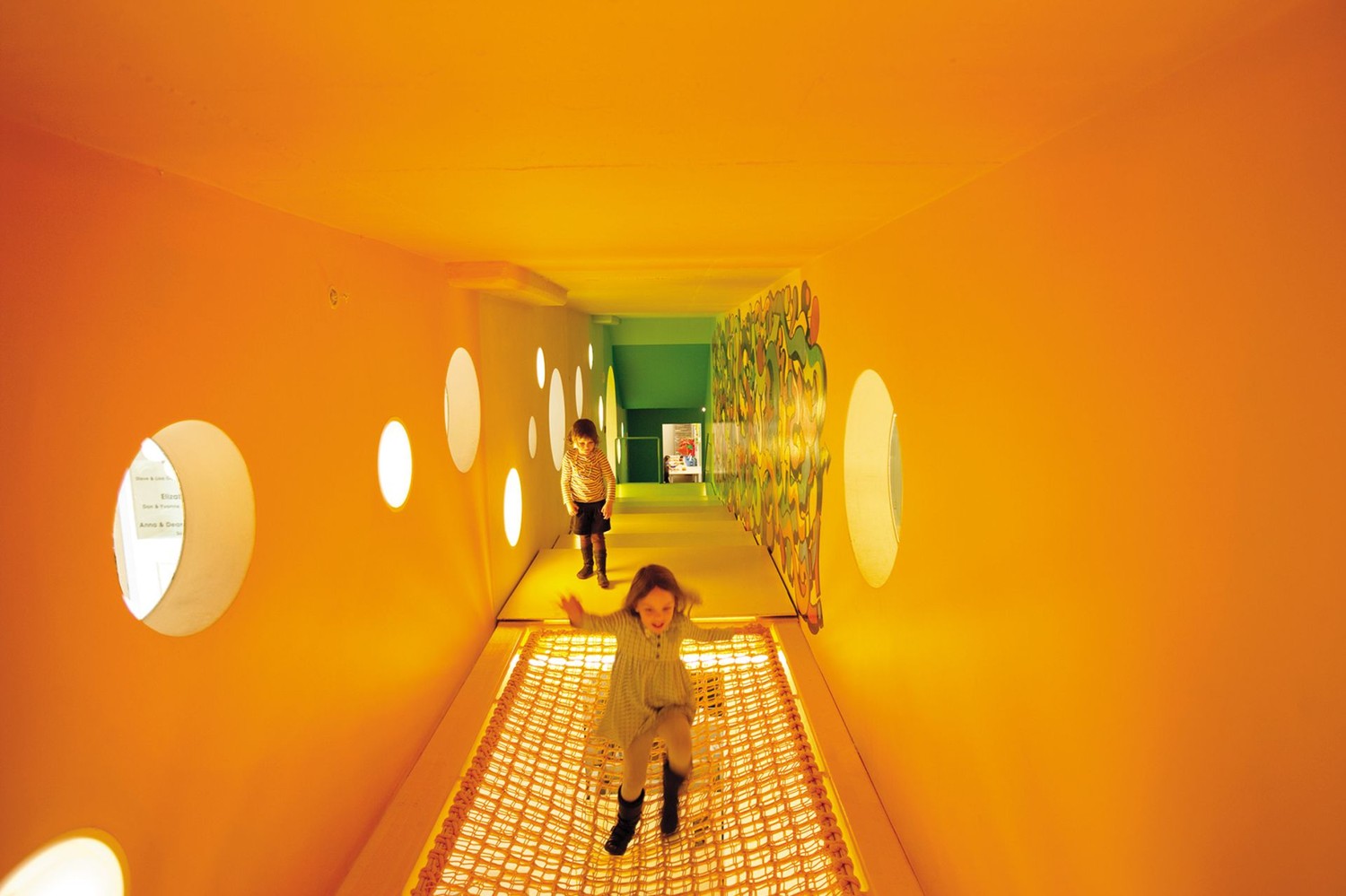
The physical architecture of the museum was a deliberate extension of its pedagogical philosophy. Designed to stimulate the senses, the space rejected the sterile, intimidating atmosphere often found in traditional white-cube galleries. Instead, it embraced a playful, chromatic landscape that mirrored the neurological excitement of a developing mind. The interior was organized around a series of classic studios and a large central gallery, yet these functional zones were woven together by a vibrant "color wheel" of experiential spaces. Visitors might find themselves navigating a yellow bridge dedicated to graffiti art, descending a green stair-slide, or discovering a blue upholstered "quiet room" for moments of deep reflection. Even the most utilitarian elements were infused with artistic intent, from the orange floor of the washing station to the purple "clay bar," where children could gather to receive both modeling clay and creative advice.
This immersive environment was designed to prove that art is not a passive object to be observed behind glass, but an active process to be inhabited. The museum’s programming championed experimental approaches, encouraging the use of unconventional materials and fostering the kind of imaginative problem-solving that defines true innovation. This spirit of exploration was epitomized in notable exhibitions like “Make Art (in) Public,” which brought the works of legendary figures such as Keith Haring , Christo and Jeanne-Claude , and Swoon into conversation with the museum's mission. By showcasing artists who blurred the lines between public space and artistic expression, the CMA taught its young audience that creativity is an omnipresent force, waiting to be discovered in the streets, the parks, and the very fabric of everyday life.
An Enduring Spirit of Creativity
Though the physical doors at Charlton Street closed in October 2024 due to the profound financial hardships exacerbated by the global pandemic, the essence of the Children's Museum of the Arts remains unextinguished. The museum’s final years were marked by a visionary commitment to radical accessibility, pledging to make its programs free of charge and prioritizing deep partnerships with schools and community groups. It stood as a fierce advocate for the belief that art education is not a luxury for the few, but a fundamental human right for every child, regardless of their socioeconomic background.
For collectors and designers, the legacy of the CMA serves as a poignant reminder of the importance of texture, narrative, and raw emotion in the curation of space. The museum taught us that the most profound artistic statements often come from the most unexpected sources—a denim garden by Ian Berry or a simple drawing by a child from a distant land. As we look back on its history, we see a blueprint for how art can foster unity and understanding in an increasingly fragmented world. The echoes of laughter, experimentation, and discovery that once filled its studios continue to inspire a new generation of creators to look at the world with wonder and to approach every blank canvas as an opportunity for revolution.