
A Monument of Victorian Ambition
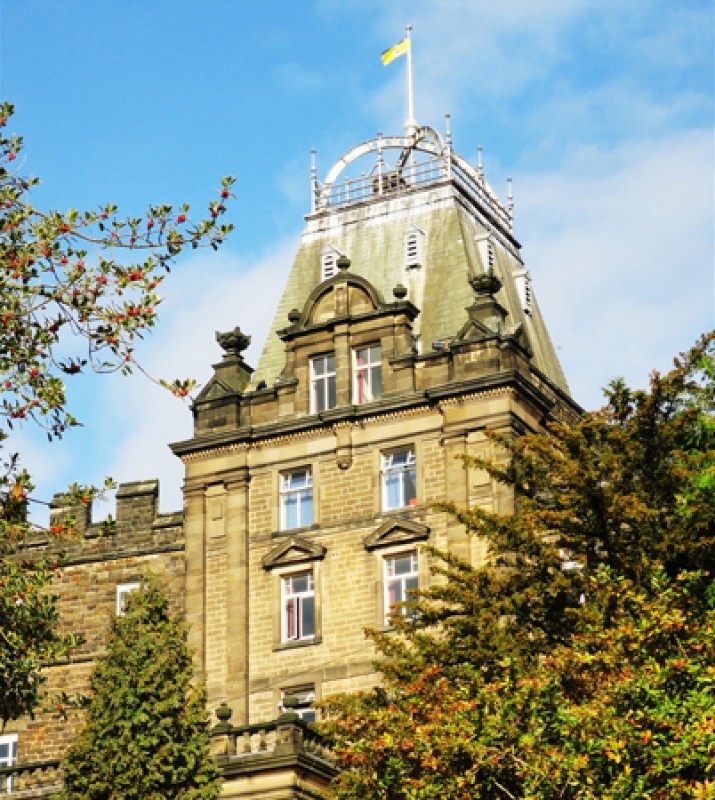
In the heart of the picturesque Peak District, where the mist often clings to the verdant slopes of Matlock Bath, stands County Hall Matlock—a structure that breathes with the weight of history and the elegance of a bygone era. Once known as Smedley's Hydro, this Grade II listed masterpiece was born from the visionary spirit of John Smedley in 1853. It was an edifice designed not just for shelter, but for healing, rooted in the nineteenth-century fascination with the therapeutic properties of Derbyshire’s mineral springs. The architecture, a triumph of Victorian grandeur designed by George Statham, presents a facade of symmetrical grace and ornate detailing that commands respect. As one approaches, the imposing proportions evoke a sense of permanence, while the magnificent Winter Gardens—a breathtaking feat of glasshouse technology—offer a delicate counterpoint to the heavy stone, inviting the light to dance through its intricate framework.The building’s evolution is a testament to architectural adaptability, incorporating elements like the distinctive bridge spanning Smedley Street, which seamlessly connects the historical layers of the complex. For those with an eye for structural beauty, the Hall represents a masterclass in how Victorian ambition can be preserved and repurposed without losing its original, restorative essence.
The Gresley Collection: Derbyshire’s Artistic Soul
Beyond its architectural splendor, County Hall serves as a sanctuary for the profound visual narrative of the region, most notably through the celebrated Gresley Collection. Amassed by Harold Gresley and Ernest Townsend, these works represent more than mere decoration; they are a soulful chronicle of the Derbyshire landscape and its cultural evolution. Within these walls, the Romantic tradition finds its most poignant expression. Collectors and art enthusiasts will find themselves captivated by landscapes that capture the ephemeral light of the Peak District, where every brushstroke seems to echo the undulating hills and tranquil valleys.The collection seamlessly weaves together themes of Victorian decorative arts and the sweeping vistas of landscape painting, creating an immersive experience that transcends time. For the interior designer or the discerning collector, these pieces offer a window into a period where art and environment were inextricably linked, providing inspiration drawn from the very earth of the Midlands. To study these works is to witness a visual chronicle of a region’s identity, moving from the era of spa retreats to the modern administrative heart of the county.
A Convergence of History and Artistry
The history of County Hall is as layered and complex as the paintings it houses. From its origins as a pioneering hydropathic retreat to its clandestine role as an Intelligence School during the shadows of World War II, the building has witnessed the shifting tides of British history. This layer of intrigue adds a profound depth to the visitor experience, transforming a stroll through a museum into a journey through time. Today, as the headquarters of the Derbyshire County Council, it represents a unique intersection where governance meets grace.It is a place where the administrative pulse of the county beats alongside a deep commitment to cultural preservation. This duality makes County Hall an unparalleled destination; it is not merely a museum, but a living testament to resilience and beauty. To walk through its halls is to engage in a dialogue with the past, discovering a space where history whispers through the stone and art illuminates the enduring spirit of a community. For anyone seeking to understand the intersection of heritage, architecture, and fine art, County Hall Matlock remains an essential pilgrimage.