Meni

Musée des Beaux-Arts de Valenciennes

Osnovne informacije

  • Alternate names: []
  • Movements: renaissance
  • Location: Valenciennes, France
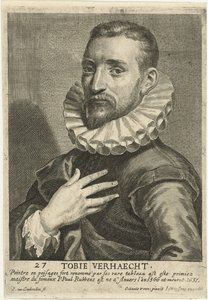
  • Featured artists: tobias verhaecht
  • Works on APS: 1
Musée des Beaux-Arts de Valenciennes

A Flemish Heartbeat in the Heart of France

The Musée des Beaux-ètes de Valenciennes is far more than a mere repository of painted canvases; it is a living chronicle of cultural convergence, where the robust spirit of Flanders meets the refined elegance of French artistry. Nestured within the historic center of Valenciennes, this institution serves as a profound testament to a legacy that began in 1801 with the prestigious Académie valenciennoise de peinture et de sculpture. As visitors approach the landmark building designed by the architect Paul Dusart and inaugurated in 1909, they are invited into a space where history breathes through every gilded frame and marble contour. The museum’s architectural journey—from its early days within the Hôtel de Ville to its grand expansion at the turn of the century—reflects the rising cultural ambitions of a region defined by centuries of artistic exchange and innovation.

Masterpieces of Light, Shadow, and Symbolism

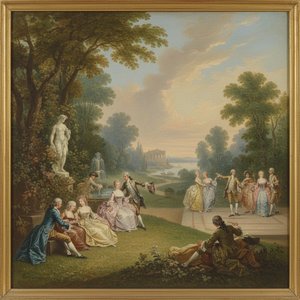
To wander through the upper galleries is to embark on a journey through the golden ages of European painting. The collection is anchored by the monumental presence of Flemish masters, whose works command attention with their dramatic scale and technical virtuosity. One cannot escape the emotional gravity of Peter Paul Rubens’ Descent from the Cross, a work that captures the very essence of religious devotion through its masterful manipulation of light and flesh. Alongside the grandeur of Rubens, the delicate, symbolic narratives of Jan Brueghel the Elder offer a window into a world where realism and allegory intertwine seamlessly. This Flemish influence provides a powerful, textured foundation that contrasts beautifully with the luminous grace of the French Rococo. Here, the museum celebrates its native son, Antoine Watteau, whose ethereal landscapes and playful ornamentation helped shape the aesthetic sensibilities of an entire era. Alongside works by François Boucher and Jean-Baptiste Pater, these paintings offer a masterclass in pastel hues and effortless elegance, providing endless inspiration for those who seek beauty in the delicate dance of light and movement.

The Echoes of Antiquity and Motion

The museum’s narrative extends far beneath the surface of the painted world, reaching into the very foundations of the region's history. In the subterranean levels, a fascinating archaeological dimension awaits, where Gallo-Roman artifacts unearthed from local excavations tell a story of ancient Roman influence and cultural continuity. This deep connection to the past finds its artistic counterpart in the museum’s sculptural holdings. The dynamic, expressive works of Jean-Baptiste Carpeaux stand as pillars of Neoclassical excellence, his ability to breathe life into marble reflecting the ideals of beauty and harmony that have long defined the era. For the collector or the designer, the Musée des Beaux-Arts de Valenciennes offers more than just a viewing experience; it provides a profound immersion into a timeline of human creativity, where the ancient relic, the sculpted figure, and the oil masterpiece exist in a singular, breathtaking harmony.

Kviz o umetnosti

Svako pitanje ima samo jedan tačan odgovor.

Pitanje 1:
What is the Musée des Beaux-Arts de Valenciennes primarily known for showcasing?
Pitanje 2:
Which artist's monumental painting, 'Descent from the Cross,' is prominently displayed at the Musée des Beaux-Arts?
Pitanje 3:
The museum houses a significant collection of sculptures by Jean Baptiste Carpeaux. What artistic style is characteristic of his works?
Pitanje 4:
What distinguishes the Musée des Beaux-Arts de Valenciennes from other museums?
Pitanje 5:
The Musée des Beaux-Arts de Valenciennes features archaeological remains from the Gallo-Roman period. What type of discoveries can visitors expect to see?