

A Bastion of Memory Amidst the Permafrost
In the heart of Yakutsk, where the legendary Siberian winter holds the landscape in a crystalline grip, stands an institution that serves as much more than a mere repository for books. The National Library of the Republic Sakha (Yakututia) is a vibrant cultural heartland, a sanctuary of identity carved out of the frozen expanse of the Russian Federation. Established in 1925 through a monumental collective effort involving nearly one hundred scientific and public organizations, the library was born from an immediate recognition of Yakutia’s profound cultural importance. It is a place where the biting cold of the external world meets the warmth of human narrative, acting as a vital center for research, education, and the preservation of an enduring spirit that refuses to be silenced by the elements.
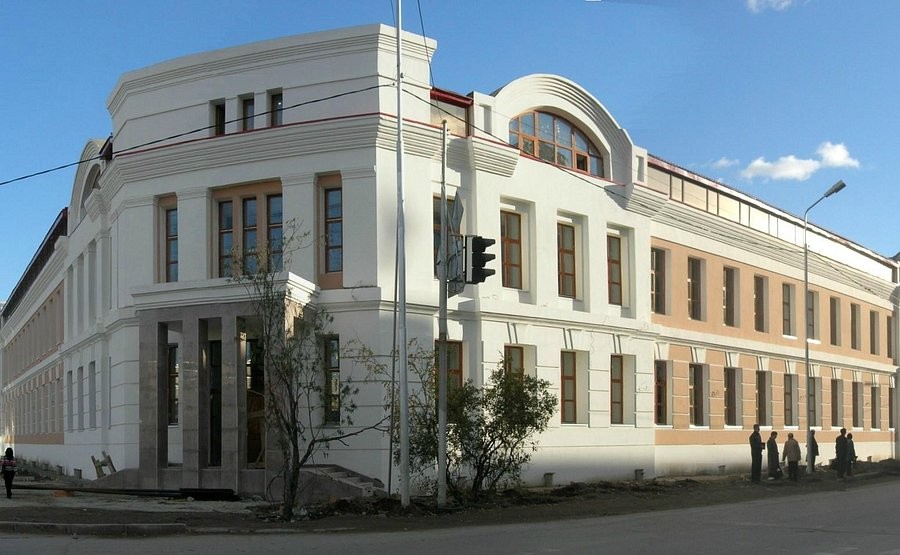
To enter this institution is to step into a dialogue between ancient heritage and modern innovation. The architecture, envisioned by the architect Vladimir Petrovich Vasiliev, masterfully weaves traditional Yakutian aesthetics into a contemporary structural language. One can observe the subtle echoes of the distinctive “yakutsk” style, characterized by its evocative timber framing and steeply pitched roofs, which ground the building in the local landscape. Inside, the design prioritizes the human experience; spacious reading rooms are bathed in soft, natural light that filters through expansive windows, offering views of the surrounding frozen tundra. These spaces, furnished with ergonomic grace, invite quiet contemplation and intellectual exploration, creating an atmosphere where the weight of history feels both present and breathable.
The Living Ink of the Sakha People
The true soul of the library lies within its staggering collection, a profound engagement with Yakutian identity expressed through ink and parchment. Housing over two million volumes, the library’s holdings are a multilingual tapestry spanning Russian, Yakut, and numerous indigenous languages. The collection is not merely a quantitative feat but a qualitative treasure trove; it contains rare manuscripts painstakingly transcribed by hand and oral traditions preserved in written form, documenting the folklore, mythology, and historical chronicles of a people intimately connected to their environment. Among its most precious artifacts are the early liturgical texts from the nineteenth century, such as the 1819 Catechism, which represent the very dawn of Yakut literacy and the complex intersection of Christianization and indigenous enlightenment.
For the scholar or the curious collector of history, the library offers unparalleled depth. The Mikhail Nikolaev Archive provides a meticulously documented window into the tumultuous years following the Russian Revolution, offering essential insights into the region's political evolution and social transformations. Furthermore, the library’s ethnographic studies serve as indispensable tools for anyone seeking to understand the societal structures and traditions of the Sakha. This wealth of knowledge is further enriched by the library's digital frontiers; through an expanding archive of photographs, maps, audio recordings, and video documentaries, the institution bridges the gap between ancient manuscripts and modern technology, ensuring that the legacy of Yakutia remains accessible to a global audience.
A Nexus of Cultural Exchange
Beyond its role as a silent guardian of the past, the National Library pulsates with the energy of the present. It functions as a dynamic hub for cultural exchange, hosting regular exhibitions, lectures, and events that draw visitors from across Russia and the international community. These gatherings are far more than simple displays; they are opportunities for profound dialogue, fostering a deeper understanding between the unique Yakutian culture and the wider world. The exhibition halls frequently rotate to celebrate regional art history, contemporary cultural achievements, and the intricate beauty of local folklore, making every visit a new discovery.
The institution also serves as a critical node in a broader network of knowledge, coordinating libraries throughout the Sakha Republic and participating in national bibliography projects. With specialized programs like the TISC for intellectual property management and the preservation of the Archives of the First President of Sakha, the library demonstrates a dual commitment to fostering future innovation while safeguarding historical truth. For the art lover, the interior designer seeking inspiration from indigenous motifs, or the historian tracing the threads of Siberian life, the National Library of the Republic Sakha stands as an unforgettable testament to the power of memory and the resilience of culture.