 Vorschau anzeigen
 Versenden
 Teilen
 Details anzeigen

 Herunterladen
 Ähnliche Objekte
 Röntgenaufnahme
 Diashow
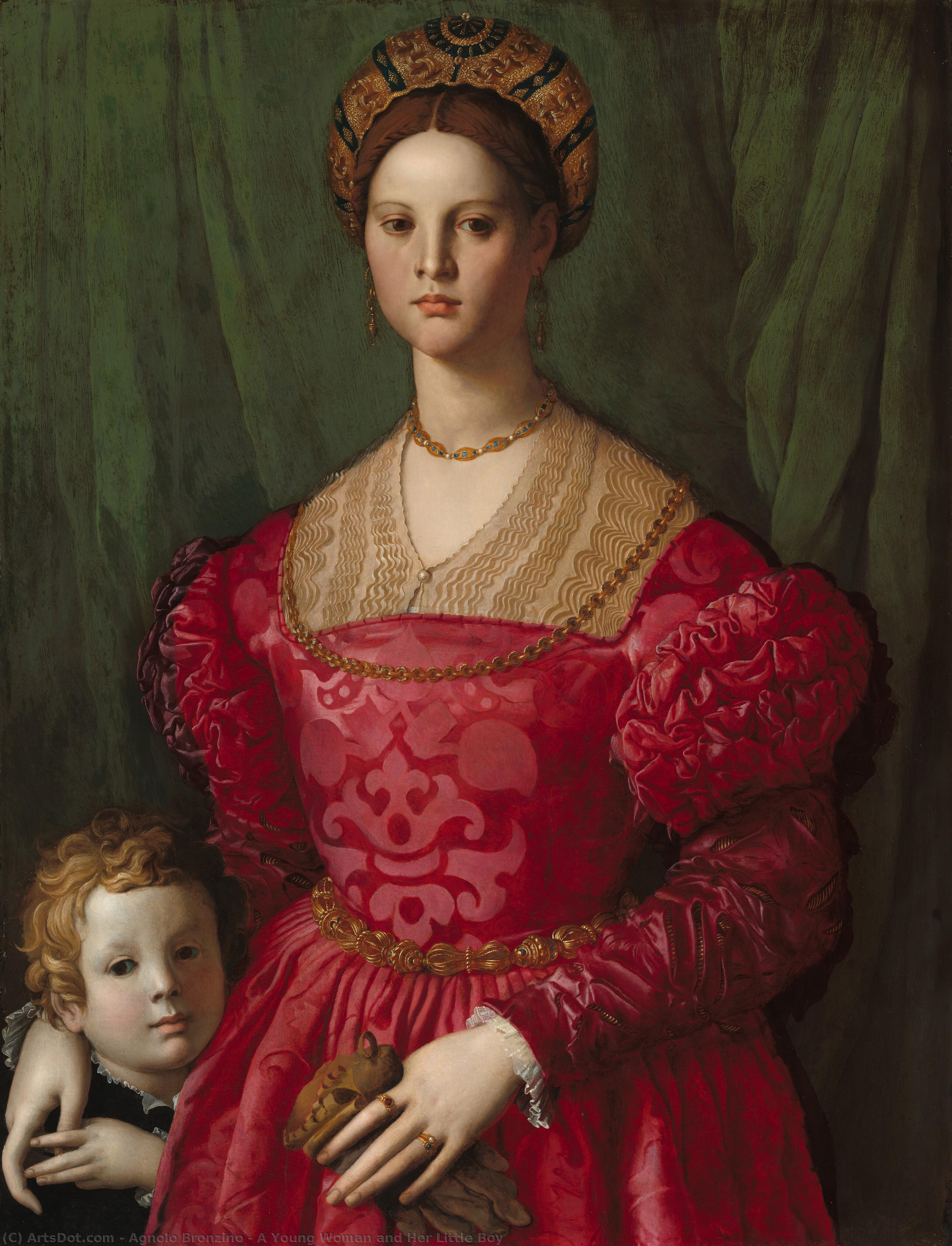
A Young Woman and Her Little Boy
 Oil On Panel
- Mannerism
 1540
1540- Renaissance
 135.0 x 111.0 cm
 Weiterlesen
Handgefertigte Ölreproduktion
Handgemaltes Ölgemälde auf Leinwand in Ihrer Wunschgröße und mit Rahmen, auf Bestellung von unseren Künstlern angefertigt. ( Druck bestellen Bild kaufen)




P118B $10

P118H $10

P118W $10

P438Z $10

P508JH $12

P508YH $12

P805H $10

P805Z $10

P919BZ $10

P919G $10

P919XJ $10

P959ZH $10

P968JZ $12

W106C $8

W218G $10

W218JH $8

W218Y $10

W307PJ $10

W316G $10

W316PJ $8

W316Y $10

W398PJ $8

W4111J $10

W500HY $15

W500JH $15

W692G $12

W849H $8

W940BG $15

W953PJ $8




Wählen Sie aus unseren vordefinierten Formaten, die den ursprünglichen Proportionen des Kunstwerks entsprechen.

Sie können Ihre eigenen Maße eingeben, um einen bestimmten Rahmen oder Platz auszufüllen. Wenn die gewählte Größe nicht den Proportionen des Originalbildes entspricht, werden wir das Kunstwerk entweder beschneiden oder das Gemälde durch zusätzliche, handgemalte Elemente erweitern. Ein digitales Mockup wird Ihnen zur Genehmigung zugesandt, bevor die Produktion beginnt.
Bitte beachten Sie, dass die Bildschirmvorschau nicht die tatsächliche Beschneidung oder Erweiterung widerspiegelt. Nur das Mockup zeigt die endgültige Komposition exakt an.
Obwohl Sondermaße verfügbar sind, empfehlen wir, eine Größe aus der vordefinierten Liste zu wählen, um die ursprünglichen Proportionen beizubehalten.
Nach der Bestellung wird das ArtsDot.com-Team dem Kunden Anweisungen per E-Mail zusenden und eine Mockup-Vorschau bereitstellen.
Weltweiter Versand () in nur 3 bis 4 Wochen statt der üblichen 5 Wochen. (30 August). Keine Kompromisse bei der Qualität.

Kostenloser weltweiter Expressversand

Hochwertige Leinenleinwand

Umfassender Versicherungsschutz beim Versand

Zollgebühren-Rückerstattungsgarantie

Garantie für exakte Farbtreue

60 Tage Rückgaberecht (nur bei Mängeln)

100% Geld-zurück-Garantie

Mengenrabatt verfügbar
 Die Glasoption ist nur für Größen unter 110 cm verfügbar.

A Young Woman and Her Little Boy
Art der Reproduktion
Format der Reproduktion
-


Gesamtpreis
$ 263
A Vision of Florentine Elegance
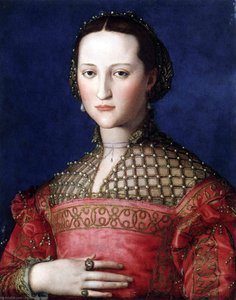
In the grand tradition of the Italian Renaissance, few works capture the intersection of maternal tenderness and aristocratic poise as exquisitely as Agnolo Bronzino’s A Young Woman and Her Little Boy. Painted around 1540, this masterpiece serves as a breathtaking window into the sophisticated world of the Florentine Mannerist court. The portrait presents a striking duo: a woman of commanding presence, draped in a sumptuous crimson-red brocade dress, and a young boy who rests near her side, his small hand reaching up to connect with hers. There is an immediate, magnetic pull to the composition, as the subjects gaze directly at the viewer with a serene, almost porcelain-like stillness that defines the era's aesthetic ideals.
The artistry of Bronzino is nothing short of virtuosic. As a master of Mannerism, he moves away from the soft, atmospheric shadows of his predecessors to embrace a style characterized by sharp clarity, polished surfaces, and an almost sculptural precision. The texture of the woman’s gown—rich with gold embroidery and intricate slashes in the sleeves—is rendered with such meticulous detail that one can almost feel the weight of the heavy fabric. Her skin possesses a luminous, marble-like quality, a hallmark of Bronzino’s technique, which lends the figures an air of eternal, frozen perfection. This cool, controlled execution is balanced by the vibrant contrast of the emerald-green curtain behind them, creating a chromatic depth that breathes life into the vertical panel.
Symbolism and the Language of Status
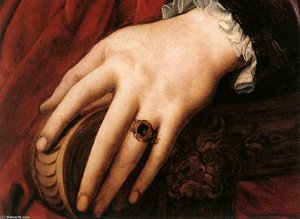
Every element within this portrait serves as a silent narrator of social standing and familial legacy. The woman’s attire is a deliberate display of wealth and power; her turban, densely embroidered with gold, and the heavy gold chains resting against her throat and chest, signal her high-ranking status within the Medici-era social hierarchy. Even the brown leather glove held in her left hand acts as a subtle symbol of refinement and nobility. Through these carefully curated details, Bronzino does more than capture a likeness; he constructs an icon of prestige.
Yet, beneath this layer of opulent artifice lies a profound emotional resonance. The physical connection between the mother and child—her hand resting protectively on his shoulder—softens the rigid formality of the courtly portrait. This tender gesture introduces a human element to the otherwise austere setting, suggesting a narrative of lineage and continuity. For the collector or the lover of fine art, this piece offers a rare duality: it is both a rigorous study of 16th-century fashion and a timeless meditation on the bond between generations.
An Inspiration for the Modern Interior
For interior designers and connoisseurs of classical beauty, a high-quality reproduction of this work offers an unparalleled opportunity to introduce a sense of historical gravity and sophisticated drama to a space. The bold palette of crimson, gold, and emerald provides a commanding focal point that complements both traditional period rooms and contemporary minimalist settings. Because the painting possesses such a strong verticality and structured composition, it functions beautifully as a statement piece in a gallery wall or as a standalone anchor in a formal study.
Owning a reproduction of Bronzino’s work is not merely about decorating a wall; it is about inviting the refined elegance of the Florentine Renaissance into the modern home. The painting’s ability to evoke feelings of stability, luxury, and quiet contemplation makes it an enduring choice for those seeking to surround themselves with art that possesses both intellectual depth and aesthetic splendor.
Ähnliche Kunstwerke

Über den Künstler
Frühes Leben und Ausbildung
Agnolo di Cosimo, bekannt als Bronzino, wurde am 17. November 1503 in Florenz, Italien, geboren. Er war der Sohn eines Metzgenders und begann seine künstlerische Ausbildung bei Raffaellino del Garbo, gefolgt von einer Lehrzeit bei Pontormo, einem bedeutenden Manieristenmaler.Künstlerischer Stil und Einflüsse
Bronzinos Stil ist durch elegante, ruhige und zurückhaltende Figuren gekennzeichnet, denen oft die Aufregung und Emotionen fehlen, die in den Werken seines Lehrmeisters Pontormo zu finden sind. Seine Porträts, insbesondere von der florentinischen Elite, sind für ihre winzige Detailgenauigkeit bekannt und haben die europäische Hofporträtmalerei über Jahrhunderte hinweg beeinflusst.Hauptwerke
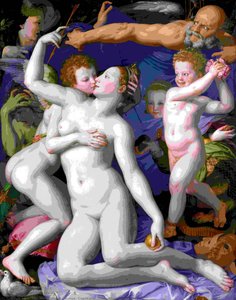
- Venus, Amor, Trivialität und Zeit (ca. 1544-45), jetzt in der National Gallery, London
- Porträts von Cosimo I. de’ Medici und seiner Frau Eleonora di Toledo, die Bronzinos Meisterschaft in der Manieristenporträtmalerei zeigen
- Idealisiert Porträts der Dichter Dante (ca. 1530, jetzt in Washington, D.C.) und Petrarch
Wirken am Hof und Späteres Leben
Bronzino wurde zum offiziellen Hofmaler des Herzogs von Toskana ernannt und blieb den größten Teil seiner Karriere in dieser Position tätig. Er war Gründungsmitglied der florentinischen Accademia delle Arti del Disegno im Jahr 1563. Bronzino verstarb am 23. November 1572 in Florenz.- Weitere Werke von Agnolo Bronzino finden Sie unter https://ArtsDot.com/@/agnolo_bronzino
- Erkunden Sie die florentinische Barock-Kunstbewegung und ihren Einfluss auf die westliche Kunst unter https://ArtsDot.com/@@/a@d3cpvx
- Entdecken Sie mehr über die italienische Renaissance-Kunstbewegung und ihre Auswirkungen auf die westliche Kunst unter /de/art/show/art-d3cpud-de/
- 17. November 1503: Geburt in Florenz, Italien
- 1539: Erhielt Medici-Schutzherrschaft für die Hochzeit von Cosimo I. de’ Medici mit Eleonora di Toledo
- 23. November 1572: Verstarb in Florenz
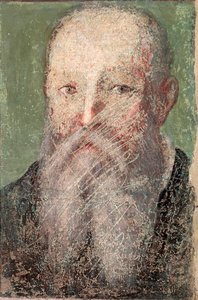
Agnolo Bronzino
1503 - 1572 , Italien
Kurzinfos
- Beeinflusste Künstler:
- Raffaellino del Garbo
- Jacopo Pontormo
- Bemerkenswerte Werke:
- Venus, Amor und Zeit
- Porträts der Medici-Familie
- Geburtsdatum: 17. November 1503
- Geburtsort: Florenz, Italien
- Künstlerischer Stil: Mannerismus
- Nationalität: Italiener
- Todatum: 23. November 1572
- Vollständiger Name: Agnolo Bronzino
- Von Künstlern Beeinflusst:
- Michelangelo
- Raphael
Ähnliche Artikel
Golden Glow: How to Use Metallic Gold Artworks to Elevate Your Home Decor with Timeless Luxury
Discover how to elevate your home with the timeless elegance of metallic gold artworks. From sculptural metal pieces to gilded oil paintings, learn expert interior design tips for integrating luxurious gold accents into your space with sophistication and grace.
The Allure of Gold in Art History: Symbolism, Technique & Cultural Significance
Explore the rich history of gold in art! Discover symbolism, techniques & cultural significance from ancient civilizations to Klimt's masterpieces. Expert insights for collectors at ArtsDot.

Eleganz in der Kunst: Die 10 schönsten Meisterwerke für Ihr Zuhause |
Entdecken Sie die 10 elegantesten Meisterwerke der Kunstgeschichte! Von Renaissance bis Impressionismus – erfahren Sie die Geschichten berühmter Künstler und lassen Sie sich von zeitloser Schönheit inspirieren. Hochwertige Kunstdrucke auf .

Crimson Threads of Narrative: Exploring Symbolism & Representation in Artworks Featuring the Red Dress
Explore the rich symbolism of the red dress in art history! From ancient power displays to iconic portraits like Cézanne’s 'Madame Cezanne', discover the cultural and artistic significance behind this captivating color. Expert analysis & insights.

Goldene Meisterwerke: Die Top 10 berühmtesten Gemälde mit Blattgold – ArtsDot
Entdecken Sie die Top 10 Gemälde, die von Blattgold verzaubern! Von Klimt bis zur Renaissance – erfahren Sie die Geschichten hinter ikonischen Kunstwerke & lassen Sie sich für Ihre Wohnraumgestaltung inspirieren. Hochwertige Reproduktionen auf ArtsDot.com.