 Vorschau anzeigen
 Versenden
 Teilen
 Details anzeigen

 Herunterladen
 Ähnliche Objekte
 Röntgenaufnahme
 Diashow
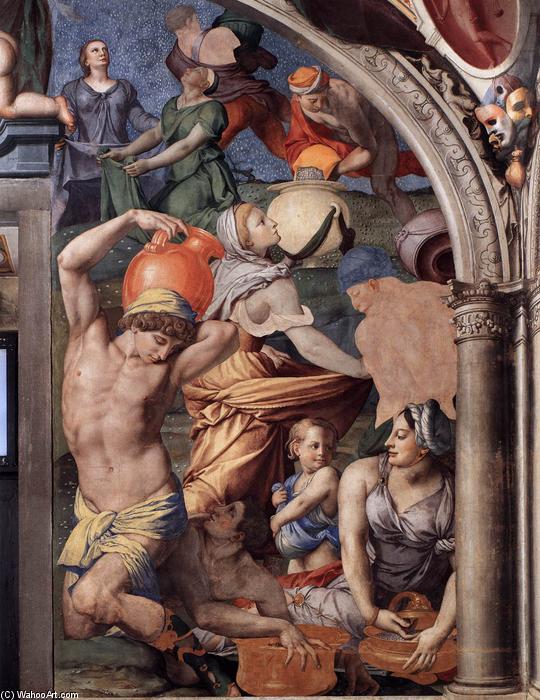
Gathering of the Manna


 Weiterlesen
Giclée / Kunstdruck
Giclée- oder Leinwanddruck in Museumsqualität mit schneller Produktion und flexiblen Veredelungsoptionen. ( Handgemalte Reproduktion bestellen Bild kaufen)




P118B $10

P118H $10

P118W $10

P438Z $10

P508JH $12

P508YH $12

P805H $10

P805Z $10

P919BZ $10

P919G $10

P919XJ $10

P959ZH $10

P968JZ $12

W106C $8

W218G $10

W218JH $8

W218Y $10

W307PJ $10

W316G $10

W316PJ $8

W316Y $10

W398PJ $8

W4111J $10

W500HY $15

W500JH $15

W692G $12

W849H $8

W940BG $15

W953PJ $8




Wählen Sie aus unseren vordefinierten Formaten, die den ursprünglichen Proportionen des Kunstwerks entsprechen.

Sie können Ihre eigenen Maße eingeben, um ein bestimmtes Format oder einen speziellen Platz einzupassen. Wenn das von Ihnen gewählte Format nicht den Proportionen des Originalbildes entspricht, werden wir das Kunstwerk entweder beschneiden oder das Bild mit einem gespiegelten oder einfarbigen Rand erweitern. Ein digitaler Entwurf wird Ihnen zur Genehmigung zugesandt, bevor die Produktion beginnt.
Bitte beachten Sie, dass die Vorschau auf dem Bildschirm nicht den tatsächlichen Zuschnitt oder die Erweiterung widerspiegelt. Nur der Entwurf zeigt die endgültige Komposition präzise an.
Obwohl Sondermaße verfügbar sind, empfehlen wir die Auswahl eines Maßes aus der vordefinierten Liste, um die ursprünglichen Proportionen zu bewahren.
Weltweiter Versand () innerhalb von 2 Wochen statt der üblichen 4/5 Wochen. (21 August)

Kostenloser weltweiter Expressversand

Hochwertige Leinenleinwand

Umfassender Versicherungsschutz beim Versand

Zollgebühren-Rückerstattungsgarantie

Garantie für exakte Farbtreue

60 Tage Rückgaberecht (nur bei Mängeln)

100% Geld-zurück-Garantie

Mengenrabatt verfügbar
 Die Glasoption ist nur für Größen unter 110 cm verfügbar.

Gathering of the Manna
Giclée / Kunstdruck
Format der Reproduktion
-


Gesamtpreis
$ 62
Sammlerstück-Beschreibung
The Fresco's Narrative Heart: Agnolo Bronzino’s “Gathering of the Manna”
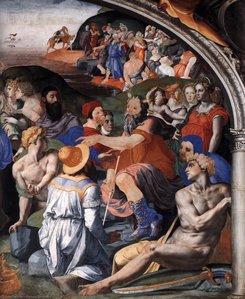
Agnolo Bronzino’s “Gathering of the Manna,” a monumental fresco within the Cappella di Eleonora in Florence’s Palazzo Vecchio, isn’t merely a depiction of a biblical event; it's a carefully constructed tableau brimming with allegorical resonance and Renaissance sophistication. Painted around 1543 during the height of his career, this work exemplifies Bronzino’s signature style – a masterful blend of cool elegance, precise detail, and an almost unsettling stillness. The scene unfolds within a richly appointed interior space, hinting at the opulence and power of the Medici family who commissioned it. The composition is dominated by a central figure, a muscular man in vibrant blue and yellow robes, pouring from a large vessel into a receiving bowl held by a woman draped in green. This isn’t simply a representation of the miraculous provision of manna to the Israelites; it's a complex meditation on sustenance, authority, and divine grace.
- The Central Action: The pouring itself is imbued with a deliberate formality, reflecting Bronzino’s Mannerist penchant for controlled gestures. Notice how the figures are posed with an almost sculptural quality, their bodies elongated and subtly distorted – a hallmark of his style.
- Symbolic Figures: The man in blue, often interpreted as Moses, embodies leadership and distribution. His posture is one of serene command, while the woman beside him represents nurturing and reception. The red-robed figure to the left, gazing intently at the scene, could be seen as representing divine observation or perhaps even a critical judgment.
- Architectural Backdrop: The architectural details – columns, arches, and decorative elements – are meticulously rendered, contributing to the overall sense of grandeur and reinforcing the importance of the event depicted.
Masterful Technique: Bronzino’s Renaissance Precision
Bronzino's skill as a fresco painter is immediately apparent in the sheer detail and luminosity of “Gathering of the Manna.” He employed a technique known as *buon fresco*, applying pigments directly to wet plaster, ensuring exceptional colorfastness and durability. The use of layering – *stratification* – allowed him to build up complex forms and textures with remarkable precision. Observe how he captures the subtle variations in fabric, the sheen of metal, and the delicate folds of drapery. This level of detail wasn’t simply decorative; it was integral to conveying a sense of realism and immediacy. The color palette is restrained yet sophisticated, dominated by cool blues, greens, and reds, punctuated by the vibrant orange of the manna itself. The careful modeling of light and shadow creates a palpable sense of depth and volume, drawing the viewer into the scene.
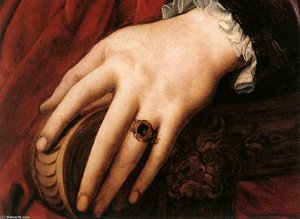
Note the almost photographic realism in the depiction of hands – a testament to Bronzino’s meticulous observation and artistic skill.Historical Context: Medici Patronage and Mannerist Innovation
“Gathering of the Manna” was created during a pivotal period in Florentine art history, marked by the rise of the Medici family as powerful patrons. Cosimo I de’ Medici, a shrewd politician and ambitious ruler, commissioned the Cappella di Eleonora to showcase his wealth and power. Bronzino, as the court painter, was tasked with creating works that reflected this grandeur. His style – characterized by its elegance, restraint, and psychological depth – aligned perfectly with the tastes of the Medici elite. Furthermore, Bronzino’s work represents a key moment in the development of Mannerism, an artistic movement that rejected the naturalism of the High Renaissance in favor of stylized forms, elongated figures, and complex compositions. “Gathering of the Manna” exemplifies these characteristics, pushing the boundaries of traditional representation while maintaining a sense of formal control.
Symbolic Resonance: Beyond the Biblical Narrative
While rooted in the biblical story of manna, “Gathering of the Manna” transcends its literal subject matter to explore broader themes of sustenance, authority, and divine provision. The act of pouring can be interpreted as a metaphor for leadership and the distribution of resources – a concept that resonated deeply with the Medici family’s role as rulers of Florence. The scene also speaks to the importance of faith and trust in times of hardship, mirroring the Israelites' reliance on God’s sustenance during their journey through the desert. The overall effect is one of quiet contemplation, inviting viewers to reflect on the enduring power of these timeless themes.
Ähnliche Kunstwerke
Über den Künstler
Frühes Leben und Ausbildung
Agnolo di Cosimo, bekannt als Bronzino, wurde am 17. November 1503 in Florenz, Italien, geboren. Er war der Sohn eines Metzgenders und begann seine künstlerische Ausbildung bei Raffaellino del Garbo, gefolgt von einer Lehrzeit bei Pontormo, einem bedeutenden Manieristenmaler.Künstlerischer Stil und Einflüsse
Bronzinos Stil ist durch elegante, ruhige und zurückhaltende Figuren gekennzeichnet, denen oft die Aufregung und Emotionen fehlen, die in den Werken seines Lehrmeisters Pontormo zu finden sind. Seine Porträts, insbesondere von der florentinischen Elite, sind für ihre winzige Detailgenauigkeit bekannt und haben die europäische Hofporträtmalerei über Jahrhunderte hinweg beeinflusst.Hauptwerke
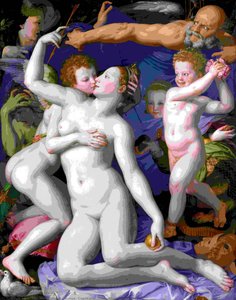
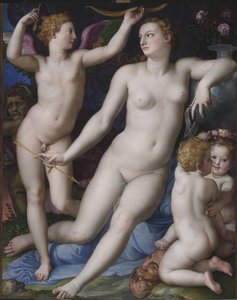
- Venus, Amor, Trivialität und Zeit (ca. 1544-45), jetzt in der National Gallery, London
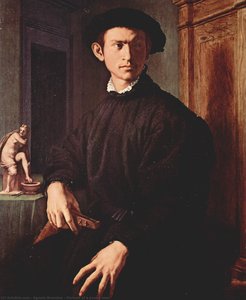
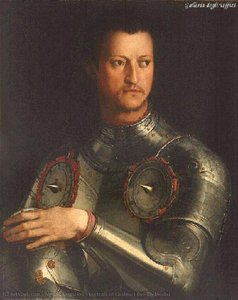
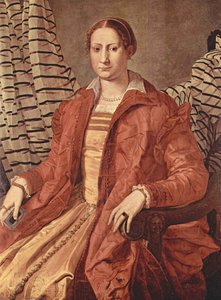
- Porträts von Cosimo I. de’ Medici und seiner Frau Eleonora di Toledo, die Bronzinos Meisterschaft in der Manieristenporträtmalerei zeigen
- Idealisiert Porträts der Dichter Dante (ca. 1530, jetzt in Washington, D.C.) und Petrarch
Wirken am Hof und Späteres Leben
Bronzino wurde zum offiziellen Hofmaler des Herzogs von Toskana ernannt und blieb den größten Teil seiner Karriere in dieser Position tätig. Er war Gründungsmitglied der florentinischen Accademia delle Arti del Disegno im Jahr 1563. Bronzino verstarb am 23. November 1572 in Florenz.- Weitere Werke von Agnolo Bronzino finden Sie unter https://ArtsDot.com/@/agnolo_bronzino
- Erkunden Sie die florentinische Barock-Kunstbewegung und ihren Einfluss auf die westliche Kunst unter https://ArtsDot.com/@@/a@d3cpvx
- Entdecken Sie mehr über die italienische Renaissance-Kunstbewegung und ihre Auswirkungen auf die westliche Kunst unter /de/art/show/art-d3cpud-de/
- 17. November 1503: Geburt in Florenz, Italien
- 1539: Erhielt Medici-Schutzherrschaft für die Hochzeit von Cosimo I. de’ Medici mit Eleonora di Toledo
- 23. November 1572: Verstarb in Florenz
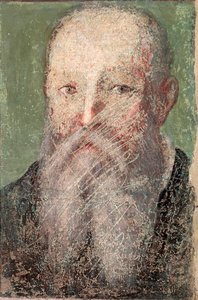
Agnolo Bronzino
1503 - 1572 , Italien
Kurzinfos
- Beeinflusste Künstler:
- Raffaellino del Garbo
- Jacopo Pontormo
- Bemerkenswerte Werke:
- Venus, Amor und Zeit
- Porträts der Medici-Familie
- Geburtsdatum: 17. November 1503
- Geburtsort: Florenz, Italien
- Künstlerischer Stil: Mannerismus
- Nationalität: Italiener
- Todatum: 23. November 1572
- Vollständiger Name: Agnolo Bronzino
- Von Künstlern Beeinflusst:
- Michelangelo
- Raphael
Ähnliche Artikel

Das Familienerbe an die Wand bringen: Wandgemälde als Generationenschatz
Verwandeln Sie Ihre Familiengeschichte in ein beeindruckendes Wandgemälde! Expertenrat & hochwertige Handwerkskunst für einzigartige Kunstwerke, die Generationen verbinden. Entdecken Sie jetzt!

The Enduring Legacy of Fresco Painting: Techniques, History & Contemporary Relevance
Explore the rich history & enduring artistry of fresco painting – from Giotto to Michelangelo! Discover techniques, conservation efforts, & modern applications. Learn how ArtsDot brings this timeless art form to your home.

The Enduring Legacy of Fresco: Technique, History & Artistic Expression Across Cultures
Explore the rich history & enduring legacy of fresco painting! Discover ancient techniques, Giotto's masterpieces, and modern applications. Expert insights for art lovers & professionals.
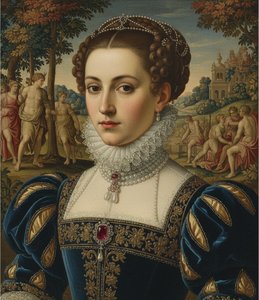
Agnolo Bronzino: Meister der Höfischen Porträtkunst und der rätselhafte Blick der Florentiner Renaissance
Entdecken Sie die faszinierende Welt von Agnolo Bronzino! Expertenanalyse seiner Meisterwerke der Renaissance-Porträtmalerei, Manierismus und die verborgenen Botschaften höfischer Kunst. Jetzt mehr erfahren!
Kunst, die mit Ihnen lebt: Emotionale Kraft individueller Innenraumfresken
Entdecken Sie die emotionale Kraft individueller Innenraumfresken! Expertenberatung & hochwertige Wandmalerei für Hotels, Wohnräume & mehr. – Ihr Partner für einzigartige Kunst.