 Vorschau anzeigen
 Versenden
 Teilen
 Details anzeigen

 Herunterladen
 Ähnliche Objekte
 Röntgenaufnahme
 Diashow
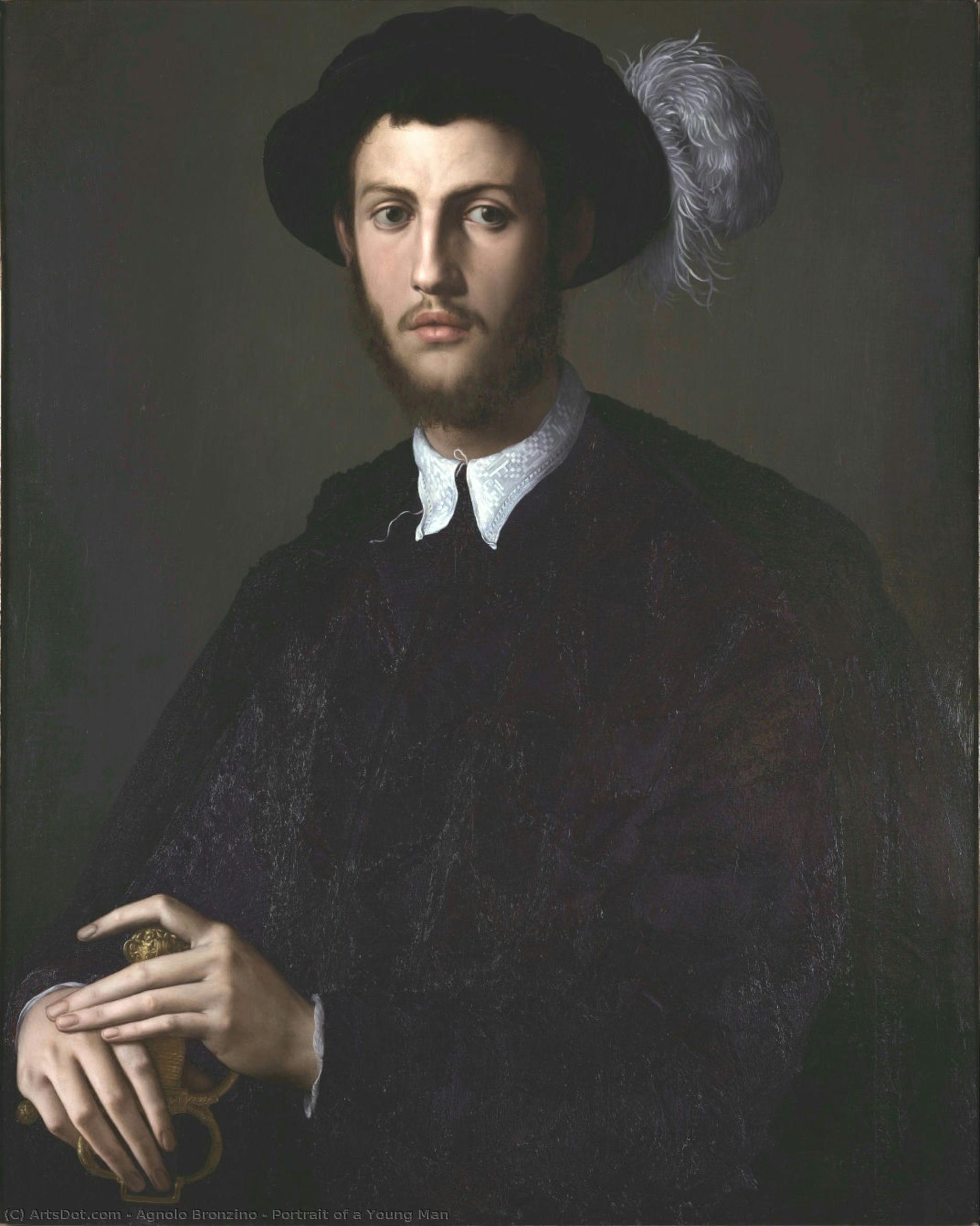
Portrait of a Young Man
 Oil On Canvas
- WallArt
- Mannerism
 1555
1555- Renaissance
 117.0 x 100.0 cm
 Nelson-Atkins Museum of Art
 Weiterlesen
Giclée / Kunstdruck
Giclée- oder Leinwanddruck in Museumsqualität mit schneller Produktion und flexiblen Veredelungsoptionen. ( Handgemalte Reproduktion bestellen Bild kaufen)




P118B $10

P118H $10

P118W $10

P438Z $10

P508JH $12

P508YH $12

P805H $10

P805Z $10

P919BZ $10

P919G $10

P919XJ $10

P959ZH $10

P968JZ $12

W106C $8

W218G $10

W218JH $8

W218Y $10

W307PJ $10

W316G $10

W316PJ $8

W316Y $10

W398PJ $8

W4111J $10

W500HY $15

W500JH $15

W692G $12

W849H $8

W940BG $15

W953PJ $8




Wählen Sie aus unseren vordefinierten Formaten, die den ursprünglichen Proportionen des Kunstwerks entsprechen.

Sie können Ihre eigenen Maße eingeben, um ein bestimmtes Format oder einen speziellen Platz einzupassen. Wenn das von Ihnen gewählte Format nicht den Proportionen des Originalbildes entspricht, werden wir das Kunstwerk entweder beschneiden oder das Bild mit einem gespiegelten oder einfarbigen Rand erweitern. Ein digitaler Entwurf wird Ihnen zur Genehmigung zugesandt, bevor die Produktion beginnt.
Bitte beachten Sie, dass die Vorschau auf dem Bildschirm nicht den tatsächlichen Zuschnitt oder die Erweiterung widerspiegelt. Nur der Entwurf zeigt die endgültige Komposition präzise an.
Obwohl Sondermaße verfügbar sind, empfehlen wir die Auswahl eines Maßes aus der vordefinierten Liste, um die ursprünglichen Proportionen zu bewahren.
Weltweiter Versand () innerhalb von 2 Wochen statt der üblichen 4/5 Wochen. (29 August)

Kostenloser weltweiter Expressversand

Hochwertige Leinenleinwand

Umfassender Versicherungsschutz beim Versand

Zollgebühren-Rückerstattungsgarantie

Garantie für exakte Farbtreue

60 Tage Rückgaberecht (nur bei Mängeln)

100% Geld-zurück-Garantie

Mengenrabatt verfügbar
 Die Glasoption ist nur für Größen unter 110 cm verfügbar.

Portrait of a Young Man
Giclée / Kunstdruck
Format der Reproduktion
-


Gesamtpreis
$ 62
The Austere Majesty of Florentine Court Life
To gaze upon this portrait is to step directly into the rarefied atmosphere of mid-sixteenth-century Florence, a world governed by the subtle power plays and exquisite tastes of the Medici court. Agnolo Bronzino, the master chronicler of such elite circles, captured not merely a likeness, but an entire social stratum. The sitter, though anonymous to us today, embodies the controlled elegance expected of those who moved within the gilded cage of Renaissance aristocracy. There is an immediate sense of formality; every fold of fabric, every precise line defining the jaw, speaks to a life lived under the watchful, yet admiring, gaze of history and high society.
Mastery in Oil: Technique and Detail
Technically, this work is a breathtaking testament to the period's mastery of oil on canvas. Bronzino’s hand achieves an almost cool perfection, evident in the meticulous rendering of textures that seem tangible across the centuries. Observe the velvet of the garment; the artist has coaxed deep, light-absorbing shadows into its nap, contrasting sharply with the subtle sheen catching the directional light. The handling of the sitter's skin is equally remarkable—smooth yet possessing enough lifelike variation to suggest vitality beneath a veneer of composure. The composition itself is deceptively simple: a centered bust shot against a dark void that serves only to push the subject forward, demanding our full attention.
Symbolism and the Weight of Status
The symbolism woven into this portrait speaks volumes about status and self-presentation during the Renaissance. The attire—the structured collar, the rich fabrics, the carefully placed feathers upon the hat—are not mere decorations; they are visual declarations of wealth, lineage, and cultivated taste. Bronzino excelled at making these symbols feel inherent to the subject's very being. Yet, beneath this outward display lies a fascinating tension. The sitter’s gaze is direct, almost challenging, suggesting an inner life that resists the superficiality of his surroundings. It is a portrait that celebrates external achievement while hinting at profound introspection.
An Enduring Emotional Resonance
What lingers most powerfully with the modern viewer is the emotional ambiguity. The detachment suggested by the sitter’s bearing—that slight aloofness characteristic of court life—is captivating. It invites us to wonder: what thoughts occupied this man in that moment? Is it boredom, contemplation, or perhaps a quiet acknowledgment of his own elevated position? This sense of dignified reserve prevents the portrait from becoming merely decorative; it becomes psychological. For collectors and designers alike, owning a reproduction of this piece is not just acquiring art, but curating an atmosphere of sophisticated, enduring gravitas within one's own space.
Ähnliche Kunstwerke
Über den Künstler
Frühes Leben und Ausbildung
Agnolo di Cosimo, bekannt als Bronzino, wurde am 17. November 1503 in Florenz, Italien, geboren. Er war der Sohn eines Metzgenders und begann seine künstlerische Ausbildung bei Raffaellino del Garbo, gefolgt von einer Lehrzeit bei Pontormo, einem bedeutenden Manieristenmaler.Künstlerischer Stil und Einflüsse
Bronzinos Stil ist durch elegante, ruhige und zurückhaltende Figuren gekennzeichnet, denen oft die Aufregung und Emotionen fehlen, die in den Werken seines Lehrmeisters Pontormo zu finden sind. Seine Porträts, insbesondere von der florentinischen Elite, sind für ihre winzige Detailgenauigkeit bekannt und haben die europäische Hofporträtmalerei über Jahrhunderte hinweg beeinflusst.Hauptwerke
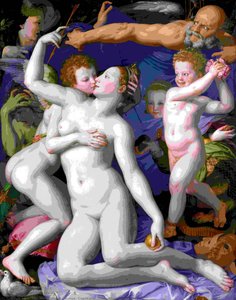
- Venus, Amor, Trivialität und Zeit (ca. 1544-45), jetzt in der National Gallery, London
- Porträts von Cosimo I. de’ Medici und seiner Frau Eleonora di Toledo, die Bronzinos Meisterschaft in der Manieristenporträtmalerei zeigen
- Idealisiert Porträts der Dichter Dante (ca. 1530, jetzt in Washington, D.C.) und Petrarch
Wirken am Hof und Späteres Leben
Bronzino wurde zum offiziellen Hofmaler des Herzogs von Toskana ernannt und blieb den größten Teil seiner Karriere in dieser Position tätig. Er war Gründungsmitglied der florentinischen Accademia delle Arti del Disegno im Jahr 1563. Bronzino verstarb am 23. November 1572 in Florenz.- Weitere Werke von Agnolo Bronzino finden Sie unter https://ArtsDot.com/@/agnolo_bronzino
- Erkunden Sie die florentinische Barock-Kunstbewegung und ihren Einfluss auf die westliche Kunst unter https://ArtsDot.com/@@/a@d3cpvx
- Entdecken Sie mehr über die italienische Renaissance-Kunstbewegung und ihre Auswirkungen auf die westliche Kunst unter /de/art/show/art-d3cpud-de/
- 17. November 1503: Geburt in Florenz, Italien
- 1539: Erhielt Medici-Schutzherrschaft für die Hochzeit von Cosimo I. de’ Medici mit Eleonora di Toledo
- 23. November 1572: Verstarb in Florenz
Agnolo Bronzino
1503 - 1572 , Italien
Kurzinfos
- Beeinflusste Künstler:
- Raffaellino del Garbo
- Jacopo Pontormo
- Bemerkenswerte Werke:
- Venus, Amor und Zeit
- Porträts der Medici-Familie
- Geburtsdatum: 17. November 1503
- Geburtsort: Florenz, Italien
- Künstlerischer Stil: Mannerismus
- Nationalität: Italiener
- Todatum: 23. November 1572
- Vollständiger Name: Agnolo Bronzino
- Von Künstlern Beeinflusst:
- Michelangelo
- Raphael
Ähnliche Artikel
Agnolo Bronzino: Meister der Höfischen Porträtkunst und der rätselhafte Blick der Florentiner Renaissance
Entdecken Sie die faszinierende Welt von Agnolo Bronzino! Expertenanalyse seiner Meisterwerke der Renaissance-Porträtmalerei, Manierismus und die verborgenen Botschaften höfischer Kunst. Jetzt mehr erfahren!
Andrea del Sarto: Florentinische Eleganz und die Meisterschaft der Renaissance
Entdecken Sie das Werk von Andrea del Sarto, einem Meister der Florentiner Renaissance. Erfahren Sie mehr über seine Fresken, seinen Stil und sein Vermächtnis in diesem umfassenden Artikel. Hochwertige Reproduktionen bei ArtsDot!
Jacopo Pontormo: Manierismus zwischen Renaissance und Emotion – Eine Neubewertung
Entdecken Sie Jacopo Pontormos revolutionäre Kunst! Unsere Expertenanalyse beleuchtet den Manierismus, seine Schlüsselwerke und Vasaris Einfluss – fundiert & verständlich.
Meisterwerke der National Gallery London: 25 Kunstikonen für Ihr Zuhause | ArtsDot
Entdecken Sie die 25 berühmtesten Gemälde der National Gallery London! Von Van Gogh bis Monet – erfahren Sie die Geschichten hinter ikonischen Meisterwerken, Kunststile & Techniken. Hochwertige Reproduktionen für Ihr Zuhause auf ArtsDot.com.
Renaissance Mannerism: Style, Subtlety & the Transition from Harmony to Artifice
Explore the captivating world of Renaissance Mannerism! Discover its key characteristics, pioneering artists like Pontormo & Bronzino, and its pivotal role in art history. Expert insights & museum-quality reproductions at ArtsDot.