 Vorschau anzeigen
 Versenden
 Teilen
 Details anzeigen

 Herunterladen
 Ähnliche Objekte
 Röntgenaufnahme
 Diashow
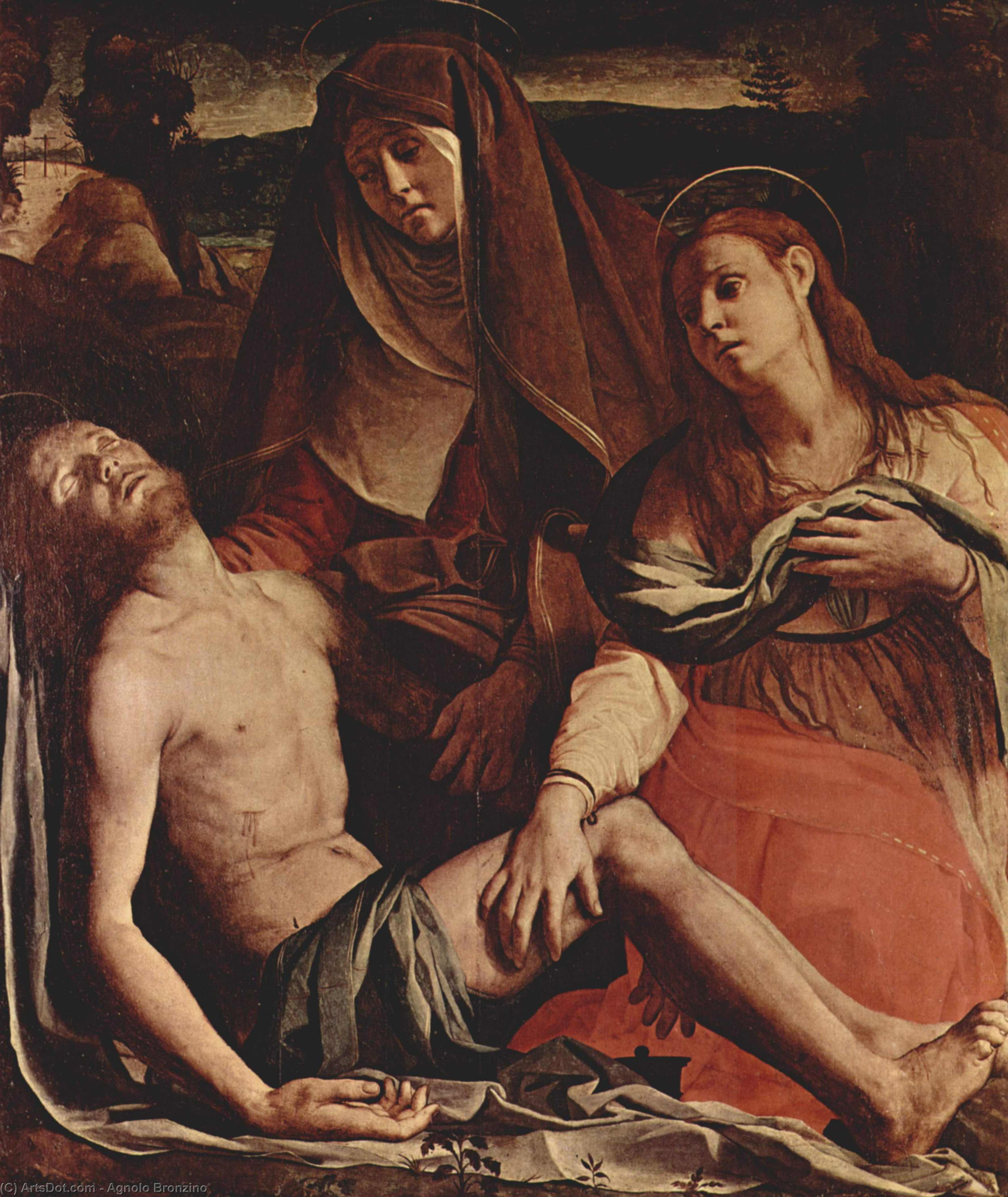
The Dead Christ with the Virgin and St. Mary Magdalene
 Oil
Oil- WallArt
- Mannerism
 1530
1530- Renaissance
 100.0 x 105.0 cm
 Weiterlesen
Handgefertigte Ölreproduktion
Handgemaltes Ölgemälde auf Leinwand in Ihrer Wunschgröße und mit Rahmen, auf Bestellung von unseren Künstlern angefertigt. ( Druck bestellen Bild kaufen)




P118B $10

P118H $10

P118W $10

P438Z $10

P508JH $12

P508YH $12

P805H $10

P805Z $10

P919BZ $10

P919G $10

P919XJ $10

P959ZH $10

P968JZ $12

W106C $8

W218G $10

W218JH $8

W218Y $10

W307PJ $10

W316G $10

W316PJ $8

W316Y $10

W398PJ $8

W4111J $10

W500HY $15

W500JH $15

W692G $12

W849H $8

W940BG $15

W953PJ $8




Wählen Sie aus unseren vordefinierten Formaten, die den ursprünglichen Proportionen des Kunstwerks entsprechen.

Sie können Ihre eigenen Maße eingeben, um einen bestimmten Rahmen oder Platz auszufüllen. Wenn die gewählte Größe nicht den Proportionen des Originalbildes entspricht, werden wir das Kunstwerk entweder beschneiden oder das Gemälde durch zusätzliche, handgemalte Elemente erweitern. Ein digitales Mockup wird Ihnen zur Genehmigung zugesandt, bevor die Produktion beginnt.
Bitte beachten Sie, dass die Bildschirmvorschau nicht die tatsächliche Beschneidung oder Erweiterung widerspiegelt. Nur das Mockup zeigt die endgültige Komposition exakt an.
Obwohl Sondermaße verfügbar sind, empfehlen wir, eine Größe aus der vordefinierten Liste zu wählen, um die ursprünglichen Proportionen beizubehalten.
Nach der Bestellung wird das ArtsDot.com-Team dem Kunden Anweisungen per E-Mail zusenden und eine Mockup-Vorschau bereitstellen.
Weltweiter Versand () in nur 3 bis 4 Wochen statt der üblichen 5 Wochen. (25 August). Keine Kompromisse bei der Qualität.

Kostenloser weltweiter Expressversand

Hochwertige Leinenleinwand

Umfassender Versicherungsschutz beim Versand

Zollgebühren-Rückerstattungsgarantie

Garantie für exakte Farbtreue

60 Tage Rückgaberecht (nur bei Mängeln)

100% Geld-zurück-Garantie

Mengenrabatt verfügbar
 Die Glasoption ist nur für Größen unter 110 cm verfügbar.

The Dead Christ with the Virgin and St. Mary Magdalene
Art der Reproduktion
Format der Reproduktion
-


Gesamtpreis
$ 263
Beschreibung des Kunstwerks
A Vision of Sorrow and Grace
In the profound stillness of Agnolo Bronzino’s The Dead Christ with the Virgin and St. Mary Magdalene, we are invited into a moment of eternal mourning, captured with the refined precision that defined the Florentine Mannerist era. Created around 1530, this masterpiece transcends a mere religious depiction to become an intimate study of grief and devotion. The composition centers on the heartbreaking embrace of the Virgin Mary, who cradles the lifeless body of her son, Jesus. This central act of maternal tenderness is framed by the presence of St. Man Mary Magdalene, whose downward gaze and visible sorrow anchor the emotional weight of the scene. Through Bronzino’s lens, the tragedy of the Crucifixion is stripped of its chaotic violence, replaced instead by a somber, sculptural elegance that commands the viewer's silent reverence.
The technique employed in this work reflects the transition from the high Renaissance to the more stylized Mannerist movement. Bronzino, a student of the revolutionary Pontormo, utilizes a sophisticated approach to form and light that gives the figures a marble-like quality. Even when viewed through the lens of historical monochrome or subtle tonal shifts, the anatomical precision is undeniable. The way the light catches the pale, lifeless skin of Christ against the heavy, draped fabrics of the mourners creates a dramatic chiaroscuro effect that breathes life into the tragedy. For the discerning collector, this painting offers a masterclass in how texture and shadow can be used to evoke the tactile reality of cloth and the ethereal weight of spiritual suffering.
Symbolism and the Mannerist Spirit
Beyond its immediate emotional impact, the artwork is rich with the symbolic language of 16th-century Italy. The arrangement of the figures serves as a silent dialogue between the earthly and the divine. The Virgin Mary acts as the bridge between the physical reality of death and the spiritual promise of resurrection. Her stoic yet broken composure reflects the "reserved elegance" for which Bronzino became famous—a style that avoids excessive melodrama in favor of a profound, internalized strength. St. Mary Magdalene, representing the penitent soul, provides the emotional mirror for the viewer, her weeping a testament to the human experience of loss. The secondary figures, positioned at the periphery, create a sense of depth and communal mourning, suggesting that this grief is not solitary but universal.
For interior designers and art enthusiasts looking to curate a space of contemplation, this piece serves as a powerful focal point. Its large scale of 100 x 105 cm allows the intricate details of the drapery and the subtle expressions of the faces to command attention in a gallery or a sophisticated residential setting. A high-quality reproduction of this work does more than decorate a wall; it introduces a sense of historical gravity and intellectual depth. Whether placed in a library, a formal study, or a quiet corner of a living space, The Dead Christ with the Virgin and St. Mary Magdalene brings with it the enduring legacy of the Florentine masters, offering an atmosphere of timelessness and profound aesthetic beauty.
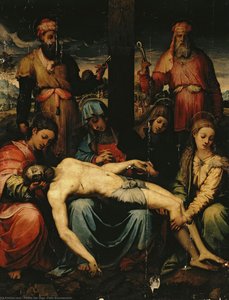
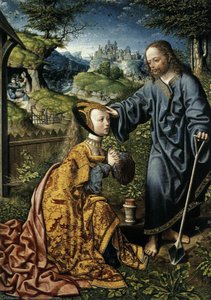
Ähnliche Kunstwerke
Über den Künstler
Frühes Leben und Ausbildung
Agnolo di Cosimo, bekannt als Bronzino, wurde am 17. November 1503 in Florenz, Italien, geboren. Er war der Sohn eines Metzgenders und begann seine künstlerische Ausbildung bei Raffaellino del Garbo, gefolgt von einer Lehrzeit bei Pontormo, einem bedeutenden Manieristenmaler.Künstlerischer Stil und Einflüsse
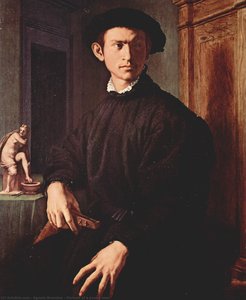
Bronzinos Stil ist durch elegante, ruhige und zurückhaltende Figuren gekennzeichnet, denen oft die Aufregung und Emotionen fehlen, die in den Werken seines Lehrmeisters Pontormo zu finden sind. Seine Porträts, insbesondere von der florentinischen Elite, sind für ihre winzige Detailgenauigkeit bekannt und haben die europäische Hofporträtmalerei über Jahrhunderte hinweg beeinflusst.Hauptwerke
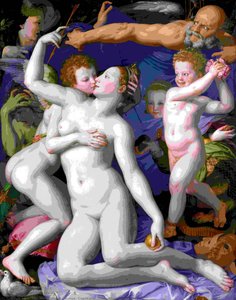
- Venus, Amor, Trivialität und Zeit (ca. 1544-45), jetzt in der National Gallery, London
- Porträts von Cosimo I. de’ Medici und seiner Frau Eleonora di Toledo, die Bronzinos Meisterschaft in der Manieristenporträtmalerei zeigen
- Idealisiert Porträts der Dichter Dante (ca. 1530, jetzt in Washington, D.C.) und Petrarch
Wirken am Hof und Späteres Leben
Bronzino wurde zum offiziellen Hofmaler des Herzogs von Toskana ernannt und blieb den größten Teil seiner Karriere in dieser Position tätig. Er war Gründungsmitglied der florentinischen Accademia delle Arti del Disegno im Jahr 1563. Bronzino verstarb am 23. November 1572 in Florenz.- Weitere Werke von Agnolo Bronzino finden Sie unter https://ArtsDot.com/@/agnolo_bronzino
- Erkunden Sie die florentinische Barock-Kunstbewegung und ihren Einfluss auf die westliche Kunst unter https://ArtsDot.com/@@/a@d3cpvx
- Entdecken Sie mehr über die italienische Renaissance-Kunstbewegung und ihre Auswirkungen auf die westliche Kunst unter /de/art/show/art-d3cpud-de/
- 17. November 1503: Geburt in Florenz, Italien
- 1539: Erhielt Medici-Schutzherrschaft für die Hochzeit von Cosimo I. de’ Medici mit Eleonora di Toledo
- 23. November 1572: Verstarb in Florenz
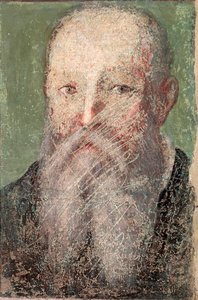
Agnolo Bronzino
1503 - 1572 , Italien
Kurzinfos
- Beeinflusste Künstler:
- Raffaellino del Garbo
- Jacopo Pontormo
- Bemerkenswerte Werke:
- Venus, Amor und Zeit
- Porträts der Medici-Familie
- Geburtsdatum: 17. November 1503
- Geburtsort: Florenz, Italien
- Künstlerischer Stil: Mannerismus
- Nationalität: Italiener
- Todatum: 23. November 1572
- Vollständiger Name: Agnolo Bronzino
- Von Künstlern Beeinflusst:
- Michelangelo
- Raphael
Ähnliche Artikel

Fra Angelico: Die 25 Meisterwerke des italienischen Frührenaissance-Malers | ArtsDot
Entdecken Sie die 25 schönsten Meisterwerke von Fra Angelico! Erleben Sie religiöse Kunst der italienischen Renaissance, himmlische Fresken & Panelgemälde. Finden Sie hochwertige Kunstdrucke und Reproduktionen für Ihr Zuhause auf ArtsDot.com.
El Greco: Die 25 Meisterwerke – Kunst für Ihr Zuhause | ArtsDot
Entdecken Sie die 25 bedeutendsten Meisterwerke von El Greco! Erleben Sie die spirituelle Tiefe und den dramatischen Stil des griechischen Malers. Hochwertige Kunstdrucke & Inspiration für Ihr Zuhause auf ArtsDot.com.
Jacob Henricus Maris: Meister des niederländischen Stimmungsrealismus und der intimen Landschaft
Entdecken Sie das Werk von Jacob Henricus Maris, einem Meister des niederländischen Stimmungsrealismus! Erfahren Sie mehr über seine Landschaftsmalerei, Einflüsse und berühmte Gemälde. Jetzt lesen & inspirieren lassen!
Mannerism: Bridging Renaissance Harmony & Baroque Drama – A Study of Style & Affectation
Explore the fascinating world of Mannerism! Discover its key characteristics, pioneering artists like Pontormo & Bronzino, and its pivotal role in bridging Renaissance harmony to Baroque drama. A comprehensive guide for art enthusiasts.

Giotto di Bondone: Die 25 Meisterwerke des Frührenaissance – Kunst für Ihr Zuhause
Entdecken Sie die 25 Meisterwerke von Giotto di Bondone! Erleben Sie die Frührenaissance, religiöse Kunst & ikonische Fresken wie in der Scrovegni Kapelle. Hochwertige Kunstdrucke online bei ArtsDot.com – für zeitlose Eleganz in Ihrem Zuhause.