 Vorschau anzeigen
 Versenden
 Teilen
 Details anzeigen

 Herunterladen
 Ähnliche Objekte
 Röntgenaufnahme
 Diashow
Apollon et Daphné


 Weiterlesen
Handgefertigte Ölreproduktion
Handgemaltes Ölgemälde auf Leinwand in Ihrer Wunschgröße und mit Rahmen, auf Bestellung von unseren Künstlern angefertigt. ( Druck bestellen Bild kaufen)




P118B $10

P118H $10

P118W $10

P438Z $10

P508JH $12

P508YH $12

P805H $10

P805Z $10

P919BZ $10

P919G $10

P919XJ $10

P959ZH $10

P968JZ $12

W106C $8

W218G $10

W218JH $8

W218Y $10

W307PJ $10

W316G $10

W316PJ $8

W316Y $10

W398PJ $8

W4111J $10

W500HY $15

W500JH $15

W692G $12

W849H $8

W940BG $15

W953PJ $8




Wählen Sie aus unseren vordefinierten Formaten, die den ursprünglichen Proportionen des Kunstwerks entsprechen.

Sie können Ihre eigenen Maße eingeben, um einen bestimmten Rahmen oder Platz auszufüllen. Wenn die gewählte Größe nicht den Proportionen des Originalbildes entspricht, werden wir das Kunstwerk entweder beschneiden oder das Gemälde durch zusätzliche, handgemalte Elemente erweitern. Ein digitales Mockup wird Ihnen zur Genehmigung zugesandt, bevor die Produktion beginnt.
Bitte beachten Sie, dass die Bildschirmvorschau nicht die tatsächliche Beschneidung oder Erweiterung widerspiegelt. Nur das Mockup zeigt die endgültige Komposition exakt an.
Obwohl Sondermaße verfügbar sind, empfehlen wir, eine Größe aus der vordefinierten Liste zu wählen, um die ursprünglichen Proportionen beizubehalten.
Nach der Bestellung wird das ArtsDot.com-Team dem Kunden Anweisungen per E-Mail zusenden und eine Mockup-Vorschau bereitstellen.
Weltweiter Versand () in nur 3 bis 4 Wochen statt der üblichen 5 Wochen. (26 August). Keine Kompromisse bei der Qualität.

Kostenloser weltweiter Expressversand

Hochwertige Leinenleinwand

Umfassender Versicherungsschutz beim Versand

Zollgebühren-Rückerstattungsgarantie

Garantie für exakte Farbtreue

60 Tage Rückgaberecht (nur bei Mängeln)

100% Geld-zurück-Garantie

Mengenrabatt verfügbar
 Die Glasoption ist nur für Größen unter 110 cm verfügbar.

Apollon et Daphné
Art der Reproduktion
Format der Reproduktion
-


Gesamtpreis
$ 288
Beschreibung des Kunstwerks
A Dance of Desire and Transformation: Francesco Albani’s “Apollo and Daphne”
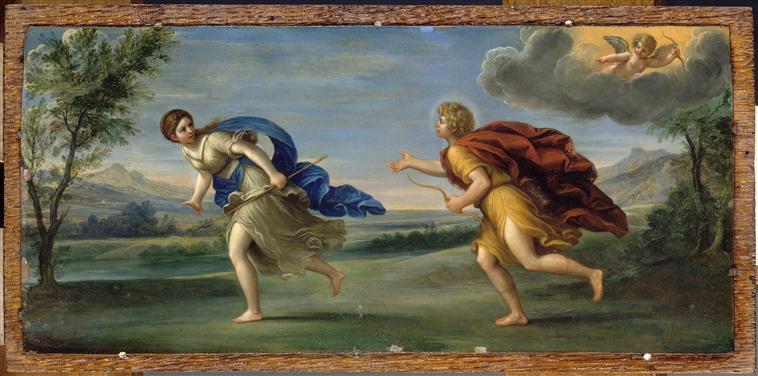
Francesco Albani's "Apollo and Daphne," painted circa 1640-1650, is more than just a mythological scene; it’s a vibrant distillation of Baroque drama, a testament to the artist’s mastery of light, movement, and emotional resonance. The painting captures a pivotal moment from Greek mythology – the pursuit of Apollo by Daphne, a nymph who, fearing his unwanted advances, transforms into a laurel tree. Albani doesn't simply depict the narrative; he embodies it with an intensity that draws the viewer directly into the heart of this timeless tale of desire, flight, and ultimately, acceptance.
Albani’s style is deeply rooted in the traditions of Roman painting while simultaneously embracing the dynamism and heightened emotion characteristic of the Baroque period. He skillfully blends classical composition with a dramatic use of chiaroscuro – the interplay of light and shadow – to create a palpable sense of urgency and movement. The figures are not static; they’re caught mid-stride, Apollo in a powerful, athletic pose, Daphne fleeing with desperate grace. This isn't a serene depiction of gods and nymphs; it’s a scene brimming with raw emotion, a chase fueled by both desire and terror.
A Symphony of Color and Form
The color palette is remarkably restrained yet powerfully effective. Earthy greens dominate the landscape, grounding the scene in a sense of naturalism, while browns and tans provide a subtle foundation for the figures’ clothing. Apollo's crimson cloak – a bold splash of vibrant red – immediately draws the eye, symbolizing his passionate pursuit. Daphne, conversely, is rendered in softer shades of white and blue, reflecting her transformation and her desperate attempt to escape. The artist masterfully uses color not just to represent reality but also to convey mood and emotion.
Albani’s technique showcases a remarkable understanding of line and shape. The flowing lines that define the drapery and foliage create a sense of movement, mirroring Daphne's flight. Curves are prevalent throughout the composition – in the graceful folds of Apollo’s cloak, the undulating branches of the trees, and even the subtle curves of the landscape itself. These organic forms contrast sharply with the more angular shapes of distant mountains, contributing to the painting’s overall sense of dynamism. The brushstrokes themselves are carefully considered, suggesting both texture and depth – rougher strokes for the ground and rocks, smoother ones for the figures' skin.
Symbolism Woven into a Myth
Beyond its narrative power, “Apollo and Daphne” is rich in symbolic meaning. The laurel tree, of course, represents Daphne’s transformation and her ultimate escape from Apollo’s unwanted attention. It becomes a symbol of resilience, beauty, and an acceptance of her fate. Apollo's pursuit embodies the relentless nature of desire, while Daphne’s flight speaks to the fear of vulnerability and the instinct for self-preservation. The inclusion of angels in the upper right corner adds another layer of interpretation, suggesting divine intervention or perhaps a commentary on the consequences of unchecked ambition.
The painting's emotional impact is profound. It evokes feelings of urgency, desperation, and even regret. We witness Daphne’s frantic flight, her terror at being pursued by a god. Apollo’s stance suggests a mixture of determination and perhaps a hint of sorrow – he desires her, yet his pursuit ultimately leads to her transformation. The scene resonates with universal themes of love, loss, and the struggle between desire and freedom.
A Masterpiece of Baroque Art
“Apollo and Daphne” is a quintessential example of Baroque art—a period defined by its dramatic intensity, emotional depth, and masterful use of light and shadow. Albani’s ability to seamlessly blend classical composition with Baroque dynamism results in a work that is both visually stunning and emotionally compelling. Reproductions of this painting capture the essence of its original power, offering a glimpse into a world of myth, desire, and transformation—a timeless testament to the enduring legacy of Francesco Albani.
Ähnliche Kunstwerke

Über den Künstler
Albani Francesco, auch bekannt als l'Albane, war ein herausragender italienischer Maler, geboren im Jahr 1578 und tätig bis zu seinem Tod im Jahre 1660. Er war eine Schlüsselfigur in der Entwicklung der barocken Malerei in Italien, besonders in Rom.
Frühes Leben und Ausbildung
Francesco Albani wurde in Bologna, Italien, in eine Künstlerfamilie hineingeboren. Sein Vater, Daniele Albani, war Maler, und sein Onkel, Giovanni Paolo Cavagna, ein renommierter Künstler. Francescos frühe Ausbildung fand im Atelier von Denzio Ferrari statt, wo er die Grundlagen der Malerei erlernte. Später zog er nach Rom, um unter der Anleitung von Guidobaldo Gandolfi zu studieren.Künstlerische Karriere
Albanis künstlerisches Schaffen zeichnete sich durch seinen einzigartigen Stil aus, der Elemente des Barock und der klassischen Kunst miteinander verschmolz. Er war bekannt für seine wunderschönen und zarten Darstellungen mythologischer und biblischer Szenen. Zu seinen berühmtesten Werken zählt Die Toilette der Venus, ein Gemälde, das sein Können darin unter Beweis stellt, die Schönheit der menschlichen Form einzufangen. Zu Albani's bemerkenswerten Werken gehören:- Die Taufe Christi, ein Gemälde, das seine Fähigkeit demonstriert, Emotion und Drama zu vermitteln.
- St. Sebastian, ein Werk, das seine Beherrschung von Licht und Schatten hervorhebt.
- Die Jungfrau und das Kind mit dem heiligen Johannes dem Täufer, ein Gemälde, das sein Können in der Erfassung der Nuancen menschlicher Ausdrucks vermittelt.
Einfluss und Vermächtnis
Albanis Einfluss auf die Entwicklung der barocken Malerei in Italien war signifikant. Er war einer der ersten Künstler, der die Verwendung von Chiaroscuro einführte, einer Technik, die den Kontrast zwischen Licht und Dunkel betont. Sein Werk wirkte auch auf die Entwicklung der Landschaftsmalerei, da er oft natürliche Szenen in seine Kompositionen einfließen ließ. Heute sind Albani's Gemälde in verschiedenen Museen zu finden, darunter das Musée du Louvre in Paris, wo seine Toilette der Venus ausgestellt ist. Sein Werk wurde auch auf ArtsDot.com präsentiert, wo Kunstliebhaber mehr über sein Leben und seine künstlerischen Errungenschaften erfahren können.Fazit
Francesco Albani war ein begabter Maler, der einen unvergesslichen Eindruck in die Welt der Kunst hinterließ. Sein einzigartiger Stil, der Elemente des Barock und der klassischen Kunst vereinte, inspiriert Künstler bis heute. Durch sein Werk können wir die Schönheit und das Drama der menschlichen Form sowie die Bedeutung von Licht und Schatten bei der Schaffung eines Gefühls von Tiefe und Emotion würdigen. Für weitere Informationen über Albani's Leben und Werk besuchen Sie ArtsDot.com oder sehen Sie sich seine Biografie auf Wikipedia an.
Francesco Albani (L'Albane)
1578 - 1660 , Italien
Ähnliche Artikel

Barocke Pracht: Wie Sie Opulenz und Emotionen in zeitgenössische Innenräume bringen
Entdecken Sie die Pracht des Barock! Expertenratgeber für luxuriöse Innenräume mit barocken Elementen. Inspiration, Tipps & hochwertige Kunst bei .

The Dramatic Flourish: Exploring the Baroque Movement's Enduring Legacy in Art History
Explore the dramatic world of Baroque art! Discover iconic artists like Caravaggio & Rubens, defining techniques, and its lasting impact on art history. Expert insights for collectors & enthusiasts at ArtsDot.

Barock Meisterwerke: Die 10 prägendsten Kunstwerke für Ihr Zuhause |
Entdecken Sie die 10 prägendsten Meisterwerke des Barock! Caravaggio, Rembrandt & Co. – Erfahren Sie die Geschichten hinter ikonischen Gemälde und finden Sie hochwertige Kunst Reproduktionen für Ihr Zuhause auf .

The Visceral Stage: Exploring Dramatic Narratives & Emotional Intensity in Baroque Art
Explore the dramatic world of Baroque art! Discover iconic masters like Caravaggio & Rembrandt, their techniques, and the movement's lasting impact. Expert insights for collectors & enthusiasts at ArtsDot.
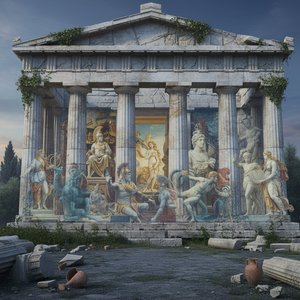
Echoes of Olympus: Mythological Narratives in Western Art Through the Ages
Explore the captivating history of mythological narratives in Western art! From ancient Greece to modern masterpieces, discover iconic artworks & symbolism. Expert analysis and high-quality reproductions at ArtsDot.