 Vorschau anzeigen
 Versenden
 Teilen
 Details anzeigen

 Herunterladen
 Ähnliche Objekte
 Röntgenaufnahme
 Diashow
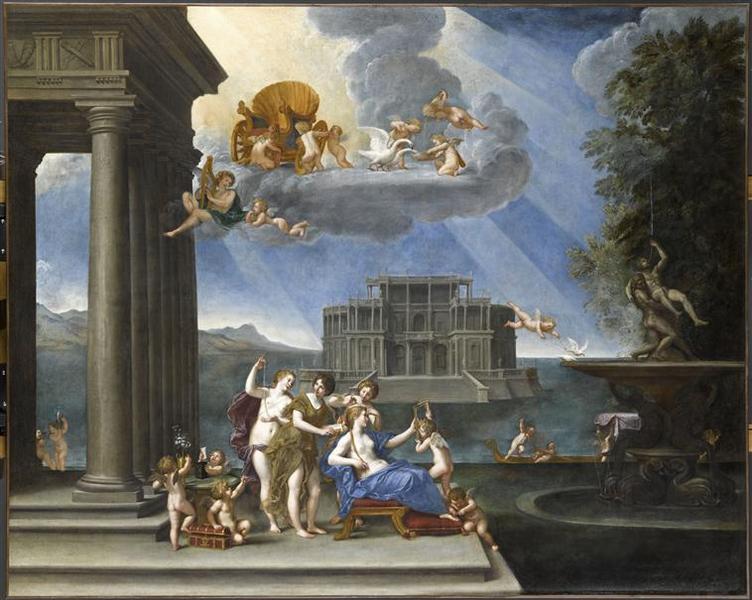
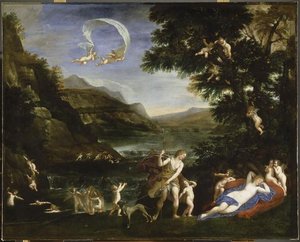
La toilette de Vénus, dit aussi à tort L'Air


 Weiterlesen
Giclée / Kunstdruck
Giclée- oder Leinwanddruck in Museumsqualität mit schneller Produktion und flexiblen Veredelungsoptionen. ( Handgemalte Reproduktion bestellen Bild kaufen)




P118B $10

P118H $10

P118W $10

P438Z $10

P508JH $12

P508YH $12

P805H $10

P805Z $10

P919BZ $10

P919G $10

P919XJ $10

P959ZH $10

P968JZ $12

W106C $8

W218G $10

W218JH $8

W218Y $10

W307PJ $10

W316G $10

W316PJ $8

W316Y $10

W398PJ $8

W4111J $10

W500HY $15

W500JH $15

W692G $12

W849H $8

W940BG $15

W953PJ $8




Wählen Sie aus unseren vordefinierten Formaten, die den ursprünglichen Proportionen des Kunstwerks entsprechen.

Sie können Ihre eigenen Maße eingeben, um ein bestimmtes Format oder einen speziellen Platz einzupassen. Wenn das von Ihnen gewählte Format nicht den Proportionen des Originalbildes entspricht, werden wir das Kunstwerk entweder beschneiden oder das Bild mit einem gespiegelten oder einfarbigen Rand erweitern. Ein digitaler Entwurf wird Ihnen zur Genehmigung zugesandt, bevor die Produktion beginnt.
Bitte beachten Sie, dass die Vorschau auf dem Bildschirm nicht den tatsächlichen Zuschnitt oder die Erweiterung widerspiegelt. Nur der Entwurf zeigt die endgültige Komposition präzise an.
Obwohl Sondermaße verfügbar sind, empfehlen wir die Auswahl eines Maßes aus der vordefinierten Liste, um die ursprünglichen Proportionen zu bewahren.
Weltweiter Versand () innerhalb von 2 Wochen statt der üblichen 4/5 Wochen. (2 September)

Kostenloser weltweiter Expressversand

Hochwertige Leinenleinwand

Umfassender Versicherungsschutz beim Versand

Zollgebühren-Rückerstattungsgarantie

Garantie für exakte Farbtreue

60 Tage Rückgaberecht (nur bei Mängeln)

100% Geld-zurück-Garantie

Mengenrabatt verfügbar
 Die Glasoption ist nur für Größen unter 110 cm verfügbar.

La toilette de Vénus, dit aussi à tort L'Air
Giclée / Kunstdruck
Format der Reproduktion
-


Gesamtpreis
$ 62
A Glimpse of Divine Grace: Francesco Albani’s “La Toilette de Vénus”
Francesco Albani's "La Toilette de Vénus, dit aussi à tort L'Air" – a painting that whispers of ancient myths and the very essence of beauty – is more than just a depiction of a goddess in repose; it’s a carefully constructed tableau of classical ideals, bathed in dramatic light and imbued with an undeniable sense of serenity. Completed around 1621-1633 during the height of the Italian Baroque period, this masterpiece resides within the Louvre Museum's collection, offering viewers a rare glimpse into the artistic sensibilities of one of Rome’s most celebrated painters. Albani, known as “l’Albane,” masterfully blended classical influences with the dynamism and emotional intensity characteristic of the era, resulting in an image that continues to captivate centuries later.
A Scene from Mythology: Composition and Narrative
The painting unfolds on a subtly receding stage – a stepped platform leading towards a distant architectural structure, likely a temple or palace. At its center lies Venus, the Roman goddess of love and beauty, reclining gracefully upon a luxurious bed draped in rich fabrics. She is not presented as a warrior queen or a forceful deity, but rather as a vulnerable, almost ethereal figure, receiving attentive care from a bevy of nymphs and putti – cherubic figures embodying innocence and youthful delight. These attendants engage in the delicate rituals of grooming: one gently brushes her hair, another holds up a mirror reflecting her radiant image, while others observe with admiring gazes. The composition is remarkably balanced, creating a harmonious visual experience that draws the eye through the scene’s carefully orchestrated layers.
The Language of Color and Light: Technique and Style
Albani's masterful technique is immediately apparent in the painting’s rich color palette. Warm tones – golds, creams, blues, and flesh hues – dominate, creating a sense of opulent luxury and inviting warmth. The lighting is dramatically directional, emanating from unseen sources behind clouds, casting strong highlights and deep shadows that sculpt the figures and imbue the scene with a palpable three-dimensionality. Notice how he employs subtle gradations in color to render the smooth texture of skin tones and the flowing drapery, demonstrating a remarkable command of oil paint. The use of linear perspective guides the eye towards the distant architectural elements, while atmospheric perspective softens the background, creating an illusion of depth and distance. Albani’s style is firmly rooted in the Baroque tradition, yet he infuses it with a refined elegance and classical restraint, avoiding excessive ornamentation or dramatic gestures.
Symbolism and Emotional Resonance: Venus and Her Court
Beyond its technical brilliance, “La Toilette de Vénus” is rich in symbolic meaning. The scene itself – the goddess receiving care – speaks to themes of beauty, love, and divine grace. The presence of the putti reinforces these ideas, suggesting a playful innocence associated with Venus’s role as the mother of gods and mortals. The act of grooming can be interpreted as a ritual of purification and renewal, highlighting Venus's power over fertility and creation. More than just a portrait, it is an allegory for the ideal state of beauty and harmony. The painting evokes a profound sense of serenity and contemplation, inviting viewers to lose themselves in the timeless allure of classical mythology and the enduring fascination with the female form.
A Legacy Endures: Reproduction and Inspiration
Albani’s “La Toilette de Vénus” remains a cornerstone of Baroque art, admired for its technical skill, elegant composition, and profound symbolic depth. Reproductions offer an accessible way to experience the beauty and artistry of this iconic work, bringing its timeless message of grace and serenity into modern homes and spaces. Whether used as a focal point in a grand salon or a subtle accent in a more intimate setting, a high-quality reproduction captures the essence of Albani’s masterpiece, allowing it to continue inspiring and delighting audiences for generations to come.
Ähnliche Kunstwerke
Über den Künstler
Albani Francesco, auch bekannt als l'Albane, war ein herausragender italienischer Maler, geboren im Jahr 1578 und tätig bis zu seinem Tod im Jahre 1660. Er war eine Schlüsselfigur in der Entwicklung der barocken Malerei in Italien, besonders in Rom.
Frühes Leben und Ausbildung
Francesco Albani wurde in Bologna, Italien, in eine Künstlerfamilie hineingeboren. Sein Vater, Daniele Albani, war Maler, und sein Onkel, Giovanni Paolo Cavagna, ein renommierter Künstler. Francescos frühe Ausbildung fand im Atelier von Denzio Ferrari statt, wo er die Grundlagen der Malerei erlernte. Später zog er nach Rom, um unter der Anleitung von Guidobaldo Gandolfi zu studieren.Künstlerische Karriere
Albanis künstlerisches Schaffen zeichnete sich durch seinen einzigartigen Stil aus, der Elemente des Barock und der klassischen Kunst miteinander verschmolz. Er war bekannt für seine wunderschönen und zarten Darstellungen mythologischer und biblischer Szenen. Zu seinen berühmtesten Werken zählt Die Toilette der Venus, ein Gemälde, das sein Können darin unter Beweis stellt, die Schönheit der menschlichen Form einzufangen. Zu Albani's bemerkenswerten Werken gehören:- Die Taufe Christi, ein Gemälde, das seine Fähigkeit demonstriert, Emotion und Drama zu vermitteln.
- St. Sebastian, ein Werk, das seine Beherrschung von Licht und Schatten hervorhebt.
- Die Jungfrau und das Kind mit dem heiligen Johannes dem Täufer, ein Gemälde, das sein Können in der Erfassung der Nuancen menschlicher Ausdrucks vermittelt.
Einfluss und Vermächtnis
Albanis Einfluss auf die Entwicklung der barocken Malerei in Italien war signifikant. Er war einer der ersten Künstler, der die Verwendung von Chiaroscuro einführte, einer Technik, die den Kontrast zwischen Licht und Dunkel betont. Sein Werk wirkte auch auf die Entwicklung der Landschaftsmalerei, da er oft natürliche Szenen in seine Kompositionen einfließen ließ. Heute sind Albani's Gemälde in verschiedenen Museen zu finden, darunter das Musée du Louvre in Paris, wo seine Toilette der Venus ausgestellt ist. Sein Werk wurde auch auf ArtsDot.com präsentiert, wo Kunstliebhaber mehr über sein Leben und seine künstlerischen Errungenschaften erfahren können.Fazit
Francesco Albani war ein begabter Maler, der einen unvergesslichen Eindruck in die Welt der Kunst hinterließ. Sein einzigartiger Stil, der Elemente des Barock und der klassischen Kunst vereinte, inspiriert Künstler bis heute. Durch sein Werk können wir die Schönheit und das Drama der menschlichen Form sowie die Bedeutung von Licht und Schatten bei der Schaffung eines Gefühls von Tiefe und Emotion würdigen. Für weitere Informationen über Albani's Leben und Werk besuchen Sie ArtsDot.com oder sehen Sie sich seine Biografie auf Wikipedia an.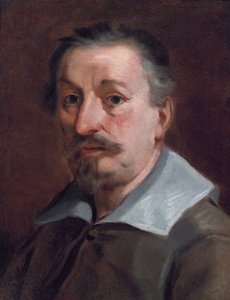
Francesco Albani (L'Albane)
1578 - 1660 , Italien
Ähnliche Artikel

Barocke Pracht: Wie Sie Opulenz und Emotionen in zeitgenössische Innenräume bringen
Entdecken Sie die Pracht des Barock! Expertenratgeber für luxuriöse Innenräume mit barocken Elementen. Inspiration, Tipps & hochwertige Kunst bei .

Barock Meisterwerke: Die 10 prägendsten Kunstwerke für Ihr Zuhause |
Entdecken Sie die 10 prägendsten Meisterwerke des Barock! Caravaggio, Rembrandt & Co. – Erfahren Sie die Geschichten hinter ikonischen Gemälde und finden Sie hochwertige Kunst Reproduktionen für Ihr Zuhause auf .

The Dramatic Flourish: Exploring the Baroque Movement's Enduring Legacy in Art History
Explore the dramatic world of Baroque art! Discover iconic artists like Caravaggio & Rubens, defining techniques, and its lasting impact on art history. Expert insights for collectors & enthusiasts at ArtsDot.

The Visceral Stage: Exploring Dramatic Narratives & Emotional Intensity in Baroque Art
Explore the dramatic world of Baroque art! Discover iconic masters like Caravaggio & Rembrandt, their techniques, and the movement's lasting impact. Expert insights for collectors & enthusiasts at ArtsDot.

Simon Vouet: Vom italienischen Barock zum französischen Klassizismus – Eine künstlerische Reise
Entdecken Sie das Leben und Werk von Simon Vouet, dem Pionier des italienischen Barock in Frankreich! Erfahren Sie mehr über seinen künstlerischen Werdegang, seine wichtigsten Gemälde und seinen nachhaltigen Einfluss auf die französische Malerei. Jetzt lesen!