

 Vorschau anzeigen
 Versenden
 Teilen
 Details anzeigen

 Herunterladen
 Ähnliche Objekte
 Röntgenaufnahme
 Diashow
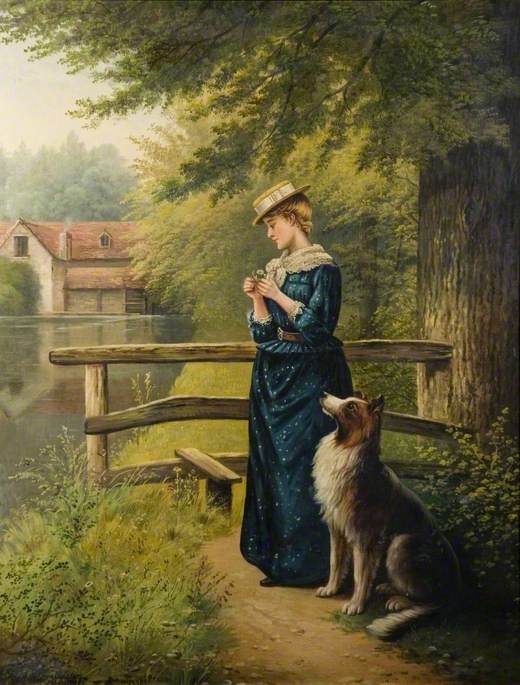
Portrait of a Woman and a Dog
 1891
1891 92.0 x 71.0 cm
 Sunderland Museum - Winter Gardens
 Weiterlesen
Handgefertigte Ölreproduktion
Handgemaltes Ölgemälde auf Leinwand in Ihrer Wunschgröße und mit Rahmen, auf Bestellung von unseren Künstlern angefertigt. ( Druck bestellen Bild kaufen)




































Wählen Sie aus unseren vordefinierten Formaten, die den ursprünglichen Proportionen des Kunstwerks entsprechen.

Sie können Ihre eigenen Maße eingeben, um einen bestimmten Rahmen oder Platz auszufüllen. Wenn die gewählte Größe nicht den Proportionen des Originalbildes entspricht, werden wir das Kunstwerk entweder beschneiden oder das Gemälde durch zusätzliche, handgemalte Elemente erweitern. Ein digitales Mockup wird Ihnen zur Genehmigung zugesandt, bevor die Produktion beginnt.
Bitte beachten Sie, dass die Bildschirmvorschau nicht die tatsächliche Beschneidung oder Erweiterung widerspiegelt. Nur das Mockup zeigt die endgültige Komposition exakt an.
Obwohl Sondermaße verfügbar sind, empfehlen wir, eine Größe aus der vordefinierten Liste zu wählen, um die ursprünglichen Proportionen beizubehalten.
Nach der Bestellung wird das ArtsDot.com-Team dem Kunden Anweisungen per E-Mail zusenden und eine Mockup-Vorschau bereitstellen.
Weltweiter Versand () in nur 3 bis 4 Wochen statt der üblichen 5 Wochen. (7 September). Keine Kompromisse bei der Qualität.

Kostenloser weltweiter Expressversand

Hochwertige Leinenleinwand

Umfassender Versicherungsschutz beim Versand

Zollgebühren-Rückerstattungsgarantie

Garantie für exakte Farbtreue

100-Tage-Rückgaberecht (nur bei Mängeln)

100% Geld-zurück-Garantie

Mengenrabatt verfügbar
 Die Glasoption ist nur für Größen unter 110 cm verfügbar.

Portrait of a Woman and a Dog
Art der Reproduktion
Format der Reproduktion
-


Gesamtpreis
$ 263
Ähnliche Kunstwerke










Über den Künstler
A Life Painted in Atmosphere: Albert Milton Drinkwater (1860–1917)
Albert Milton Drinkwater, a name perhaps less celebrated than some of his Victorian contemporaries, nevertheless occupies a significant niche within the landscape and portrait traditions of late 19th-century British art. Born in 1860, Drinkwater’s life coincided with a period of immense social and artistic change, a time when the rigid academic styles were beginning to yield to new explorations of light, mood, and individual expression. While biographical details remain somewhat sparse, the body of work he left behind speaks volumes about an artist deeply attuned to the subtleties of the natural world and the character of his sitters. He wasn’t a revolutionary in the manner of the Impressionists, but rather a skilled realist who imbued his paintings with a quiet emotional resonance that continues to captivate viewers today.Early Influences and Artistic Development
Drinkwater's artistic journey unfolded against the backdrop of a Britain undergoing rapid industrialization and urbanization. This era fostered a growing appreciation for rural scenes and a nostalgic yearning for a simpler way of life, themes that would become central to his oeuvre. While specific details regarding his formal training are limited, it’s reasonable to assume he received instruction in traditional techniques—the meticulous detail evident in his work suggests a solid grounding in academic principles. However, Drinkwater quickly moved beyond mere replication, developing a distinctive style characterized by atmospheric perspective and a sensitive handling of light. His early works often depict the English countryside – tranquil lakes reflecting the sky, weathered bridges spanning quiet rivers, and expansive fields bathed in golden sunlight. These paintings aren’t simply topographical records; they are imbued with a sense of peace and solitude, inviting the viewer to step into the scene and experience its tranquility firsthand. The influence of artists like John Constable and Thomas Gainsborough is palpable, particularly in Drinkwater's ability to capture the fleeting effects of weather and the inherent beauty of the English landscape. He also demonstrated an aptitude for portraiture, creating compelling likenesses that reveal not only physical appearance but also a sense of inner life.Mastering Realism and Capturing Character
Drinkwater’s skill lay in his ability to blend technical proficiency with emotional insight. His landscapes are notable for their detailed realism—every tree leaf, every ripple on the water's surface is rendered with painstaking accuracy. Yet, this meticulousness never feels cold or clinical; instead, it serves to enhance the overall atmospheric effect. He was a master of capturing light and shadow, using subtle gradations of tone to create depth and mood. His portraits share this same attention to detail, but they are also distinguished by their psychological depth. Drinkwater wasn’t interested in simply creating flattering representations; he sought to capture the essence of his sitters—their personality, their intelligence, their vulnerabilities. A portrait of Edwin Brinsley ('Sheridan Brinsley'), a comedian, for example, reveals not only the subject's outward appearance but also a hint of the performer's inner complexities. Drinkwater’s ability to convey character through subtle nuances of expression and pose sets his portraits apart from more conventional examples of Victorian portraiture.Legacy and Historical Significance
Albert Milton Drinkwater died in 1917, leaving behind a body of work that offers a fascinating glimpse into the artistic sensibilities of late Victorian Britain. While he may not have achieved widespread fame during his lifetime, his paintings continue to be appreciated for their technical skill, atmospheric beauty, and emotional depth. His works provide valuable insights into the social and cultural values of the era—the growing appreciation for rural life, the fascination with individual character, and the desire to capture the fleeting moments of everyday existence.- Detailed Realism: Drinkwater’s paintings are characterized by a meticulous attention to detail, capturing the subtleties of light, texture, and form.
- Atmospheric Perspective: He was a master of creating depth and mood through subtle gradations of tone and atmospheric effects.
- Psychological Insight: His portraits reveal not only physical appearance but also a sense of inner life and character.
- Victorian Landscape Tradition: Drinkwater’s landscapes reflect the growing appreciation for rural scenes and a nostalgic yearning for a simpler way of life.
albert milton drinkwater
1860 - 1917
Kurzinfos
- Artistic Movement Or Style: Landscape Painting
- Artists Or Movements Influenced By This Artist: ['']
- Artists Who Influenced This Artist: ['']
- Date Of Birth: 1860
- Date Of Death: 1917
- Full Name: Albert Milton Drinkwater
- Nationality: British
- Notable Artworks:
- Barton Aqueduct and Bridge
- Landscape with Mountain and Lake
- Place Of Birth: England