

 Vorschau anzeigen
 Versenden
 Teilen
 Details anzeigen

 Herunterladen
 Ähnliche Objekte
 Röntgenaufnahme
 Diashow
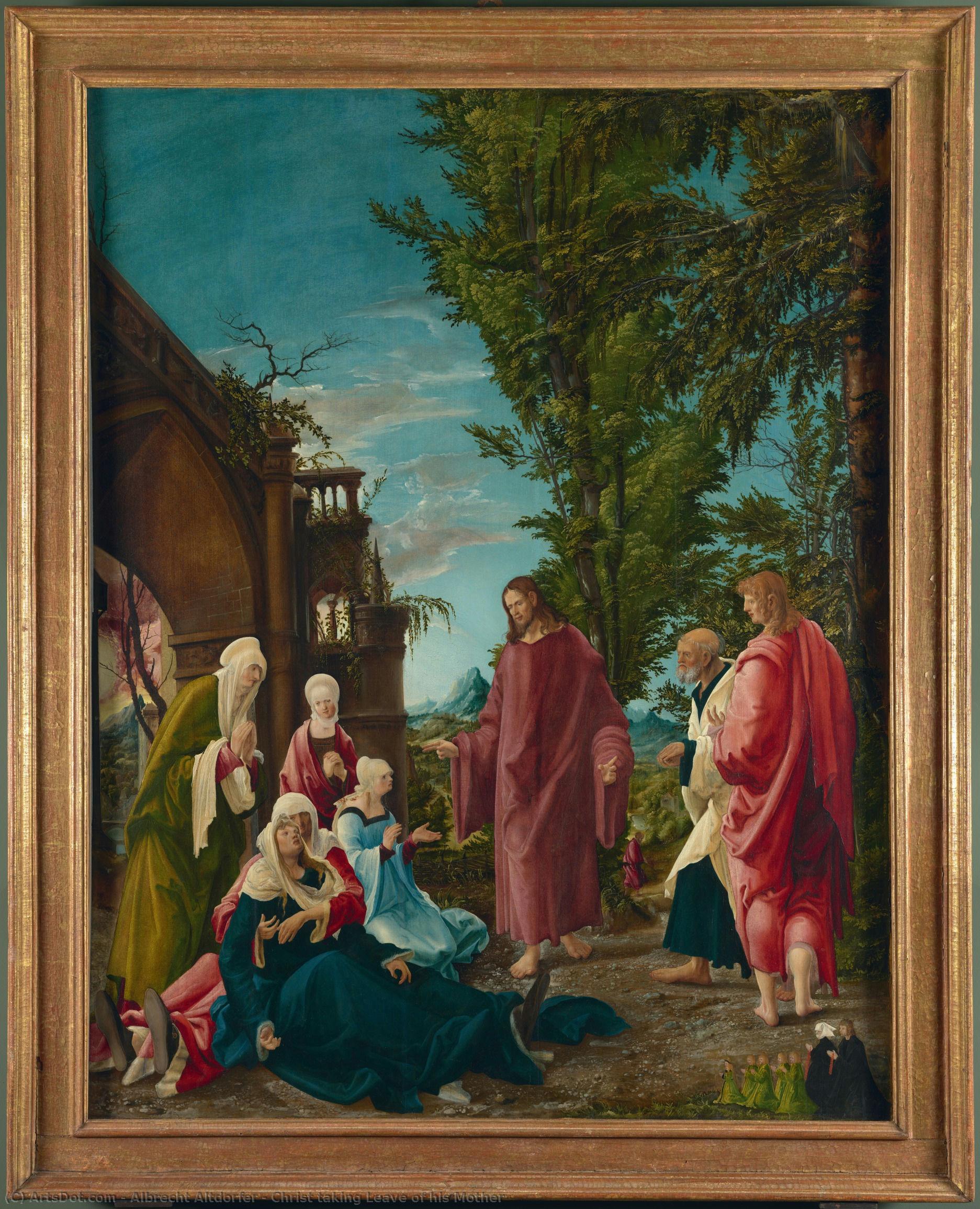
Christ taking Leave of his Mother
 Acryl auf Leinwand
- Wandkunst
- German Renaissance
 1520
1520 141.0 x 111.0 cm
 National Gallery
 Weiterlesen
Erwerben Sie ein hochauflösendes, optimiertes digitales Bild, das der Online-Vorschau weit überlegen ist.
Jede Datei wird von unseren hauseigenen Spezialisten mit modernsten Werkzeugen und fachmännischer manueller Retusche sorgfältig vorbereitet. Wir stellen sicher, dass jedes Bild eine außergewöhnliche Klarheit, präzise Farbgenauigkeit und feinste Details aufweist.
Die endgültige Datei wird innerhalb von 72 Stunden per E-Mail zugestellt und ist für den sofortigen Einsatz in professionellen, redaktionellen und Druckumgebungen optimiert. Es handelt sich um dieselbe Qualität, der führende Designstudios, Verlage und Galerien vertrauen.
Digitales Bild
Laden Sie eine hochauflösende Datei für die persönliche Präsentation, den Druck und kreative Projekte herunter. ( Druck bestellen Handgemalte Reproduktion bestellen)
In jeder Bestellung digitaler Bilder enthalten
Professionelle digitale Bereitstellung, garantiert
Wenn Sie sich für ArtsDot.com entscheiden, erhalten Sie nicht nur ein Bild – Sie erhalten ein professionell aufbereitetes digitales Kunstwerk, das mit höchster Präzision erstellt und durch eine Zufriedenheitsgarantie abgesichert wird. Hier ist alles, was automatisch mit Ihrer Bestellung geliefert wird:

Schnelle E-Mail-Zustellung
Ihre hochauflösende digitale Bilddatei wird Ihnen innerhalb von 72 Stunden nach der Bestellung per E-Mail zugestellt – bereit zur sofortigen Verwendung.

KI-optimierte digitale Datei
Ihre Kunstwerke werden professionell mithilfe fortschrittlicher KI-Tools und manueller Bearbeitung optimiert, um maximale Detailtreue, Klarheit und Farbgenauigkeit zu gewährleisten.

Lebenslanger kostenloser Neudruckservice
Datei versehentlich gelöscht oder verloren? Keine Sorge – wir senden sie Ihnen jederzeit kostenlos erneut zu.

Keine Einfuhrgebühren – jemals
Genießen Sie Ihr Kunstwerk sofort ohne Zollgebühren, Einfuhrabgaben oder Versandkosten – digitale Downloads sind immer steuerfrei.

Garantierte Farbtreue
Wir garantieren, dass Ihr digitales Bild mithilfe professioneller Werkzeuge und Farbmanagement die Originalfarben so präzise wie möglich wiedergibt.

60-Tage-Zufriedenheitsgarantie
Sollten Sie mit Ihrem digitalen Bild nicht zufrieden sein, werden wir es überarbeiten oder Ihnen innerhalb von 60 Tagen 100% erstatten – ohne Wenn und Aber.

100% Geld-zurück-Garantie
Nicht zufrieden? Erhalten Sie innerhalb von 60 Tagen nach Erhalt Ihrer digitalen Datei eine vollständige Rückerstattung – ohne Angabe von Gründen.

Rabatte bei Großbestellungen
3 Bilder kaufen, 10% sparen – 5 Bilder kaufen, 15% sparen – Ab 10 Bildern 20% sparen. Ideal für kreative Projekte, Galerien und Agenturen.
Details zum Sammlerstück
Albrecht Altdorfer’s “Christ Taking Leave of His Mother” – A Window into Northern Renaissance Soul
Albrecht Altdorfer's "Christ Taking Leave of His Mother," painted around 1520, isn't merely a depiction of a biblical moment; it’s a profound exploration of grief, faith, and the nascent beauty of the German Renaissance landscape. This powerful work, now residing in the National Gallery in London, transcends simple religious illustration to become a deeply emotive experience for the viewer. Altdorfer, born in Regensburg amidst the vibrant cultural crossroads of the Danube River valley, wasn’t simply an artist; he was a pivotal architect and civic leader who fundamentally reshaped the visual language of his time, particularly through his pioneering work in landscape painting.
The scene itself is deceptively simple: Christ, radiant with a quiet authority, bids farewell to his mother Mary. Yet, within this intimate tableau lies a complex tapestry of symbolism and emotional resonance. Mary’s prostration, her face etched with sorrowful acceptance, speaks volumes about the impending sacrifice she understands so deeply. The four holy women – Mary Cleophas, Mary Salome, Mary Jacobi, and Mary Magdalene – gather around her, mirroring her grief in their postures and expressions, creating a circle of shared mourning. The gesture of Christ’s hand, blessing his mother, is not one of dismissal but of profound love and farewell—a promise of divine grace accompanying his earthly journey.
Altdorfer masterfully employs the techniques characteristic of the Northern Renaissance, particularly evident in the rich, layered application of tempera on panel. The colors are deeply saturated – blues and purples dominate Mary’s garments, contrasting with the warmer tones of Christ's robe—creating a dramatic visual impact. Notice the meticulous detail in the rendering of the figures’ hands, each gesture imbued with meaning: Mary’s outstretched hand reaching for her son, Christ’s firm grasp on his mother’s arm. The artist’s use of light and shadow is equally compelling, drawing attention to key elements within the composition while simultaneously enveloping the scene in a sense of solemnity.
The Landscape as Soul – A Revolutionary Approach
What truly distinguishes “Christ Taking Leave of His Mother” from earlier depictions of the same subject is Altdorfer’s radical integration of landscape. Rather than serving merely as a backdrop, the forest—a dense, brooding expanse of ancient trees and tangled undergrowth—becomes an active participant in the narrative. It's not a picturesque vista; it’s a visceral representation of grief, loss, and the weight of impending doom. The gnarled branches reaching towards the heavens mirror Mary’s sorrowful posture, while the shadowed depths evoke the mystery of Christ’s sacrifice.
This innovative approach to landscape painting—a move away from the idealized, flattened perspectives favored by earlier artists—was revolutionary for its time. Altdorfer's use of atmospheric perspective and his ability to convey a sense of depth and volume within the forest create an immersive experience for the viewer, drawing them into the emotional heart of the scene. The inclusion of miniature figures at the base of the painting – likely representing the artist and his patrons – further anchors the scene in its earthly context, reminding us that this is not just a theological meditation but also a reflection on human life and mortality.
Symbolism and Spiritual Depth
Beyond the immediate narrative, “Christ Taking Leave of His Mother” is laden with symbolic meaning. The bird visible within the forest—often interpreted as a dove—represents peace and freedom, hinting at the promise of redemption offered by Christ’s sacrifice. The swooning Mary symbolizes not just grief but also her acceptance of God's will. The presence of the four holy women underscores the communal nature of faith and the shared experience of sorrow within the Christian community.
Furthermore, Altdorfer subtly incorporates elements of alchemy and astrology—common pursuits among Renaissance intellectuals—into the composition. The forest itself can be seen as a metaphor for the soul’s journey through darkness towards enlightenment. The painting invites contemplation on themes of sacrifice, faith, and the interconnectedness of human experience and the divine.
A Legacy of Innovation – Reproductions and Beyond
Albrecht Altdorfer's "Christ Taking Leave of His Mother" stands as a testament to his artistic genius and his pivotal role in shaping the course of Northern Renaissance art. Today, reproductions of this powerful work offer a unique opportunity to experience its emotional depth and visual richness. Whether adorning a contemplative study or serving as a focal point within a grand salon, a high-quality reproduction captures the essence of Altdorfer’s masterpiece—a timeless meditation on faith, grief, and the enduring beauty of the human spirit.
Ähnliche Kunstwerke
Biografie des Künstlers
Frühe Jahre und Karriere
Albrecht Altdorfer, ein renommierter deutscher Maler, Grafiker und Architekt, wurde um 1480 in Regensburg, Bayern, geboren. Sein Vater, Ulrich Altdorfer, ein Maler und Miniaturist, beeinflusste sein Interesse an der Kunst wahrscheinlich schon in jungen Jahren.Aufstieg zur Bedeutung
Altdorfers künstlerische Karriere gewann mit der Schaffung kleiner, intimer Werke in unkonventionellen Medien an Fahrt. Er ließ sich 1505 in Regensburg nieder und wurde schließlich Stadtarchitekt und Stadtrat. Seine ersten signierten Werke, darunter Stiche und Zeichnungen wie die *Stygmata des Heiligen Franziskus* und *Der heilige Hieronymus*, stammen aus dem Jahr um 1506.Beitrag zur Donauschule
Altdorfer gilt als einer der Hauptvertreter der Donauschule, einem Kreis, der die Landschaft als eigenständiges Genre in Süddeutschland begründete. Seine Reisen entlang des Donau-Flusses und in die Alpen im Jahr 1511 inspirierten ihn dazu, der erste Landschaftsmaler im modernen Sinne zu werden und leitete so die Donauschule ein.Bemerkenswerte Werke und Kooperationen
- Die Schlacht Alexanders von Issos (1529) für Herzog Wilhelm IV. von Bayern
- Zusammenarbeit mit Maximilian I. in Innsbruck ab 1513
- Beeinflusst von Künstlern wie Giorgione und Lucas Cranach, was sich in seinen Kreuzigungsdarstellungen zeigt
Museumsbestände und Vermächtnis
- Das Museum Ostdeutsche Galerie (Deutschland) beherbergt Altdorfers Werke, darunter die *Madonna (Schöne Maria von Regensburg)*
- Die Kunstsammlungen und Museen Augsburg (Österreich) zeigen ebenfalls seine Kunst
- Altdorfers Vermächtnis erstreckt sich über seine 55 Panels, 120 Zeichnungen und zahlreiche Stiche hinaus, mit einem bleibenden Einfluss auf die deutsche Renaissance.
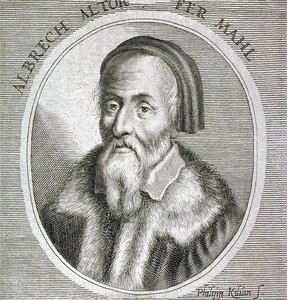
Albrecht Altdorfer
1480 - 1538 , Deutschland
Kurzinfos
- Bemerkenswerte Kunstwerke:
- Die Schlacht Alexanders von Issos
- Madonna (Schöne Maria von Regensburg)
- Geburtsdatum: um 1480
- Geburtsort (Stadt, Land): Regensburg, Deutschland
- Künstler Oder Bewegungen, Die Von Diesem Künstler Beeinflusst Wurden: ['Deutsche Landschaftsmalerei']
- Künstler, Die Diesen Künstler Beeinflussten:
- Giorgione
- Lucas Cranach der Ältere
- Künstlerische Bewegung/Stil: Deutsche Renaissance, Donauschule
- Nationalität: Deutsch
- Todatum: 1538
- Vollständiger Name: Albrecht Altdorfer

