


 Versenden als Grußkarte
 Teilen
 Details anzeigen

 Herunterladen
 Ähnliche Objekte
 Diashow
 Besucherstatistiken
Squarcio verticale (1970) di Osvaldo Calò
 Metal
Metal- Sculpture
- Minimalism
 Modern
 243.0 x 315.0 cm
 Ministerio der Äusseren Angelegenheiten und internationalen Zusammenarbeit. Collezione Farnesina
 Mehr anzeigen
Erwerben Sie ein hochauflösendes, optimiertes digitales Bild, das der Online-Vorschau weit überlegen ist.
Jede Datei wird von unseren hauseigenen Spezialisten mit modernsten Werkzeugen und fachmännischer manueller Retusche sorgfältig vorbereitet. Wir stellen sicher, dass jedes Bild eine außergewöhnliche Klarheit, präzise Farbgenauigkeit und feinste Details aufweist.
Die endgültige Datei wird innerhalb von 72 Stunden per E-Mail zugestellt und ist für den sofortigen Einsatz in professionellen, redaktionellen und Druckumgebungen optimiert. Es handelt sich um dieselbe Qualität, der führende Designstudios, Verlage und Galerien vertrauen.
Digitales Bild
Laden Sie eine hochauflösende Datei für die persönliche Präsentation, den Druck und kreative Projekte herunter. ( Zum Druck wechseln Handgemalte Reproduktion kaufen)
In jeder Bestellung digitaler Bilder enthalten
Professionelle digitale Bereitstellung, garantiert
Wenn Sie sich für ArtsDot.com entscheiden, erhalten Sie nicht nur ein Bild – Sie erhalten ein professionell aufbereitetes digitales Kunstwerk, das mit höchster Präzision erstellt und durch eine Zufriedenheitsgarantie abgesichert wird. Hier ist alles, was automatisch mit Ihrer Bestellung geliefert wird:

Schnelle E-Mail-Zustellung
Ihre hochauflösende digitale Bilddatei wird Ihnen innerhalb von 72 Stunden nach der Bestellung per E-Mail zugestellt – bereit zur sofortigen Verwendung.

KI-optimierte digitale Datei
Ihre Kunstwerke werden professionell mithilfe fortschrittlicher KI-Tools und manueller Bearbeitung optimiert, um maximale Detailtreue, Klarheit und Farbgenauigkeit zu gewährleisten.

Kostenloser lebenslanger Neudruckservice
Datei versehentlich gelöscht oder verloren? Keine Sorge – wir senden sie Ihnen jederzeit kostenlos erneut zu.

Keine Einfuhrgebühren – jemals
Genießen Sie Ihr Kunstwerk sofort ohne Zollgebühren, Einfuhrabgaben oder Versandkosten – digitale Downloads sind immer steuerfrei.

Garantierte Farbtreue
Wir garantieren, dass Ihr digitales Bild mithilfe professioneller Werkzeuge und Farbmanagement die Originalfarben so präzise wie möglich wiedergibt.

100-Tage-Zufriedenheitsgarantie
Sollten Sie mit Ihrem digitalen Bild nicht zufrieden sein, werden wir es überarbeiten oder 100% innerhalb von 100 Tagen erstatten – ohne Wenn und Aber.

100% Geld-zurück-Garantie
Nicht zufrieden? Erhalten Sie innerhalb von 100 Tagen nach Erhalt Ihrer digitalen Datei eine vollständige Rückerstattung – ohne Wenn und Aber.

Rabatte bei Großbestellungen
3 Bilder kaufen, 10% sparen – 5 Bilder kaufen, 15% sparen – Ab 10 Bildern 20% sparen. Ideal für kreative Projekte, Galerien und Agenturen.
The Poetics of Rupture: Encountering Osvaldo Calò’s Vertical Fracture
In the quiet corridors of contemporary art, few works command attention with such raw, industrial gravity as Squarcio verticale. Created in 1970 by the Italian master Aldo Calò, this monumental piece serves as a profound meditation on the tension between permanence and decay. At first glance, the viewer is confronted by a striking visual rupture—a large, vertical crack that seems to slice through the very essence of the medium. This is not merely a flaw in the material, but a deliberate, sculptural intervention that challenges our perception of stability. The work possesses an imposing presence, measuring an expansive 243 x 315 cm, making it less of a mere object and more of an architectural event that redefines the space it inhabits.
The aesthetic language of this piece is deeply rooted in the minimalist and geometric abstraction movements that defined much of Calò’s later career. There is a palpable sense of industrial modernism at play; the metallic surface of the work reflects a cold, structural strength, yet it is precisely this strength that is being interrogated by the central fissure. The technique suggests a mastery over heavy, unyielding materials, transforming what could be seen as mere metal into a canvas for existential inquiry. By introducing a "wound" into such a rigid form, Calò bridges the gap between the industrial and the organic, inviting the observer to find beauty in the broken and meaning in the fragmented.
For the discerning collector or interior designer, Squarcio verticale offers an unparalleled opportunity to introduce a focal point of profound intellectual depth. The piece functions as a conversation starter, its stark geometry and dramatic shadow play providing a sophisticated anchor for modern, minimalist, or even brutalist interior environments. It does not merely decorate a wall; it commands the atmosphere, injecting a sense of historical weight and avant-garde spirit into a room. To possess a high-quality reproduction of this work is to bring a piece of mid-century Italian sculptural innovation into the contemporary home, offering a permanent window into the era of geometric silence and structural drama.
Beyond its physical impact, the emotional resonance of Calò’s creation lies in its ability to evoke both awe and introspection. The "vertical tear" can be interpreted as a symbol of the passage of time or the inevitable breaking of even the most resilient structures. It speaks to the human condition—the vulnerability hidden beneath a hardened exterior. As one stands before this work, perhaps seated on a gallery bench in quiet contemplation, the piece invites a slowing of time. It is an invitation to look closer at the cracks in our own perceptions and to find the sublime artistry within the unexpected breaks of life.
Ähnliche Kunstwerke
Künstlerbiografie
Aldo Calo (1910 - 1983): Geometry and Silence
Aldo Calo (1910 – 1983) stands as a singular figure in Italian sculpture of the mid-century, embodying a profound commitment to minimalist aesthetics and geometric abstraction. Born in San Cesario di Lecce, Italy, his artistic journey began with formal training at the Lecce Art School and continued at the Institute of Art in Florence, where he absorbed influences from antiquity—particularly monumental sculptures—Catholic iconography, and the ornate architectural decorations characteristic of Baroque grandeur. These formative experiences instilled a sensitivity to form and materiality that would define his distinctive style throughout his prolific career. By the late 1940s, Calo’s artistic vision expanded beyond traditional representation, embracing the burgeoning international art movements of Surrealism and Expressionism. He encountered pivotal figures like Constantin Brancusi, Jean Arp, and Ossip Zadkine in Paris during a formative period, fostering dialogues that propelled him toward exploring new conceptual territories. This encounter with fellow sculptors profoundly impacted his artistic sensibilities, encouraging experimentation with unconventional materials and techniques—a hallmark of his oeuvre. Notably, he collaborated briefly with Henry Moore in England, immersing himself in the British sculptural landscape and absorbing its modernist ethos. Calò’s stylistic evolution culminated in a singular approach characterized by an unwavering dedication to simplicity and geometric precision. He eschewed elaborate ornamentation, prioritizing fundamental forms—often cubes, spheres, and cylinders—to convey profound ideas about space, balance, and materiality. His sculptures achieved remarkable visual impact through subtle variations in texture and surface finish, creating surfaces that seemed to emanate a quiet stillness. This minimalist aesthetic resonated deeply with the spirit of the 1960s Art Movement, aligning him with artists who sought to distill artistic expression into its purest essence. Calò’s artistic output spanned decades, producing over 350 sculptures—a testament to his unwavering dedication and creative impulse. He served as Director of the Institute of Art in Rome from 1959 until his death in 1983, nurturing a generation of aspiring sculptors and shaping the intellectual landscape of Italian art education. His influence extended beyond pedagogical endeavors; he actively participated in artistic exhibitions across Europe and internationally, showcasing his work alongside luminaries such as Brancusi, Moore, and Marini—artists who shared his commitment to geometric abstraction and sculptural innovation. Throughout his career, Calò received numerous accolades recognizing his contribution to the art world, including the National Prize for Sculpture awarded at the Venice Biennale in 1962—a prestigious honor that cemented his reputation as one of Italy’s foremost sculptors. His sculptures reside in prominent museums worldwide—including the Milwaukee Art Museum and the Museo Nazionale Romano—demonstrating their enduring appeal and securing their place within the canon of modern art history. Aldo Calo's legacy continues to inspire artists today, reminding us that profound artistic expression can emerge from the most austere forms.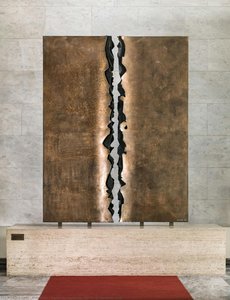
aldo calo
1910 - 1983
Kurzprofil
- Artistic Movement Or Style: Geometric Abstraction
- Artists Or Movements Influenced By This Artist: ['Marino Marini']
- Artists Who Influenced This Artist:
- Constantin Brancusi
- Jean Arp
- Ossip Zadkine
- Date Of Death: 1983
- Full Name: Aldo Calo
- Nationality: Italian
- Notable Artworks:
- Danseuse au serpents.
- Senza titolo.
- Untitled, 1957.
- Tensione No. 2.
- Place Of Birth: San Cesario di Lecce, Italy