 Vorschau anzeigen
 Versenden
 Teilen
 Details anzeigen

 Herunterladen
 Ähnliche Objekte
 Röntgenaufnahme
 Diashow
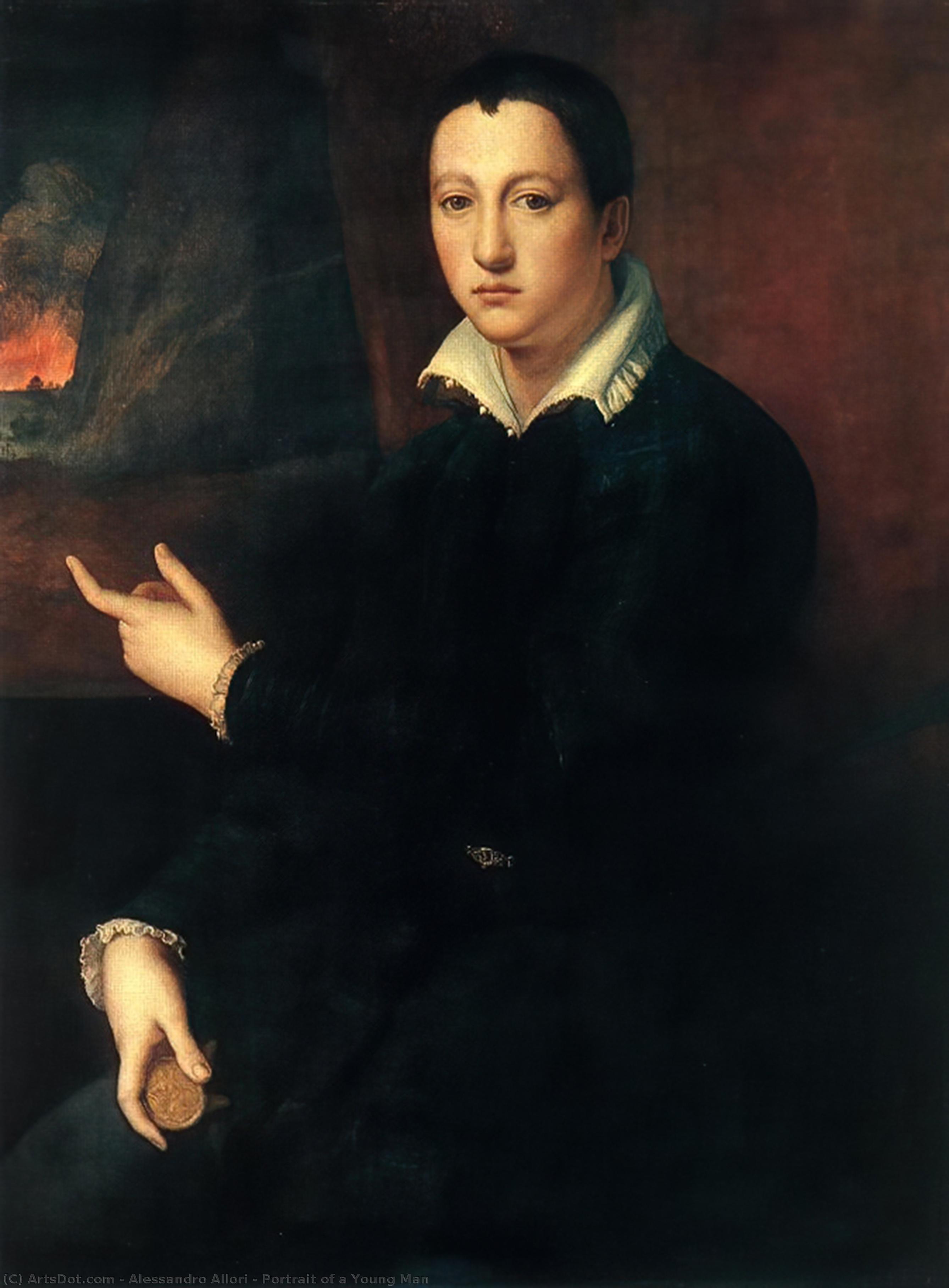
Portrait of a Young Man
 Öl auf Leinwand
- Wandkunst
- Italian Renaissance/Mannerism
 117.0 x 87.0 cm
 Eremitage Museum
 Weiterlesen
Handgefertigte Ölreproduktion
Handgemaltes Ölgemälde auf Leinwand in Ihrer Wunschgröße und mit Rahmen, auf Bestellung von unseren Künstlern angefertigt. ( Druck bestellen Bild kaufen)




P118B $10

P118H $10

P118W $10

P438Z $10

P508JH $12

P508YH $12

P805H $10

P805Z $10

P919BZ $10

P919G $10

P919XJ $10

P959ZH $10

P968JZ $12

W106C $8

W218G $10

W218JH $8

W218Y $10

W307PJ $10

W316G $10

W316PJ $8

W316Y $10

W398PJ $8

W4111J $10

W500HY $15

W500JH $15

W692G $12

W849H $8

W940BG $15

W953PJ $8




Wählen Sie aus unseren vordefinierten Formaten, die den ursprünglichen Proportionen des Kunstwerks entsprechen.

Sie können Ihre eigenen Maße eingeben, um einen bestimmten Rahmen oder Platz auszufüllen. Wenn die gewählte Größe nicht den Proportionen des Originalbildes entspricht, werden wir das Kunstwerk entweder beschneiden oder das Gemälde durch zusätzliche, handgemalte Elemente erweitern. Ein digitales Mockup wird Ihnen zur Genehmigung zugesandt, bevor die Produktion beginnt.
Bitte beachten Sie, dass die Bildschirmvorschau nicht die tatsächliche Beschneidung oder Erweiterung widerspiegelt. Nur das Mockup zeigt die endgültige Komposition exakt an.
Obwohl Sondermaße verfügbar sind, empfehlen wir, eine Größe aus der vordefinierten Liste zu wählen, um die ursprünglichen Proportionen beizubehalten.
Nach der Bestellung wird das ArtsDot.com-Team dem Kunden Anweisungen per E-Mail zusenden und eine Mockup-Vorschau bereitstellen.
Weltweiter Versand () in nur 3 bis 4 Wochen statt der üblichen 5 Wochen. (21 August). Keine Kompromisse bei der Qualität.

Kostenloser weltweiter Expressversand

Hochwertige Leinenleinwand

Umfassender Versicherungsschutz beim Versand

Zollgebühren-Rückerstattungsgarantie

Garantie für exakte Farbtreue

60 Tage Rückgaberecht (nur bei Mängeln)

100% Geld-zurück-Garantie

Mengenrabatt verfügbar
 Die Glasoption ist nur für Größen unter 110 cm verfügbar.

Portrait of a Young Man
Art der Reproduktion
Format der Reproduktion
-


Gesamtpreis
$ 263
Beschreibung des Kunstwerks
A Study in Renaissance Dignity: Unveiling Alessandro Allori’s ‘Portrait of a Young Man’
Alessandro Allori's “Portrait of a Young Man,” painted circa 1560-65, is more than just a likeness; it’s a carefully constructed meditation on status, contemplation, and the burgeoning spirit of the Italian Renaissance. This arresting portrait, currently residing in the Ashmolean Museum in Oxford, immediately draws the viewer into a world of restrained elegance and subtle psychological depth – a testament to Allori's mastery of capturing not just appearance but also the quiet intensity within. The painting’s power lies in its ability to evoke a sense of dignified reserve, hinting at an inner life both complex and profoundly thoughtful.
The composition is remarkably controlled, centering on the young man who occupies the majority of the frame. His posture, subtly angled towards the viewer, suggests a deliberate awareness – he’s not merely posing for the artist; he's engaging with the act of representation itself. The inclusion of two secondary figures in the background—a woman to his left and a gentleman further back on the right—adds layers of narrative without disrupting the central focus. A prominent clock near the top-left corner subtly anchors the scene, perhaps symbolizing the passage of time or the subject’s awareness of his position within society's intricate hierarchy.
A Palette of Shadow and Light: Technique and Materiality
Allori’s technical skill is immediately apparent in the painting’s rich color palette. Dominated by deep browns, blacks, and muted greens, the overall effect is one of somber formality. However, this darkness is skillfully punctuated by highlights of white – particularly noticeable in the subject's collar and face—creating a dramatic interplay of light and shadow that emphasizes his features and lends depth to the portrait. The artist’s use of oil paint on canvas allows for meticulous layering, building up textures from the smooth skin of the face to the more pronounced roughness of the fabric. Glazes are likely employed to achieve subtle color transitions, adding luminosity and a remarkable sense of realism.
The painting's linear perspective, while not flawlessly consistent, effectively establishes depth, drawing the eye into the background landscape glimpsed through an opening or window. This atmospheric perspective—the blurring of details in the distance—creates a convincing illusion of space and reinforces the feeling of looking out at a broader world beyond the immediate scene. The strong lines defining the subject’s clothing – the elaborate ruffles of his collar, the folds of his sleeves – are meticulously rendered, showcasing Allori's attention to detail and his understanding of fabric texture.
Symbolism and the Portraiture of an Era
The stern expression on the young man’s face is perhaps the most striking element of the portrait. It conveys a sense of seriousness, even disapproval—a quiet dignity that speaks volumes about his character. His gesture – a subtle pointing outwards – suggests importance or direction, as if he's offering guidance or sharing an observation. The inclusion of the clock could be interpreted symbolically, representing the passage of time and perhaps alluding to the subject’s awareness of his social standing and responsibilities.
Stylistically, “Portrait of a Young Man” firmly places Allori within the late Mannerist tradition—a period characterized by elongated forms, complex compositions, and an emphasis on psychological realism. Yet, unlike some of his Mannerist contemporaries, Allori avoids excessive ornamentation or artificiality, instead opting for a more restrained and controlled aesthetic. The painting’s overall effect is one of polished sophistication, reflecting the values and sensibilities of Renaissance Florence.
A Legacy in Oil: Alessandro Allori's Enduring Influence
Alessandro Allori (1535-1607) was a pivotal figure in Florentine art, deeply influenced by Agnolo Bronzino, his mentor. His work embodies the transition from the High Renaissance to Mannerism, showcasing both technical brilliance and a profound understanding of human psychology. “Portrait of a Young Man” stands as a prime example of Allori’s artistic vision—a captivating study in dignity, contemplation, and the enduring power of portraiture.
Ähnliche Kunstwerke

Über den Künstler
Alessandro Allori: Ein florentinischer Manierist
- Geboren: Florenz, Italien (31. Mai 1535)
- Gestorben: 22. September 1607
Frühes Leben und Ausbildung
Alessandro Allori wurde 1535 in Florenz geboren. Nach dem Tod seines Vaters im Jahr 1540 wurde er von Agnolo Bronzino, einem renommierten Manieristenmaler und engen Freund der Familie, aufgenommen und ausgebildet. Diese Mentorschaft prägte Alloris künstlerischen Stil tiefgreifend. Bronzinos Einfluss ist in Alloris Vorliebe für unnatürliche, marmorartige Formen und den Fokus auf kalte Statuen in seinen Kompositionen erkennbar.
Künstlerischer Stil und Einflüsse
Alloris Werk wird oft als abgeleitet beschrieben, wobei Kritiker feststellen, dass er sich scheinbar hauptsächlich von bereits existierender Kunst inspirieren ließ. Sein Stil zeichnet sich durch die polierte Darstellung von Figuren mit einer unnatürlichen, fast marmorartigen Qualität aus, was seinen Gemälden ein zweidimensionales, statue-ähnliches Aussehen verleiht. Diese Ästhetik lässt sich in seinen Kooperationen mit Giovanni Maria Butteri und seinem Hauptschüler, Giovanni Bizzelli, beobachten. Weitere bemerkenswerte Schüler waren Cristoforo del Altissimo, Cesare Dandini, Aurelio Lomi, John Mosnier, Alessandro Pieroni, Giovanni Battista Vanni und Monanni.
- Hauptmerkmale: Unnatürliche, marmorartige Formen, kalte Statuen, polierte Figuren, zweidimensionale Qualität.
- Einflüsse: Agnolo Bronzino, Manierismus-Bewegung.
Wichtige Werke und Vermächtnis
Alessandro Alloris künstlerische Beiträge finden sich in verschiedenen Museen auf der ganzen Welt, darunter die Gemäldegalerie in Berlin. Ein bemerkenswertes Ereignis ereignete sich im Jahr 2006, als ein Gemälde von Allori, möglicherweise ein Porträt von Eleonora (Dianora) di Toledo de' Medici, von dem BBC-Auslandsreporter Sir Charles Wheeler an die Gemäldegalerie zurückgegeben wurde, der es 1952 in Deutschland erhalten hatte.
- Bemerkenswerte Werke: "Allegorie des menschlichen Lebens", "Geschichten des Heiligen Hieronymus" (Fresko), verschiedene Porträts.
- Vermächtnis: Sein Sohn, Cristofano Allori, wurde ebenfalls Maler und setzte so die künstlerische Tradition der Familie fort.
Historische Bedeutung
Alessandro Allori nimmt einen bedeutenden Platz in der Geschichte der florentinischen Kunst als eine Schlüsselgestalt innerhalb der späten Manierismus-Schule ein. Obwohl sein Stil für seine abgeleitete Natur kritisiert wurde, spielte er eine wichtige Rolle bei der Weitergabe und Entwicklung der Manierismus-Ästhetik. Sein Einfluss ist in den Werken seiner Schüler sichtbar, und seine Gemälde werden bis heute von Kunstliebhabern studiert und bewundert. Er war auch an bedeutenden dekorativen Projekten für prominente Mäzene wie die Familie Medici beteiligt, was seine Bedeutung innerhalb der künstlerischen Kreise von Florenz demonstriert.
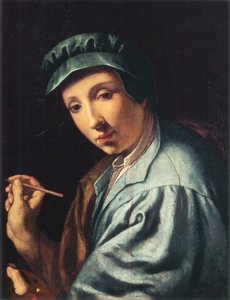
Alessandro Allori
1535 - 1607 , Italien
Kurzinfos
- Beeinflusste Künstler:
- Agnolo Bronzino
- Michelangelo
- Bemerkenswerte Werke:
- Allegorie des Lebens
- Geschichten des Heiligen Hieronymus
- Geburtsdatum: 31. Mai 1535
- Geburtsort: Florenz, Italien
- Künstlerischer Stil: Spätmanierismus
- Nationalität: Italiener
- Sterbedatum: 22. September 1607
- Vollständiger Name: Alessandro Allori
- Von Künstlern Beeinflusst: ['Agnolo Bronzino']
Ähnliche Artikel

The Enduring Legacy of Oil on Canvas: Technique, History & Aesthetic Impact
Explore the rich history & techniques of oil painting – from Renaissance masters to Impressionism. Discover pigments, layering methods, and why this timeless medium endures. Expert insights for artists & art enthusiasts.

Öl auf Leinwand: Eine historische und technische Erkundung eines zeitlosen künstlerischen Mediums
Entdecken Sie die faszinierende Welt der Ölmalerei! Von historischen Techniken bis zur modernen Anwendung – wir bieten Expertenwissen, Restaurierungstipps und hochwertige Reproduktionen. Jetzt informieren!

The Enduring Power of Painting: A Historical & Contemporary Exploration of Form and Emotion
Explore the rich history & enduring techniques of oil painting with ArtsDot. Discover masterpieces, learn about art collecting, and find authentic handmade reproductions crafted by skilled artists.

Das bleibende Erbe der Ölmalerei: Technik, Geschichte und zeitgenössische Praxis
Entdecken Sie die faszinierende Geschichte der Ölmalerei – von den frühen Techniken bis zur modernen Kunst. Expertenwissen, detaillierte Analysen und Inspiration für Sammler & Kunstliebhaber.
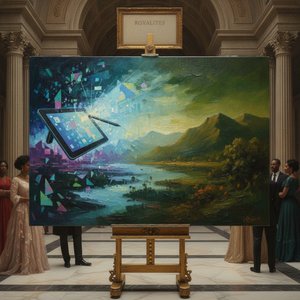
Verkaufen Sie Ihr digitales Bild als handgemalte Öl‑Reproduktion – Museum‑Qualität, automatisierte Preisberechnung und hohe Gewinnmarge!
Entdecken Sie die Kunst des Handgemalten Öl‑Reproduktionen von ArtsDot – museum‑qualitativ, mit automatisierter Preisberechnung und 100 % Zufriedenheitsgarantie. Vertrauen Sie unserem Expertennetzwerk für NFT‑Sammler, um Ihr digitales Bild in ein zeitloses Erbe zu verwandeln.