

 Vorschau anzeigen
 Versenden
 Teilen
 Details anzeigen

 Herunterladen
 Ähnliche Objekte
 Röntgenaufnahme
 Diashow
 Stats
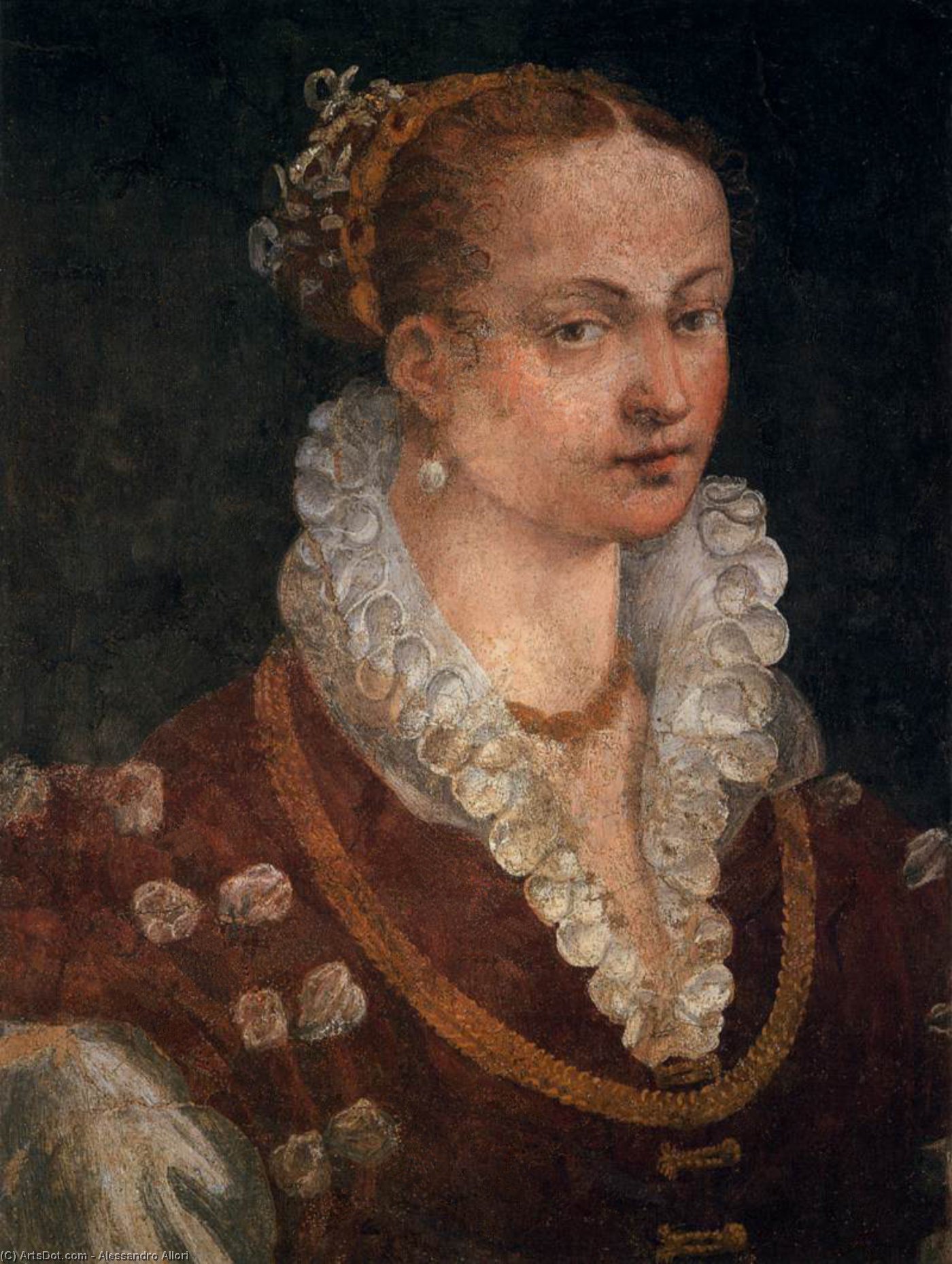
StatsPortrait of Bianca Cappello, Second Wife of Francesco I de' Medici
 Acrylic On Canvas
- WallArt
- Late Mannerism
 1580
1580 75.0 x 52.0 cm
 Galleria degli Uffizi
 Weiterlesen
Erwerben Sie ein hochauflösendes, optimiertes digitales Bild, das der Online-Vorschau weit überlegen ist.
Jede Datei wird von unseren hauseigenen Spezialisten mit modernsten Werkzeugen und fachmännischer manueller Retusche sorgfältig vorbereitet. Wir stellen sicher, dass jedes Bild eine außergewöhnliche Klarheit, präzise Farbgenauigkeit und feinste Details aufweist.
Die endgültige Datei wird innerhalb von 72 Stunden per E-Mail zugestellt und ist für den sofortigen Einsatz in professionellen, redaktionellen und Druckumgebungen optimiert. Es handelt sich um dieselbe Qualität, der führende Designstudios, Verlage und Galerien vertrauen.
Digitales Bild
Laden Sie eine hochauflösende Datei für die persönliche Präsentation, den Druck und kreative Projekte herunter. ( Switch to Print Handgemalte Reproduktion bestellen)
In jeder Bestellung digitaler Bilder enthalten
Professionelle digitale Bereitstellung, garantiert
Wenn Sie sich für ArtsDot.com entscheiden, erhalten Sie nicht nur ein Bild – Sie erhalten ein professionell aufbereitetes digitales Kunstwerk, das mit höchster Präzision erstellt und durch eine Zufriedenheitsgarantie abgesichert wird. Hier ist alles, was automatisch mit Ihrer Bestellung geliefert wird:

Schnelle E-Mail-Zustellung
Ihre hochauflösende digitale Bilddatei wird Ihnen innerhalb von 72 Stunden nach der Bestellung per E-Mail zugestellt – bereit zur sofortigen Verwendung.

KI-optimierte digitale Datei
Ihre Kunstwerke werden professionell mithilfe fortschrittlicher KI-Tools und manueller Bearbeitung optimiert, um maximale Detailtreue, Klarheit und Farbgenauigkeit zu gewährleisten.

Lebenslanger kostenloser Neudruckservice
Datei versehentlich gelöscht oder verloren? Keine Sorge – wir senden sie Ihnen jederzeit kostenlos erneut zu.

Keine Einfuhrgebühren – jemals
Genießen Sie Ihr Kunstwerk sofort ohne Zollgebühren, Einfuhrabgaben oder Versandkosten – digitale Downloads sind immer steuerfrei.

Garantierte Farbtreue
Wir garantieren, dass Ihr digitales Bild mithilfe professioneller Werkzeuge und Farbmanagement die Originalfarben so präzise wie möglich wiedergibt.

100-Tage-Zufriedenheitsgarantie
Wenn Sie mit Ihrem digitalen Bild nicht zufrieden sind, werden wir es überarbeiten oder 100% innerhalb von 100 Tagen erstatten – ohne Wenn und Aber.

100% Geld-zurück-Garantie
Nicht zufrieden? Erhalten Sie innerhalb von 100 Tagen nach Erhalt Ihrer digitalen Datei eine vollständige Rückerstattung – ohne Wenn und Aber.

Rabatte bei Großbestellungen
3 Bilder kaufen, 10% sparen – 5 Bilder kaufen, 15% sparen – Ab 10 Bildern 20% sparen. Ideal für kreative Projekte, Galerien und Agenturen.
Portrait of Bianca Cappello: A Medici Intrigue in Velvet and Shadow
Alessandro Allori’s “Portrait of Bianca Cappello, Second Wife of Francesco I de' Medici” – a captivating work completed around 1580 – is more than just a likeness; it’s a carefully constructed tableau of power, desire, and veiled secrets. Measuring a modest 75 x 52 cm, this fresco, now housed in the Galleria degli Uffizi in Florence, offers a glimpse into the turbulent world of the Medici court, specifically the scandalous affair that cemented Bianca Cappello's place as one of Florence’s most intriguing figures. The painting immediately draws the eye to Bianca herself – a woman radiating an almost unsettling allure. Her long, flowing hair is rendered with a subtle shimmer, hinting at the luxurious fabrics she undoubtedly wore, while her direct gaze challenges the viewer, inviting speculation about the thoughts and emotions hidden beneath her composed exterior.
Allori’s masterful technique exemplifies the late Mannerist style prevalent during this period. He eschews the idealized beauty of earlier Renaissance portraits in favor of a more psychologically complex representation. Notice the elongated proportions of Bianca's hands, a hallmark of Mannerism, and the delicate modeling of her features – each curve and shadow meticulously crafted to create an illusion of depth and volume. The use of color is restrained yet effective; the rich crimson of her gown contrasts dramatically with the cool tones of the background, drawing attention to the central figure and emphasizing her importance within the composition. The subtle hints of gold in her jewelry—a necklace and earrings—further underscore her elevated status.
A Woman of Intrigue: Bianca Cappello’s Rise and Fall
Bianca Cappello's story is inextricably linked to the fortunes of the Medici dynasty. Born into a prominent Venetian noble family, she possessed an undeniable beauty that quickly caught the eye of Francesco I de' Medici, then Grand Duke of Tuscany. Their relationship began as a clandestine affair, fueled by mutual attraction and political maneuvering. Francesco, seeking to secure his succession and circumvent the restrictions imposed by his wife, Joanna of Austria, married Bianca in 1578 – a move that scandalized Florence and ignited considerable opposition from the powerful Medici family, particularly Francesco’s brother, Ferdinando.
The painting captures this pivotal moment. While the presence of two secondary figures—likely members of the court—adds depth to the scene, they remain deliberately understated, serving primarily as witnesses to Bianca's central position. The arrangement subtly suggests a power dynamic: Bianca is not merely a subject but the focal point of attention, radiating an aura of both vulnerability and defiance. Historical accounts suggest that Francesco’s brother, Ferdinando, orchestrated Bianca’s death, possibly through poisoning, in 1587, fueled by jealousy and resentment over her influence within the court.
Symbolism and Artistic Devices
Beyond its narrative content, “Portrait of Bianca Cappello” is rich in symbolic details. The crimson gown, a color associated with royalty and passion, reinforces Bianca’s elevated status and hints at the tumultuous nature of her relationship with Francesco. The pearl necklace, a symbol of purity and virtue, ironically contrasts sharply with the illicit affair she engaged in. Allori employs subtle visual cues to convey this duality – Bianca's gaze is direct and confident, yet there’s an underlying tension, a suggestion that she is aware of the precariousness of her position.
Furthermore, the painting’s composition—a carefully balanced arrangement of figures within a shallow space—creates a sense of intimacy and immediacy. The use of *sfumato*, a technique pioneered by Leonardo da Vinci, softens the edges of Bianca's features, lending her an ethereal quality and contributing to the overall atmosphere of mystery and intrigue. The background, rendered in muted tones, serves as a neutral backdrop, allowing Bianca’s presence to dominate the scene.
A Timeless Masterpiece: Reproduction Possibilities
ArtsDot offers meticulously crafted hand-painted reproductions of Alessandro Allori's “Portrait of Bianca Cappello,” capturing the essence of this iconic work with unparalleled fidelity. Our artists utilize traditional techniques and archival-quality materials to ensure that each reproduction faithfully replicates the painting’s nuanced colors, delicate details, and atmospheric depth. Whether you are an art collector, interior designer seeking a statement piece, or simply an admirer of Renaissance art, our reproductions provide a beautiful and authentic way to experience this captivating portrait – a window into the dramatic world of the Medici court and the enigmatic figure of Bianca Cappello.
Ähnliche Kunstwerke

Biografie des Künstlers
Alessandro Allori: Ein florentinischer Manierist
- Geboren: Florenz, Italien (31. Mai 1535)
- Gestorben: 22. September 1607
Frühes Leben und Ausbildung
Alessandro Allori wurde 1535 in Florenz geboren. Nach dem Tod seines Vaters im Jahr 1540 wurde er von Agnolo Bronzino, einem renommierten Manieristenmaler und engen Freund der Familie, aufgenommen und ausgebildet. Diese Mentorschaft prägte Alloris künstlerischen Stil tiefgreifend. Bronzinos Einfluss ist in Alloris Vorliebe für unnatürliche, marmorartige Formen und den Fokus auf kalte Statuen in seinen Kompositionen erkennbar.
Künstlerischer Stil und Einflüsse
Alloris Werk wird oft als abgeleitet beschrieben, wobei Kritiker feststellen, dass er sich scheinbar hauptsächlich von bereits existierender Kunst inspirieren ließ. Sein Stil zeichnet sich durch die polierte Darstellung von Figuren mit einer unnatürlichen, fast marmorartigen Qualität aus, was seinen Gemälden ein zweidimensionales, statue-ähnliches Aussehen verleiht. Diese Ästhetik lässt sich in seinen Kooperationen mit Giovanni Maria Butteri und seinem Hauptschüler, Giovanni Bizzelli, beobachten. Weitere bemerkenswerte Schüler waren Cristoforo del Altissimo, Cesare Dandini, Aurelio Lomi, John Mosnier, Alessandro Pieroni, Giovanni Battista Vanni und Monanni.
- Hauptmerkmale: Unnatürliche, marmorartige Formen, kalte Statuen, polierte Figuren, zweidimensionale Qualität.
- Einflüsse: Agnolo Bronzino, Manierismus-Bewegung.
Wichtige Werke und Vermächtnis
Alessandro Alloris künstlerische Beiträge finden sich in verschiedenen Museen auf der ganzen Welt, darunter die Gemäldegalerie in Berlin. Ein bemerkenswertes Ereignis ereignete sich im Jahr 2006, als ein Gemälde von Allori, möglicherweise ein Porträt von Eleonora (Dianora) di Toledo de' Medici, von dem BBC-Auslandsreporter Sir Charles Wheeler an die Gemäldegalerie zurückgegeben wurde, der es 1952 in Deutschland erhalten hatte.
- Bemerkenswerte Werke: "Allegorie des menschlichen Lebens", "Geschichten des Heiligen Hieronymus" (Fresko), verschiedene Porträts.
- Vermächtnis: Sein Sohn, Cristofano Allori, wurde ebenfalls Maler und setzte so die künstlerische Tradition der Familie fort.
Historische Bedeutung
Alessandro Allori nimmt einen bedeutenden Platz in der Geschichte der florentinischen Kunst als eine Schlüsselgestalt innerhalb der späten Manierismus-Schule ein. Obwohl sein Stil für seine abgeleitete Natur kritisiert wurde, spielte er eine wichtige Rolle bei der Weitergabe und Entwicklung der Manierismus-Ästhetik. Sein Einfluss ist in den Werken seiner Schüler sichtbar, und seine Gemälde werden bis heute von Kunstliebhabern studiert und bewundert. Er war auch an bedeutenden dekorativen Projekten für prominente Mäzene wie die Familie Medici beteiligt, was seine Bedeutung innerhalb der künstlerischen Kreise von Florenz demonstriert.
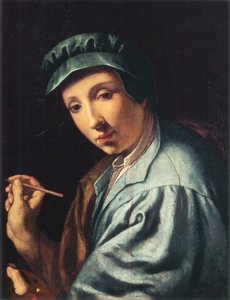
Alessandro Allori
1535 - 1607 , Italien
Kurzinfos
- Beeinflusste Künstler:
- Agnolo Bronzino
- Michelangelo
- Bemerkenswerte Werke:
- Allegorie des Lebens
- Geschichten des Heiligen Hieronymus
- Geburtsdatum: 31. Mai 1535
- Geburtsort: Florenz, Italien
- Künstlerischer Stil: Spätmanierismus
- Nationalität: Italiener
- Sterbedatum: 22. September 1607
- Vollständiger Name: Alessandro Allori
- Von Künstlern Beeinflusst: ['Agnolo Bronzino']