 Vorschau anzeigen
 Versenden
 Teilen
 Details anzeigen

 Herunterladen
 Ähnliche Objekte
 Röntgenaufnahme
 Diashow
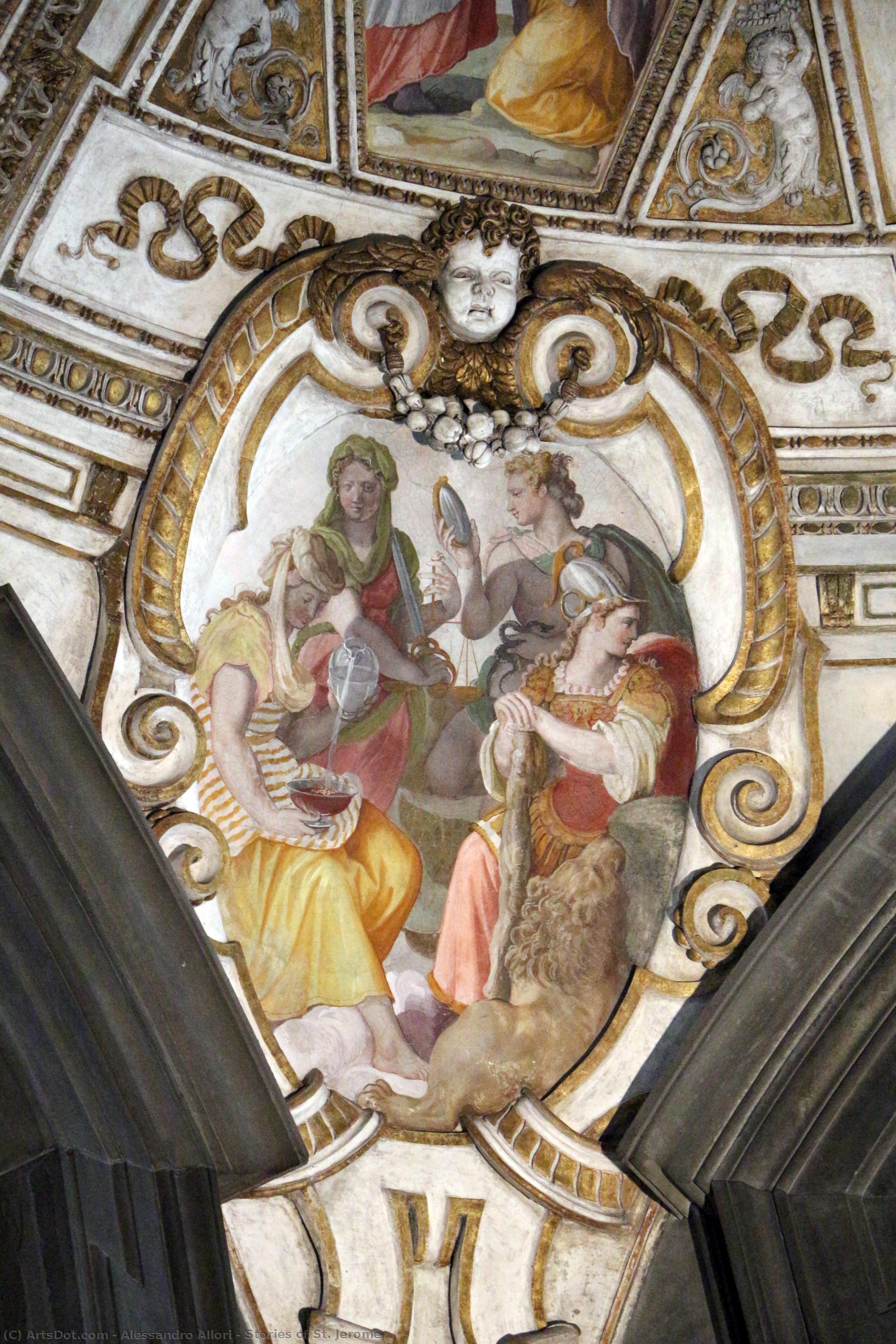
Stories of St. Jerome


 Weiterlesen
Handgefertigte Ölreproduktion
Handgemaltes Ölgemälde auf Leinwand in Ihrer Wunschgröße und mit Rahmen, auf Bestellung von unseren Künstlern angefertigt. ( Druck bestellen Bild kaufen)




P118B $10

P118H $10

P118W $10

P438Z $10

P508JH $12

P508YH $12

P805H $10

P805Z $10

P919BZ $10

P919G $10

P919XJ $10

P959ZH $10

P968JZ $12

W106C $8

W218G $10

W218JH $8

W218Y $10

W307PJ $10

W316G $10

W316PJ $8

W316Y $10

W398PJ $8

W4111J $10

W500HY $15

W500JH $15

W692G $12

W849H $8

W940BG $15

W953PJ $8




Wählen Sie aus unseren vordefinierten Formaten, die den ursprünglichen Proportionen des Kunstwerks entsprechen.

Sie können Ihre eigenen Maße eingeben, um einen bestimmten Rahmen oder Platz auszufüllen. Wenn die gewählte Größe nicht den Proportionen des Originalbildes entspricht, werden wir das Kunstwerk entweder beschneiden oder das Gemälde durch zusätzliche, handgemalte Elemente erweitern. Ein digitales Mockup wird Ihnen zur Genehmigung zugesandt, bevor die Produktion beginnt.
Bitte beachten Sie, dass die Bildschirmvorschau nicht die tatsächliche Beschneidung oder Erweiterung widerspiegelt. Nur das Mockup zeigt die endgültige Komposition exakt an.
Obwohl Sondermaße verfügbar sind, empfehlen wir, eine Größe aus der vordefinierten Liste zu wählen, um die ursprünglichen Proportionen beizubehalten.
Nach der Bestellung wird das ArtsDot.com-Team dem Kunden Anweisungen per E-Mail zusenden und eine Mockup-Vorschau bereitstellen.
Weltweiter Versand () in nur 3 bis 4 Wochen statt der üblichen 5 Wochen. (21 August). Keine Kompromisse bei der Qualität.

Kostenloser weltweiter Expressversand

Hochwertige Leinenleinwand

Umfassender Versicherungsschutz beim Versand

Zollgebühren-Rückerstattungsgarantie

Garantie für exakte Farbtreue

60 Tage Rückgaberecht (nur bei Mängeln)

100% Geld-zurück-Garantie

Mengenrabatt verfügbar
 Die Glasoption ist nur für Größen unter 110 cm verfügbar.

Stories of St. Jerome
Art der Reproduktion
Format der Reproduktion
-


Gesamtpreis
$ 263
Beschreibung des Kunstwerks
Alessandro Allori’s “Stories of St. Jerome”: A Window into Florentine Scholarship
“Stories of St. Jerome,” painted in 1577 by Alessandro Allori, is more than just a fresco; it's a vibrant tableau vivant—a bustling scene brimming with intellectual and spiritual life within the heart of Renaissance Florence. Commissioned for the Capponi Chapel in the Church of Santa Felicità, this monumental work offers a captivating glimpse into the era’s fascination with learning, piety, and the power of visual narrative. Allori, a pivotal figure in the transition between Mannerism and the burgeoning Baroque style, masterfully employs illusionistic space and dynamic composition to create an immersive experience for the viewer.
The fresco depicts St. Jerome, the renowned biblical scholar and hermit, surrounded by a multitude of figures engaged in various scholarly pursuits. We see monks poring over manuscripts, scribes meticulously copying texts, philosophers debating complex theological concepts, and even a young boy diligently studying—a deliberate representation of the widespread commitment to education that characterized Florentine society at the time. The scene is not merely decorative; it’s an allegory for the pursuit of knowledge and the importance of religious devotion in guiding intellectual endeavors. Allori's meticulous attention to detail – from the folds of the monks’ robes to the expressions on their faces – imbues each figure with a distinct personality, contributing to the overall sense of lively engagement.
Mannerist Techniques: Illusionism and Sculptural Form
Allori’s artistic style is deeply rooted in Mannerism, a movement that prioritized elegance, refinement, and psychological complexity over the naturalistic ideals of the High Renaissance. This is most evident in his masterful use of illusionistic space—a technique borrowed from Andrea Palladio—to create the impression of depth and volume within the relatively small chapel walls. The figures appear to emerge directly from the painted surface, blurring the boundaries between reality and representation. Furthermore, Allori’s figures possess a distinctly sculpted quality; they are elongated, attenuated, and often posed in dramatic, asymmetrical arrangements, hallmarks of Mannerist aesthetics.
The artist's palette is restrained yet sophisticated, dominated by rich earth tones—ochres, siennas, and umbers—that lend the scene a sense of gravitas and timelessness. He skillfully employs chiaroscuro – the contrast between light and shadow – to model forms and create a dramatic interplay of light and dark, further enhancing the illusionistic effect. The use of gold leaf accents on certain figures and architectural elements adds a touch of opulence and reinforces the fresco’s status as a significant work of art.
Symbolism and Context: Papal Authority and Scholarly Circles
Beyond its purely aesthetic qualities, “Stories of St. Jerome” is laden with symbolic meaning. The prominent placement of St. Jerome himself underscores his role as a model for intellectual and spiritual devotion. His presence serves as a visual reminder of the importance of biblical scholarship in shaping Christian belief. The inclusion of numerous scholars and intellectuals reflects the patronage of the Papal court, particularly Pope Pius V, who was deeply invested in promoting education and the arts within Florence. The fresco can be interpreted as an endorsement of papal authority—a demonstration of the Church’s commitment to fostering a vibrant intellectual environment.
The presence of a young boy studying alongside the learned men suggests the continuity of knowledge across generations, reinforcing the idea that learning is a lifelong pursuit. Even the animal depicted – a small dog – adds a layer of symbolic richness, potentially representing loyalty and fidelity—qualities valued in both scholarly pursuits and religious devotion.
A Legacy of Beauty: Reproductions and Artistic Inspiration
“Stories of St. Jerome” remains a powerful testament to Alessandro Allori’s artistic genius and the intellectual ferment of Renaissance Florence. Today, high-quality reproductions offer art lovers around the world an opportunity to experience the fresco's captivating beauty and profound symbolism. Whether adorning a grand salon or a more intimate space, a reproduction of this masterpiece can serve as a constant source of inspiration—a reminder of the enduring power of knowledge, faith, and artistic expression.
Ähnliche Kunstwerke
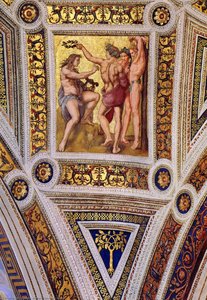

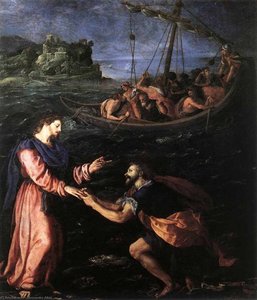
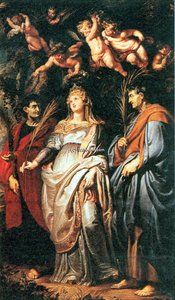
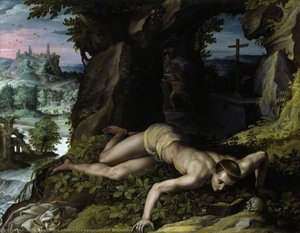
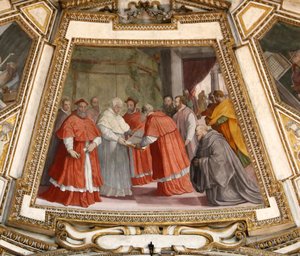
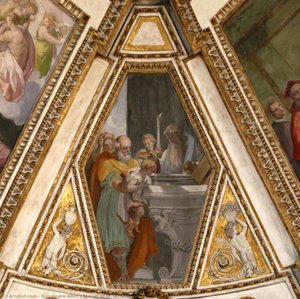
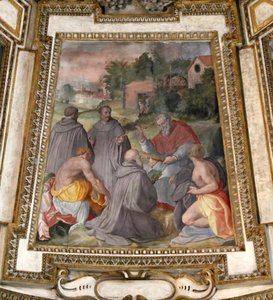
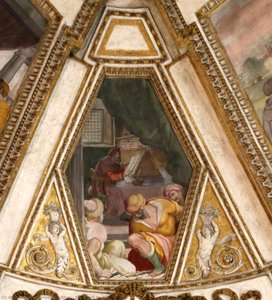
Über den Künstler
Alessandro Allori: Ein florentinischer Manierist
- Geboren: Florenz, Italien (31. Mai 1535)
- Gestorben: 22. September 1607
Frühes Leben und Ausbildung
Alessandro Allori wurde 1535 in Florenz geboren. Nach dem Tod seines Vaters im Jahr 1540 wurde er von Agnolo Bronzino, einem renommierten Manieristenmaler und engen Freund der Familie, aufgenommen und ausgebildet. Diese Mentorschaft prägte Alloris künstlerischen Stil tiefgreifend. Bronzinos Einfluss ist in Alloris Vorliebe für unnatürliche, marmorartige Formen und den Fokus auf kalte Statuen in seinen Kompositionen erkennbar.
Künstlerischer Stil und Einflüsse
Alloris Werk wird oft als abgeleitet beschrieben, wobei Kritiker feststellen, dass er sich scheinbar hauptsächlich von bereits existierender Kunst inspirieren ließ. Sein Stil zeichnet sich durch die polierte Darstellung von Figuren mit einer unnatürlichen, fast marmorartigen Qualität aus, was seinen Gemälden ein zweidimensionales, statue-ähnliches Aussehen verleiht. Diese Ästhetik lässt sich in seinen Kooperationen mit Giovanni Maria Butteri und seinem Hauptschüler, Giovanni Bizzelli, beobachten. Weitere bemerkenswerte Schüler waren Cristoforo del Altissimo, Cesare Dandini, Aurelio Lomi, John Mosnier, Alessandro Pieroni, Giovanni Battista Vanni und Monanni.
- Hauptmerkmale: Unnatürliche, marmorartige Formen, kalte Statuen, polierte Figuren, zweidimensionale Qualität.
- Einflüsse: Agnolo Bronzino, Manierismus-Bewegung.
Wichtige Werke und Vermächtnis
Alessandro Alloris künstlerische Beiträge finden sich in verschiedenen Museen auf der ganzen Welt, darunter die Gemäldegalerie in Berlin. Ein bemerkenswertes Ereignis ereignete sich im Jahr 2006, als ein Gemälde von Allori, möglicherweise ein Porträt von Eleonora (Dianora) di Toledo de' Medici, von dem BBC-Auslandsreporter Sir Charles Wheeler an die Gemäldegalerie zurückgegeben wurde, der es 1952 in Deutschland erhalten hatte.
- Bemerkenswerte Werke: "Allegorie des menschlichen Lebens", "Geschichten des Heiligen Hieronymus" (Fresko), verschiedene Porträts.
- Vermächtnis: Sein Sohn, Cristofano Allori, wurde ebenfalls Maler und setzte so die künstlerische Tradition der Familie fort.
Historische Bedeutung
Alessandro Allori nimmt einen bedeutenden Platz in der Geschichte der florentinischen Kunst als eine Schlüsselgestalt innerhalb der späten Manierismus-Schule ein. Obwohl sein Stil für seine abgeleitete Natur kritisiert wurde, spielte er eine wichtige Rolle bei der Weitergabe und Entwicklung der Manierismus-Ästhetik. Sein Einfluss ist in den Werken seiner Schüler sichtbar, und seine Gemälde werden bis heute von Kunstliebhabern studiert und bewundert. Er war auch an bedeutenden dekorativen Projekten für prominente Mäzene wie die Familie Medici beteiligt, was seine Bedeutung innerhalb der künstlerischen Kreise von Florenz demonstriert.
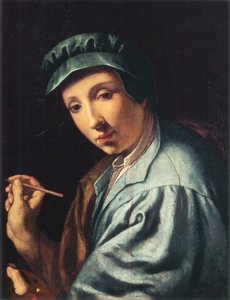
Alessandro Allori
1535 - 1607 , Italien
Kurzinfos
- Beeinflusste Künstler:
- Agnolo Bronzino
- Michelangelo
- Bemerkenswerte Werke:
- Allegorie des Lebens
- Geschichten des Heiligen Hieronymus
- Geburtsdatum: 31. Mai 1535
- Geburtsort: Florenz, Italien
- Künstlerischer Stil: Spätmanierismus
- Nationalität: Italiener
- Sterbedatum: 22. September 1607
- Vollständiger Name: Alessandro Allori
- Von Künstlern Beeinflusst: ['Agnolo Bronzino']
Ähnliche Artikel

Das Familienerbe an die Wand bringen: Wandgemälde als Generationenschatz
Verwandeln Sie Ihre Familiengeschichte in ein beeindruckendes Wandgemälde! Expertenrat & hochwertige Handwerkskunst für einzigartige Kunstwerke, die Generationen verbinden. Entdecken Sie jetzt!

The Enduring Legacy of Fresco Painting: Techniques, History & Contemporary Relevance
Explore the rich history & enduring artistry of fresco painting – from Giotto to Michelangelo! Discover techniques, conservation efforts, & modern applications. Learn how ArtsDot brings this timeless art form to your home.

The Enduring Legacy of Fresco: Technique, History & Artistic Expression Across Cultures
Explore the rich history & enduring legacy of fresco painting! Discover ancient techniques, Giotto's masterpieces, and modern applications. Expert insights for art lovers & professionals.
Die bleibende Pracht der Freskomalerei: Technik, Geschichte und künstlerischer Ausdruck
Entdecken Sie die faszinierende Welt der Freskomalerei! Von den Ursprüngen bis zur Renaissance – wir beleuchten Technik, Geschichte und künstlerischen Ausdruck dieser einzigartigen Kunstform. Expertenwissen für Sammler & Liebhaber.
Kunst, die mit Ihnen lebt: Emotionale Kraft individueller Innenraumfresken
Entdecken Sie die emotionale Kraft individueller Innenraumfresken! Expertenberatung & hochwertige Wandmalerei für Hotels, Wohnräume & mehr. – Ihr Partner für einzigartige Kunst.