

 Vorschau anzeigen
 Versenden
 Teilen
 Details anzeigen

 Herunterladen
 Ähnliche Objekte
 Röntgenaufnahme
 Diashow
 Statistiken
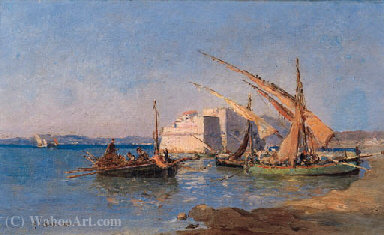
Barche con pescatori a riva
 Weiterlesen
Erwerben Sie ein hochauflösendes, optimiertes digitales Bild, das der Online-Vorschau weit überlegen ist.
Jede Datei wird von unseren hauseigenen Spezialisten mit modernsten Werkzeugen und fachmännischer manueller Retusche sorgfältig vorbereitet. Wir stellen sicher, dass jedes Bild eine außergewöhnliche Klarheit, präzise Farbgenauigkeit und feinste Details aufweist.
Die endgültige Datei wird innerhalb von 72 Stunden per E-Mail zugestellt und ist für den sofortigen Einsatz in professionellen, redaktionellen und Druckumgebungen optimiert. Es handelt sich um dieselbe Qualität, der führende Designstudios, Verlage und Galerien vertrauen.
Digitales Bild
Laden Sie eine hochauflösende Datei für die persönliche Präsentation, den Druck und kreative Projekte herunter. ( Zu Druck wechseln Handgemalte Reproduktion bestellen)
In jeder Bestellung digitaler Bilder enthalten
Professionelle digitale Bereitstellung, garantiert
Wenn Sie sich für ArtsDot.com entscheiden, erhalten Sie nicht nur ein Bild – Sie erhalten ein professionell aufbereitetes digitales Kunstwerk, das mit höchster Präzision erstellt und durch eine Zufriedenheitsgarantie abgesichert wird. Hier ist alles, was automatisch mit Ihrer Bestellung geliefert wird:

Schnelle E-Mail-Zustellung
Ihre hochauflösende digitale Bilddatei wird Ihnen innerhalb von 72 Stunden nach der Bestellung per E-Mail zugestellt – bereit zur sofortigen Verwendung.

KI-optimierte digitale Datei
Ihre Kunstwerke werden professionell mithilfe fortschrittlicher KI-Tools und manueller Bearbeitung optimiert, um maximale Detailtreue, Klarheit und Farbgenauigkeit zu gewährleisten.

Lebenslanger kostenloser Neudruckservice
Datei versehentlich gelöscht oder verloren? Keine Sorge – wir senden sie Ihnen jederzeit kostenlos erneut zu.

Keine Einfuhrgebühren – jemals
Genießen Sie Ihr Kunstwerk sofort ohne Zollgebühren, Einfuhrabgaben oder Versandkosten – digitale Downloads sind immer steuerfrei.

Garantierte Farbtreue
Wir garantieren, dass Ihr digitales Bild mithilfe professioneller Werkzeuge und Farbmanagement die Originalfarben so präzise wie möglich wiedergibt.

100-Tage-Zufriedenheitsgarantie
Wenn Sie mit Ihrem digitalen Bild nicht zufrieden sind, werden wir es überarbeiten oder 100% innerhalb von 100 Tagen erstatten – ohne Wenn und Aber.

100% Geld-zurück-Garantie
Nicht zufrieden? Erhalten Sie innerhalb von 100 Tagen nach Erhalt Ihrer digitalen Datei eine vollständige Rückerstattung – ohne Wenn und Aber.

Rabatte bei Großbestellungen
3 Bilder kaufen, 10% sparen – 5 Bilder kaufen, 15% sparen – Ab 10 Bildern 20% sparen. Ideal für kreative Projekte, Galerien und Agenturen.
Ähnliche Kunstwerke









Biografie des Künstlers
Alessandro La Volpe: Capturing the Soul of Southern Italy
Born in Lucera, a town nestled within the heart of Italy’s Campania region, Alessandro La Volpe (1820-1887) emerged as a pivotal figure in 19th-century Italian landscape painting. His artistic journey was deeply intertwined with his homeland – specifically, the sun-drenched landscapes and evocative light of Southern Italy, particularly the regions surrounding Naples and the Amalfi Coast. La Volpe’s work transcends mere representation; he sought to capture not just the visual appearance of these places but also their very essence, imbuing each canvas with a palpable sense of atmosphere and emotion.
La Volpe's early artistic training laid the foundation for his distinctive style. He began his formal studies at the Academy of Fine Arts in Naples, where he was mentored by Gabriele Smargiassi and Salvatore Fergola – both prominent figures within the burgeoning Posillipo School. This influential movement, centered around the picturesque district of Posillipo overlooking the Bay of Naples, emphasized a delicate realism combined with an expressive use of light and color. The influence of Smargiassi’s “rosy manner,” characterized by soft hues and atmospheric effects, is particularly evident in La Volpe's later works.
The Landscape as Narrative
La Volpe’s paintings are predominantly landscapes, but they function more like intimate narratives than simple depictions of scenery. He frequently chose subjects that resonated with the everyday lives of the people inhabiting these regions – bustling caravan scenes, quiet harbors dotted with fishing boats, and panoramic views of ancient ruins bathed in golden light. These weren't grand historical compositions; instead, he focused on capturing fleeting moments, the subtle shifts in light, and the interactions between man and his environment.
A key element of La Volpe’s technique was his masterful manipulation of *chiaroscuro* – the dramatic contrast between light and shadow. He employed this device not merely for aesthetic effect but to create a sense of depth, volume, and emotional intensity. The interplay of light and shade transforms ordinary landscapes into scenes brimming with drama and atmosphere. His use of color is equally noteworthy; he favored warm, earthy tones—ochres, siennas, and umbers—that perfectly mirrored the palette of the Italian countryside.
Influences and Artistic Development
La Volpe’s artistic development was shaped by a confluence of influences. As mentioned earlier, the Posillipo School provided him with a foundational understanding of landscape painting in Italy. However, he also drew inspiration from the Barbizon school in France, known for its emphasis on *plein air* (outdoor) painting and a direct observation of nature. This approach is reflected in his meticulous attention to detail and his ability to capture the nuances of light and color as they appear directly before him.
His early career saw him exhibiting at the annual exhibitions of the Promoter of Fine Arts in Naples, showcasing works such as “Temples of Paestum” and “Marina of Paestum.” Later, he moved to Rome, where he established a studio and continued to develop his distinctive style. His move to Rome marked a shift towards more urban landscapes, though he never abandoned his love for the natural beauty of Southern Italy.
Legacy and Historical Significance
Alessandro La Volpe’s contribution to Italian landscape painting is significant not only for his technical skill but also for his ability to evoke a profound sense of place. His paintings offer a glimpse into the soul of Southern Italy—its beauty, its history, and its enduring spirit. He remains an important figure in the Posillipo School and a testament to the power of art to capture the essence of a region and its people.
His work is held in several museums and private collections worldwide, including the Museum of La Plata in Argentina, where his landscapes of the Gulf of Naples are particularly celebrated. La Volpe’s legacy endures as an artist who masterfully translated the light and atmosphere of Southern Italy onto canvas, creating timeless images that continue to captivate viewers today.
alessandro la volpe
1820 - 1887
Kurzinfos
- Artistic Movement Or Style: Posillipo School
- Artists Or Movements Influenced By This Artist: ['Macchiaioli']
- Artists Who Influenced This Artist:
- Gabriele Smargiassi
- Salvatore Fergola
- Date Of Birth: February 27, 1820
- Date Of Death: August 2, 1887
- Full Name: Alessandro La Volpe
- Nationality: Italian
- Notable Artworks:
- Paesaggio lacustre
- Temples of Paestum
- Place Of Birth: Lucera, Italy