

 Vorschau anzeigen
 Versenden
 Teilen
 Details anzeigen

 Herunterladen
 Ähnliche Objekte
 Röntgenaufnahme
 Diashow
 Statistiken
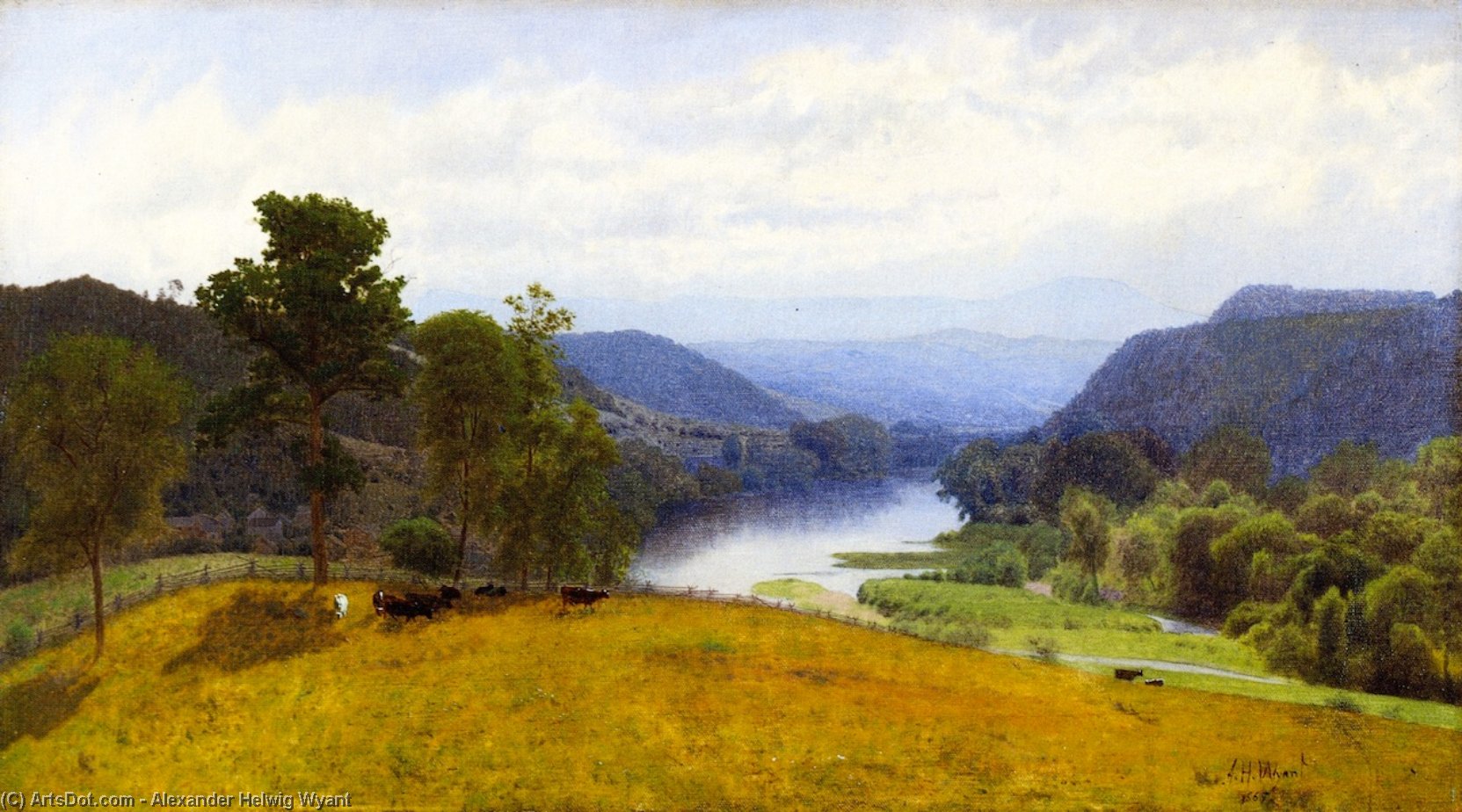
Sunset in the Hills


 Weiterlesen
Erwerben Sie ein hochauflösendes, optimiertes digitales Bild, das der Online-Vorschau weit überlegen ist.
Jede Datei wird von unseren hauseigenen Spezialisten mit modernsten Werkzeugen und fachmännischer manueller Retusche sorgfältig vorbereitet. Wir stellen sicher, dass jedes Bild eine außergewöhnliche Klarheit, präzise Farbgenauigkeit und feinste Details aufweist.
Die endgültige Datei wird innerhalb von 72 Stunden per E-Mail zugestellt und ist für den sofortigen Einsatz in professionellen, redaktionellen und Druckumgebungen optimiert. Es handelt sich um dieselbe Qualität, der führende Designstudios, Verlage und Galerien vertrauen.
Digitales Bild
Laden Sie eine hochauflösende Datei für die persönliche Präsentation, den Druck und kreative Projekte herunter. ( Zu Druck wechseln Handgemalte Reproduktion bestellen)
In jeder Bestellung digitaler Bilder enthalten
Professionelle digitale Bereitstellung, garantiert
Wenn Sie sich für ArtsDot.com entscheiden, erhalten Sie nicht nur ein Bild – Sie erhalten ein professionell aufbereitetes digitales Kunstwerk, das mit höchster Präzision erstellt und durch eine Zufriedenheitsgarantie abgesichert wird. Hier ist alles, was automatisch mit Ihrer Bestellung geliefert wird:

Schnelle E-Mail-Zustellung
Ihre hochauflösende digitale Bilddatei wird Ihnen innerhalb von 72 Stunden nach der Bestellung per E-Mail zugestellt – bereit zur sofortigen Verwendung.

KI-optimierte digitale Datei
Ihre Kunstwerke werden professionell mithilfe fortschrittlicher KI-Tools und manueller Bearbeitung optimiert, um maximale Detailtreue, Klarheit und Farbgenauigkeit zu gewährleisten.

Lebenslanger kostenloser Neudruckservice
Datei versehentlich gelöscht oder verloren? Keine Sorge – wir senden sie Ihnen jederzeit kostenlos erneut zu.

Keine Einfuhrgebühren – jemals
Genießen Sie Ihr Kunstwerk sofort ohne Zollgebühren, Einfuhrabgaben oder Versandkosten – digitale Downloads sind immer steuerfrei.

Garantierte Farbtreue
Wir garantieren, dass Ihr digitales Bild mithilfe professioneller Werkzeuge und Farbmanagement die Originalfarben so präzise wie möglich wiedergibt.

100-Tage-Zufriedenheitsgarantie
Wenn Sie mit Ihrem digitalen Bild nicht zufrieden sind, werden wir es überarbeiten oder 100% innerhalb von 100 Tagen erstatten – ohne Wenn und Aber.

100% Geld-zurück-Garantie
Nicht zufrieden? Erhalten Sie innerhalb von 100 Tagen nach Erhalt Ihrer digitalen Datei eine vollständige Rückerstattung – ohne Wenn und Aber.

Rabatte bei Großbestellungen
3 Bilder kaufen, 10% sparen – 5 Bilder kaufen, 15% sparen – Ab 10 Bildern 20% sparen. Ideal für kreative Projekte, Galerien und Agenturen.
A Poet’s Landscape: Alexander Helwig Wyant's “Sunset in the Hills”
Alexander Helwig Wyant wasn’t merely a painter of landscapes; he was, as many have described him, a poet translating the subtle moods of nature onto canvas. His work, particularly pieces like "Sunset in the Hills," offers a glimpse into an era where art sought to capture not just visual representation but also the very *feeling* of a place – a sentimentality deeply rooted in observation and introspection. This particular painting, completed in 1869, is a masterclass in tonalism, a style that prioritized atmospheric effects and subdued color palettes over sharp detail, creating an immersive experience for the viewer.
The scene unfolds within a gently rolling valley, bisected by a meandering river reflecting the fiery hues of the setting sun. Mountains rise in the distance, their forms softened by a hazy atmosphere – a deliberate choice by Wyant to evoke a sense of vastness and tranquility. Scattered throughout the foreground are a few grazing cows, adding a touch of rustic charm and grounding the scene with a familiar element of rural life. Yet, it’s not simply a depiction of a pastoral landscape; there's an underlying melancholy, a quiet contemplation that permeates the entire composition.
The Tonalist Approach: Light, Shadow, and Emotion
Wyant’s technique is characterized by its deliberate restraint. He eschewed the bright, vibrant colors favored by the Hudson River School, instead employing a carefully constructed layering of muted tones – predominantly browns, grays, and ochres – to build up the image. This “tonalism,” as it became known, wasn't about photographic accuracy; rather, it was an attempt to capture the *essence* of light and shadow, conveying mood and atmosphere with remarkable subtlety. Notice how the sunlight isn’t rendered in harsh beams but diffused through a veil of mist, casting long, soft shadows across the valley floor.
The brushstrokes themselves are loose and expressive, contributing to the painting's overall sense of movement and fluidity. Wyant wasn’t interested in meticulously detailing every blade of grass or ripple on the water; instead, he used broad strokes to suggest form and texture, allowing the viewer’s eye to fill in the gaps and actively participate in constructing the image. This technique invites a meditative response from the observer, encouraging them to linger and lose themselves within the painting's serene embrace.
A Biographical Context: Wyant’s Journey
Alexander Helwig Wyant’s artistic journey is as compelling as his paintings. Born in Port Washington, Ohio, he began sketching along the banks of the Ohio River, developing a keen eye for capturing the nuances of nature. A pivotal encounter with George Inness in 1857 profoundly influenced his style, leading him to relocate to New York City and seek formal training at the National Academy of Design. Later travels through Europe – particularly his time studying Corot and Dupré in Paris and Hans Gude in Germany – further broadened his artistic horizons, shaping his distinctive tonalist approach.
A significant turning point in Wyant’s life occurred after a stroke in 1873, which left him with paralysis on his right side. Remarkably, he adapted to this challenge by learning to paint with his left hand, demonstrating an extraordinary resilience and creative spirit. This experience undoubtedly deepened his introspective nature and informed the emotional depth of his later works. His move to Arkville, New York, in 1889, where he established a thriving artist’s colony, provided him with a supportive community and further fueled his artistic explorations.
Symbolism and Emotional Resonance
"Sunset in the Hills" is more than just a pretty landscape; it's imbued with a quiet sense of melancholy and reflection. The fading light symbolizes the passage of time and the inevitability of change, while the cows represent a connection to the land and a reminder of simpler times. The vastness of the valley evokes feelings of solitude and contemplation, inviting the viewer to step outside their own concerns and connect with the natural world.
Ultimately, Wyant’s "Sunset in the Hills" is a testament to his ability to capture not just the appearance of a landscape but also its emotional essence. It's a painting that speaks to our deepest longings for peace, tranquility, and connection – a timeless masterpiece that continues to resonate with viewers today.
Ähnliche Kunstwerke
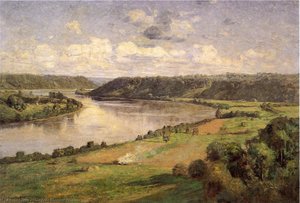
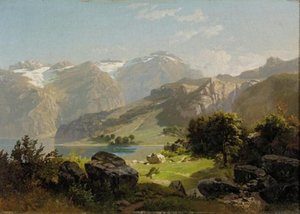
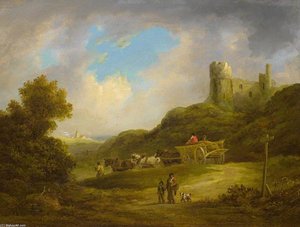
Biografie des Künstlers
Frühes Leben und Einflüsse
- Geboren: 11. Januar 1836, Port Washington, Ohio
- Gestorben: 29. November 1892, New York City
- Wyant begann mit dem Malen am Ufer des Ohio River in Cincinnati, Ohio.
- Er wurde maßgeblich von George Inness beeinflusst, den er 1857 in New York City kennenlernte. Dieses Treffen ermutigte ihn, die Kunst ernsthaft zu betreiben.
- Mit Unterstützung von Nicholas Longworth studierte Wyant an der National Academy of Design und reiste 1860 nach Europa.
- Seine Europareise umfasste ein Studium bei Hans Gude in Düsseldorf und Karlsruhe, Deutschland, sowie kurze Besuche in England und Irland. Diese Erfahrungen führten ihn mit verschiedenen künstlerischen Stilen und Landschaften in Berührung.
Künstlerische Entwicklung und Stil
- Wyants frühe Werke spiegelten die Tradition der Hudson River School wider, gekennzeichnet durch detaillierte Darstellungen von Naturlandschaften.
- Im Laufe der Zeit entwickelte sich sein Stil hin zum Tonalismus, einer Bewegung, die atmosphärische Effekte, gedämpfte Farben und eine poetische Interpretation betonte.
- Ein Schlüsselelement Wyants Entwicklung war seine zunehmende Abhängigkeit von einer Palette aus Weiß-, Grau- und Erdtönen.
- Er wurde bekannt dafür, Wolken zu nutzen, um subtile Stimmungen zu erzeugen, anstatt dramatische Darstellungen.
- Der Schlaganfall, den er 1873 erlitt und der seinen rechten Arm lähmte, veranlasste ihn, das Malen mit seiner linken Hand selbst beizubringen. Dieses Unglück intensivierte vermutlich seinen Fokus auf atmosphärische Effekte und emotionale Ausdruckskraft.
Wichtige Werke und Ausstellungen
- Wyant stellte von 1864 bis 1892 umfangreich an der National Academy of Design aus.
- Er nahm auch an Ausstellungen mit der Brooklyn Art Association, dem Boston Art Club, der Pennsylvania Academy of Fine Arts und anderen teil.
- Bemerkenswerte Werke sind: Mohawk Valley (Metropolitan Museum of Art), Arkville Autumn Landscape (sein letztes Gemälde).
- Seine Aquarelle wurden ab 1867 regelmäßig ausgestellt.
- Er spielte eine wichtige Rolle bei der Gründung der American Watercolor Society im Jahr 1878.
Historische Bedeutung und Vermächtnis
- Wyant gilt als bedeutende Figur, die die Hudson River School und den Tonalismus miteinander verbindet.
- Seine Arbeit spiegelt einen Wandel hin zu introspektiveren und atmosphärischeren Landschaften wider, weg von rein repräsentativen Darstellungen der Natur.
- Er trug zur Entwicklung der amerikanischen Aquarellmalerei durch seine aktive Teilnahme an der American Watercolor Society bei.
- Obwohl er zu Lebzeiten nicht weithin geschätzt wurde, haben Wyants Werke für ihre poetische Qualität und subtile Schönheit Anerkennung gefunden.
- Seine späteren Arbeiten, insbesondere die aus Arkville, New York, zeigen eine Verbindung zu den Barbizon-Malern und spiegeln einen kontemplativen Ansatz in der Landschaftskunst wider.
Wichtige Einflüsse und Zugehörigkeiten
- George Inness: Ein primärer Mentor und Einfluss auf Wyants künstlerische Entwicklung.
- John Constable & J.M.W. Turner: Britische Künstler, deren Landschaften Wyants atmosphärischen Stil inspirierten.
- Hudson River School: Wyant folgte zunächst dieser Tradition, wandte sich aber später dem Tonalismus zu.
- American Barbizon Movement: Seine späteren Arbeiten stimmten mit den Prinzipien dieser Bewegung überein und betonten das Malen im Freien und einen Fokus auf natürliches Licht.
- Century Association & National Academy of Design: Wyant war Mitglied dieser angesehenen Künstlerorganisationen.
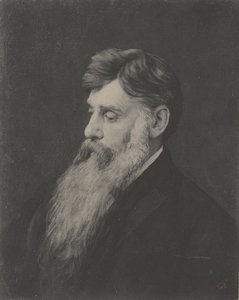
Alexander Helwig Wyant
1836 - 1892 , Vereinigte Staaten von Amerika
Kurzinfos
- Beeinflusste Künstler:
- George Inness
- John Constable
- J.M.W. Turner
- Bemerkenswerte Werke:
- Mohawk Valley
- Arkville Herbstlandschaft
- Geburtsdatum: 11. Januar 1836
- Geburtsort: Port Washington, USA
- Künstlerische Bewegung:
- Hudson River School
- Tonalismus
- Nationalität: Amerikanisch
- Todatum: 29. November 1892
- Vollständiger Name: Alexander Helwig Wyant