 Vorschau anzeigen
 Versenden
 Teilen
 Details anzeigen

 Herunterladen
 Ähnliche Objekte
 Röntgenaufnahme
 Diashow
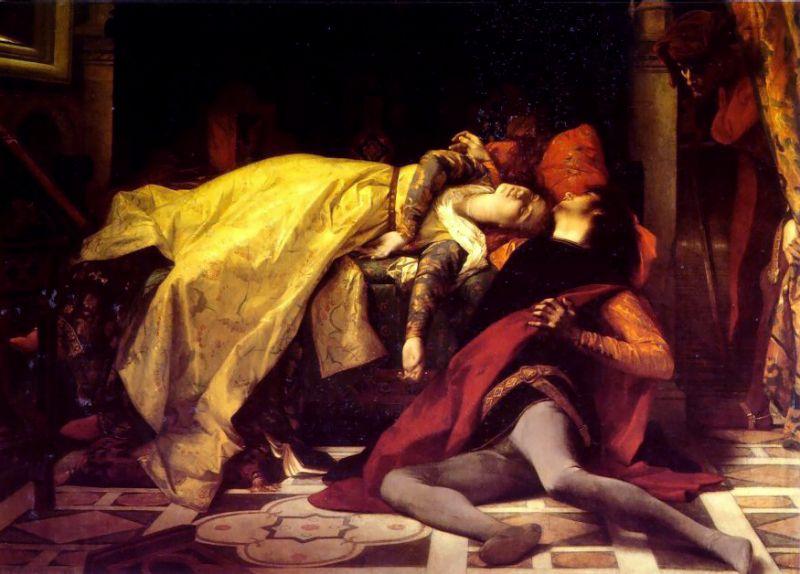
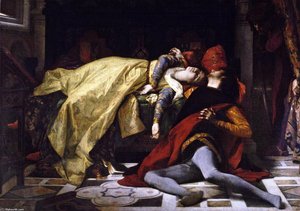
The Death of Francesca da Rimini and Paolo Malatesta


 Weiterlesen
Giclée / Kunstdruck
Giclée- oder Leinwanddruck in Museumsqualität mit schneller Produktion und flexiblen Veredelungsoptionen. ( Handgemalte Reproduktion bestellen Bild kaufen)




P118B $10

P118H $10

P118W $10

P438Z $10

P508JH $12

P508YH $12

P805H $10

P805Z $10

P919BZ $10

P919G $10

P919XJ $10

P959ZH $10

P968JZ $12

W106C $8

W218G $10

W218JH $8

W218Y $10

W307PJ $10

W316G $10

W316PJ $8

W316Y $10

W398PJ $8

W4111J $10

W500HY $15

W500JH $15

W692G $12

W849H $8

W940BG $15

W953PJ $8




Wählen Sie aus unseren vordefinierten Formaten, die den ursprünglichen Proportionen des Kunstwerks entsprechen.

Sie können Ihre eigenen Maße eingeben, um ein bestimmtes Format oder einen speziellen Platz einzupassen. Wenn das von Ihnen gewählte Format nicht den Proportionen des Originalbildes entspricht, werden wir das Kunstwerk entweder beschneiden oder das Bild mit einem gespiegelten oder einfarbigen Rand erweitern. Ein digitaler Entwurf wird Ihnen zur Genehmigung zugesandt, bevor die Produktion beginnt.
Bitte beachten Sie, dass die Vorschau auf dem Bildschirm nicht den tatsächlichen Zuschnitt oder die Erweiterung widerspiegelt. Nur der Entwurf zeigt die endgültige Komposition präzise an.
Obwohl Sondermaße verfügbar sind, empfehlen wir die Auswahl eines Maßes aus der vordefinierten Liste, um die ursprünglichen Proportionen zu bewahren.
Weltweiter Versand () innerhalb von 2 Wochen statt der üblichen 4/5 Wochen. (31 August)

Kostenloser weltweiter Expressversand

Hochwertige Leinenleinwand

Umfassender Versicherungsschutz beim Versand

Zollgebühren-Rückerstattungsgarantie

Garantie für exakte Farbtreue

60 Tage Rückgaberecht (nur bei Mängeln)

100% Geld-zurück-Garantie

Mengenrabatt verfügbar
 Die Glasoption ist nur für Größen unter 110 cm verfügbar.

The Death of Francesca da Rimini and Paolo Malatesta
Giclée / Kunstdruck
Format der Reproduktion
-


Gesamtpreis
$ 62
A Moment Frozen in Time: Alexandre Cabanel’s “Death of Francesca da Rimini”
Alexandre Cabanel's "Death of Francesca da Rimini and Paolo Malatesta," completed in 1870, stands as a quintessential exemplar of Academic Art—a movement dedicated to upholding classical ideals of beauty and proportion. More than just a depiction of Dante Alighieri’s tragic tale, this monumental canvas delves into the profound exploration of grief, love, and mortality, cementing Cabanel's place among France’s most influential artists of his era. The painting captures the final moments of Francesca da Rimini and Paolo Malatesta’s doomed romance, portraying Francesca lying serenely upon Paolo’s chest as he cradles her lifeless body—a tableau imbued with palpable sorrow yet simultaneously radiating an unsettling tranquility.The Style of Academic Art: Classical Influence
Cabanel's artistic vision was firmly rooted in the traditions established by Jacques-Louis David and Nicolas Poussin, masters who championed idealized representations of human form and narrative grandeur. Unlike Impressionism’s focus on capturing fleeting impressions of light and color, Cabanel meticulously crafted a scene designed to evoke contemplation and moral reflection. The composition adheres rigidly to pyramidal structure—a technique favored throughout the Baroque and Neoclassical periods—creating stability and emphasizing the central figures while subtly guiding the viewer's gaze. This deliberate control over visual elements underscores the artist’s commitment to conveying emotion through carefully considered form and gesture.Technique: Oil Paint on Canvas – Precision and Detail
Cabanel employed oil paint on canvas, a medium that allowed for unparalleled tonal richness and textural nuance. His brushstrokes are remarkably smooth and controlled, meticulously blending colors to achieve an astonishing level of realism—particularly evident in the depiction of Francesca’s skin tones and Paolo’s muscular physique. The artist painstakingly rendered every detail, from the folds of Malatesta's clothing to the subtle expressions on their faces, demonstrating a mastery of anatomical accuracy that was considered paramount within the Academic framework. Furthermore, Cabanel skillfully utilized chiaroscuro—the dramatic interplay between light and shadow—to heighten emotional impact and emphasize the solemnity of the scene.Historical Context: Dante’s Inferno Revisited
The painting draws directly from Dante Alighieri's “Inferno,” the third canto of his epic poem—a cornerstone of Western literature exploring themes of sin, punishment, and divine retribution. Dante recounts the story of Francesca and Paolo, two lovers consumed by passion who defied God’s decree and ultimately perished together after a fatal encounter. Cabanel’s interpretation transcends mere illustration; he seeks to convey the psychological complexities inherent in grief and the inescapable consequences of transgression. The artwork reflects the Victorian era's preoccupation with morality and spirituality—a period marked by intense debate regarding the role of emotion and imagination in artistic expression.Symbolism: Grief, Acceptance, and Eternal Rest
Beyond its narrative content, “Death of Francesca da Rimini” is laden with symbolic significance. Francesca’s serene repose suggests an acceptance of death as inevitable—a poignant contrast to the torment experienced by those consumed by earthly desires. The positioning of Paolo cradling Francesca's body symbolizes paternal care and devotion amidst profound sorrow. Moreover, the muted palette contributes to the painting’s contemplative mood, reinforcing the idea of eternal rest and spiritual transcendence. Cabanel skillfully utilizes visual cues to communicate deeper philosophical ideas—a testament to the enduring power of art to provoke thought and inspire emotion.Emotional Impact: A Portrait of Sorrowful Beauty
Ultimately, Cabanel's masterpiece succeeds in capturing a moment of unbearable beauty—a haunting depiction of grief that transcends time. The painting compels viewers to confront questions about love, loss, and faith, prompting introspection on the human condition. Its enduring appeal lies in its ability to evoke empathy and contemplation—characteristics highly valued within Academic Art’s pursuit of moral instruction. Reproductions of “Death of Francesca da Rimini” continue to resonate with audiences today, serving as a reminder of art's capacity to illuminate the darkest recesses of human experience while upholding timeless standards of artistic excellence.Ähnliche Kunstwerke




Über den Künstler
Frühe Jahre und Ausbildung
Alexandre Cabanel, ein renommierter französischer Maler, wurde am 28. September 1823 in Montpellier, Hérault, geboren. Im Alter von siebzehn Jahren trat er in die École des Beaux-Arts in Paris ein, wo er unter François-Édouard Picot studierte.Künstlerischer Stil und Bekannte Werke
Cabanels künstlerischer Stil war durch seine Einhaltung des akademischen Stils gekennzeichnet, wobei er sich auf historische, klassische und religiöse Themen konzentrierte. Er war auch ein begabter Porträtmaler. Zu seinen bekanntesten Werken gehören:- Ophelia (1883), ein Meisterwerk, das seine Fähigkeit zeigt, die Essenz einer Szene einzufangen.
- Die Geburt der Venus (1863), ein Paradebeispiel für die akademische Malerei des 19. Jahrhunderts, das vom Kaiser Napoleon III. erworben wurde.
- Porträt der Gräfin E. A. Worontzowa-Daschkowa, das seine Fähigkeit demonstriert, die Essenz seiner Motive einzufangen.
Einflüsse und Entwicklung
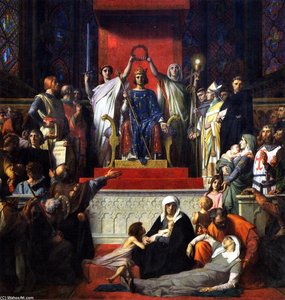
Cabanel stand durch seinen Lehrer François-Édouard Picot in Verbindung mit der klassischen Schule Jacques-Louis Davids. Seine frühen Bilder wie „Der Tod des Moses“ (1852) und „Der heilige Ludwig“ (1855) hielten sich noch durchaus an die strengen akademischen Regeln, zeigten aber schon innerhalb derselben Talent für Zeichnung und Komposition. Er näherte sich der modernen Empfindungsweise in dem Bild „Die Witwe des Kapellmeisters, die mit ihren Kindern den Klängen der Orgel lauscht“, das mit seinen rosigen Tönen an die Werke François Bouchers und anderer Meister des Rokoko erinnerte.Auszeichnungen und Anerkennung
Cabanels Arbeit wurde weithin anerkannt, und er erhielt mehrere Auszeichnungen, darunter:- Das Prix de Rome-Stipendium im Jahr 1845
- Die Grande Médaille d'Honneur bei den Salons von 1865, 1867 und 1878
Lehre und Vermächtnis
Cabanel wurde 1864 zum Professor an der École des Beaux-Arts ernannt, wo er bis zu seinem Tod unterrichtete. Seine Schüler waren zahlreiche erfolgreiche Künstler, was sein Erbe in der Kunstwelt sicherstellte. Er war seit 1887 assoziiertes Mitglied der Académie royale des Sciences, des Lettres et des Beaux-Arts de Belgique. Cabanels Malweise wurde im Laufe der Zeit weniger geschätzt, aber eine umfassende Sonderausstellung im Jahr 2011 zeigte seine Bedeutung neu.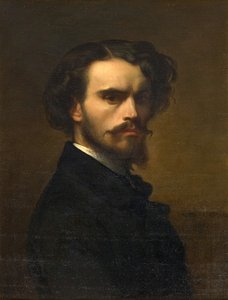
Alexandre Cabanel
1875 - 1889 , Frankreich
Kurzinfos
- Beeinflusste Künstler:
- François-Édouard Picot
- Jacques-Louis David
- Bemerkenswerte Werke:
- Ophelia (1883)
- Die Geburt der Venus (1863)
- Geburtsdatum: 28. September 1823
- Geburtsort: Montpellier, Frankreich
- Künstlerischer Stil: Akademische Kunst
- Nationalität: Französisch
- Sterbedatum: 23. Januar 1889
- Vollständiger Name: Alexandre Cabanel
Ähnliche Artikel

Leonardo da Vinci: Die 25 Meisterwerke für Ihr Zuhause | ArtsDot
Entdecken Sie die 25 Meisterwerke von Leonardo da Vinci! Erfahren Sie faszinierende Geschichten hinter Gemälden wie der Mona Lisa & Das letzte Abendmahl. Hochwertige Reproduktionen für Ihr Zuhause – jetzt bei ArtsDot entdecken!

Akademischer Realismus: Die 10 Meisterwerke, die eine Epoche prägten | ArtsDot
Entdecken Sie die 10 prägendsten Meisterwerke des Akademischen Realismus! Erfahren Sie die Geschichten hinter berühmten Gemälden, Künstlern & Techniken. Hochwertige Reproduktionen für Ihr Zuhause – jetzt auf ArtsDot.com!

Alexandre Cabanel: Sinnlichkeit, Tradition und der Salon – Akademischer Realismus im Glanz des Zweiten Kaiserreichs
Entdecken Sie Alexandre Cabanels sinnliche und detailreiche Werke des Akademischen Realismus! Analysieren Sie seine Meisterwerke, den Einfluss der Académie und die Kontroversen seiner Zeit. Ein tiefer Einblick in die Kunstgeschichte.

Leonardo da Vinci: Synthese von Kunst, Wissenschaft und menschlicher Beobachtung – Eine Renaissance-Meisterleistung für den Kenner
Entdecken Sie Leonardo da Vincis revolutionäre Kunst und Wissenschaft! Expertenanalyse seiner Meisterwerke, Techniken wie Sfumato & Chiaroscuro. Für Kenner und Sammler.

Romantic Realism's Finest: 10 Masterpieces for Your Home | ArtsDot
Explore 10 defining masterpieces of Romantic Realism! Discover Courbet, Millet & Daumier's powerful paintings—capturing emotion and social realities. Find museum-quality reproductions for your home at ArtsDot.com.