

 Vorschau anzeigen
 Versenden
 Teilen
 Details anzeigen

 Herunterladen
 Ähnliche Objekte
 Röntgenaufnahme
 Diashow
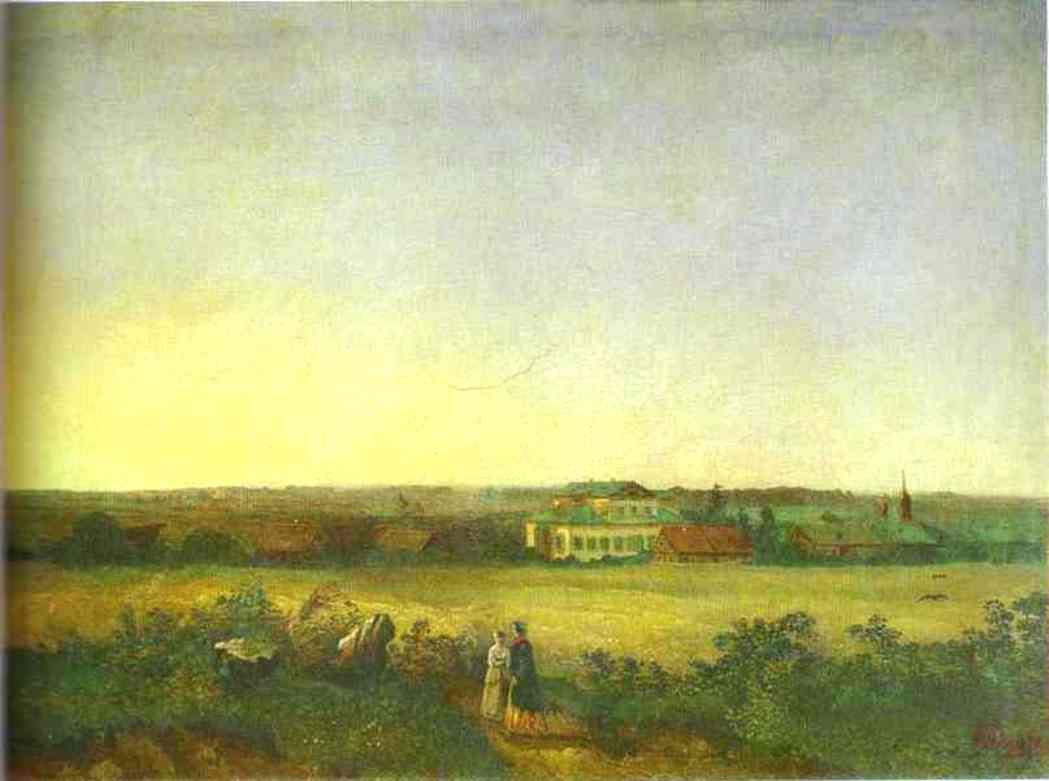
View in the Vicinity of Moscow with a Mansion and Two Female Figures


 Weiterlesen
Erwerben Sie ein hochauflösendes, optimiertes digitales Bild, das der Online-Vorschau weit überlegen ist.
Jede Datei wird von unseren hauseigenen Spezialisten mit modernsten Werkzeugen und fachmännischer manueller Retusche sorgfältig vorbereitet. Wir stellen sicher, dass jedes Bild eine außergewöhnliche Klarheit, präzise Farbgenauigkeit und feinste Details aufweist.
Die endgültige Datei wird innerhalb von 72 Stunden per E-Mail zugestellt und ist für den sofortigen Einsatz in professionellen, redaktionellen und Druckumgebungen optimiert. Es handelt sich um dieselbe Qualität, der führende Designstudios, Verlage und Galerien vertrauen.
Digitales Bild
Laden Sie eine hochauflösende Datei für die persönliche Präsentation, den Druck und kreative Projekte herunter. ( Druck bestellen Handgemalte Reproduktion bestellen)
In jeder Bestellung digitaler Bilder enthalten
Professionelle digitale Bereitstellung, garantiert
Wenn Sie sich für ArtsDot.com entscheiden, erhalten Sie nicht nur ein Bild – Sie erhalten ein professionell aufbereitetes digitales Kunstwerk, das mit höchster Präzision erstellt und durch eine Zufriedenheitsgarantie abgesichert wird. Hier ist alles, was automatisch mit Ihrer Bestellung geliefert wird:

Schnelle E-Mail-Zustellung
Ihre hochauflösende digitale Bilddatei wird Ihnen innerhalb von 72 Stunden nach der Bestellung per E-Mail zugestellt – bereit zur sofortigen Verwendung.

KI-optimierte digitale Datei
Ihre Kunstwerke werden professionell mithilfe fortschrittlicher KI-Tools und manueller Bearbeitung optimiert, um maximale Detailtreue, Klarheit und Farbgenauigkeit zu gewährleisten.

Lebenslanger kostenloser Neudruckservice
Datei versehentlich gelöscht oder verloren? Keine Sorge – wir senden sie Ihnen jederzeit kostenlos erneut zu.

Keine Einfuhrgebühren – jemals
Genießen Sie Ihr Kunstwerk sofort ohne Zollgebühren, Einfuhrabgaben oder Versandkosten – digitale Downloads sind immer steuerfrei.

Garantierte Farbtreue
Wir garantieren, dass Ihr digitales Bild mithilfe professioneller Werkzeuge und Farbmanagement die Originalfarben so präzise wie möglich wiedergibt.

60-Tage-Zufriedenheitsgarantie
Sollten Sie mit Ihrem digitalen Bild nicht zufrieden sein, werden wir es überarbeiten oder Ihnen innerhalb von 60 Tagen 100% erstatten – ohne Wenn und Aber.

100% Geld-zurück-Garantie
Nicht zufrieden? Erhalten Sie innerhalb von 60 Tagen nach Erhalt Ihrer digitalen Datei eine vollständige Rückerstattung – ohne Angabe von Gründen.

Rabatte bei Großbestellungen
3 Bilder kaufen, 10% sparen – 5 Bilder kaufen, 15% sparen – Ab 10 Bildern 20% sparen. Ideal für kreative Projekte, Galerien und Agenturen.
A Poetic Vision of Rural Russia
In the quietude of 1850, Alexei Kondratyevich Savrasov captured more than just a landscape; he captured the very soul of the Russian countryside. View in the Vicinity of Moscow with a Mansion and Two Female Figures serves as a breathtaking window into a bygone era, where the rhythm of life was dictated by the seasons and the gentle movement of nature. The painting presents a serene tableau of a village nestled within the vast expanse, where a grand mansion stands as a silent sentinel amidst the humble dwellings. In the foreground, two female figures are positioned with a quiet intimacy, their presence adding a layer of human narrative to the sprawling scenery. They appear caught in a moment of reflection or soft conversation, grounding the immense landscape with a sense of domestic peace and communal connection.
The composition is masterfully balanced, guiding the viewer's eye through a tapestry of rural life. Scattered throughout the verdant terrain are horses, some grazing near the foreground while others drift into the hazy distance, creating a profound sense of depth and movement. This interplay between the stationary architecture of the mansion and the wandering livestock evokes a feeling of eternal continuity. Savrasov, a pioneer of the lyrical landscape, utilizes these elements not merely as subjects, but as symbols of a harmonious existence between humanity and the earth. The atmosphere is thick with a nostalgic, picturesque charm that invites the observer to step into the frame and breathe in the tranquil air of the Moscow outskirts.
Mastery of Light and Lyrical Technique
Technically, this work exemplifies Savrasov’s ability to imbue ordinary scenery with extraordinary emotional resonance. His brushwork, characteristic of the mid-19th century Russian school, avoids harsh outlines in favor of soft, blended transitions that mimic the natural diffusion of light. The palette is a sophisticated arrangement of earthy tones, lush greens, and soft atmospheric blues, which work together to create a sense of warmth and vitality. Through his delicate application of paint, Savrasov achieves a luminous quality, making the sunlight appear as though it is filtering through a gentle mist, casting a dreamlike glow over the village and its inhabitants.
For the discerning collector or interior designer, this piece offers an unparalleled opportunity to introduce a sense of historical depth and tranquility into a living space. The painting’s ability to evoke nostalgia makes it a perfect centerpiece for rooms designed for contemplation, such as a study, a library, or a formal sitting room. As a high-quality reproduction, it retains the profound emotional impact of the original, providing an elegant focal point that speaks of heritage, peace, and the enduring beauty of the natural world. To possess such a work is to hold a fragment of Russian art history, bringing the timeless elegance of Savrasov’s lyrical vision into the modern home.
Ähnliche Kunstwerke
Biografie des Künstlers
Alexei Kondratyevich Savrasov: The Poet of Russian Landscape
Alexei Kondratyevich Savrasov (1830-1897) stands as a monumental figure in the history of Russian art, recognized primarily for establishing what is known as “lyrical landscape” – a genre that prioritized emotional resonance and atmospheric nuance over mere topographical accuracy. He wasn’t simply depicting scenery; he was conveying feeling, capturing the soul of Russia itself within canvases imbued with profound beauty and melancholy. Savrasov's artistic journey began in Moscow, where he was born into a merchant family—a formative experience that instilled in him an appreciation for observation and detail. Early artistic inclinations were nurtured by Professor Rabus at the Moscow School of Painting, Sculpture and Architecture (MSPSA), where he graduated in 1850 and immediately dedicated himself to mastering landscape painting – a field undergoing significant transformation during his time.- Early Influences: Savrasov’s formative years were marked by exposure to Romantic ideals prevalent at the time, notably influenced by artists like John Constable and Alexandre Calame who championed capturing atmospheric effects and conveying emotion through visual representation.
- Ukrainian Travels: In 1852, he embarked on a journey to Ukraine, absorbing its expansive steppes and honing his skills in portraying vast landscapes with sensitivity and precision.
- St Petersburg Engagement: Grand Duchess Maria Nikolayevna’s patronage brought him to St. Petersburg in 1854, placing him within the epicenter of Russia's artistic milieu and securing a prestigious teaching position at MSPSA—a role that profoundly shaped his artistic development and nurtured collaborations with future luminaries like Isaac Levitan and Konstantin Korovin.
The Birth of Lyrical Landscape
Savrasov’s artistic breakthrough arrived in the 1860s, coinciding with his travels across Europe – particularly England—where he encountered the groundbreaking work of Constable and Calame. These encounters spurred him to abandon overtly picturesque conventions and embrace a radically different aesthetic: “mood landscape.” Unlike academic art's focus on grand vistas and idealized forms, Savrasov sought to distill the essence of nature into its most poignant expressions. He deliberately avoided theatrical compositions or panoramic views, opting instead for scenes that captured subtle shifts in light and color—moments of quiet contemplation infused with emotion. This stylistic innovation resonated deeply within the burgeoning “Peredvizhniki” (Wanderers) movement – a collective dedicated to realist art imbued with social commentary – marking Savrasov as one of its founding fathers and propelling him to artistic prominence.- The Significance of Detail: Savrasov’s technique was characterized by meticulous observation and painstaking rendering—a hallmark of his approach to subjects like birch trees, frozen ponds, and winter landscapes.
- Collaboration with Vasily Perov: His friendship with Vasily Perov proved invaluable, fostering mutual inspiration and collaborative projects that solidified Savrasov's reputation as a master craftsman and visionary artist.
“The Rooks Have Returned”: A Masterpiece of Emotion
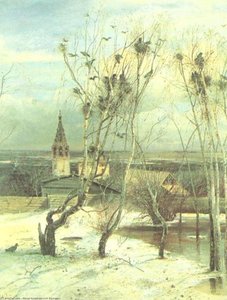
Among Savrasov’s oeuvre, *The Rooks Have Returned* (1871) stands as his undisputed masterpiece—a painting that encapsulates the very spirit of lyrical landscape and cemented his legacy as Russia's foremost exponent of this distinctive style. Far from merely depicting a picturesque scene, Savrasov sought to convey an emotional experience—the transformative beauty of spring’s arrival—expressed through deceptively simple elements: rooks returning to their nests amidst birch trees against the backdrop of thawing snow. Critics hailed it as the genesis of “mood landscape,” recognizing its ability to capture the intangible essence of nature and human emotion with unparalleled grace. The painting's enduring appeal lies in its profound psychological depth, reflecting Savrasov’s own artistic philosophy—a belief that true beauty resides not in grand spectacle but in quiet contemplation and subtle nuance.- Symbolism and Atmosphere: Savrasov skillfully employed symbolism—the returning rooks representing rebirth and renewal—to heighten the painting's emotional impact, creating an atmosphere of serene melancholy and anticipatory joy.
- Influence on Subsequent Artists: *The Rooks Have Returned* profoundly influenced generations of Russian artists who followed in Savrasov’s footsteps, establishing a tradition of lyrical realism that continues to inspire artistic creativity today.
A Tragic End and Lasting Legacy
Despite his artistic triumphs, Savrasov's personal life was marred by sorrow—the untimely death of his daughter in 1871 triggering a period of debilitating grief and exacerbating his struggles with alcoholism. This crisis profoundly impacted his artistic output, leading to a decline in productivity and marking the end of his creative fervor. Dismissed from MSPSA in 1882, he endured a bleak existence marked by poverty and isolation—a poignant reminder that even the most brilliant artist is susceptible to human vulnerability. Yet, Savrasov persevered in painting until his final days, producing evocative works that reflected his inner turmoil—a testament to his unwavering dedication to art despite adversity. His funeral in 1897 was attended by a select few loyal friends—including Pavel Tretyakov—who recognized and honored Savrasov’s enduring contribution to Russian artistic heritage. Alexei Kondratyevich Savrasov's legacy transcends mere stylistic innovation; he remains an emblem of Russia’s poetic spirit, forever enshrined in canvases that capture the sublime beauty of the natural world and the profound depths of human emotion.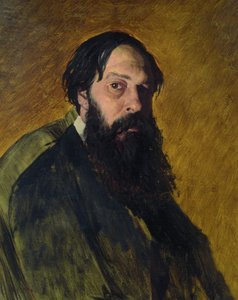
Alexei Kondratjewitsch Savrasow
1830 - 1897 , Russland
Kurzinfos
- Artistic Movement Or Style: Lyrischer Landschaftsstil
- Artists Or Movements Influenced By This Artist: ['Isaac Levitan']
- Artists Who Influenced This Artist:
- John Constable
- Alexandre Calame
- Date Of Birth: Mai 24, 1830
- Date Of Death: Oktober 8, 1897
- Full Name: Alexei Kondratyevich Savrasov
- Nationality: Russisch
- Notable Artworks:
- Die Raben sind zurück
- Ausblick auf den Kreml von der Krymsky Brücke
- Winter Nacht
- Place Of Birth: Moskau, Russland

