

 Vorschau anzeigen
 Versenden
 Teilen
 Details anzeigen

 Herunterladen
 Ähnliche Objekte
 Röntgenaufnahme
 Diashow
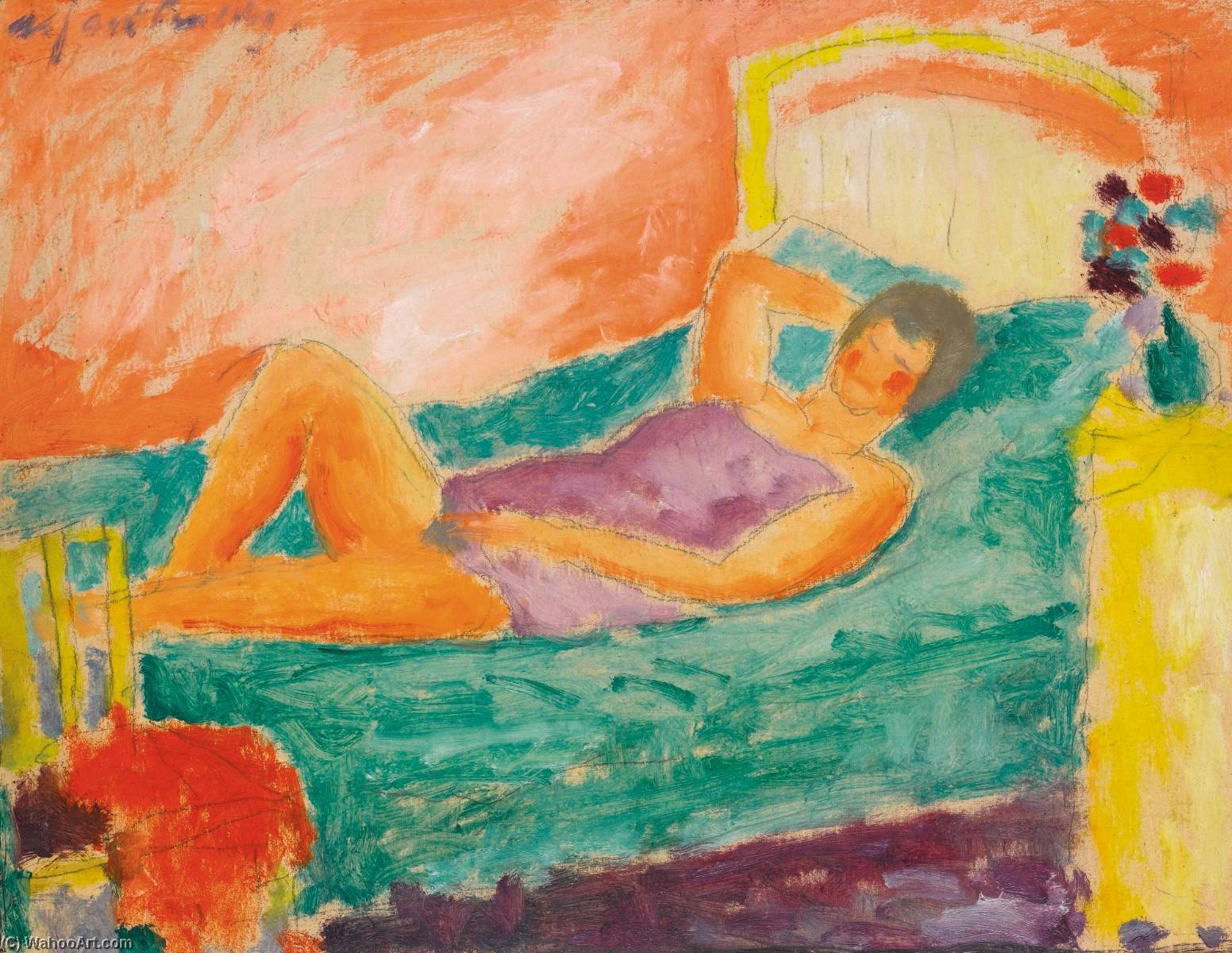
Akt in St. Prex (Nude in St. Prex)

 Weiterlesen
Erwerben Sie ein hochauflösendes, optimiertes digitales Bild, das der Online-Vorschau weit überlegen ist.
Jede Datei wird von unseren hauseigenen Spezialisten mit modernsten Werkzeugen und fachmännischer manueller Retusche sorgfältig vorbereitet. Wir stellen sicher, dass jedes Bild eine außergewöhnliche Klarheit, präzise Farbgenauigkeit und feinste Details aufweist.
Die endgültige Datei wird innerhalb von 72 Stunden per E-Mail zugestellt und ist für den sofortigen Einsatz in professionellen, redaktionellen und Druckumgebungen optimiert. Es handelt sich um dieselbe Qualität, der führende Designstudios, Verlage und Galerien vertrauen.
Digitales Bild
Laden Sie eine hochauflösende Datei für die persönliche Präsentation, den Druck und kreative Projekte herunter. ( Druck bestellen Handgemalte Reproduktion bestellen)
In jeder Bestellung digitaler Bilder enthalten
Professionelle digitale Bereitstellung, garantiert
Wenn Sie sich für ArtsDot.com entscheiden, erhalten Sie nicht nur ein Bild – Sie erhalten ein professionell aufbereitetes digitales Kunstwerk, das mit höchster Präzision erstellt und durch eine Zufriedenheitsgarantie abgesichert wird. Hier ist alles, was automatisch mit Ihrer Bestellung geliefert wird:

Schnelle E-Mail-Zustellung
Ihre hochauflösende digitale Bilddatei wird Ihnen innerhalb von 72 Stunden nach der Bestellung per E-Mail zugestellt – bereit zur sofortigen Verwendung.

KI-optimierte digitale Datei
Ihre Kunstwerke werden professionell mithilfe fortschrittlicher KI-Tools und manueller Bearbeitung optimiert, um maximale Detailtreue, Klarheit und Farbgenauigkeit zu gewährleisten.

Lebenslanger kostenloser Neudruckservice
Datei versehentlich gelöscht oder verloren? Keine Sorge – wir senden sie Ihnen jederzeit kostenlos erneut zu.

Keine Einfuhrgebühren – jemals
Genießen Sie Ihr Kunstwerk sofort ohne Zollgebühren, Einfuhrabgaben oder Versandkosten – digitale Downloads sind immer steuerfrei.

Garantierte Farbtreue
Wir garantieren, dass Ihr digitales Bild mithilfe professioneller Werkzeuge und Farbmanagement die Originalfarben so präzise wie möglich wiedergibt.

60-Tage-Zufriedenheitsgarantie
Sollten Sie mit Ihrem digitalen Bild nicht zufrieden sein, werden wir es überarbeiten oder Ihnen innerhalb von 60 Tagen 100% erstatten – ohne Wenn und Aber.

100% Geld-zurück-Garantie
Nicht zufrieden? Erhalten Sie innerhalb von 60 Tagen nach Erhalt Ihrer digitalen Datei eine vollständige Rückerstattung – ohne Angabe von Gründen.

Rabatte bei Großbestellungen
3 Bilder kaufen, 10% sparen – 5 Bilder kaufen, 15% sparen – Ab 10 Bildern 20% sparen. Ideal für kreative Projekte, Galerien und Agenturen.
A Symphony in Crimson and Gold: Exploring Rembrandt’s ‘The Return of Susanna and David’
Rembrandt van Rijswijk’s “The Return of Susanna and David,” painted around 1637-38, transcends mere depiction; it embodies the profound emotional core of biblical narrative interwoven with masterful artistic technique. This monumental canvas, housed in the Gemäldegalerie Alte Meister in Dresden, Germany, captures a pivotal moment from the Book of Judges – Susanna’s daring escape from David’s lustful pursuit and subsequent triumphant return to her husband’s embrace.
Style & Composition: Rembrandt's signature style—characterized by dramatic chiaroscuro—dominates the artwork. The artist skillfully employs light and shadow to sculpt figures, creating a palpable sense of depth and realism that was revolutionary for its time. The composition is deliberately asymmetrical, drawing the viewer’s eye across the canvas with an energetic diagonal line tracing Susanna's movement as she flees David’s gaze. Despite the turbulent scene depicted, Rembrandt achieves remarkable serenity through careful positioning and subtle gestures.
Technique: Rembrandt utilized a technique known as impasto—thickly applied paint—primarily on Susanna’s drapery and David’s torso. This textural approach wasn't merely decorative; it conveyed the physicality of the figures, emphasizing their vulnerability and strength simultaneously. The artist meticulously blended oil paints with turpentine to achieve luminous colors and subtle gradations, capturing the ethereal quality of light filtering through the room.
Historical Context: Painted during Rembrandt’s Golden Age—a period marked by artistic flourishing in Amsterdam—the painting reflects the broader intellectual currents of its time. Baroque art sought to evoke emotion and grandeur, mirroring the religious fervor prevalent in Europe. Rembrandt's depiction aligns with humanist ideals that championed human dignity and moral fortitude, portraying Susanna as a courageous heroine who defies societal pressures.
Symbolism: The painting is rich in symbolic imagery. Susanna’s scarlet robe symbolizes purity and innocence, while David’s gaze represents desire and temptation. The biblical narrative itself speaks to themes of righteousness versus wickedness, courage versus fearlessness, and ultimately, triumph over adversity. Rembrandt subtly incorporates these symbols into the artwork's visual language, enriching its meaning beyond a simple retelling of the story.
Emotional Impact: “The Return of Susanna and David” resonates deeply with viewers due to its masterful portrayal of human emotion. Rembrandt captures the palpable tension between Susanna’s apprehension and David’s unwavering gaze, conveying the psychological drama inherent in the situation. The painting's luminous colors and dramatic chiaroscuro evoke a sense of awe and wonder, inviting contemplation on themes of faith, morality, and resilience—a testament to Rembrandt’s enduring legacy as one of history’s greatest artists.
Exploring Rembrandt’s Mastery: Light and Shadow – A Detailed Examination
Rembrandt's unparalleled ability to manipulate light and shadow—known as chiaroscuro—is arguably the defining characteristic of “The Return of Susanna and David.” He doesn’t merely illuminate his subjects; he sculpts them with light, creating an illusion of three-dimensionality that transcends conventional painting techniques. Observe how Rembrandt directs beams of light across Susanna's drapery, highlighting its folds and contours, while simultaneously plunging David’s torso into darkness.
This dramatic interplay of light and shadow isn’t simply stylistic ornamentation; it serves a crucial narrative purpose. The darkness symbolizes David’s obsession and the threat he poses to Susanna’s safety, whereas the light represents divine grace and Susanna's eventual deliverance. Rembrandt achieves this effect through meticulous layering of glazes—thin coats of translucent paint—allowing him to subtly modulate the intensity of color and luminosity.
The Texture of Emotion: Impasto Technique and Its Significance
Rembrandt’s impasto technique – applying thick layers of paint onto the canvas – is particularly evident in Susanna's gown. The textured surface captures the physicality of fabric, conveying a sense of movement and dynamism that contributes to the painting’s overall emotional impact. This deliberate roughness wasn’t intended as mere accident; it was a conscious decision by Rembrandt to heighten the visual experience for the viewer.
Furthermore, impasto enhances the expressive qualities of the artwork. The ridges and peaks of paint create a palpable sense of depth and texture, mirroring the turbulent emotions depicted in the scene. It’s as if Rembrandt himself wanted to imbue the canvas with the very essence of human experience—a bold departure from smoother, more polished styles prevalent during the Baroque period.
A Window into Biblical Narrative: Rembrandt's Interpretation
"The Return of Susanna and David" isn’t merely a reproduction of biblical scripture; it’s Rembrandt’s profound interpretation of its themes. He captures the psychological complexities of the narrative, portraying Susanna as a woman grappling with fear and vulnerability while simultaneously asserting her moral integrity. Rembrandt skillfully conveys the drama of the moment—the desperate flight from danger, the unwavering gaze of desire—transforming a familiar tale into an unforgettable visual experience.
Through his masterful use of light, shadow, and texture, Rembrandt elevates “The Return of Susanna and David” beyond mere storytelling; it becomes a timeless meditation on human resilience and the triumph of virtue over temptation—a masterpiece that continues to inspire awe and admiration centuries after its creation.
Ähnliche Kunstwerke


Biografie des Künstlers
Frühe Jahre und Ausbildung
Alexej von Jawlensky, ein bedeutender russischer Expressionist, wurde am 13. März (altem Stil) / 25. März (neuem Stil) 1864 in Torzhok, Russland, geboren. Als fünftes Kind von Georgi von Jawlensky und seiner Frau Alexandra (geborene Medwedewa) erlebte Alexej eine Kindheit geprägt von häufigen Umzügen, bevor die Familie schließlich im Alter von zehn Jahren nach Moskau zog. Seine genaue Geburtsdatum ist umstritten, wobei verschiedene Quellen unterschiedliche Jahreszahlen angeben, aber Recherchen deuten stark auf 1865 hin.Künstlerische Entwicklung und Einflüsse
Nach dem Abschluss seines Militärdienstes entwickelte Alexej eine Leidenschaft für die Malerei und besuchte 1880 die Moskauer Weltausstellung. Dank seiner gesellschaftlichen Verbindungen erhielt er eine Versetzung nach St. Petersburg, wo er von 1889 bis 1896 an der Kunstakademie studierte, während er weiterhin seinen Militärdienst verrichtete. In dieser Zeit lernte er Marianne von Werefkin kennen, eine wohlhabende Künstlerin, die seine Arbeit förderte und ihm ein komfortables Leben ermöglichte. 1894 zog er nach München und studierte unter Anton Ažbe. Seine Kunst wurde stark von Ferdinand Hodler, Jan Verkade und Paul Serusier beeinflusst, was zu einer Entwicklung hin zum Expressionismus führte.Wichtige Werke und Stilentwicklung
- Jawlenskys frühe Arbeiten zeichneten sich durch üppige, reiche Farben aus, die später in eine Abstraktion und einen vereinfachten, formalisierten Stil übergingen.
- Zu seinen bemerkenswertesten Werken zählen:
- Schokko mit rotem Hut (1909)
- Porträt von Alexander Sakharoff (1909)
- Violettes Turban (1911)
Bedeutung und Vermächtnis
Alexej von Jawlensky gilt als eine Schlüsselfigur des Expressionismus, insbesondere im Zusammenhang mit der Künstlergruppe Der Blaue Reiter. Seine Werke zeichnen sich durch die Verwendung kräftiger Farben und vereinfachter Formen aus, um Emotionen auszudrücken. Nach seiner Vertreibung aus Deutschland im Jahr 1914 zog er in die Schweiz, wo er Emmy Scheyer kennenlernte, die seine Arbeit in den Vereinigten Staaten förderte. Jawlensky starb am 15. März 1941 in Wiesbaden, Deutschland. Seine Werke sind heute in bedeutenden Museen auf der ganzen Welt zu sehen, darunter das Museum Ostwall in Dortmund und die Städtische Galerie im Lenbachhaus in München. Sein Einfluss auf die Entwicklung des abstrakten Expressionismus ist unbestreitbar.Spätere Jahre und Tod
Nach seiner Vertreibung aus Deutschland im Jahr 1914 zog Alexej in die Schweiz, wo er Emmy Scheyer kennenlernte, die seine Arbeit in den Vereinigten Staaten förderte. Alexej von Jawlensky verstarb am 15. März 1941 in Wiesbaden, Deutschland.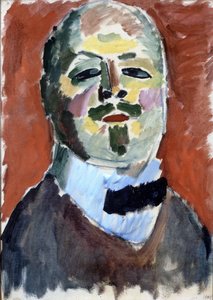
Alexej von Jawlensky
1864 - 1941 , Russland
Kurzinfos
- Bekannte Werke:
- Schokko mit rotem Hut
- Porträt von Alexander Sakharoff
- Violette Turban
- Einflüsse:
- Anton Ažbe
- Ferdinand Hodler
- Jan Verkade
- Paul Sérusier
- Geburtsdatum: 25. März 1865
- Geburtsort: Torzhok, Russland
- Künstlerische Bewegung: Expressionismus
- Nationalität: Russisch-Deutsch
- Todatum: 15. März 1941
- Vollständiger Name: Alexej Georgewitsch von Jawlensky

