 Vorschau anzeigen
 Versenden
 Teilen
 Details anzeigen

 Herunterladen
 Ähnliche Objekte
 Röntgenaufnahme
 Diashow
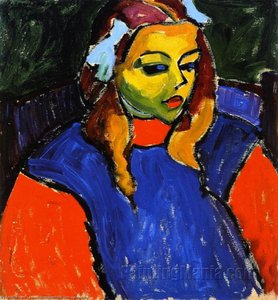
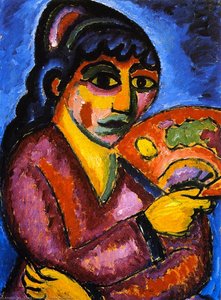
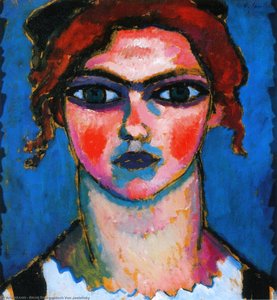
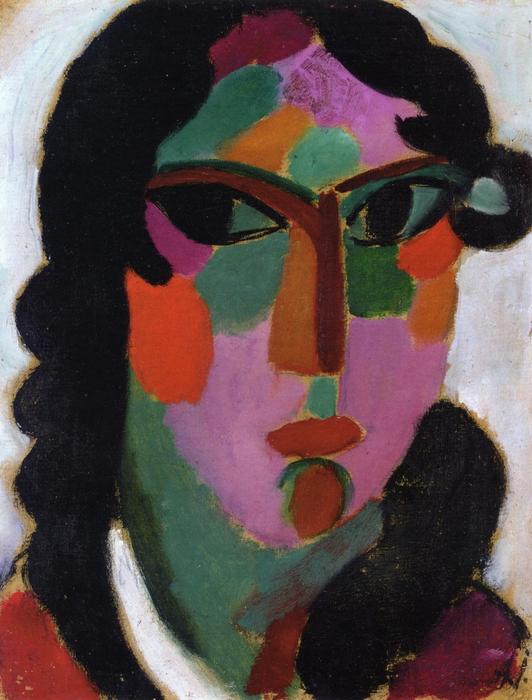
Head of a Girl
 Oil On Panel
- Expressionism
 1916
1916- 19th Century
 40.0 x 31.0 cm
 Weiterlesen
Giclée / Kunstdruck
Giclée- oder Leinwanddruck in Museumsqualität mit schneller Produktion und flexiblen Veredelungsoptionen. ( Handgemalte Reproduktion bestellen Bild kaufen)




P118B $10

P118H $10

P118W $10

P438Z $10

P508JH $12

P508YH $12

P805H $10

P805Z $10

P919BZ $10

P919G $10

P919XJ $10

P959ZH $10

P968JZ $12

W106C $8

W218G $10

W218JH $8

W218Y $10

W307PJ $10

W316G $10

W316PJ $8

W316Y $10

W398PJ $8

W4111J $10

W500HY $15

W500JH $15

W692G $12

W849H $8

W940BG $15

W953PJ $8




Wählen Sie aus unseren vordefinierten Formaten, die den ursprünglichen Proportionen des Kunstwerks entsprechen.

Sie können Ihre eigenen Maße eingeben, um ein bestimmtes Format oder einen speziellen Platz einzupassen. Wenn das von Ihnen gewählte Format nicht den Proportionen des Originalbildes entspricht, werden wir das Kunstwerk entweder beschneiden oder das Bild mit einem gespiegelten oder einfarbigen Rand erweitern. Ein digitaler Entwurf wird Ihnen zur Genehmigung zugesandt, bevor die Produktion beginnt.
Bitte beachten Sie, dass die Vorschau auf dem Bildschirm nicht den tatsächlichen Zuschnitt oder die Erweiterung widerspiegelt. Nur der Entwurf zeigt die endgültige Komposition präzise an.
Obwohl Sondermaße verfügbar sind, empfehlen wir die Auswahl eines Maßes aus der vordefinierten Liste, um die ursprünglichen Proportionen zu bewahren.
Weltweiter Versand () innerhalb von 2 Wochen statt der üblichen 4/5 Wochen. (28 August)

Kostenloser weltweiter Expressversand

Hochwertige Leinenleinwand

Umfassender Versicherungsschutz beim Versand

Zollgebühren-Rückerstattungsgarantie

Garantie für exakte Farbtreue

60 Tage Rückgaberecht (nur bei Mängeln)

100% Geld-zurück-Garantie

Mengenrabatt verfügbar
 Die Glasoption ist nur für Größen unter 110 cm verfügbar.

Head of a Girl
Giclée / Kunstdruck
Format der Reproduktion
-


Gesamtpreis
$ 62
Alexej von Jawlensky’s ‘Head of a Girl’: A Portrait of Intense Emotion
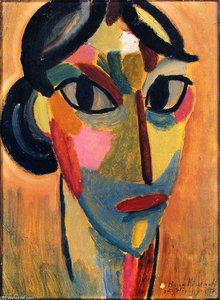
Alexej von Jawlensky's “Head of a Girl,” painted in 1916, is not merely a depiction of a young woman; it’s a raw and profoundly moving exploration of the human spirit. Measuring just 40 x 31 cm on panel, this intimate work exemplifies the artist’s signature Expressionist style – a deliberate rejection of academic realism in favor of conveying intense emotion and subjective experience. The painting immediately commands attention with its bold, almost violent brushstrokes and vibrant, unmodulated colors. These aren't gentle hues; they are saturated reds, deep blues, and earthy browns, applied with an urgency that speaks to the artist’s inner turmoil.
The subject herself is presented with a startling directness. The girl, identified by some scholars as Emmy Scheyer, whom Jawlensky affectionately called “Galka,” stares directly at the viewer with an unnervingly intense gaze. Her dark hair is rendered in thick, choppy strokes, and her glasses add to the impression of intellectual scrutiny and perhaps, vulnerability. Jawlensky’s technique avoids softening or idealizing her features; instead, he captures a moment of profound contemplation, hinting at a complex inner life. The lack of background further intensifies this focus, forcing the viewer into an immediate and unsettling connection with the subject's gaze.
The Expressionist Roots & Munich Circle
To fully appreciate “Head of a Girl,” it’s crucial to understand Jawlensky’s artistic context. Born in 1864 in Torzhok, Russia, he arrived in Germany at a pivotal moment in art history – the rise of Expressionism. Initially drawn to military life, his encounter with the vibrant world of the 1880 Moscow World Exposition ignited a lifelong passion for painting. He became a key member of the New Munich Artist’s Association (Neue Künstlervereinigung München), alongside figures like Wassily Kandinsky and Franz Marc, forming part of the influential “Blue Rider” group – Der Blaue Reiter – known for their exploration of spirituality and emotional intensity through color and form. This association exposed him to innovative ideas about abstraction and non-objective art, profoundly shaping his artistic vocabulary.
Jawlensky’s time within these circles was marked by a constant dialogue with other artists, pushing the boundaries of traditional representation. His work evolved from more representational forms to increasingly expressive ones, reflecting the anxieties and uncertainties of the early 20th century. The influence of figures like Vincent van Gogh, whom he admired for his emotional honesty, is palpable in Jawlensky’s use of color and brushwork.
Symbolism & Emotional Resonance
Beyond its stylistic qualities, “Head of a Girl” resonates with powerful symbolic undertones. The intense gaze can be interpreted as a reflection of the artist's own struggles with faith, doubt, and the search for meaning in a rapidly changing world. The painting’s raw emotional intensity aligns with the Expressionist movement’s core belief that art should not simply depict reality but rather convey subjective experience. Some scholars suggest that the girl represents a symbol of innocence threatened by the encroaching forces of modernity – a theme frequently explored by Jawlensky in his later works.
The painting's small scale further enhances its impact, creating an intimate and almost claustrophobic atmosphere. It’s a portrait designed to provoke contemplation, inviting the viewer to confront their own emotions and perceptions. “Head of a Girl” is not a comfortable image; it’s a challenging one – a testament to Jawlensky's unwavering commitment to expressing the deepest truths of the human condition.
A Masterpiece Reproduced
ArtsDot offers meticulously hand-painted reproductions of Alexej von Jawlensky’s “Head of a Girl,” capturing the essence of this iconic work. Our skilled artisans employ traditional oil painting techniques, faithfully recreating the artist's bold brushstrokes and vibrant color palette. We offer a range of sizes and canvas finishes to suit your individual taste and décor – from luxurious fine art papers to textured canvases that truly replicate the original’s tactile quality. Bring this powerful portrait into your home or office and experience the enduring legacy of one of Expressionism's most compelling figures.
Ähnliche Kunstwerke
Über den Künstler
Frühe Jahre und Ausbildung
Alexej von Jawlensky, ein bedeutender russischer Expressionist, wurde am 13. März (altem Stil) / 25. März (neuem Stil) 1864 in Torzhok, Russland, geboren. Als fünftes Kind von Georgi von Jawlensky und seiner Frau Alexandra (geborene Medwedewa) erlebte Alexej eine Kindheit geprägt von häufigen Umzügen, bevor die Familie schließlich im Alter von zehn Jahren nach Moskau zog. Seine genaue Geburtsdatum ist umstritten, wobei verschiedene Quellen unterschiedliche Jahreszahlen angeben, aber Recherchen deuten stark auf 1865 hin.Künstlerische Entwicklung und Einflüsse
Nach dem Abschluss seines Militärdienstes entwickelte Alexej eine Leidenschaft für die Malerei und besuchte 1880 die Moskauer Weltausstellung. Dank seiner gesellschaftlichen Verbindungen erhielt er eine Versetzung nach St. Petersburg, wo er von 1889 bis 1896 an der Kunstakademie studierte, während er weiterhin seinen Militärdienst verrichtete. In dieser Zeit lernte er Marianne von Werefkin kennen, eine wohlhabende Künstlerin, die seine Arbeit förderte und ihm ein komfortables Leben ermöglichte. 1894 zog er nach München und studierte unter Anton Ažbe. Seine Kunst wurde stark von Ferdinand Hodler, Jan Verkade und Paul Serusier beeinflusst, was zu einer Entwicklung hin zum Expressionismus führte.Wichtige Werke und Stilentwicklung
- Jawlenskys frühe Arbeiten zeichneten sich durch üppige, reiche Farben aus, die später in eine Abstraktion und einen vereinfachten, formalisierten Stil übergingen.
- Zu seinen bemerkenswertesten Werken zählen:
- Schokko mit rotem Hut (1909)
- Porträt von Alexander Sakharoff (1909)
- Violettes Turban (1911)
Bedeutung und Vermächtnis
Alexej von Jawlensky gilt als eine Schlüsselfigur des Expressionismus, insbesondere im Zusammenhang mit der Künstlergruppe Der Blaue Reiter. Seine Werke zeichnen sich durch die Verwendung kräftiger Farben und vereinfachter Formen aus, um Emotionen auszudrücken. Nach seiner Vertreibung aus Deutschland im Jahr 1914 zog er in die Schweiz, wo er Emmy Scheyer kennenlernte, die seine Arbeit in den Vereinigten Staaten förderte. Jawlensky starb am 15. März 1941 in Wiesbaden, Deutschland. Seine Werke sind heute in bedeutenden Museen auf der ganzen Welt zu sehen, darunter das Museum Ostwall in Dortmund und die Städtische Galerie im Lenbachhaus in München. Sein Einfluss auf die Entwicklung des abstrakten Expressionismus ist unbestreitbar.Spätere Jahre und Tod
Nach seiner Vertreibung aus Deutschland im Jahr 1914 zog Alexej in die Schweiz, wo er Emmy Scheyer kennenlernte, die seine Arbeit in den Vereinigten Staaten förderte. Alexej von Jawlensky verstarb am 15. März 1941 in Wiesbaden, Deutschland.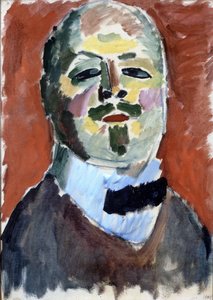
Alexej von Jawlensky
1864 - 1941 , Russland
Kurzinfos
- Bekannte Werke:
- Schokko mit rotem Hut
- Porträt von Alexander Sakharoff
- Violette Turban
- Einflüsse:
- Anton Ažbe
- Ferdinand Hodler
- Jan Verkade
- Paul Sérusier
- Geburtsdatum: 25. März 1865
- Geburtsort: Torzhok, Russland
- Künstlerische Bewegung: Expressionismus
- Nationalität: Russisch-Deutsch
- Todatum: 15. März 1941
- Vollständiger Name: Alexej Georgewitsch von Jawlensky