 Vorschau anzeigen
 Versenden
 Teilen
 Details anzeigen

 Herunterladen
 Ähnliche Objekte
 Röntgenaufnahme
 Diashow
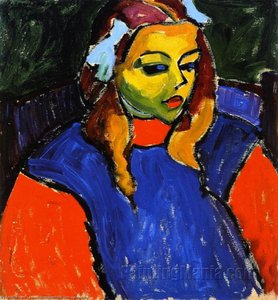
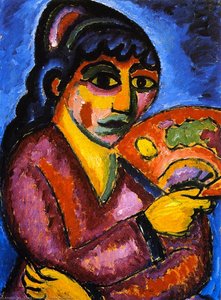
Head of a Girl


 Weiterlesen
Handgefertigte Ölreproduktion
Handgemaltes Ölgemälde auf Leinwand in Ihrer Wunschgröße und mit Rahmen, auf Bestellung von unseren Künstlern angefertigt. ( Druck bestellen Bild kaufen)




P118B $10

P118H $10

P118W $10

P438Z $10

P508JH $12

P508YH $12

P805H $10

P805Z $10

P919BZ $10

P919G $10

P919XJ $10

P959ZH $10

P968JZ $12

W106C $8

W218G $10

W218JH $8

W218Y $10

W307PJ $10

W316G $10

W316PJ $8

W316Y $10

W398PJ $8

W4111J $10

W500HY $15

W500JH $15

W692G $12

W849H $8

W940BG $15

W953PJ $8




Wählen Sie aus unseren vordefinierten Formaten, die den ursprünglichen Proportionen des Kunstwerks entsprechen.

Sie können Ihre eigenen Maße eingeben, um einen bestimmten Rahmen oder Platz auszufüllen. Wenn die gewählte Größe nicht den Proportionen des Originalbildes entspricht, werden wir das Kunstwerk entweder beschneiden oder das Gemälde durch zusätzliche, handgemalte Elemente erweitern. Ein digitales Mockup wird Ihnen zur Genehmigung zugesandt, bevor die Produktion beginnt.
Bitte beachten Sie, dass die Bildschirmvorschau nicht die tatsächliche Beschneidung oder Erweiterung widerspiegelt. Nur das Mockup zeigt die endgültige Komposition exakt an.
Obwohl Sondermaße verfügbar sind, empfehlen wir, eine Größe aus der vordefinierten Liste zu wählen, um die ursprünglichen Proportionen beizubehalten.
Nach der Bestellung wird das ArtsDot.com-Team dem Kunden Anweisungen per E-Mail zusenden und eine Mockup-Vorschau bereitstellen.
Weltweiter Versand () in nur 3 bis 4 Wochen statt der üblichen 5 Wochen. (28 August). Keine Kompromisse bei der Qualität.

Kostenloser weltweiter Expressversand

Hochwertige Leinenleinwand

Umfassender Versicherungsschutz beim Versand

Zollgebühren-Rückerstattungsgarantie

Garantie für exakte Farbtreue

60 Tage Rückgaberecht (nur bei Mängeln)

100% Geld-zurück-Garantie

Mengenrabatt verfügbar
 Die Glasoption ist nur für Größen unter 110 cm verfügbar.

Head of a Girl
Art der Reproduktion
Format der Reproduktion
-


Gesamtpreis
$ 263
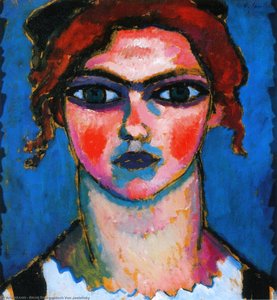
A Portrait Steeped in Emotion: Exploring Alexej von Jawlensky’s “Head of a Girl”
The early 20th century witnessed an artistic upheaval unlike any seen before, fueled by anxieties surrounding societal change and propelled forward by a desire to transcend mere representation. Within this turbulent landscape emerged Expressionism—a movement defined not by objective observation but by the fervent conveyance of inner feeling. At its forefront stood Alexej Georgewitsch von Jawlensky (1864-1941), a Russian artist whose unwavering commitment to emotional truth resulted in works that continue to resonate with audiences today, notably “Head of a Girl,” painted in 1912. This captivating portrait transcends the conventions of its time, offering a glimpse into the psychological complexities inherent within artistic endeavor itself.The Expressionist Vision: Beyond Surface Appearance
Jawlensky’s stylistic approach was deliberately antithetical to Impressionism and Realism—movements preoccupied with capturing fleeting moments of light and faithfully depicting external reality. Instead, he embraced distortion and simplification as tools for accessing the subconscious mind. “Head of a Girl” exemplifies this ethos perfectly; the woman's face is rendered in bold, angular planes against a serene blue backdrop, creating an arresting visual paradox. The artist eschewed meticulous detail, prioritizing expressive color—primarily crimson red—to imbue the painting with palpable energy and conveying a profound sense of melancholy. This deliberate departure from realism wasn’t merely stylistic choice; it represented a fundamental philosophical stance rooted in the conviction that art should illuminate the hidden depths of human experience.Historical Context: A Moment of Artistic Uncertainty
Painted during the crucible of World War I, “Head of a Girl” reflects the pervasive atmosphere of anxiety and disillusionment characterizing European culture at the time. The Expressionist movement arose as a reaction to the perceived failures of bourgeois optimism—a response born from confronting the horrors of mechanized warfare and grappling with existential questions concerning faith and morality. Jawlensky himself was deeply affected by the conflict, experiencing personal loss and witnessing firsthand the devastation wrought upon his homeland. This experience undoubtedly informed his artistic sensibilities, shaping his preoccupation with themes of solitude, grief, and spiritual yearning—elements subtly communicated through the painting’s muted palette and stylized composition.Symbolism Within Color: The Crimson Heartbeat
The dominant hue—the vibrant red of the woman's hat—holds considerable symbolic significance within Expressionist iconography. Traditionally associated with passion, vitality, and sacrifice, red transcends its literal representation to embody a deeper emotional resonance. However, in “Head of a Girl,” it’s juxtaposed against the calming blue of the background, creating a tension that underscores the painting’s melancholic mood. This deliberate contrast speaks to the inherent contradictions within human emotion—the simultaneous presence of joy and sorrow, hope and despair—themes explored with remarkable sensitivity by Jawlensky. The color red isn't merely decorative; it functions as a conduit for conveying profound psychological states.Emotional Impact: A Window into Inner Consciousness
Ultimately, “Head of a Girl” succeeds in capturing the elusive essence of human consciousness—a feat achieved through masterful technique and unwavering artistic conviction. Jawlensky’s deliberate simplification of form—reducing the woman's face to geometric planes—facilitates an immediate connection with the viewer, bypassing intellectual analysis and tapping into primal emotional responses. The painting compels contemplation, inviting us to confront our own vulnerabilities and acknowledging the universality of human experience. It stands as a testament to the transformative power of art—its ability to transcend time and circumstance, communicating enduring truths about the human condition. Viewing this remarkable piece offers not merely aesthetic pleasure but an opportunity for profound introspection—a reminder that true beauty resides in embracing both joy and sorrow, confronting darkness with unwavering courage, and honoring the complexities inherent within our inner selves.Ähnliche Kunstwerke

Über den Künstler
Frühe Jahre und Ausbildung
Alexej von Jawlensky, ein bedeutender russischer Expressionist, wurde am 13. März (altem Stil) / 25. März (neuem Stil) 1864 in Torzhok, Russland, geboren. Als fünftes Kind von Georgi von Jawlensky und seiner Frau Alexandra (geborene Medwedewa) erlebte Alexej eine Kindheit geprägt von häufigen Umzügen, bevor die Familie schließlich im Alter von zehn Jahren nach Moskau zog. Seine genaue Geburtsdatum ist umstritten, wobei verschiedene Quellen unterschiedliche Jahreszahlen angeben, aber Recherchen deuten stark auf 1865 hin.Künstlerische Entwicklung und Einflüsse
Nach dem Abschluss seines Militärdienstes entwickelte Alexej eine Leidenschaft für die Malerei und besuchte 1880 die Moskauer Weltausstellung. Dank seiner gesellschaftlichen Verbindungen erhielt er eine Versetzung nach St. Petersburg, wo er von 1889 bis 1896 an der Kunstakademie studierte, während er weiterhin seinen Militärdienst verrichtete. In dieser Zeit lernte er Marianne von Werefkin kennen, eine wohlhabende Künstlerin, die seine Arbeit förderte und ihm ein komfortables Leben ermöglichte. 1894 zog er nach München und studierte unter Anton Ažbe. Seine Kunst wurde stark von Ferdinand Hodler, Jan Verkade und Paul Serusier beeinflusst, was zu einer Entwicklung hin zum Expressionismus führte.Wichtige Werke und Stilentwicklung
- Jawlenskys frühe Arbeiten zeichneten sich durch üppige, reiche Farben aus, die später in eine Abstraktion und einen vereinfachten, formalisierten Stil übergingen.
- Zu seinen bemerkenswertesten Werken zählen:
- Schokko mit rotem Hut (1909)
- Porträt von Alexander Sakharoff (1909)
- Violettes Turban (1911)
Bedeutung und Vermächtnis
Alexej von Jawlensky gilt als eine Schlüsselfigur des Expressionismus, insbesondere im Zusammenhang mit der Künstlergruppe Der Blaue Reiter. Seine Werke zeichnen sich durch die Verwendung kräftiger Farben und vereinfachter Formen aus, um Emotionen auszudrücken. Nach seiner Vertreibung aus Deutschland im Jahr 1914 zog er in die Schweiz, wo er Emmy Scheyer kennenlernte, die seine Arbeit in den Vereinigten Staaten förderte. Jawlensky starb am 15. März 1941 in Wiesbaden, Deutschland. Seine Werke sind heute in bedeutenden Museen auf der ganzen Welt zu sehen, darunter das Museum Ostwall in Dortmund und die Städtische Galerie im Lenbachhaus in München. Sein Einfluss auf die Entwicklung des abstrakten Expressionismus ist unbestreitbar.Spätere Jahre und Tod
Nach seiner Vertreibung aus Deutschland im Jahr 1914 zog Alexej in die Schweiz, wo er Emmy Scheyer kennenlernte, die seine Arbeit in den Vereinigten Staaten förderte. Alexej von Jawlensky verstarb am 15. März 1941 in Wiesbaden, Deutschland.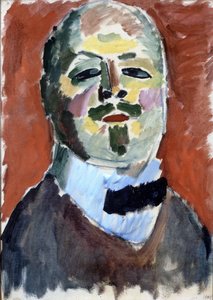
Alexej von Jawlensky
1864 - 1941 , Russland
Kurzinfos
- Bekannte Werke:
- Schokko mit rotem Hut
- Porträt von Alexander Sakharoff
- Violette Turban
- Einflüsse:
- Anton Ažbe
- Ferdinand Hodler
- Jan Verkade
- Paul Sérusier
- Geburtsdatum: 25. März 1865
- Geburtsort: Torzhok, Russland
- Künstlerische Bewegung: Expressionismus
- Nationalität: Russisch-Deutsch
- Todatum: 15. März 1941
- Vollständiger Name: Alexej Georgewitsch von Jawlensky