

 Vorschau anzeigen
 Versenden
 Teilen
 Details anzeigen

 Herunterladen
 Ähnliche Objekte
 Röntgenaufnahme
 Diashow
 Statistiken
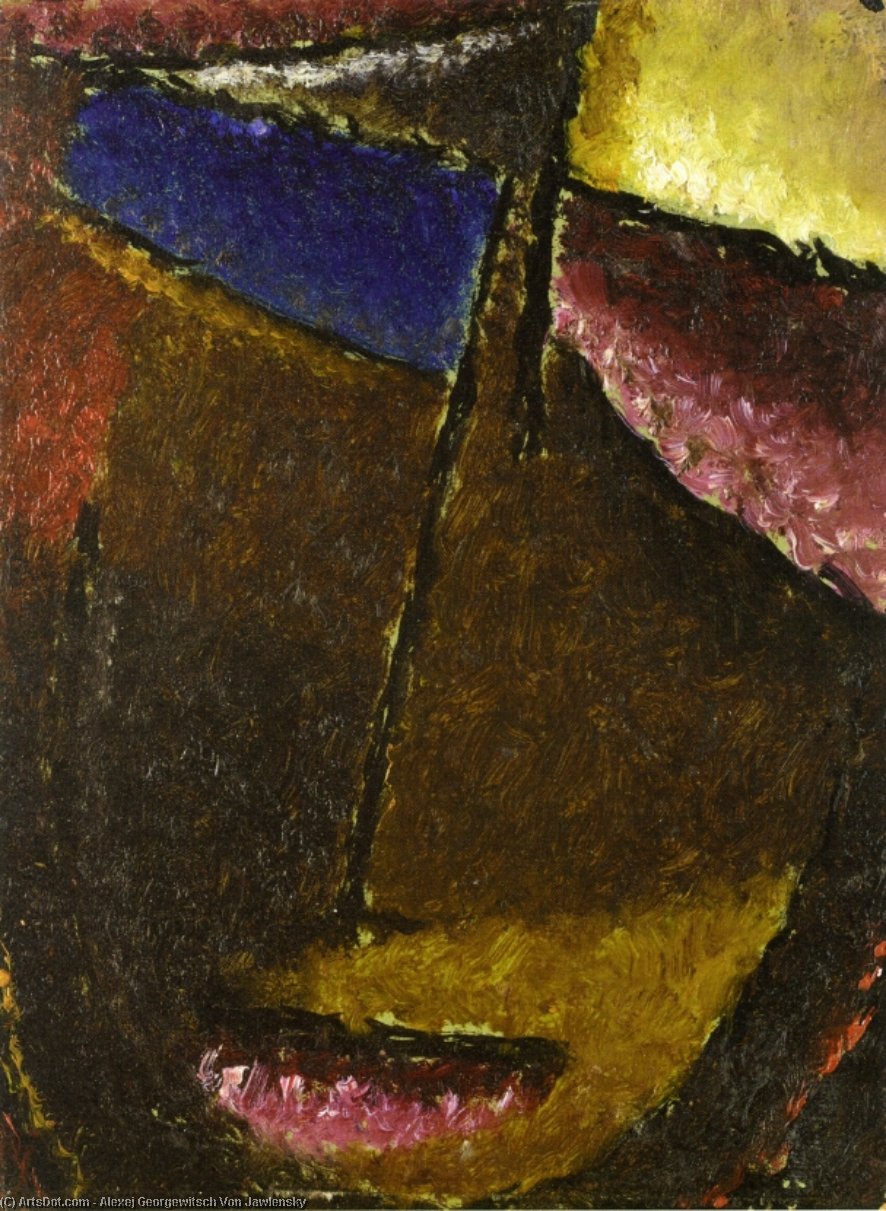
Small Abstract Head


 Weiterlesen
Erwerben Sie ein hochauflösendes, optimiertes digitales Bild, das der Online-Vorschau weit überlegen ist.
Jede Datei wird von unseren hauseigenen Spezialisten mit modernsten Werkzeugen und fachmännischer manueller Retusche sorgfältig vorbereitet. Wir stellen sicher, dass jedes Bild eine außergewöhnliche Klarheit, präzise Farbgenauigkeit und feinste Details aufweist.
Die endgültige Datei wird innerhalb von 72 Stunden per E-Mail zugestellt und ist für den sofortigen Einsatz in professionellen, redaktionellen und Druckumgebungen optimiert. Es handelt sich um dieselbe Qualität, der führende Designstudios, Verlage und Galerien vertrauen.
Digitales Bild
Laden Sie eine hochauflösende Datei für die persönliche Präsentation, den Druck und kreative Projekte herunter. ( Zu Druck wechseln Handgemalte Reproduktion bestellen)
In jeder Bestellung digitaler Bilder enthalten
Professionelle digitale Bereitstellung, garantiert
Wenn Sie sich für ArtsDot.com entscheiden, erhalten Sie nicht nur ein Bild – Sie erhalten ein professionell aufbereitetes digitales Kunstwerk, das mit höchster Präzision erstellt und durch eine Zufriedenheitsgarantie abgesichert wird. Hier ist alles, was automatisch mit Ihrer Bestellung geliefert wird:

Schnelle E-Mail-Zustellung
Ihre hochauflösende digitale Bilddatei wird Ihnen innerhalb von 72 Stunden nach der Bestellung per E-Mail zugestellt – bereit zur sofortigen Verwendung.

KI-optimierte digitale Datei
Ihre Kunstwerke werden professionell mithilfe fortschrittlicher KI-Tools und manueller Bearbeitung optimiert, um maximale Detailtreue, Klarheit und Farbgenauigkeit zu gewährleisten.

Lebenslanger kostenloser Neudruckservice
Datei versehentlich gelöscht oder verloren? Keine Sorge – wir senden sie Ihnen jederzeit kostenlos erneut zu.

Keine Einfuhrgebühren – jemals
Genießen Sie Ihr Kunstwerk sofort ohne Zollgebühren, Einfuhrabgaben oder Versandkosten – digitale Downloads sind immer steuerfrei.

Garantierte Farbtreue
Wir garantieren, dass Ihr digitales Bild mithilfe professioneller Werkzeuge und Farbmanagement die Originalfarben so präzise wie möglich wiedergibt.

100-Tage-Zufriedenheitsgarantie
Wenn Sie mit Ihrem digitalen Bild nicht zufrieden sind, werden wir es überarbeiten oder 100% innerhalb von 100 Tagen erstatten – ohne Wenn und Aber.

100% Geld-zurück-Garantie
Nicht zufrieden? Erhalten Sie innerhalb von 100 Tagen nach Erhalt Ihrer digitalen Datei eine vollständige Rückerstattung – ohne Wenn und Aber.

Rabatte bei Großbestellungen
3 Bilder kaufen, 10% sparen – 5 Bilder kaufen, 15% sparen – Ab 10 Bildern 20% sparen. Ideal für kreative Projekte, Galerien und Agenturen.
A Vision Born of Displacement: Exploring Alexej von Jawlensky’s “Small Abstract Head”
The artwork "Small Abstract Head" by Alexej von Jawlensky, completed in 1934, stands as a testament to the turbulent spirit of Expressionism and a poignant reflection on personal experience. More than just a visual composition, it's an emotional landscape rendered in pigment and texture—a journey into the artist’s inner world projected onto canvas. Created during a period marked by significant upheaval – Jawlensky’s family endured hardship and relocation due to political persecution – this piece embodies a profound sense of yearning and resilience that resonates powerfully with viewers today.The Style and Technique: Embracing Impasto and Emotional Intensity
Jawlensky's stylistic approach aligns seamlessly with the tenets of Expressionism, prioritizing subjective feeling over objective representation. He eschewed academic conventions, favoring instead bold color palettes and unrestrained brushstrokes—specifically, thick impasto technique—to convey raw emotion. The canvas surface is dominated by textured ridges of paint, creating a palpable physicality that invites tactile engagement. This deliberate disregard for illusionistic realism underscores the artist’s commitment to communicating inner states directly, bypassing rational thought in favor of visceral sensation. Layers upon layers of pigment build up on the surface, resulting in an almost sculptural quality—a visual embodiment of emotional depth and complexity. The artist meticulously controlled color harmony, utilizing complementary hues – yellows against blues, reds against greens – to heighten visual impact and amplify the expressive force of the composition.Historical Context: Expressionism Amidst Political Turmoil
The artistic fervor of the early 20th century witnessed a burgeoning movement known as Expressionism, fueled by anxieties surrounding societal change and political instability. Artists like Jawlensky sought refuge from the perceived sterility of bourgeois culture, rejecting traditional aesthetics in favor of confronting uncomfortable truths about human existence. The painting’s creation coincided with escalating tensions between Germany and Russia during the Weimar Republic—a period characterized by economic hardship and political polarization. These circumstances undoubtedly influenced Jawlensky's artistic vision, prompting him to explore themes of isolation, vulnerability, and the struggle for spiritual integrity – concepts that permeate the artwork’s visual language. The Expressionist movement reacted against Impressionism’s focus on capturing fleeting moments of beauty, instead prioritizing psychological exploration and conveying emotional urgency.Symbolic Resonance: Fragmentation and the Quest for Form
“Small Abstract Head” is rife with symbolic elements that transcend mere visual decoration. The fragmented forms—primarily amorphous shapes reminiscent of a human visage—represent not literal likeness but rather an internalized representation of identity itself. These fractured contours suggest a disintegration of form, mirroring the artist’s own experience of displacement and loss. Simultaneously, they symbolize the ongoing effort to reconstruct meaning amidst chaos – a core preoccupation within Expressionist thought. The dominant color scheme—dark browns interwoven with vibrant splashes of yellow, blue, red, and pink—contributes significantly to the artwork's symbolic significance. Browns evoke earthiness and grounding, representing stability despite hardship; yellows convey optimism and spiritual illumination, hinting at a desire for transcendence. The bold hues underscore the emotional intensity of the piece, mirroring the artist’s inner turmoil and unwavering determination.Emotional Impact: A Portrait of Inner Struggle
Ultimately, “Small Abstract Head” succeeds in capturing a profound emotional resonance that transcends time and circumstance. It speaks to the universal human experience of confronting vulnerability and grappling with existential questions—themes explored extensively by Expressionist artists. The textured surface invites contemplation, prompting viewers to consider the artist’s psychological state and his unwavering commitment to artistic integrity. More than just an aesthetically pleasing image, it's a conduit for empathy—a reminder that art can illuminate the complexities of human emotion and offer solace amidst uncertainty. Viewing this artwork evokes feelings of introspection and melancholy, yet simultaneously inspires a sense of resilience and hope – mirroring Jawlensky’s own life journey and cementing his legacy as one of Expressionism’s most poignant voices.Ähnliche Kunstwerke
Biografie des Künstlers
Frühe Jahre und Ausbildung
Alexej von Jawlensky, ein bedeutender russischer Expressionist, wurde am 13. März (altem Stil) / 25. März (neuem Stil) 1864 in Torzhok, Russland, geboren. Als fünftes Kind von Georgi von Jawlensky und seiner Frau Alexandra (geborene Medwedewa) erlebte Alexej eine Kindheit geprägt von häufigen Umzügen, bevor die Familie schließlich im Alter von zehn Jahren nach Moskau zog. Seine genaue Geburtsdatum ist umstritten, wobei verschiedene Quellen unterschiedliche Jahreszahlen angeben, aber Recherchen deuten stark auf 1865 hin.Künstlerische Entwicklung und Einflüsse
Nach dem Abschluss seines Militärdienstes entwickelte Alexej eine Leidenschaft für die Malerei und besuchte 1880 die Moskauer Weltausstellung. Dank seiner gesellschaftlichen Verbindungen erhielt er eine Versetzung nach St. Petersburg, wo er von 1889 bis 1896 an der Kunstakademie studierte, während er weiterhin seinen Militärdienst verrichtete. In dieser Zeit lernte er Marianne von Werefkin kennen, eine wohlhabende Künstlerin, die seine Arbeit förderte und ihm ein komfortables Leben ermöglichte. 1894 zog er nach München und studierte unter Anton Ažbe. Seine Kunst wurde stark von Ferdinand Hodler, Jan Verkade und Paul Serusier beeinflusst, was zu einer Entwicklung hin zum Expressionismus führte.Wichtige Werke und Stilentwicklung
- Jawlenskys frühe Arbeiten zeichneten sich durch üppige, reiche Farben aus, die später in eine Abstraktion und einen vereinfachten, formalisierten Stil übergingen.
- Zu seinen bemerkenswertesten Werken zählen:
- Schokko mit rotem Hut (1909)
- Porträt von Alexander Sakharoff (1909)
- Violettes Turban (1911)
Bedeutung und Vermächtnis
Alexej von Jawlensky gilt als eine Schlüsselfigur des Expressionismus, insbesondere im Zusammenhang mit der Künstlergruppe Der Blaue Reiter. Seine Werke zeichnen sich durch die Verwendung kräftiger Farben und vereinfachter Formen aus, um Emotionen auszudrücken. Nach seiner Vertreibung aus Deutschland im Jahr 1914 zog er in die Schweiz, wo er Emmy Scheyer kennenlernte, die seine Arbeit in den Vereinigten Staaten förderte. Jawlensky starb am 15. März 1941 in Wiesbaden, Deutschland. Seine Werke sind heute in bedeutenden Museen auf der ganzen Welt zu sehen, darunter das Museum Ostwall in Dortmund und die Städtische Galerie im Lenbachhaus in München. Sein Einfluss auf die Entwicklung des abstrakten Expressionismus ist unbestreitbar.Spätere Jahre und Tod
Nach seiner Vertreibung aus Deutschland im Jahr 1914 zog Alexej in die Schweiz, wo er Emmy Scheyer kennenlernte, die seine Arbeit in den Vereinigten Staaten förderte. Alexej von Jawlensky verstarb am 15. März 1941 in Wiesbaden, Deutschland.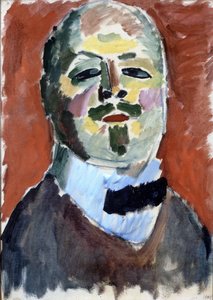
Alexej von Jawlensky
1864 - 1941 , Russland
Kurzinfos
- Bekannte Werke:
- Schokko mit rotem Hut
- Porträt von Alexander Sakharoff
- Violette Turban
- Einflüsse:
- Anton Ažbe
- Ferdinand Hodler
- Jan Verkade
- Paul Sérusier
- Geburtsdatum: 25. März 1865
- Geburtsort: Torzhok, Russland
- Künstlerische Bewegung: Expressionismus
- Nationalität: Russisch-Deutsch
- Todatum: 15. März 1941
- Vollständiger Name: Alexej Georgewitsch von Jawlensky