 Vorschau anzeigen
 Versenden
 Teilen
 Details anzeigen

 Herunterladen
 Ähnliche Objekte
 Röntgenaufnahme
 Diashow
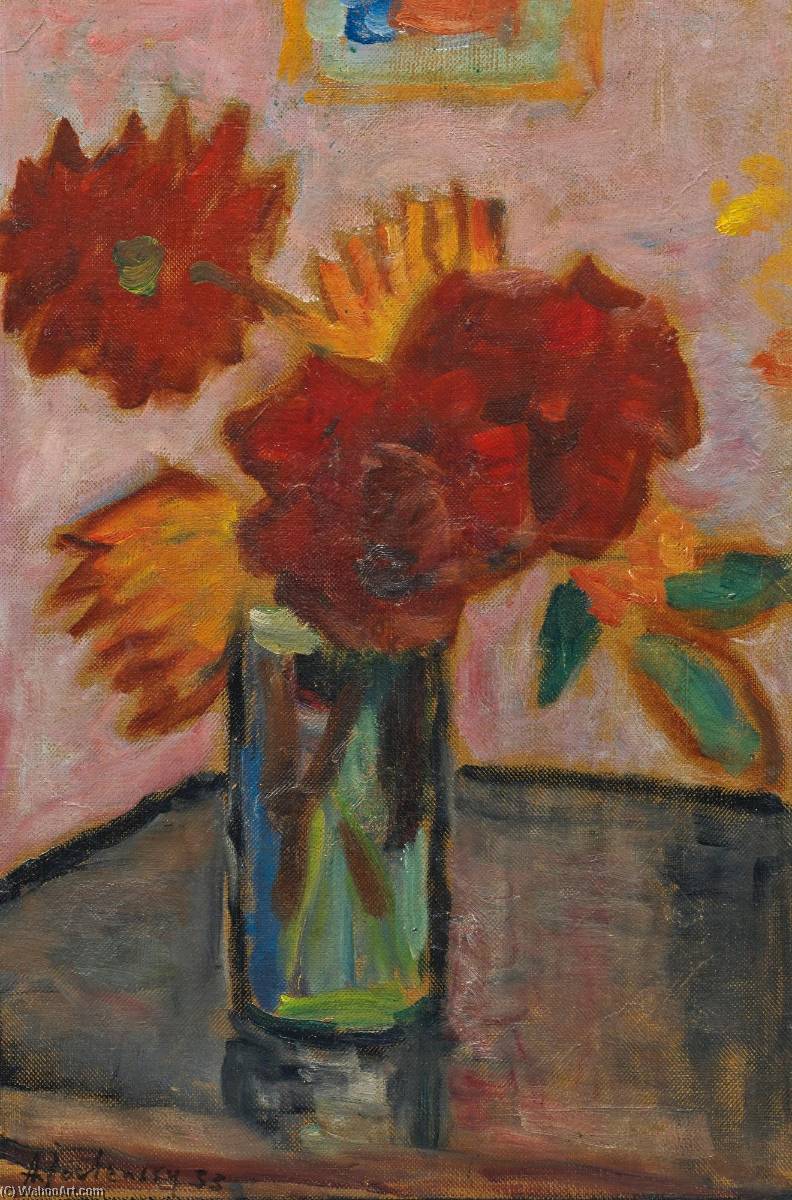
Stillleben (Still Life with Flowers)
 Oil On Canvas
- WallArt
- Expressionism
 1933
1933- 19th Century
 51.0 x 34.0 cm
 Weiterlesen
Giclée / Kunstdruck
Giclée- oder Leinwanddruck in Museumsqualität mit schneller Produktion und flexiblen Veredelungsoptionen. ( Handgemalte Reproduktion bestellen Bild kaufen)




P118B $10

P118H $10

P118W $10

P438Z $10

P508JH $12

P508YH $12

P805H $10

P805Z $10

P919BZ $10

P919G $10

P919XJ $10

P959ZH $10

P968JZ $12

W106C $8

W218G $10

W218JH $8

W218Y $10

W307PJ $10

W316G $10

W316PJ $8

W316Y $10

W398PJ $8

W4111J $10

W500HY $15

W500JH $15

W692G $12

W849H $8

W940BG $15

W953PJ $8




Wählen Sie aus unseren vordefinierten Formaten, die den ursprünglichen Proportionen des Kunstwerks entsprechen.

Sie können Ihre eigenen Maße eingeben, um ein bestimmtes Format oder einen speziellen Platz einzupassen. Wenn das von Ihnen gewählte Format nicht den Proportionen des Originalbildes entspricht, werden wir das Kunstwerk entweder beschneiden oder das Bild mit einem gespiegelten oder einfarbigen Rand erweitern. Ein digitaler Entwurf wird Ihnen zur Genehmigung zugesandt, bevor die Produktion beginnt.
Bitte beachten Sie, dass die Vorschau auf dem Bildschirm nicht den tatsächlichen Zuschnitt oder die Erweiterung widerspiegelt. Nur der Entwurf zeigt die endgültige Komposition präzise an.
Obwohl Sondermaße verfügbar sind, empfehlen wir die Auswahl eines Maßes aus der vordefinierten Liste, um die ursprünglichen Proportionen zu bewahren.
Weltweiter Versand () innerhalb von 2 Wochen statt der üblichen 4/5 Wochen. (25 August)

Kostenloser weltweiter Expressversand

Hochwertige Leinenleinwand

Umfassender Versicherungsschutz beim Versand

Zollgebühren-Rückerstattungsgarantie

Garantie für exakte Farbtreue

60 Tage Rückgaberecht (nur bei Mängeln)

100% Geld-zurück-Garantie

Mengenrabatt verfügbar
 Die Glasoption ist nur für Größen unter 110 cm verfügbar.

Stillleben (Still Life with Flowers)
Giclée / Kunstdruck
Format der Reproduktion
-


Gesamtpreis
$ 62
Sammlerstück-Beschreibung
A Moment Frozen in Emotion: Alexej von Jawlensky’s ‘Stillleben (Still Life with Flowers)’
Alexej von Jawlensky's ‘Stillleben (Still Life with Flowers)’ – painted in 1933 – is more than a simple depiction of a bouquet; it’s a potent distillation of the artist’s deeply felt approach to capturing human experience. This small oil painting, measuring 51 x 34 cm, immediately draws the viewer into its world through a deliberate rejection of photographic realism and an embrace of raw emotion. Jawlensky wasn't interested in meticulously rendering the details of individual petals or the precise geometry of the vase; instead, he sought to convey the *feeling* of the flowers – their vibrancy, their fragility, and perhaps even a sense of melancholy – through bold brushstrokes and intensely saturated color.
The painting’s impressionistic style is evident in its loose, expressive lines and visible texture. Thick impasto layers build up on the flower heads, creating a tactile quality that invites close inspection. The artist's technique—characterized by layering paint and a disregard for traditional perspective—is entirely focused on subjective perception. Rather than constructing a realistic three-dimensional space, Jawlensky utilizes variations in color and shading to suggest depth, creating a flattened picture plane that emphasizes the painting’s surface and the immediacy of the moment.
The Language of Symbolism: Flowers as Vessels of Meaning
Still life was a favored genre for Jawlensky, often serving as a vehicle for exploring profound themes. The choice of red flowers – a color frequently associated with passion, sacrifice, and remembrance – adds another layer of complexity to the work. Considering the artist’s own intensely personal and emotionally charged style, it's reasonable to interpret these blooms not merely as decorative elements but as symbols carrying significant weight. This aligns with the broader tradition of ‘vanitas’ paintings, prevalent in Dutch Golden Age art, which used still lifes to remind viewers of mortality and the transience of earthly pleasures – a concept powerfully echoed in works like Maria van Oosterwijck's "Vanitas with Sunflower and Jewelry Box."
The composition itself—a simple arrangement of flowers within a glass vase against a muted pink background—further enhances this symbolic resonance. The rectangular shape of the table, contrasting with the organic forms of the flowers, creates a visual tension that mirrors the emotional complexities at play. The use of light, originating from above and slightly in front, casts dramatic shadows, defining the objects’ contours and intensifying their presence.
A Pioneer of Expressionism: Jawlensky's Legacy
‘Stillleben (Still Life with Flowers)’ firmly places Jawlensky within the burgeoning movement of early 20th-century expressionism. His work, alongside that of artists like Kandinsky and Nolde, represented a radical departure from academic traditions, prioritizing emotional intensity over objective representation. Born in Torzhok, Russia, in 1864, Jawlensky’s journey – marked by relocation, military service, and ultimately, a profound commitment to artistic expression – culminated in this powerfully evocative painting. His dedication to capturing fleeting moments of light and color, combined with his willingness to confront difficult emotions, established him as a pivotal figure in the development of modern art.
This hand-painted reproduction offers an unparalleled opportunity to experience Jawlensky’s artistic vision firsthand. The meticulous attention to detail, faithfully recreating the artist's unique technique and vibrant palette, ensures that this iconic work will continue to captivate and inspire for generations to come.
Ähnliche Kunstwerke
Über den Künstler
Frühe Jahre und Ausbildung
Alexej von Jawlensky, ein bedeutender russischer Expressionist, wurde am 13. März (altem Stil) / 25. März (neuem Stil) 1864 in Torzhok, Russland, geboren. Als fünftes Kind von Georgi von Jawlensky und seiner Frau Alexandra (geborene Medwedewa) erlebte Alexej eine Kindheit geprägt von häufigen Umzügen, bevor die Familie schließlich im Alter von zehn Jahren nach Moskau zog. Seine genaue Geburtsdatum ist umstritten, wobei verschiedene Quellen unterschiedliche Jahreszahlen angeben, aber Recherchen deuten stark auf 1865 hin.Künstlerische Entwicklung und Einflüsse
Nach dem Abschluss seines Militärdienstes entwickelte Alexej eine Leidenschaft für die Malerei und besuchte 1880 die Moskauer Weltausstellung. Dank seiner gesellschaftlichen Verbindungen erhielt er eine Versetzung nach St. Petersburg, wo er von 1889 bis 1896 an der Kunstakademie studierte, während er weiterhin seinen Militärdienst verrichtete. In dieser Zeit lernte er Marianne von Werefkin kennen, eine wohlhabende Künstlerin, die seine Arbeit förderte und ihm ein komfortables Leben ermöglichte. 1894 zog er nach München und studierte unter Anton Ažbe. Seine Kunst wurde stark von Ferdinand Hodler, Jan Verkade und Paul Serusier beeinflusst, was zu einer Entwicklung hin zum Expressionismus führte.Wichtige Werke und Stilentwicklung
- Jawlenskys frühe Arbeiten zeichneten sich durch üppige, reiche Farben aus, die später in eine Abstraktion und einen vereinfachten, formalisierten Stil übergingen.
- Zu seinen bemerkenswertesten Werken zählen:
- Schokko mit rotem Hut (1909)
- Porträt von Alexander Sakharoff (1909)
- Violettes Turban (1911)
Bedeutung und Vermächtnis
Alexej von Jawlensky gilt als eine Schlüsselfigur des Expressionismus, insbesondere im Zusammenhang mit der Künstlergruppe Der Blaue Reiter. Seine Werke zeichnen sich durch die Verwendung kräftiger Farben und vereinfachter Formen aus, um Emotionen auszudrücken. Nach seiner Vertreibung aus Deutschland im Jahr 1914 zog er in die Schweiz, wo er Emmy Scheyer kennenlernte, die seine Arbeit in den Vereinigten Staaten förderte. Jawlensky starb am 15. März 1941 in Wiesbaden, Deutschland. Seine Werke sind heute in bedeutenden Museen auf der ganzen Welt zu sehen, darunter das Museum Ostwall in Dortmund und die Städtische Galerie im Lenbachhaus in München. Sein Einfluss auf die Entwicklung des abstrakten Expressionismus ist unbestreitbar.Spätere Jahre und Tod
Nach seiner Vertreibung aus Deutschland im Jahr 1914 zog Alexej in die Schweiz, wo er Emmy Scheyer kennenlernte, die seine Arbeit in den Vereinigten Staaten förderte. Alexej von Jawlensky verstarb am 15. März 1941 in Wiesbaden, Deutschland.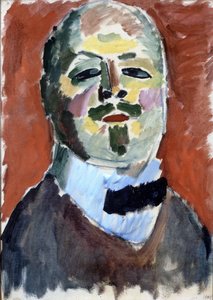
Alexej von Jawlensky
1864 - 1941 , Russland
Kurzinfos
- Bekannte Werke:
- Schokko mit rotem Hut
- Porträt von Alexander Sakharoff
- Violette Turban
- Einflüsse:
- Anton Ažbe
- Ferdinand Hodler
- Jan Verkade
- Paul Sérusier
- Geburtsdatum: 25. März 1865
- Geburtsort: Torzhok, Russland
- Künstlerische Bewegung: Expressionismus
- Nationalität: Russisch-Deutsch
- Todatum: 15. März 1941
- Vollständiger Name: Alexej Georgewitsch von Jawlensky
Ähnliche Artikel
Blossoms of Time: A Historical & Aesthetic Exploration of Floral Painting Across Cultures
Explore the rich history of floral painting! Discover symbolism, techniques & masterpieces from Van Huysum to O'Keeffe. Expert insights for art lovers & collectors at ArtsDot.
Blossoming Symbolism: A Historical Journey Through Flowers in Western Painting
Explore the rich history of flower symbolism in Western painting! Discover how artists from the Renaissance to Modernism used blossoms to convey meaning, emotion & beauty. Learn about iconic artworks and movements.

Crimson Threads of Narrative: Exploring Symbolism & Representation in Artworks Featuring the Red Dress
Explore the rich symbolism of the red dress in art history! From ancient power displays to iconic portraits like Cézanne’s 'Madame Cezanne', discover the cultural and artistic significance behind this captivating color. Expert analysis & insights.
Blossoms of Time: A Historical Journey Through Flower Painting
Explore the captivating history of flower painting! Discover Dutch masters, symbolic meanings, & botanical art. Expert insights & high-quality reproductions at ArtsDot.
Clyfford Still's Abstract Expressionism: A Study of Color, Form & the Existential Landscape
Explore the profound world of Clyfford Still's Abstract Expressionism with ArtsDot. Discover his unique style, existential themes & investment potential. Expert analysis for discerning collectors.