 Vorschau anzeigen
 Versenden
 Teilen
 Details anzeigen

 Herunterladen
 Ähnliche Objekte
 Röntgenaufnahme
 Diashow
Variation: Sound of Summer


 Weiterlesen
Handgefertigte Ölreproduktion
Handgemaltes Ölgemälde auf Leinwand in Ihrer Wunschgröße und mit Rahmen, auf Bestellung von unseren Künstlern angefertigt. ( Druck bestellen Bild kaufen)




P118B $10

P118H $10

P118W $10

P438Z $10

P508JH $12

P508YH $12

P805H $10

P805Z $10

P919BZ $10

P919G $10

P919XJ $10

P959ZH $10

P968JZ $12

W106C $8

W218G $10

W218JH $8

W218Y $10

W307PJ $10

W316G $10

W316PJ $8

W316Y $10

W398PJ $8

W4111J $10

W500HY $15

W500JH $15

W692G $12

W849H $8

W940BG $15

W953PJ $8




Wählen Sie aus unseren vordefinierten Formaten, die den ursprünglichen Proportionen des Kunstwerks entsprechen.

Sie können Ihre eigenen Maße eingeben, um einen bestimmten Rahmen oder Platz auszufüllen. Wenn die gewählte Größe nicht den Proportionen des Originalbildes entspricht, werden wir das Kunstwerk entweder beschneiden oder das Gemälde durch zusätzliche, handgemalte Elemente erweitern. Ein digitales Mockup wird Ihnen zur Genehmigung zugesandt, bevor die Produktion beginnt.
Bitte beachten Sie, dass die Bildschirmvorschau nicht die tatsächliche Beschneidung oder Erweiterung widerspiegelt. Nur das Mockup zeigt die endgültige Komposition exakt an.
Obwohl Sondermaße verfügbar sind, empfehlen wir, eine Größe aus der vordefinierten Liste zu wählen, um die ursprünglichen Proportionen beizubehalten.
Nach der Bestellung wird das ArtsDot.com-Team dem Kunden Anweisungen per E-Mail zusenden und eine Mockup-Vorschau bereitstellen.
Weltweiter Versand () in nur 3 bis 4 Wochen statt der üblichen 5 Wochen. (23 August). Keine Kompromisse bei der Qualität.

Kostenloser weltweiter Expressversand

Hochwertige Leinenleinwand

Umfassender Versicherungsschutz beim Versand

Zollgebühren-Rückerstattungsgarantie

Garantie für exakte Farbtreue

60 Tage Rückgaberecht (nur bei Mängeln)

100% Geld-zurück-Garantie

Mengenrabatt verfügbar
 Die Glasoption ist nur für Größen unter 110 cm verfügbar.

Variation: Sound of Summer
Art der Reproduktion
Format der Reproduktion
-


Gesamtpreis
$ 263
Beschreibung des Kunstwerks
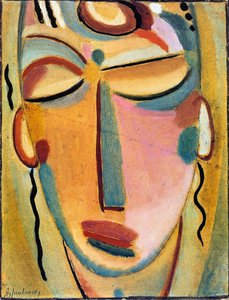
Alexej von Jawlensky’s “Variation: Sound of Summer” – A Symphony in Color
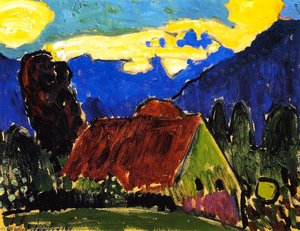
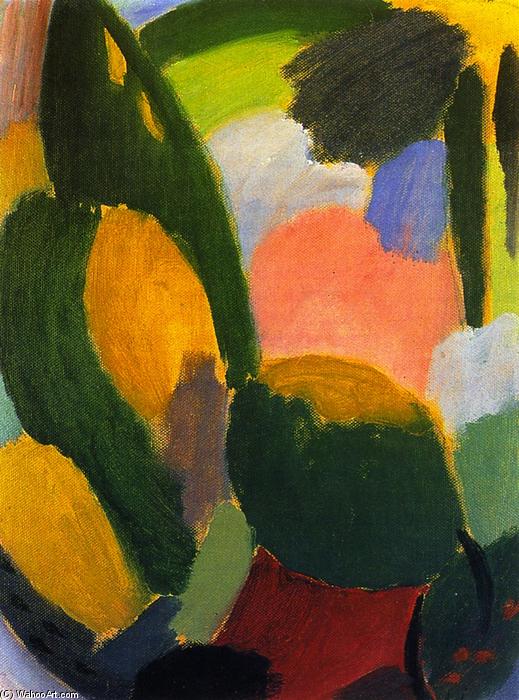
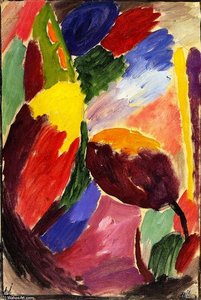
The painting "Variation: Sound of Summer," created by Alexej von Jawlensky in 1916, stands as a cornerstone of Expressionist art and embodies the profound emotional resonance characteristic of this pivotal movement. Born in Torzhok, Russia, in 1864, Jawlensky’s artistic journey was marked by constant relocation and an early fascination with military service—experiences that undoubtedly instilled within him a sensitivity to displacement and a yearning for deeper connection, themes subtly reflected in the contemplative spirit of his later works. His encounter with Impressionism during the 1880 Moscow World Exposition ignited a passion for visual expression that would ultimately eclipse any obligation to conventional pursuits. Securing a position in St. Petersburg through social connections allowed him to hone his craft and immerse himself in the burgeoning artistic milieu of the era, fostering collaborations with fellow innovators like Vasily Kandinsky and Franz Marc—artists who shared a conviction that art should transcend mere representation to convey inner feelings directly.- Style: Jawlensky’s “Variation” exemplifies Expressionism's core tenets – prioritizing emotional intensity over objective observation. Rejecting the academic conventions of his time, he sought to capture not what he *saw*, but what he *felt*. This stylistic choice aligns perfectly with the broader artistic currents of the period, where artists wrestled with anxieties surrounding war and societal upheaval.
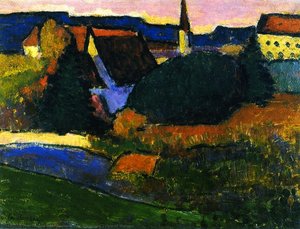
- Technique: Executed on light card laid down on fibreboard, the painting utilizes a distinctive technique rooted in Jawlensky’s meticulous approach to color and form. He employed a layering process—applying thin washes of pigment followed by thicker applications—to build up textural surfaces that pulsate with vibrancy. The artist's deliberate use of muted greens and yellows – particularly prominent in the central tree – creates an atmosphere of serene contemplation, mirroring the composer Igor Stravinsky’s influence on Jawlensky’s artistic sensibilities.
Historical Context: The Blaue Reiter and Artistic Anxiety
“Variation” emerged during a period of intense intellectual and artistic ferment—namely, the formative years of “Der Blaue Reiter,” or “The Blue Rider.” Founded in Munich in 1908 by Kandinsky and Marc, this influential group championed a radical reimagining of art’s role as a conduit for spiritual experience. Influenced by Nietzsche's philosophy and captivated by the burgeoning avant-garde musical innovations spearheaded by Stravinsky—particularly Scriabin’s Prometheus Symphony—the Blaue Reiter artists sought to synthesize visual and auditory elements into a Gesamtkunstwerk, or “total artwork,” aiming to evoke profound emotional responses in viewers. The painting reflects this broader artistic preoccupation with confronting existential anxieties and exploring the subconscious mind – themes that resonated deeply within the collective consciousness of Europe as it braced itself for the horrors of World War I.Symbolism: Resonance of Nature and Inner Harmony
The central tree—rendered in shades of emerald green and golden yellow—serves as a focal point, symbolizing resilience and vitality amidst turbulent times. Its branches reach upwards towards the heavens, conveying a sense of aspiration and spiritual yearning – mirroring Stravinsky’s exploration of musical harmony and its ability to transcend earthly concerns. The scattered shapes and colors surrounding the tree contribute to an overall composition that embodies the Blaue Reiter's ethos: a deliberate rejection of representational accuracy in favor of evocative expression. These elements coalesce into a visual metaphor for inner peace and contemplation—a testament to Jawlensky’s unwavering belief in art’s capacity to communicate profound emotional truths.Emotional Impact: A Quiet Triumph
“Variation” transcends mere aesthetic beauty; it communicates an enduring sense of melancholy tempered by optimism. The subdued palette – dominated by greens and yellows—evokes the tranquility of summer meadows, yet simultaneously hints at underlying vulnerability. The artist’s masterful manipulation of texture creates a surface that invites tactile engagement, mirroring the immersive experience of listening to music. Ultimately, Jawlensky's “Variation: Sound of Summer” remains an arresting reminder that art can illuminate the deepest recesses of human emotion—a timeless masterpiece that continues to inspire awe and contemplation decades after its creation.Ähnliche Kunstwerke

Über den Künstler
Frühe Jahre und Ausbildung
Alexej von Jawlensky, ein bedeutender russischer Expressionist, wurde am 13. März (altem Stil) / 25. März (neuem Stil) 1864 in Torzhok, Russland, geboren. Als fünftes Kind von Georgi von Jawlensky und seiner Frau Alexandra (geborene Medwedewa) erlebte Alexej eine Kindheit geprägt von häufigen Umzügen, bevor die Familie schließlich im Alter von zehn Jahren nach Moskau zog. Seine genaue Geburtsdatum ist umstritten, wobei verschiedene Quellen unterschiedliche Jahreszahlen angeben, aber Recherchen deuten stark auf 1865 hin.Künstlerische Entwicklung und Einflüsse
Nach dem Abschluss seines Militärdienstes entwickelte Alexej eine Leidenschaft für die Malerei und besuchte 1880 die Moskauer Weltausstellung. Dank seiner gesellschaftlichen Verbindungen erhielt er eine Versetzung nach St. Petersburg, wo er von 1889 bis 1896 an der Kunstakademie studierte, während er weiterhin seinen Militärdienst verrichtete. In dieser Zeit lernte er Marianne von Werefkin kennen, eine wohlhabende Künstlerin, die seine Arbeit förderte und ihm ein komfortables Leben ermöglichte. 1894 zog er nach München und studierte unter Anton Ažbe. Seine Kunst wurde stark von Ferdinand Hodler, Jan Verkade und Paul Serusier beeinflusst, was zu einer Entwicklung hin zum Expressionismus führte.Wichtige Werke und Stilentwicklung
- Jawlenskys frühe Arbeiten zeichneten sich durch üppige, reiche Farben aus, die später in eine Abstraktion und einen vereinfachten, formalisierten Stil übergingen.
- Zu seinen bemerkenswertesten Werken zählen:
- Schokko mit rotem Hut (1909)
- Porträt von Alexander Sakharoff (1909)
- Violettes Turban (1911)
Bedeutung und Vermächtnis
Alexej von Jawlensky gilt als eine Schlüsselfigur des Expressionismus, insbesondere im Zusammenhang mit der Künstlergruppe Der Blaue Reiter. Seine Werke zeichnen sich durch die Verwendung kräftiger Farben und vereinfachter Formen aus, um Emotionen auszudrücken. Nach seiner Vertreibung aus Deutschland im Jahr 1914 zog er in die Schweiz, wo er Emmy Scheyer kennenlernte, die seine Arbeit in den Vereinigten Staaten förderte. Jawlensky starb am 15. März 1941 in Wiesbaden, Deutschland. Seine Werke sind heute in bedeutenden Museen auf der ganzen Welt zu sehen, darunter das Museum Ostwall in Dortmund und die Städtische Galerie im Lenbachhaus in München. Sein Einfluss auf die Entwicklung des abstrakten Expressionismus ist unbestreitbar.Spätere Jahre und Tod
Nach seiner Vertreibung aus Deutschland im Jahr 1914 zog Alexej in die Schweiz, wo er Emmy Scheyer kennenlernte, die seine Arbeit in den Vereinigten Staaten förderte. Alexej von Jawlensky verstarb am 15. März 1941 in Wiesbaden, Deutschland.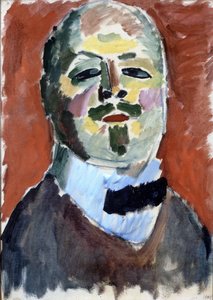
Alexej von Jawlensky
1864 - 1941 , Russland
Kurzinfos
- Bekannte Werke:
- Schokko mit rotem Hut
- Porträt von Alexander Sakharoff
- Violette Turban
- Einflüsse:
- Anton Ažbe
- Ferdinand Hodler
- Jan Verkade
- Paul Sérusier
- Geburtsdatum: 25. März 1865
- Geburtsort: Torzhok, Russland
- Künstlerische Bewegung: Expressionismus
- Nationalität: Russisch-Deutsch
- Todatum: 15. März 1941
- Vollständiger Name: Alexej Georgewitsch von Jawlensky
Ähnliche Artikel

Geometrische Abstraktion: Die 10 Meisterwerke, die Kunstgeschichte prägten | ArtsDot.com
Entdecken Sie die 10 Meisterwerke der geometrischen Abstraktion! Von Kandinsky bis Mondrian – erleben Sie die Geschichte, Farben & Formen dieser revolutionären Kunstrichtung. Hochwertige Kunstreproduktionen auf ArtsDot.com

Kandinsky: Die 25 Meisterwerke des Abstrakten – Kunst für Ihr Zuhause | ArtsDot
Entdecken Sie die 25 bedeutendsten Gemälde von Wassily Kandinsky! Tauchen Sie ein in die Welt der abstrakten Kunst, des Expressionismus und der Farbkomposition. Hochwertige Kunstdrucke & Inspiration für Ihr Zuhause auf ArtsDot.com.
Abstrakter Expressionismus: Die 10 Meisterwerke, die eine Kunstbewegung prägten |
Entdecken Sie die 10 Meisterwerke des Abstrakten Expressionismus! Von Jackson Pollock bis Mark Rothko – erfahren Sie die Geschichten hinter ikonischen Gemälde und finden Sie hochwertige Reproduktionen für Ihr Zuhause. Jetzt bei entdecken!
Fernand Léger: Die 25 Meisterwerke des Kubismus für Ihr Zuhause | ArtsDot
Entdecken Sie die 25 Meisterwerke von Fernand Léger! Tauchen Sie ein in die Welt des Kubismus, Tubismus & der Avantgarde. Hochwertige Kunstreproduktionen für Ihr Zuhause – jetzt auf ArtsDot.com!
Navigieren der abstrakten Expression: Ein Leitfaden zu zeitgenössischen Strömungen für emotionale Resonanz in der Kunstauswahl
Entdecken Sie den Abstrakten Expressionismus! Expertenratgeber für Sammler: Rothko, Pollock & Hofmann verstehen, wertvolle Kunst auswählen und Ihre emotionale Verbindung finden. Jetzt lesen!