

 Vorschau anzeigen
 Versenden
 Teilen
 Details anzeigen

 Herunterladen
 Ähnliche Objekte
 Röntgenaufnahme
 Diashow
 Statistiken
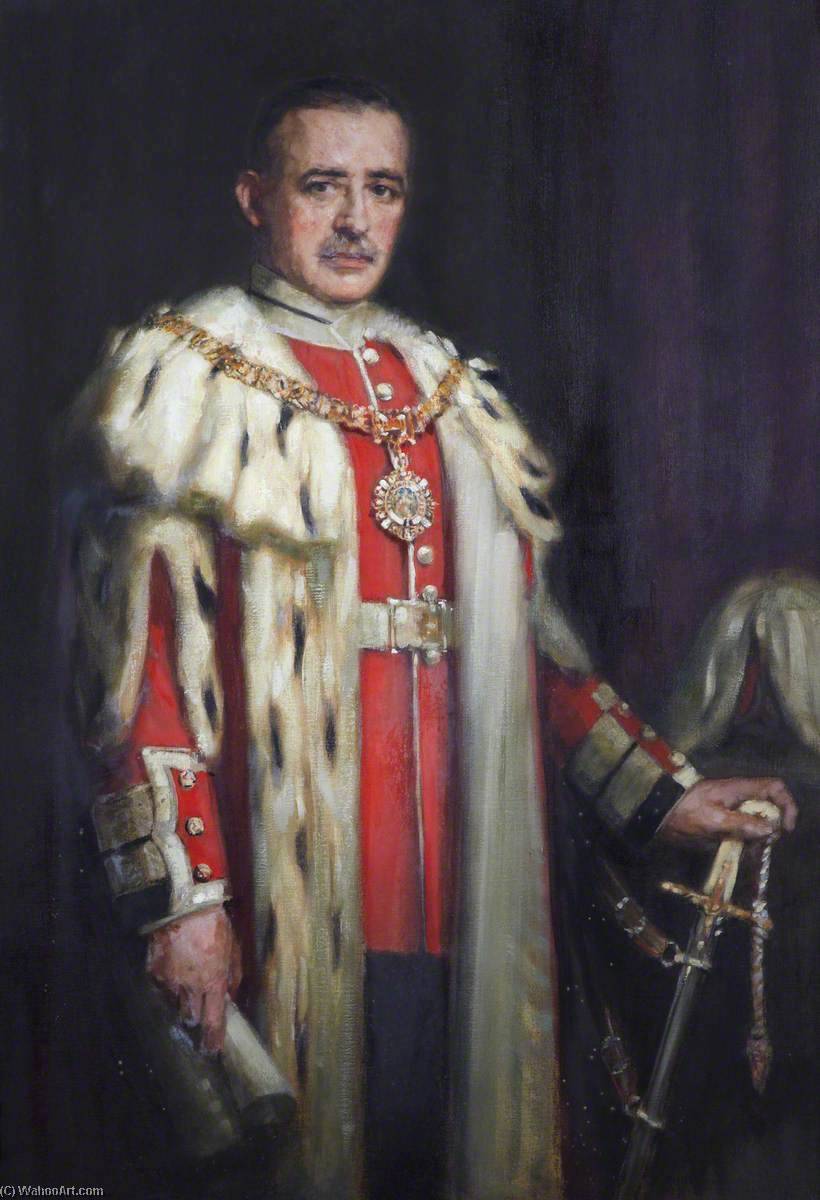
Sir William J. Thomson (1881–1949), LLD, Lord Provost (1932–1935)
 1937
1937 137.0 x 97.0 cm
 Weiterlesen
Erwerben Sie ein hochauflösendes, optimiertes digitales Bild, das der Online-Vorschau weit überlegen ist.
Jede Datei wird von unseren hauseigenen Spezialisten mit modernsten Werkzeugen und fachmännischer manueller Retusche sorgfältig vorbereitet. Wir stellen sicher, dass jedes Bild eine außergewöhnliche Klarheit, präzise Farbgenauigkeit und feinste Details aufweist.
Die endgültige Datei wird innerhalb von 72 Stunden per E-Mail zugestellt und ist für den sofortigen Einsatz in professionellen, redaktionellen und Druckumgebungen optimiert. Es handelt sich um dieselbe Qualität, der führende Designstudios, Verlage und Galerien vertrauen.
Digitales Bild
Laden Sie eine hochauflösende Datei für die persönliche Präsentation, den Druck und kreative Projekte herunter. ( Zu Druck wechseln Handgemalte Reproduktion bestellen)
In jeder Bestellung digitaler Bilder enthalten
Professionelle digitale Bereitstellung, garantiert
Wenn Sie sich für ArtsDot.com entscheiden, erhalten Sie nicht nur ein Bild – Sie erhalten ein professionell aufbereitetes digitales Kunstwerk, das mit höchster Präzision erstellt und durch eine Zufriedenheitsgarantie abgesichert wird. Hier ist alles, was automatisch mit Ihrer Bestellung geliefert wird:

Schnelle E-Mail-Zustellung
Ihre hochauflösende digitale Bilddatei wird Ihnen innerhalb von 72 Stunden nach der Bestellung per E-Mail zugestellt – bereit zur sofortigen Verwendung.

KI-optimierte digitale Datei
Ihre Kunstwerke werden professionell mithilfe fortschrittlicher KI-Tools und manueller Bearbeitung optimiert, um maximale Detailtreue, Klarheit und Farbgenauigkeit zu gewährleisten.

Lebenslanger kostenloser Neudruckservice
Datei versehentlich gelöscht oder verloren? Keine Sorge – wir senden sie Ihnen jederzeit kostenlos erneut zu.

Keine Einfuhrgebühren – jemals
Genießen Sie Ihr Kunstwerk sofort ohne Zollgebühren, Einfuhrabgaben oder Versandkosten – digitale Downloads sind immer steuerfrei.

Garantierte Farbtreue
Wir garantieren, dass Ihr digitales Bild mithilfe professioneller Werkzeuge und Farbmanagement die Originalfarben so präzise wie möglich wiedergibt.

100-Tage-Zufriedenheitsgarantie
Wenn Sie mit Ihrem digitalen Bild nicht zufrieden sind, werden wir es überarbeiten oder 100% innerhalb von 100 Tagen erstatten – ohne Wenn und Aber.

100% Geld-zurück-Garantie
Nicht zufrieden? Erhalten Sie innerhalb von 100 Tagen nach Erhalt Ihrer digitalen Datei eine vollständige Rückerstattung – ohne Wenn und Aber.

Rabatte bei Großbestellungen
3 Bilder kaufen, 10% sparen – 5 Bilder kaufen, 15% sparen – Ab 10 Bildern 20% sparen. Ideal für kreative Projekte, Galerien und Agenturen.
Ähnliche Kunstwerke









Biografie des Künstlers
The Soul Behind the Canvas: The Life and Legacy of Alfred Edward Borthwick
In the golden, shifting light of the Edwardian era, few artists possessed the ability to capture the quiet dignity of a passing age quite like Alfred Edward Borthwick. Born in 1871, Borthwick emerged not merely as a chronicler of faces, but as a poet of character. His journey through the great art capitals of Europe—from the rigorous academies of Edinburgh and London to the refined studios of Antwerp and Paris—imbued his work with a profound technical versatility. As a pupil of masters such as Bouguereau and Flury, he mastered the delicate balance between academic precision and the burgeoning freedom of impressionistic light. This training allowed him to navigate the complexities of human emotion, ensuring that every brushstroke served to reveal the psychological depth of his subjects.
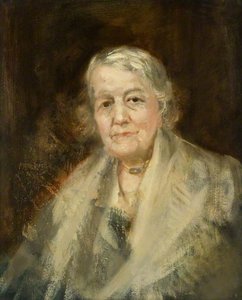
Borthwick’s life was as much a tapestry of historical drama as his paintings were of color and form. His experiences during the South African War, serving with the Scottish Sharpshooters, and his later service during the Great War, lent him a unique perspective on the fragility and resilience of the human spirit. This lived experience is palpable in his portraiture; he did not merely paint the nobility and society figures of his time, but sought to capture their internal gravity. His fascination with depicting older individuals—portraying them with an emphasis on wisdom and grace—found its most poignant expression in works like Lady Fairfax Lucy and Sir Ernest C. MacMillan. Through a palette of muted tones and subtle tonal variations, he could evoke the very atmosphere of a room or the weight of a lifetime of experience.
A Mastery of Light and Landscape
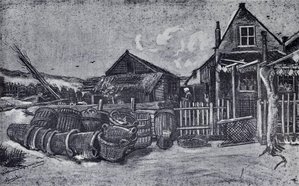
While his reputation was firmly anchored in the realm of portraiture, Borthwick’s artistic vision extended far beyond the studio walls. He possessed an extraordinary ability to translate the rugged textures of the natural world onto canvas, treating landscapes and seascapes with the same emotional intensity as his human subjects. In works such as Stonehaven Harbour, one can witness the artist's command over texture; his brushstrokes evoke the salt-sprayed, weathered beauty of the Scottish coastline, mirroring the Impressionist movement’s devotion to capturing fleeting moments of light and atmosphere. This duality—the ability to move between the intimate psychological study of a sitter and the expansive, atmospheric grandeur of a landscape—is what defined his unique aesthetic contribution to British art.
His achievements were recognized by the highest institutions of his day, marking him as a central figure in the Scottish art scene. His ascent within the Royal Scottish Academy, moving from an Associate in 1928 to a full Member in 1938, stands as a testament to his enduring influence and popularity. Perhaps no single work captured the public imagination quite like “The Presence,” painted in 1909. This masterpiece, which eventually found its home in St. Mary’s Cathedral in Edinburgh, became one of the most widely reproduced images of its era, demonstrating Borthwick's rare ability to create art that resonated deeply with the collective consciousness of the public.
Historical Significance and Artistic Enduringness
The passing of Alfred Edward Borthwick on December 7, 1955, marked the end of an era, yet his artistic legacy remains a vital link to the cultural landscape of the early twentieth century. He stood at the crossroads of tradition and modernity, bridging the gap between the formal, idealized beauty of the Victorian masters and the emotive, light-driven explorations of the modernists. His work serves as a historical window into the Edwardian and interwar periods, preserving the likenesses and the very essence of a society in transition.
To study Borthwick is to encounter an artist who believed that painting was a vessel for truth—not just the truth of physical appearance, but the truth of the human condition. His contributions can be summarized through several key pillars of his career:
- Technical Versatility: A seamless blend of academic realism and impressionistic technique learned from the finest masters in Europe.
- Psychological Depth: An unparalleled ability to imbue portraits with a sense of dignity, wisdom, and intangible emotion.
- Atmospheric Landscapes: A mastery of light and texture that brought the rugged beauty of the British landscape to life.
- Institutional Impact: A distinguished career within the Royal Scottish Academy and the Society of Scottish Artists, influencing generations of viewers and collectors alike.
Today, Borthwick’s canvases continue to captivate, offering a sense of permanence in an ever-changing world. His ability to find the extraordinary within the ordinary, and the eternal within the fleeting, ensures that his name remains etched in the annals of British art history.
alfred edward borthwick
1871 - 1955
Kurzinfos
- Artistic Movement Or Style: Impressionism
- Artists Or Movements Influenced By This Artist: ['Post-Impressionism']
- Artists Who Influenced This Artist: ['Claude Monet']
- Date Of Death: 1955
- Full Name: Alfred Edward Borthwick
- Nationality: British
- Notable Artworks:
- Lady Fairfax Lucy
- Sir Ernest C. MacMillan
- Stonehaven Harbour, Aberdeenshire
- Place Of Birth: Newcastle upon Tyne, England