

 Vorschau anzeigen
 Versenden
 Teilen
 Details anzeigen

 Herunterladen
 Ähnliche Objekte
 Röntgenaufnahme
 Diashow
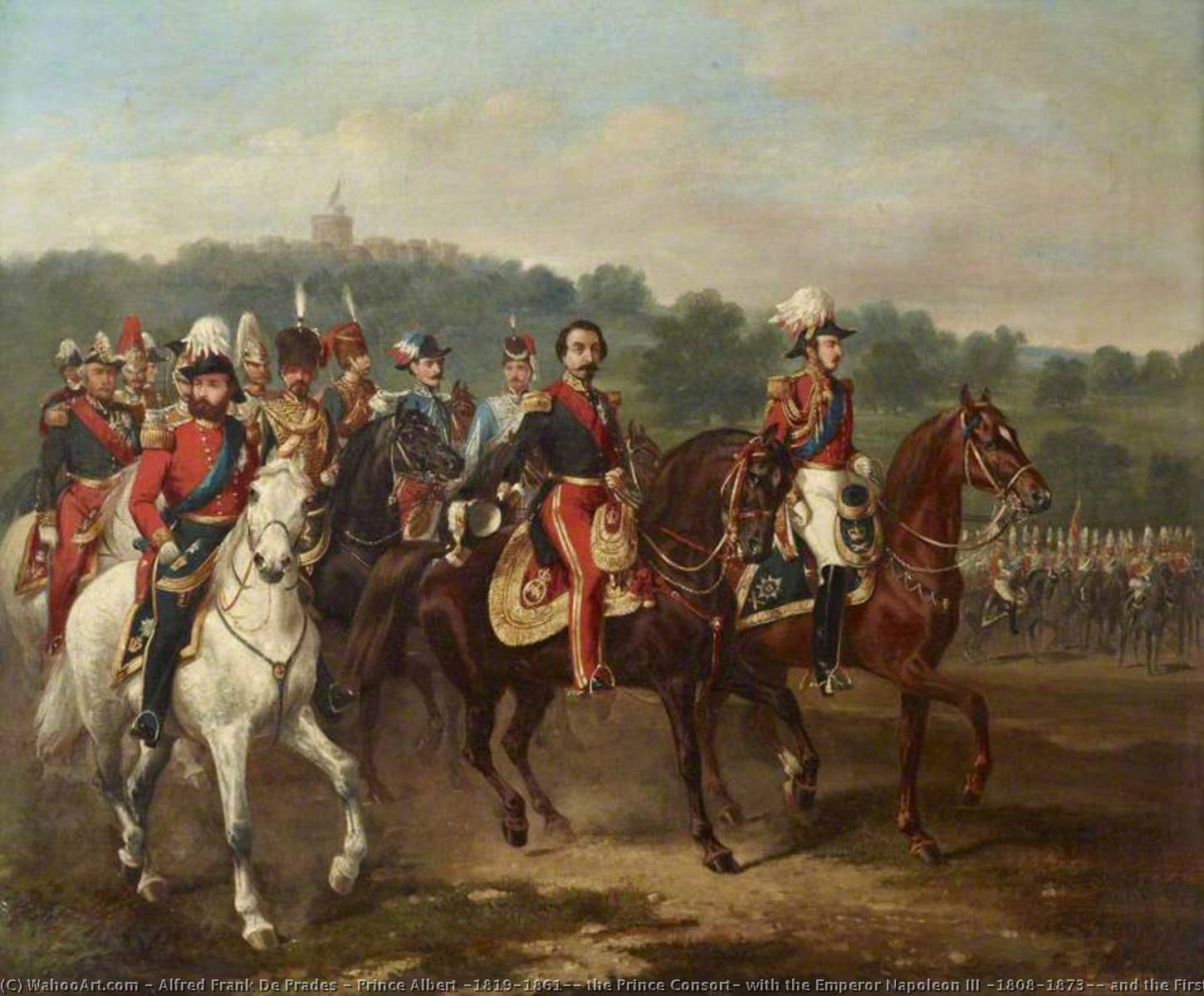
Prince Albert (1819–1861), the Prince Consort, with the Emperor Napoleon III (1808–1873), and the First Life Guards at Windsor, 17 April 1855
 50.0 x 60.0 cm
 National Trust
 Weiterlesen
Erwerben Sie ein hochauflösendes, optimiertes digitales Bild, das der Online-Vorschau weit überlegen ist.
Jede Datei wird von unseren hauseigenen Spezialisten mit modernsten Werkzeugen und fachmännischer manueller Retusche sorgfältig vorbereitet. Wir stellen sicher, dass jedes Bild eine außergewöhnliche Klarheit, präzise Farbgenauigkeit und feinste Details aufweist.
Die endgültige Datei wird innerhalb von 72 Stunden per E-Mail zugestellt und ist für den sofortigen Einsatz in professionellen, redaktionellen und Druckumgebungen optimiert. Es handelt sich um dieselbe Qualität, der führende Designstudios, Verlage und Galerien vertrauen.
Digitales Bild
Laden Sie eine hochauflösende Datei für die persönliche Präsentation, den Druck und kreative Projekte herunter. ( Druck bestellen Handgemalte Reproduktion bestellen)
In jeder Bestellung digitaler Bilder enthalten
Professionelle digitale Bereitstellung, garantiert
Wenn Sie sich für ArtsDot.com entscheiden, erhalten Sie nicht nur ein Bild – Sie erhalten ein professionell aufbereitetes digitales Kunstwerk, das mit höchster Präzision erstellt und durch eine Zufriedenheitsgarantie abgesichert wird. Hier ist alles, was automatisch mit Ihrer Bestellung geliefert wird:

Schnelle E-Mail-Zustellung
Ihre hochauflösende digitale Bilddatei wird Ihnen innerhalb von 72 Stunden nach der Bestellung per E-Mail zugestellt – bereit zur sofortigen Verwendung.

KI-optimierte digitale Datei
Ihre Kunstwerke werden professionell mithilfe fortschrittlicher KI-Tools und manueller Bearbeitung optimiert, um maximale Detailtreue, Klarheit und Farbgenauigkeit zu gewährleisten.

Lebenslanger kostenloser Neudruckservice
Datei versehentlich gelöscht oder verloren? Keine Sorge – wir senden sie Ihnen jederzeit kostenlos erneut zu.

Keine Einfuhrgebühren – jemals
Genießen Sie Ihr Kunstwerk sofort ohne Zollgebühren, Einfuhrabgaben oder Versandkosten – digitale Downloads sind immer steuerfrei.

Garantierte Farbtreue
Wir garantieren, dass Ihr digitales Bild mithilfe professioneller Werkzeuge und Farbmanagement die Originalfarben so präzise wie möglich wiedergibt.

60-Tage-Zufriedenheitsgarantie
Sollten Sie mit Ihrem digitalen Bild nicht zufrieden sein, werden wir es überarbeiten oder Ihnen innerhalb von 60 Tagen 100% erstatten – ohne Wenn und Aber.

100% Geld-zurück-Garantie
Nicht zufrieden? Erhalten Sie innerhalb von 60 Tagen nach Erhalt Ihrer digitalen Datei eine vollständige Rückerstattung – ohne Angabe von Gründen.

Rabatte bei Großbestellungen
3 Bilder kaufen, 10% sparen – 5 Bilder kaufen, 15% sparen – Ab 10 Bildern 20% sparen. Ideal für kreative Projekte, Galerien und Agenturen.
Ähnliche Kunstwerke










Biografie des Künstlers
The Equestrian Visionary: The Life and Legacy of Alfred Frank de Prades
In the golden age of Victorian sporting art, few names resonated with the same anatomical precision and romantic vigor as Alfred Frank de Prades. A master of the animalier tradition, de Prades possessed a rare ability to breathe life into canvas, transforming static depictions of horses and military figures into breathing, pulsing scenes of historical drama. Though born in Lunel, Hérault, France, his artistic soul was deeply entwined with the landscape and culture of England. This unique duality—a French sensibility meeting British sporting passion—allowed him to capture the grandeur of the equestrian world with a nuance that captivated the noble British aristocracy and established him as one of the most sought-after painters of his era.
The foundations of his talent were laid in a childhood marked by movement and transition. Following a dramatic separation between his parents, de Prades relocated to London at the age of sixteen. This early immersion in British society proved pivotal; the sights of the English countryside and the prestige of the local racing culture became the primary muses for his developing eye. While much of his formal training remains shrouded in the mists of history, his innate grasp of equine anatomy suggests a profound, perhaps self-taught, dedication to the study of nature. Even as a young prodigy, his work displayed an uncanny ability to replicate the tension of a muscle or the frantic energy of a gallop, a skill famously evidenced by his early piece, “Down the Stretch,” painted when he was a mere thirteen years old.
A Legacy of Precision and Patronage
As de Prades matured, his artistic lineage became increasingly clear. He worked within the prestigious tradition established by George Stubbs, adopting a style characterized by scientific accuracy and emotional depth. This connection to the great masters of equine art allowed him to navigate the elite circles of London’s Covent Garden, where he became a fixture in the exhibitions of the British Institution and the Royal Academy of Arts. His work was not merely decorative; it was an exploration of power, nobility, and the symbiotic relationship between man and beast. The British sporting set, driven by a passion for hunting, racing, and military prowess, found in de Prades a chronicler who could immortalize their finest steeds and most heroic officers.
His oeuvre is marked by several defining characteristics that elevate his work above mere portraiture:
- Anatomical Realism: A relentless pursuit of truth in the depiction of equine musculature, bone structure, and movement.
- Military Grandeur: The ability to blend the elegance of cavalry uniforms with the raw energy of battle or parade scenes.
- Atmospheric Depth: Using light and shadow to create a sense of place, whether in the snowy expanses of a mail coach journey or the dusty heat of a military camp.
Through his brush, historical figures were rendered not just as icons, but as living participants in their time. His portraits of high-ranking officers, such as the 7th Earl of Cardigan, serve as vital windows into the Victorian era, capturing the intricate details of Hungarian attire and the spirited temperament of the horses they rode. De Prades did more than paint animals; he painted the very essence of an age defined by expansion, cavalry charges, and the romanticized glory of the hunt.
The Enduring Impression of a Master
Though his life came to an end in 1885, the impact of Alfred Frank de Prades continues to resonate within the halls of art history. He remains a pivotal figure for those studying the evolution of animalier painting, representing a bridge between the classical anatomical studies of the eighteenth century and the more dramatic, narrative-driven styles of the late nineteenth century. His ability to command the viewer's attention through the sheer vitality of his subjects ensures that his works remain much more than historical artifacts; they are enduring celebrations of motion, strength, and the timeless beauty of the equine form.
alfred frank de prades
1825 - 1885

