 Vorschau anzeigen
 Versenden
 Teilen
 Details anzeigen

 Herunterladen
 Ähnliche Objekte
 Röntgenaufnahme
 Diashow
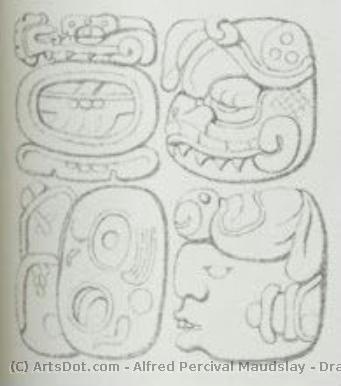
Drawing of an inscription from Palenque


 Weiterlesen
Giclée / Kunstdruck
Giclée- oder Leinwanddruck in Museumsqualität mit schneller Produktion und flexiblen Veredelungsoptionen. ( Handgemalte Reproduktion bestellen Bild kaufen)




P118B $10

P118H $10

P118W $10

P438Z $10

P508JH $12

P508YH $12

P805H $10

P805Z $10

P919BZ $10

P919G $10

P919XJ $10

P959ZH $10

P968JZ $12

W106C $8

W218G $10

W218JH $8

W218Y $10

W307PJ $10

W316G $10

W316PJ $8

W316Y $10

W398PJ $8

W4111J $10

W500HY $15

W500JH $15

W692G $12

W849H $8

W940BG $15

W953PJ $8




Wählen Sie aus unseren vordefinierten Formaten, die den ursprünglichen Proportionen des Kunstwerks entsprechen.

Sie können Ihre eigenen Maße eingeben, um ein bestimmtes Format oder einen speziellen Platz einzupassen. Wenn das von Ihnen gewählte Format nicht den Proportionen des Originalbildes entspricht, werden wir das Kunstwerk entweder beschneiden oder das Bild mit einem gespiegelten oder einfarbigen Rand erweitern. Ein digitaler Entwurf wird Ihnen zur Genehmigung zugesandt, bevor die Produktion beginnt.
Bitte beachten Sie, dass die Vorschau auf dem Bildschirm nicht den tatsächlichen Zuschnitt oder die Erweiterung widerspiegelt. Nur der Entwurf zeigt die endgültige Komposition präzise an.
Obwohl Sondermaße verfügbar sind, empfehlen wir die Auswahl eines Maßes aus der vordefinierten Liste, um die ursprünglichen Proportionen zu bewahren.
Weltweiter Versand () innerhalb von 2 Wochen statt der üblichen 4/5 Wochen. (27 August)

Kostenloser weltweiter Expressversand

Hochwertige Leinenleinwand

Umfassender Versicherungsschutz beim Versand

Zollgebühren-Rückerstattungsgarantie

Garantie für exakte Farbtreue

60 Tage Rückgaberecht (nur bei Mängeln)

100% Geld-zurück-Garantie

Mengenrabatt verfügbar
 Die Glasoption ist nur für Größen unter 110 cm verfügbar.

Drawing of an inscription from Palenque
Giclée / Kunstdruck
Format der Reproduktion
-


Gesamtpreis
$ 62
Sammlerstück-Beschreibung
A Window Into Ancient Palenque: Maudslay’s Detailed Drawing
Alfred Percival Maudslay's drawing of an inscription from Palenque stands as a testament to Victorian fascination with Mesoamerican archaeology and the meticulous observation required to capture the essence of vanished civilizations. Completed in 1890, this monochrome print transcends mere documentation; it embodies a profound appreciation for artistic skill and cultural heritage. Maudslay’s journey into Central America wasn't simply a quest for scientific discovery—it was fueled by an eagerness to immerse himself in the vibrant tapestry of indigenous traditions, shaping his approach to both fieldwork and artistic representation.- Subject Matter: The drawing focuses on glyphic symbols adorning a stone monument found at Palenque, Chiapas, Mexico – a site renowned for its elaborate royal tombs and complex calendrical system. These inscriptions are believed to convey narratives of dynastic succession, religious beliefs, and astronomical observations crucial to understanding the Maya worldview.
- Style: Maudslay’s style leans heavily into realism, prioritizing accuracy in depicting the intricate details of the stone surface and glyphs. However, it's tempered with a subtle artistic sensibility that elevates the drawing beyond a simple topographical record. The artist skillfully employs hatching and shading to create depth and texture, conveying the materiality of the monument itself.
Technique: Observation and Reproduction
Maudslay’s technique exemplifies the prevailing methods of archaeological illustration during his era. He painstakingly sketched the inscription directly from observation, utilizing charcoal on paper—a common practice for capturing ephemeral details in challenging environments. The resulting drawing is a remarkably detailed reproduction, reflecting Maudslay's dedication to preserving visual records of ancient sites. Unlike photographic reproductions that capture only surface appearances, Maudslay’s drawing strives to convey not just what was seen but also the artist’s interpretation of its significance.- Materials: Charcoal on paper – a durable medium favored for capturing tonal variations and textural nuances.
- Process: Maudslay meticulously transferred the image from the monument onto paper, employing precise lines and shading to recreate the contours of the stone surface and the glyphs with remarkable fidelity.
Historical Context & Symbolism
The drawing’s creation coincided with a burgeoning interest in Mesoamerican archaeology within Britain. Maudslay's expeditions to Guatemala and Mexico contributed significantly to the dissemination of knowledge about Maya culture, bolstering support for scholarly endeavors aimed at deciphering their complex system of writing and cosmology. The glyphs themselves represent more than just symbols; they encapsulate profound ideas about time, ritual, and divine authority—concepts central to Maya religious beliefs. Considerations for Reproduction:A high-quality reproduction of Maudslay’s drawing would allow viewers to appreciate the subtle nuances of tonal shading and textural detail that capture the essence of Palenque's monumental art. Framing it in a neutral tone would best honor the original artwork's aesthetic integrity.
Emotional Impact: A Connection Across Time
More than just an artifact of scientific inquiry, Maudslay’s drawing evokes a sense of wonder and reverence for the achievements of ancient civilizations. It invites contemplation on the passage of time and the enduring power of artistic expression to communicate ideas across cultures and generations. Like gazing upon the original monument itself, examining this print offers a glimpse into the minds of explorers and artists who sought to illuminate the mysteries of Mesoamerica.
Ähnliche Kunstwerke

Über den Künstler
Frühes Leben und Bildung
Alfred Percival Maudslay, ein britischer Kolonialadministrator und Archäologe, wurde am 18. März 1850 in London in eine wohlhabende Familie hineingeboren. Er studierte Naturwissenschaften an Trinity Hall, Cambridge und erwarb 1872 einen Bachelor of Arts.Beruf und Reisen
Maudslays frühe Pläne für eine medizinische Karriere wurden aufgeschoben, als er mit seinem Bruder durch Zentralamerika, Mexiko und Teile der Vereinigten Staaten reiste. Diese Reise weckte ein Interesse an der Archäologie, das später sein Vermächtnis prägen sollte. Nach seiner Rückkehr nach Hause verschob Maudslay das Medizinstudium erneut, um 1873 nach Island zu reisen. Seine chronische Bronchitis veranlasste ihn, nach einem wärmeren Klima zu suchen, was zu einer Reihe von Positionen auf Jamaika, Trinidad und schließlich im Südpazifik führte.Archäologische Beiträge
Maudslays Zeit in den britischen Pazifikkolonien legte das Fundament für seine zukünftigen archäologischen Bestrebungen. Er entwickelte ein Interesse an der Sammlung ethnografischer Materialien, was später zur Gründung des University Museum of Archaeology and Ethnology at Cambridge beitragen sollte. Sein Freund, der Ornithologe Osbert Salvin, ermutigte Maudslay, die Maya-Ruinen von Quiriguá und Copán zu erkunden.Bemerkenswerte Leistungen
Maudslay war der Erste, der die Stätte von Yaxchilán beschrieb.
Er erforschte Chichén in den 1880er Jahren und nahm umfangreiche Fotografien auf.
Er veröffentlichte die erste ausführliche Beschreibung von Chichen Itza in seinem Buch „Biologia Centrali-Americana“.
Er erstellte eine vollständige Übersetzung mit Anmerkungen von Bernal Díaz del Castillos Historia, die bis heute die Standard-englische Ausgabe ist.
Künstlerisches Vermächtnis
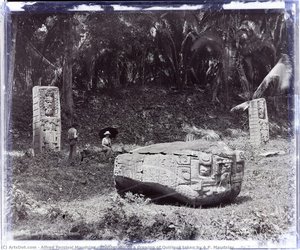
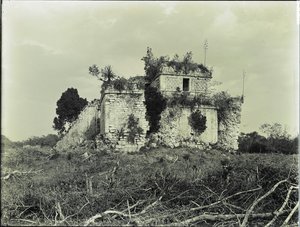
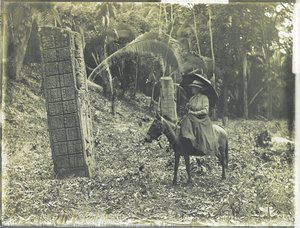
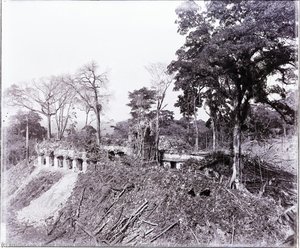
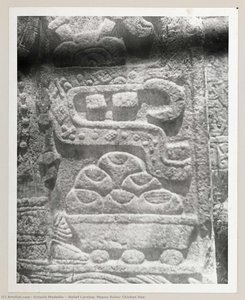
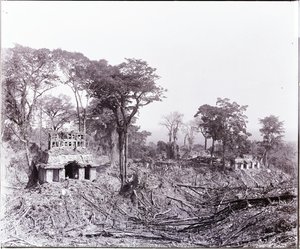
Maudslays Fotografien und Schriften wurden bewahrt und bieten einen einzigartigen Einblick in die Welt der Archäologie des 19. Jahrhunderts. Seine Werke lassen sich in verschiedenen Museen finden, darunter das British Museum (London, Vereinigtes Königreich), das mehrere seiner Fotografien beherbergt.- Photograph of Chichén Itzá taken by A.P. Maudslay (16 x 21 cm, British Museum, Fotografie)
- Photograph of Chichén Itzá taken by A.P. Maudslay (25 x 30 cm, British Museum, Fotografie)
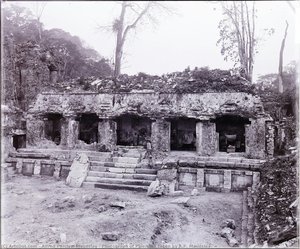
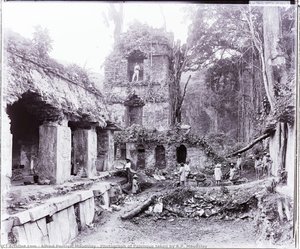
- Photograph of Copán taken by A.P. Maudslay (31 x 25 cm, British Museum, Fotografie)
Fazit
Das Vermächtnis von Alfred Percival Maudslay ist ein Zeugnis der Kraft der Neugier und der Entdeckung. Von seinen frühen Tagen als Kolonialadministrator bis zu seinen späteren Jahren als Archäologe inspiriert und bildet Maudslays Werk weiterhin.
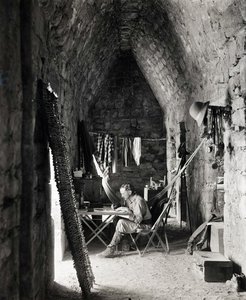
Alfred Percival Maudslay
1850 - 1931 , Vereinigtes Königreich
Kurzinfos
- Artistic Movement Or Style: Archäologie/Fotografie
- Date Of Birth: 1850
- Date Of Death: 1931
- Full Name: Alfred Percival Maudslay
- Nationality: Britisch
- Notable Artworks: ['Fotografie von Chichén Itzá']
- Place Of Birth: London, Vereinigtes Königreich
Ähnliche Artikel

Sir Alfred James Munnings: Die 25 Meisterwerke des Pferdebildes | ArtsDot
Entdecken Sie die 25 Meisterwerke von Sir Alfred James Munnings! Erleben Sie seine beeindruckenden Pferdebilder, geprägt vom Impressionismus und Realismus. Hochwertige Kunstdrucke & Reproduktionen auf ArtsDot.com – für elegante Wandkunst & stilvolles Interieurdesign.
Die 25 Meisterwerke des British Museum: Kunstgeschichte für Ihr Zuhause | ArtsDot
Entdecken Sie die 25 bedeutendsten Kunstwerke des British Museum! Von ägyptischen Schätzen bis zu Meisterwerken von Rembrandt & Van Gogh – erfahren Sie faszinierende Geschichten und finden Sie hochwertige Reproduktionen für Ihr Zuhause. Jetzt auf ArtsDot.com inspirieren lassen!
Alfred East: Pioneering Plein Air & Evoking Atmospheric Landscapes
Explore the life & work of Alfred East, a pioneer of British plein air painting. Discover his techniques for capturing atmospheric landscapes, Barbizon influences, and lasting legacy. Learn more at ArtsDot.
Philip Wilson Steer: Der Impressionismus und die britische Lebensweise – Eine künstlerische Entdeckung
Entdecken Sie Philip Wilson Steer, einen Pionier des britischen Impressionismus! Erfahren Sie mehr über sein Leben, seine Werke und seinen Einfluss auf die Kunstgeschichte. Expertenwissen & detaillierte Analysen.
Frank Brangwyn: Ein Leben zwischen Farbe, Handwerk und dem Geist der modernen britischen Kunst
Entdecken Sie das faszinierende Leben und Werk von Frank Brangwyn – einem Meister der britischen Kunst zwischen Handwerk, Grafik und Malerei. Erfahren Sie mehr über seinen Einfluss auf die moderne Gestaltung und finden Sie hochwertige Reproduktionen bei ArtsDot.