 Versenden
 Teilen
 Details anzeigen

 Herunterladen
 Ähnliche Objekte
 Diashow
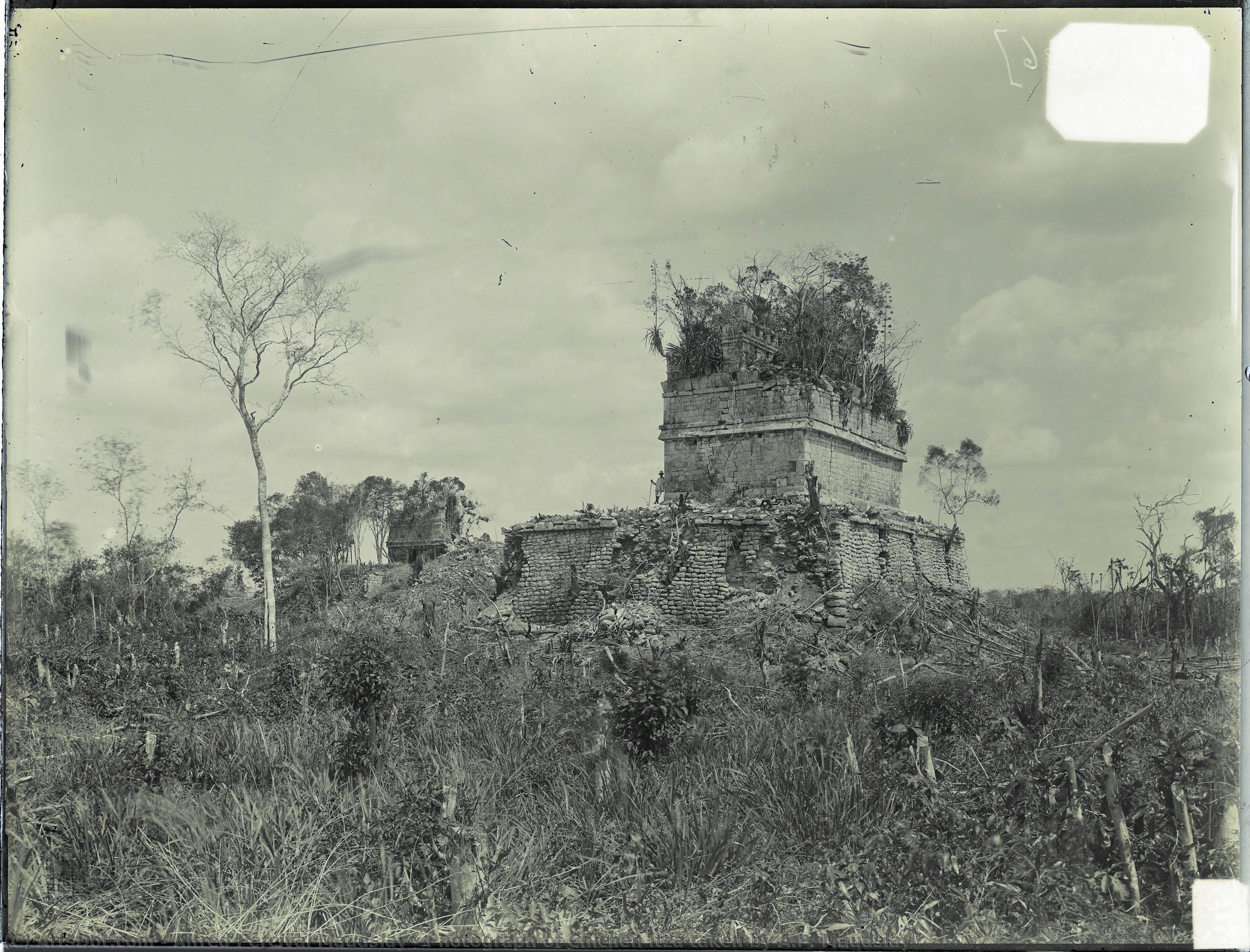
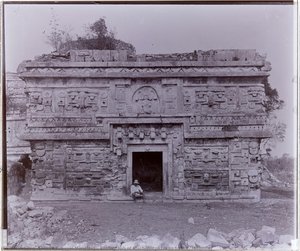
Photograph of Chichén Itzá taken by A.P. Maudslay
 Giclée Print
- Digital
- Documentary Photography
 1894
1894 16.0 x 21.0 cm
 British Museum
 Weiterlesen
Handgefertigte Ölreproduktion
Handgemaltes Ölgemälde auf Leinwand in Ihrer Wunschgröße und mit Rahmen, auf Bestellung von unseren Künstlern angefertigt. ( Druck bestellen Bild kaufen)




































Wählen Sie aus unseren vordefinierten Formaten, die den ursprünglichen Proportionen des Kunstwerks entsprechen.

Sie können Ihre eigenen Maße eingeben, um einen bestimmten Rahmen oder Platz auszufüllen. Wenn die gewählte Größe nicht den Proportionen des Originalbildes entspricht, werden wir das Kunstwerk entweder beschneiden oder das Gemälde durch zusätzliche, handgemalte Elemente erweitern. Ein digitales Mockup wird Ihnen zur Genehmigung zugesandt, bevor die Produktion beginnt.
Bitte beachten Sie, dass die Bildschirmvorschau nicht die tatsächliche Beschneidung oder Erweiterung widerspiegelt. Nur das Mockup zeigt die endgültige Komposition exakt an.
Obwohl Sondermaße verfügbar sind, empfehlen wir, eine Größe aus der vordefinierten Liste zu wählen, um die ursprünglichen Proportionen beizubehalten.
Nach der Bestellung wird das ArtsDot.com-Team dem Kunden Anweisungen per E-Mail zusenden und eine Mockup-Vorschau bereitstellen.
Weltweiter Versand () in nur 3 bis 4 Wochen statt der üblichen 5 Wochen. (31 August). Keine Kompromisse bei der Qualität.

Kostenloser weltweiter Expressversand

Hochwertige Leinenleinwand

Umfassender Versicherungsschutz beim Versand

Zollgebühren-Rückerstattungsgarantie

Garantie für exakte Farbtreue

60 Tage Rückgaberecht (nur bei Mängeln)

100% Geld-zurück-Garantie

Mengenrabatt verfügbar
 Die Glasoption ist nur für Größen unter 110 cm verfügbar.

Photograph of Chichén Itzá taken by A.P. Maudslay
Art der Reproduktion
Format der Reproduktion
-


Gesamtpreis
$ 263
A Window Into Ancient Majesty: Alfred Maudslay’s Chichén Itzá Photograph
The photograph presented here – “Photograph of Chichén Itzá taken by A.P. Maudslay” – is far more than a simple depiction of an ancient Mayan ruin; it's a meticulously crafted portal into the late 19th century, a testament to the burgeoning field of archaeological exploration, and a poignant reminder of a civilization’s enduring legacy etched in stone. Captured in stark black and white during 1894, this remarkable wet collodion image by British colonial administrator and archaeologist Alfred Percival Maudslay offers an extraordinarily detailed and evocative view of Chichén Itzá – the sprawling Mayan city nestled within the Yucatán Peninsula of Mexico. The photograph immediately draws the eye to a monumental stone structure, likely a temple or fortress, dominating the frame with its weathered walls and subtly crumbling grandeur. It’s a scene imbued with a palpable sense of history, decay, and the thrill of discovery—a feeling that speaks volumes about Maudslay's pioneering work.
Maudslay’s compositional choices are deliberate and profoundly effective. He employs a horizontal format, immediately establishing a sense of awe and scale by emphasizing the breadth of the ruins. The central stone structure is positioned with careful precision, anchoring the composition while simultaneously inviting the viewer to wander through the surrounding vegetation. Foreground elements—uneven ground and sparse foliage—serve as a subtle guide, leading the eye deeper into the scene and creating an illusion of vastness, mirroring the scale of the ancient city itself. The photograph’s monochrome palette – a carefully controlled range of grays – amplifies this effect, lending it an antique and historical feel that transcends mere documentation.
The Pioneer: Alfred Percival Maudslay and His Method
Understanding the context of this image is crucial to appreciating its significance. Alfred Percival Maudslay wasn’t simply a photographer; he was a meticulous scholar, a colonial administrator with a deep fascination for Central American cultures, and a true pioneer in archaeological methodology. His early career involved extensive travel throughout the British Pacific colonies – Fiji, Tonga, Samoa – where he honed his observational skills and developed a keen eye for detail. It was during these years that he began to recognize the importance of documenting ancient sites before they were irrevocably altered by time or development.
Maudslay’s approach to photography was remarkably innovative for its time. He utilized wet collodion, a complex photographic process requiring immediate exposure and careful processing – a technique that demanded immense skill and patience. This method produced images with a unique tonal range and texture, lending them an almost tactile quality. Furthermore, he didn't simply record the ruins; he actively engaged with them, employing techniques like plaster casting to preserve intricate carvings and hieroglyphs, ensuring their survival for future generations. His collaboration with Lorenzo Giuntini, an Italian expert in archaeological restoration, further enhanced his ability to document and analyze the site’s architectural details.
Symbolism and the Echoes of a Lost Civilization
Beyond its technical brilliance, the photograph is rich in symbolic meaning. The imposing stone structure itself represents the enduring power and sophistication of the Mayan civilization – a culture that flourished for centuries before mysteriously declining. The weathered walls, hinting at time’s relentless passage, evoke a sense of melancholy and loss, reminding us of the impermanence of human endeavors. Yet, amidst this decay, there's also an undeniable beauty—a testament to the artistry and ingenuity of the Mayan people.
The inclusion of the surrounding vegetation – a mix of dense jungle foliage – adds another layer of interpretation. It symbolizes the inextricable link between humanity and nature, highlighting how the ancient city was seamlessly integrated into its natural environment. The photograph subtly suggests that Chichén Itzá wasn’t merely built; it grew out of the landscape, becoming an integral part of the Mayan worldview.
A Legacy in Monochrome: Reproduction and Artistic Value
Reproduced today as a high-quality giclee print, “Photograph of Chichén Itzá taken by A.P. Maudslay” retains its captivating power. The subtle tonal variations, achieved through the wet collodion process, are faithfully reproduced, capturing the nuances of light and shadow that define the image’s atmosphere. This artwork serves as a valuable window into a bygone era, offering a glimpse into the life and work of a remarkable explorer and archaeologist. It's not just a beautiful image; it’s a historical artifact—a tangible connection to one of the world’s most enigmatic civilizations.
Whether adorning a study, a gallery wall, or an interior space, this photograph evokes a sense of timelessness and wonder, inviting contemplation on the rise and fall of empires and the enduring legacy of human creativity.
Ähnliche Kunstwerke
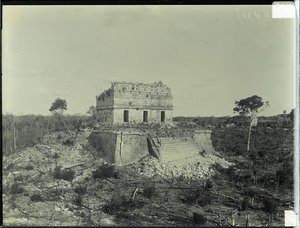
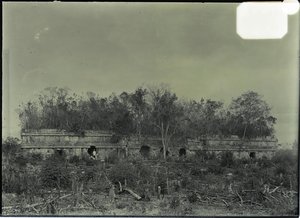
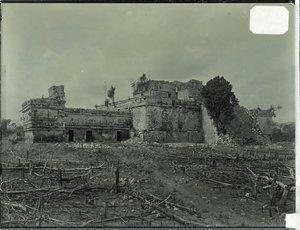
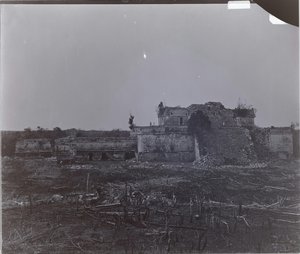
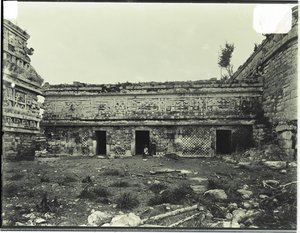
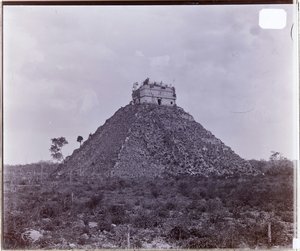
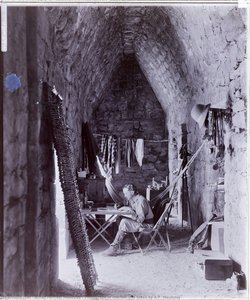
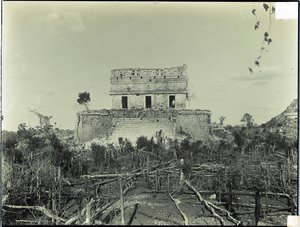
Über den Künstler
Frühes Leben und Bildung
Alfred Percival Maudslay, ein britischer Kolonialadministrator und Archäologe, wurde am 18. März 1850 in London in eine wohlhabende Familie hineingeboren. Er studierte Naturwissenschaften an Trinity Hall, Cambridge und erwarb 1872 einen Bachelor of Arts.Beruf und Reisen
Maudslays frühe Pläne für eine medizinische Karriere wurden aufgeschoben, als er mit seinem Bruder durch Zentralamerika, Mexiko und Teile der Vereinigten Staaten reiste. Diese Reise weckte ein Interesse an der Archäologie, das später sein Vermächtnis prägen sollte. Nach seiner Rückkehr nach Hause verschob Maudslay das Medizinstudium erneut, um 1873 nach Island zu reisen. Seine chronische Bronchitis veranlasste ihn, nach einem wärmeren Klima zu suchen, was zu einer Reihe von Positionen auf Jamaika, Trinidad und schließlich im Südpazifik führte.Archäologische Beiträge
Maudslays Zeit in den britischen Pazifikkolonien legte das Fundament für seine zukünftigen archäologischen Bestrebungen. Er entwickelte ein Interesse an der Sammlung ethnografischer Materialien, was später zur Gründung des University Museum of Archaeology and Ethnology at Cambridge beitragen sollte. Sein Freund, der Ornithologe Osbert Salvin, ermutigte Maudslay, die Maya-Ruinen von Quiriguá und Copán zu erkunden.Bemerkenswerte Leistungen
Maudslay war der Erste, der die Stätte von Yaxchilán beschrieb.
Er erforschte Chichén in den 1880er Jahren und nahm umfangreiche Fotografien auf.
Er veröffentlichte die erste ausführliche Beschreibung von Chichen Itza in seinem Buch „Biologia Centrali-Americana“.
Er erstellte eine vollständige Übersetzung mit Anmerkungen von Bernal Díaz del Castillos Historia, die bis heute die Standard-englische Ausgabe ist.
Künstlerisches Vermächtnis
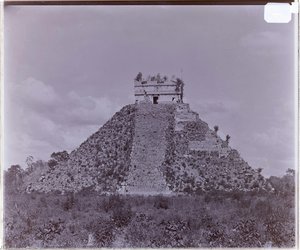
Maudslays Fotografien und Schriften wurden bewahrt und bieten einen einzigartigen Einblick in die Welt der Archäologie des 19. Jahrhunderts. Seine Werke lassen sich in verschiedenen Museen finden, darunter das British Museum (London, Vereinigtes Königreich), das mehrere seiner Fotografien beherbergt.- Photograph of Chichén Itzá taken by A.P. Maudslay (16 x 21 cm, British Museum, Fotografie)
- Photograph of Chichén Itzá taken by A.P. Maudslay (25 x 30 cm, British Museum, Fotografie)
- Photograph of Copán taken by A.P. Maudslay (31 x 25 cm, British Museum, Fotografie)
Fazit
Das Vermächtnis von Alfred Percival Maudslay ist ein Zeugnis der Kraft der Neugier und der Entdeckung. Von seinen frühen Tagen als Kolonialadministrator bis zu seinen späteren Jahren als Archäologe inspiriert und bildet Maudslays Werk weiterhin.
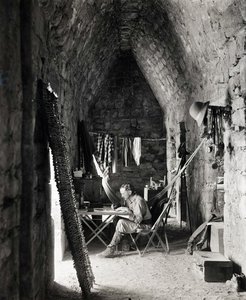
Alfred Percival Maudslay
1850 - 1931 , Vereinigtes Königreich
Kurzinfos
- Artistic Movement Or Style: Archäologie/Fotografie
- Date Of Birth: 1850
- Date Of Death: 1931
- Full Name: Alfred Percival Maudslay
- Nationality: Britisch
- Notable Artworks: ['Fotografie von Chichén Itzá']
- Place Of Birth: London, Vereinigtes Königreich
Ähnliche Artikel

Sir Alfred James Munnings: Die 25 Meisterwerke des Pferdebildes | ArtsDot
Entdecken Sie die 25 Meisterwerke von Sir Alfred James Munnings! Erleben Sie seine beeindruckenden Pferdebilder, geprägt vom Impressionismus und Realismus. Hochwertige Kunstdrucke & Reproduktionen auf ArtsDot.com – für elegante Wandkunst & stilvolles Interieurdesign.
Hubert Robert und die Romantik der Ruinen: Eine Studie zur künstlerischen Innovation und Antikenbegeisterung
Entdecken Sie die faszinierende Welt von Hubert Robert und seiner Ruinenmalerei! Expertenanalyse zu Techniken, Motiven & Investitionspotenzial für anspruchsvolle Kunstsammler. ArtsDot bietet hochwertige Reproduktionen.

Alfred Stevens: Capturing Parisian Elegance & Fin-de-Siècle Intimacy
Discover the captivating world of Alfred Stevens, master of Parisian elegance & intimate portraiture. Explore his techniques, influences, and legacy – a prized collection for discerning art enthusiasts.
Alfred Wallis: Rediscovering the Naïve Visionary of Cornish Life
Discover the captivating world of Alfred Wallis, the self-taught Cornish painter championed by modernists. Explore his unique naive style, maritime scenes & lasting legacy with ArtsDot.
Alfred Henry Maurer: Reassessing the Pioneer of American Modernist Abstraction
Explore the groundbreaking work of Alfred Henry Maurer, a pivotal figure in American Modernism. Discover his Fauvist & Cubist paintings and understand his lasting influence on abstract art. Expert analysis for collectors.