

 Versenden
 Teilen
 Details anzeigen

 Herunterladen
 Ähnliche Objekte
 Diashow
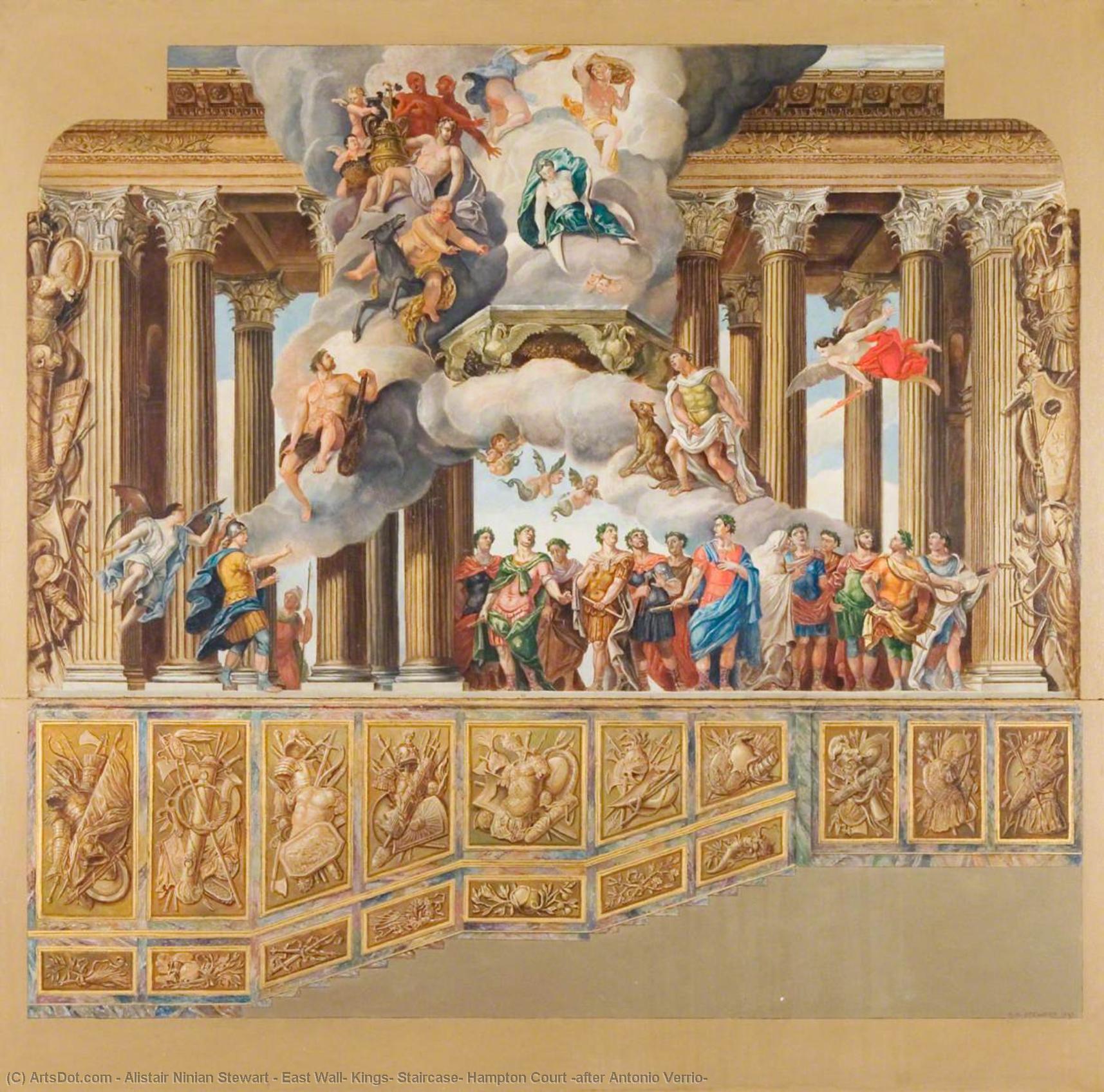
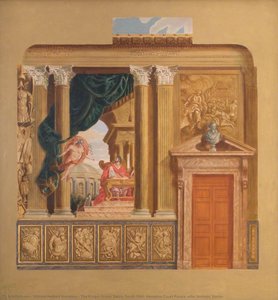
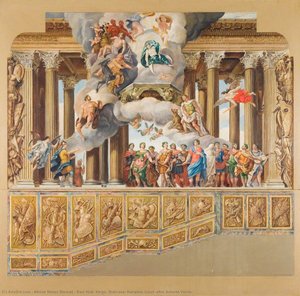
East Wall, Kings' Staircase, Hampton Court (after Antonio Verrio)
 Fresco
- Baroque
 1943
1943- Modern
 115.0 x 117.0 cm
 Government Art Collection
 Weiterlesen
Handgefertigte Ölreproduktion
Handgemaltes Ölgemälde auf Leinwand in Ihrer Wunschgröße und mit Rahmen, auf Bestellung von unseren Künstlern angefertigt. ( Druck bestellen Bild kaufen)




































Wählen Sie aus unseren vordefinierten Formaten, die den ursprünglichen Proportionen des Kunstwerks entsprechen.

Sie können Ihre eigenen Maße eingeben, um einen bestimmten Rahmen oder Platz auszufüllen. Wenn die gewählte Größe nicht den Proportionen des Originalbildes entspricht, werden wir das Kunstwerk entweder beschneiden oder das Gemälde durch zusätzliche, handgemalte Elemente erweitern. Ein digitales Mockup wird Ihnen zur Genehmigung zugesandt, bevor die Produktion beginnt.
Bitte beachten Sie, dass die Bildschirmvorschau nicht die tatsächliche Beschneidung oder Erweiterung widerspiegelt. Nur das Mockup zeigt die endgültige Komposition exakt an.
Obwohl Sondermaße verfügbar sind, empfehlen wir, eine Größe aus der vordefinierten Liste zu wählen, um die ursprünglichen Proportionen beizubehalten.
Nach der Bestellung wird das ArtsDot.com-Team dem Kunden Anweisungen per E-Mail zusenden und eine Mockup-Vorschau bereitstellen.
Weltweiter Versand () in nur 3 bis 4 Wochen statt der üblichen 5 Wochen. (24 August). Keine Kompromisse bei der Qualität.

Kostenloser weltweiter Expressversand

Hochwertige Leinenleinwand

Umfassender Versicherungsschutz beim Versand

Zollgebühren-Rückerstattungsgarantie

Garantie für exakte Farbtreue

60 Tage Rückgaberecht (nur bei Mängeln)

100% Geld-zurück-Garantie

Mengenrabatt verfügbar
 Die Glasoption ist nur für Größen unter 110 cm verfügbar.

East Wall, Kings' Staircase, Hampton Court (after Antonio Verrio)
Art der Reproduktion
Format der Reproduktion
-


Gesamtpreis
$ 488
Beschreibung des Kunstwerks
A Grand Vision of Antiquity and Majesty
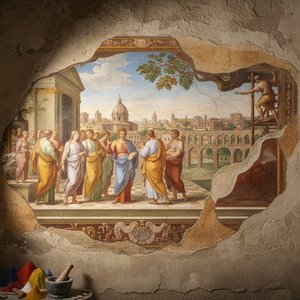
In the sweeping expanse of East Wall, Kings' Staircase, Hampton Court, we are transported not merely to a palace corridor, but into a celestial theater of power and myth. Created in 1943 by the evocative Scottish artist Alistair Ninian Stewart, this monumental fresco serves as a profound homage to the Baroque genius of Antonio Verrio. The composition is a masterclass in layered storytelling, where the terrestrial and the divine converge. As the eye travels upward, it follows a rhythmic procession of Roman soldiers and classical figures who ascend through various registers of existence. The foreground, anchored by the disciplined presence of Roman infantry, provides a grounded, muscular foundation that leads the viewer toward a middle realm populated by deities and legendary heroes, eventually culminating in a breathtakingly luminous heavenly expanse.
The sheer scale of the work demands attention, utilizing a sophisticated sense of perspective to dissolve the physical boundaries of the wall. Through the clever use of architectural elements—stately columns and sweeping drapery—Stewart creates an illusionistic depth that draws the observer into the very heart of the narrative. This trompe l'oeil effect is not merely a technical feat but an emotional invitation, pulling the viewer into a world where history and myth are indistinguishable.
The Baroque Language of Light and Motion
Technically, this piece is a triumph of the fresco medium, showcasing the artist's ability to manipulate pigments mixed with water directly onto wet plaster. This ancient technique lends the artwork a unique, organic texture; one can sense the smoothness of polished marble armor contrasting against the soft, ethereal clouds and the heavy, undulating folds of classical robes. The color palette is a rich tapestry of warmth, dominated by regal golds, deep vermilion reds, and profound blues that evoke the grandeur of an imperial era.
The lighting within the composition is nothing short of dramatic, characteristic of the Baroque aesthetic. A powerful, unseen light source illuminates the central figures, casting deep, velvety shadows that sculpt the anatomy of the soldiers and the architectural flourishes of the staircase. This interplay of light and shadow—chiaroscuro—enhances the sense of movement, making the clouds appear to drift and the drapery to flutter in a divine breeze. For the discerning collector or interior designer, such a piece offers a commanding focal point, capable of infusing a room with a sense of historical weight and theatrical elegance.
Symbolism and the Echoes of Civilization
Beyond its visual splendor, the artwork is steeped in profound symbolism. The Roman soldiers are not merely decorative; they represent the enduring strength of military might and the structured order of civilization. As these figures ascend toward the celestial realm, they embody the human aspiration toward virtue and divine favor. The presence of deities serves as a reminder of the cosmic forces that govern the rise and fall of empires, adding a layer of philosophical depth to the visual spectacle.
There is an undeniable emotional resonance within this 1943 creation. Painted during a period of global upheaval, Stewart’s recreation of such classical grandeur evokes a sense of awe, stability, and the triumph of enduring beauty over the chaos of time. It is a work that celebrates the continuity of human legacy. For those seeking to adorn a space with art that inspires contemplation and commands respect, this reproduction offers an unparalleled opportunity to possess a fragment of historical majesty, bringing the opulent spirit of Hampton Court into the modern home.
Ähnliche Kunstwerke
![Legende Des Heiligen Franziskus - [03] - Traum Vom Schloss — Giotto Di Bondone, Gotisch](/media/artworks/images-thumb/47/85/4785472aa265f95fe6962555859f4ab5.jpg)
Über den Künstler
Alistair Ninian Stewart: Echoes of War and the Pallor of Galloway
Alistair Ninian Stewart (1908-1979) wasn’t a name immediately recognized in the annals of 20th-century British art, yet his work possesses a haunting beauty and profound historical resonance. Born in Edinburgh, Scotland, into a family with strong artistic leanings – his father was a renowned painter – Stewart's journey as an artist was shaped by both personal tragedy and the tumultuous backdrop of World War II. His canvases aren’t merely depictions of landscapes or buildings; they are imbued with a palpable sense of loss, memory, and the enduring impact of conflict on the British psyche.
Stewart’s early artistic training focused primarily on landscape painting, influenced by the Scottish tradition of depicting the rugged beauty of Galloway. He initially embraced a more traditional style, capturing the rolling hills, heather-clad moors, and dramatic coastlines with meticulous detail. However, the outbreak of World War II dramatically altered his trajectory. The bombing raids over Britain, particularly those targeting London, profoundly affected him, triggering a shift in his subject matter and artistic approach. He began to document the devastation – the skeletal remains of buildings, the rubble-strewn streets, and the lingering sense of fear – with an unflinching realism that belied the romanticism often associated with landscape painting.
The Shadow of War: A Shift in Style
Following the war, Stewart’s work underwent a significant transformation. He moved away from purely representational depictions, exploring tonal variations and atmospheric effects to convey the emotional weight of his subjects. His paintings became characterized by muted colors, subtle textures, and a deliberate blurring of outlines – techniques reminiscent of Tonalism, a late 19th-century movement emphasizing mood and atmosphere over precise detail. This stylistic evolution is particularly evident in his iconic series of wartime paintings, including “East Wall, Kings’ Staircase, Hampton Court” (1943) and "North Bastion, Tower of London" (1941). These works aren't celebratory portrayals of military might; instead, they offer a poignant meditation on destruction, decay, and the fragility of human existence. The stark contrast between the grandeur of the historical buildings and their ravaged state serves as a powerful metaphor for the broader social and psychological trauma experienced by Britain during the war years.
Stewart’s artistic influences were diverse. He admired the work of J.M.W. Turner, whose atmospheric landscapes had profoundly impacted his early training. Later, he was drawn to the works of Edward Hopper, particularly his evocative portrayals of urban isolation and loneliness. However, it's crucial to note that Stewart’s wartime paintings transcend mere imitation; they possess a uniquely Scottish sensibility – a melancholic awareness of mortality and a deep connection to the land.
Galloway Revisited: A Return to Roots
Despite his wartime output, Stewart never abandoned his love for Galloway. In the post-war years, he returned to this region, producing a series of paintings that celebrated its enduring beauty while subtly acknowledging the scars left by past conflicts. These landscapes retain the meticulous detail of his earlier work but are infused with a newfound sense of quiet contemplation and resilience. The muted colors and atmospheric effects suggest a deeper understanding of the land’s history – its connection to both prosperity and hardship.
His later works often featured portraits, notably his evocative depictions of Sir John Watson Gordon, a leading Scottish master. These portraits demonstrate Stewart's ability to capture not only physical likeness but also the character and personality of his subjects. The influence of Tonalism is still present, creating a sense of intimacy and emotional depth.
Legacy and Historical Significance
Alistair Ninian Stewart’s contribution to British art may have been initially overlooked, yet his wartime paintings hold significant historical value. They offer a rare and unflinching glimpse into the psychological impact of World War II on Britain – a subject often glossed over in official accounts. His work serves as a poignant reminder of the human cost of conflict and the enduring power of memory. Furthermore, Stewart’s stylistic evolution—his transition from traditional landscape painting to atmospheric Tonalism—demonstrates the dynamic nature of artistic expression during a period of profound social and political upheaval. Today, his paintings are increasingly recognized for their emotional depth, technical skill, and historical significance, solidifying Alistair Ninian Stewart's place as a compelling voice in 20th-century British art.
alistair ninian stewart
1908 - 1979
Kurzinfos
- Artistic Movement Or Style: WWII Art, Landscape Painting
- Artists Or Movements Influenced By This Artist:
- Impressionist painters
- Macchiaioli artists
- Artists Who Influenced This Artist:
- Tommy Gordon
- William MacGeorge
- Date Of Birth: 1908
- Date Of Death: 1979
- Full Name: Alistair Ninian Stewart
- Nationality: Scottish
- Notable Artworks:
- East Wall, Hampton Court
- North Bastion, Tower London
- Place Of Birth: WahooArt, Scotland
Ähnliche Artikel

Das Familienerbe an die Wand bringen: Wandgemälde als Generationenschatz
Verwandeln Sie Ihre Familiengeschichte in ein beeindruckendes Wandgemälde! Expertenrat & hochwertige Handwerkskunst für einzigartige Kunstwerke, die Generationen verbinden. Entdecken Sie jetzt!

The Enduring Legacy of Fresco Painting: Techniques, History & Contemporary Relevance
Explore the rich history & enduring artistry of fresco painting – from Giotto to Michelangelo! Discover techniques, conservation efforts, & modern applications. Learn how ArtsDot brings this timeless art form to your home.

The Enduring Legacy of Fresco: Technique, History & Artistic Expression Across Cultures
Explore the rich history & enduring legacy of fresco painting! Discover ancient techniques, Giotto's masterpieces, and modern applications. Expert insights for art lovers & professionals.
Kunst, die mit Ihnen lebt: Emotionale Kraft individueller Innenraumfresken
Entdecken Sie die emotionale Kraft individueller Innenraumfresken! Expertenberatung & hochwertige Wandmalerei für Hotels, Wohnräume & mehr. – Ihr Partner für einzigartige Kunst.
Die bleibende Pracht der Freskomalerei: Technik, Geschichte und künstlerischer Ausdruck
Entdecken Sie die faszinierende Welt der Freskomalerei! Von den Ursprüngen bis zur Renaissance – wir beleuchten Technik, Geschichte und künstlerischen Ausdruck dieser einzigartigen Kunstform. Expertenwissen für Sammler & Liebhaber.

