

 Vorschau anzeigen
 Versenden
 Teilen
 Details anzeigen

 Herunterladen
 Ähnliche Objekte
 Röntgenaufnahme
 Diashow
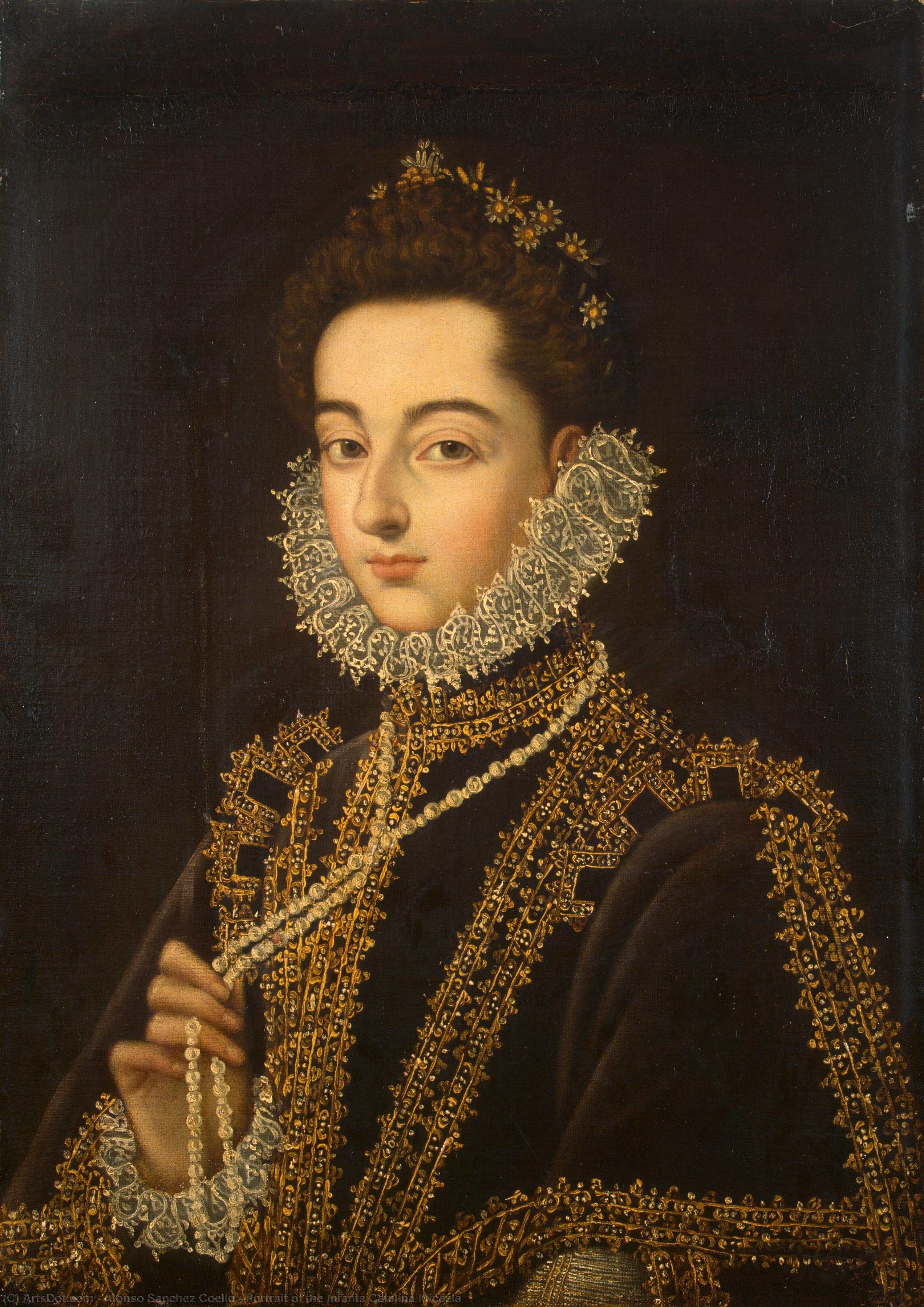
Portrait of the Infanta Catalina Micaela
 Oil On Canvas
- WallArt
- Renaissance Portraiture
 1682
1682 70.0 x 50.0 cm
 Eremitage Museum
 Weiterlesen
Erwerben Sie ein hochauflösendes, optimiertes digitales Bild, das der Online-Vorschau weit überlegen ist.
Jede Datei wird von unseren hauseigenen Spezialisten mit modernsten Werkzeugen und fachmännischer manueller Retusche sorgfältig vorbereitet. Wir stellen sicher, dass jedes Bild eine außergewöhnliche Klarheit, präzise Farbgenauigkeit und feinste Details aufweist.
Die endgültige Datei wird innerhalb von 72 Stunden per E-Mail zugestellt und ist für den sofortigen Einsatz in professionellen, redaktionellen und Druckumgebungen optimiert. Es handelt sich um dieselbe Qualität, der führende Designstudios, Verlage und Galerien vertrauen.
Digitales Bild
Laden Sie eine hochauflösende Datei für die persönliche Präsentation, den Druck und kreative Projekte herunter. ( Druck bestellen Handgemalte Reproduktion bestellen)
In jeder Bestellung digitaler Bilder enthalten
Professionelle digitale Bereitstellung, garantiert
Wenn Sie sich für ArtsDot.com entscheiden, erhalten Sie nicht nur ein Bild – Sie erhalten ein professionell aufbereitetes digitales Kunstwerk, das mit höchster Präzision erstellt und durch eine Zufriedenheitsgarantie abgesichert wird. Hier ist alles, was automatisch mit Ihrer Bestellung geliefert wird:

Schnelle E-Mail-Zustellung
Ihre hochauflösende digitale Bilddatei wird Ihnen innerhalb von 72 Stunden nach der Bestellung per E-Mail zugestellt – bereit zur sofortigen Verwendung.

KI-optimierte digitale Datei
Ihre Kunstwerke werden professionell mithilfe fortschrittlicher KI-Tools und manueller Bearbeitung optimiert, um maximale Detailtreue, Klarheit und Farbgenauigkeit zu gewährleisten.

Lebenslanger kostenloser Neudruckservice
Datei versehentlich gelöscht oder verloren? Keine Sorge – wir senden sie Ihnen jederzeit kostenlos erneut zu.

Keine Einfuhrgebühren – jemals
Genießen Sie Ihr Kunstwerk sofort ohne Zollgebühren, Einfuhrabgaben oder Versandkosten – digitale Downloads sind immer steuerfrei.

Garantierte Farbtreue
Wir garantieren, dass Ihr digitales Bild mithilfe professioneller Werkzeuge und Farbmanagement die Originalfarben so präzise wie möglich wiedergibt.

60-Tage-Zufriedenheitsgarantie
Sollten Sie mit Ihrem digitalen Bild nicht zufrieden sein, werden wir es überarbeiten oder Ihnen innerhalb von 60 Tagen 100% erstatten – ohne Wenn und Aber.

100% Geld-zurück-Garantie
Nicht zufrieden? Erhalten Sie innerhalb von 60 Tagen nach Erhalt Ihrer digitalen Datei eine vollständige Rückerstattung – ohne Angabe von Gründen.

Rabatte bei Großbestellungen
3 Bilder kaufen, 10% sparen – 5 Bilder kaufen, 15% sparen – Ab 10 Bildern 20% sparen. Ideal für kreative Projekte, Galerien und Agenturen.
The Enigmatic Beauty of a Royal Portrait
Alonso Sánchez Coello’s “Portrait of the Infanta Catalina Micaela,” painted in 1582-85, is more than just a depiction of a young noblewoman; it's a meticulously crafted window into the formality and subtle power dynamics of 16th-century Spanish court life. The painting, now residing within the hallowed halls of the Museo del Prado in Madrid, immediately draws the eye with its restrained elegance – a deliberate departure from the flamboyant excesses often associated with portraiture during that era. The subject, Catalina Micaela, daughter of Philip II and Margaret Thérèse of Austria, is presented with an almost austere dignity, her gaze lowered as if lost in contemplation, yet radiating an undeniable grace.
Coello’s genius lies not merely in his technical skill – the subtle gradations of light and shadow, the delicate rendering of fabrics and jewelry – but in his ability to imbue a formal portrait with a profound sense of humanity. He masterfully blends influences from the Flemish objectivity championed by Anthonis Mor, whom he studied in Flanders, with the Venetian sensuality that characterized Titian’s work. This fusion results in a remarkably lifelike portrayal, capturing not just the physical likeness of the Infanta but also hinting at her inner world – a quiet intelligence and perhaps even a touch of melancholy.
A Masterclass in Renaissance Technique
Examining the painting closely reveals Coello’s sophisticated understanding of technique. He employs a layered approach, building up color and texture through numerous thin glazes—a hallmark of Flemish painting—creating an astonishingly luminous surface. The rich crimson of her dress is offset by the cool tones of her hair and skin, while the intricate details of her jewelry – pearls, gold buttons, and delicate lace – are rendered with painstaking precision. Notice, too, how he subtly uses light to sculpt the form of her face, emphasizing the delicate curve of her cheekbone and the gentle slope of her nose.
- Flemish Objectivity: Coello’s meticulous attention to detail and realistic depiction of textures reflects the influence of Flemish painting.
- Venetian Sensuality: The use of warm colors, particularly in the dress, hints at the Venetian tradition's emphasis on color and light.
- Glaze Technique: The numerous thin glazes create a luminous and vibrant surface.
Symbolism and Context within the Spanish Court
Beyond its technical brilliance, “Portrait of the Infanta Catalina Micaela” is steeped in symbolism relevant to the Spanish court of Philip II. The pose itself—the lowered gaze, the crossed hands—is a common motif in Renaissance portraits, signifying modesty and restraint – virtues highly valued within the rigid social hierarchy of the time. The inclusion of her gloves, a symbol of feminine refinement, further reinforces this image of aristocratic grace. Catalina Micaela’s position as one of the King's daughters made her a prominent figure in court circles, and Coello’s portrait serves not only to commemorate her beauty but also to subtly assert her status within the royal family.
Furthermore, the painting provides insight into the artistic patronage system prevalent during this period. The Infanta’s portrait was commissioned by Philip II himself, a testament to Coello's standing as one of the most sought-after court painters in Spain. The work reflects the King’s desire to project an image of power and prosperity – a carefully constructed façade designed to reinforce his authority.
A Timeless Masterpiece: Reproduction Possibilities
Today, “Portrait of the Infanta Catalina Micaela” stands as a testament to Alonso Sánchez Coello's artistic genius. If you’re seeking to bring this captivating portrait into your own home or office, a high-quality reproduction offers an accessible and affordable way to appreciate its beauty and historical significance. 1st Art Gallery offers meticulously hand-painted reproductions that capture the essence of Coello's original masterpiece, ensuring that you possess a stunning work of art that will grace your space for generations to come.
Ähnliche Kunstwerke

Biografie des Künstlers
Frühes Leben und Ausbildung
- Geboren: Benifaió, Spanien (1531)
- Verbrachte Kindheit in der Nähe von Valencia bis zum Tod seines Vaters.
- Um 1541/42 zog er nach Portugal, um bei seinem Großvater zu leben, einem Adligen im Dienst der portugiesischen Monarchen.
- Studierte um 1550 bei Anthonis Mor (Antonio Moro) in Flandern.
- Erhielt die Unterstützung von Antoine de Granville, Bischof von Arras, ebenfalls Förderer von Mor.
Karriere am spanischen Hof
- Arbeitete für die portugiesische Königsfamilie und später für den Hof von João Manuel, Prinz von Portugal.
- Zog 1555 an den spanischen Hof Philipps II., empfohlen von Juana, Schwester Philipps II.
- Wurde 1560 Hofmaler.
- Vermählte sich um 1560/61 mit Louisa Reyaltes, der Tochter eines Silberschmieds.
- Seine Tochter, Isabel Sánchez, wurde ebenfalls Malerin und assistierte in seiner Werkstatt.
- Zog mit dem Hof nach Toledo und ließ sich 1561 in Madrid nieder.
Künstlerischer Stil und Einflüsse
- Stil: Kombinierte flämische Objektivität mit venezianischer Sinnlichkeit.
- Einflüsse: Vor allem beeinflusst von Anthonis Mor und Tizian.
- Er lernte Präzision von Mor.
- Inkorporierte venezianische Goldtöne, großzügige Verarbeitung und die Verwendung von Licht von Tizian.
- Bekannt für Porträts, die durch eine leichte Pose, Würde, Nüchternheit und warme Farbgebung gekennzeichnet sind.
Hauptwerke und Errungenschaften
- Produzierte sowohl Porträts als auch religiöse Gemälde.
- Religiöse Werke waren konventionell, zeigten aber einen asketischen Stil.
- Bemerkenswerte Porträts:
- Philipp II mit Rosenkranz (1573)
- Porträts der Infantin Isabel Clara Eugenia (1571)
- Serie von Gemälden, die die Kinder Philipps II. darstellen.
- Doppelporträt der Infantinnen Isabella Clara Eugenia und Catalina Micaela (1568–9).
- Malte religiöse Werke für El Escorial.
- Erstellte eine topographische Ansicht des Hafens von Sevilla.
Vermächtnis und historische Bedeutung
- Sein Ruf als Porträtist wurde durch zahlreiche Kopien und Imitationen kompliziert.
- Gilt als bedeutende Figur in der spanischen Renaissancekunst, insbesondere für seine Hofporträts.
- Seine Arbeit beeinflusste spätere Künstler, darunter Velázquez, hinsichtlich der Darstellung von Texturen wie Rüstungen und Stoffen.
- Starb am 8. August 1588 in Madrid.
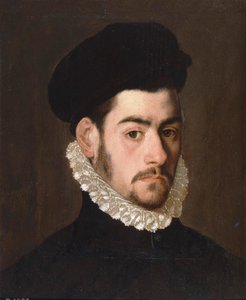
Alonso Sánchez Coello
1531 - 1588 , Spanien
Kurzinfos
- Beeinflusste Künstler:
- Anthonis Mor
- Titian
- Bemerkenswerte Werke:
- Philipp II mit Rosenkranz
- Porträt einer Dame
- Anna von Österreich
- Don Juan von Österreich
- Katharina von Österreich
- Geburtsdatum: ca. 1531
- Geburtsort: Benifaió, Spanien
- Künstlerischer Stil: Spanische Renaissance
- Nationalität: Iberisch
- Sterbedatum: 1588
- Vollständiger Name: Alonso Sánchez Coello
- Von Künstlern Beeinflusst:
- Juan Pantoja de la Cruz
- Felipe de Liaño

