

 Vorschau anzeigen
 Versenden
 Teilen
 Details anzeigen

 Herunterladen
 Ähnliche Objekte
 Röntgenaufnahme
 Diashow
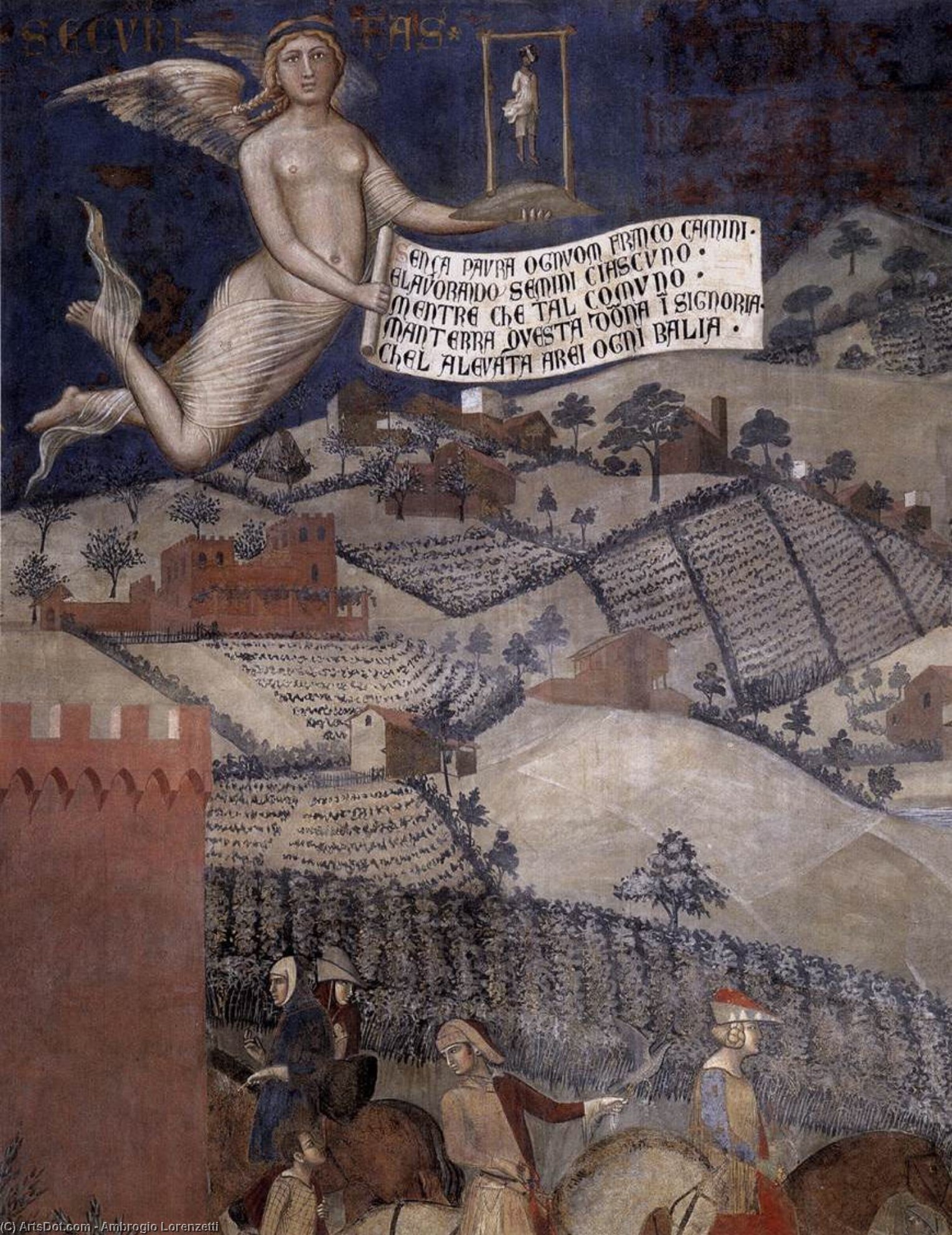
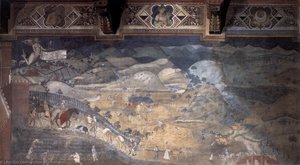
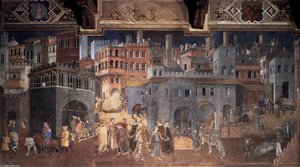
The Effects of Good Government in the Countryside (detail)


 Weiterlesen
Erwerben Sie ein hochauflösendes, optimiertes digitales Bild, das der Online-Vorschau weit überlegen ist.
Jede Datei wird von unseren hauseigenen Spezialisten mit modernsten Werkzeugen und fachmännischer manueller Retusche sorgfältig vorbereitet. Wir stellen sicher, dass jedes Bild eine außergewöhnliche Klarheit, präzise Farbgenauigkeit und feinste Details aufweist.
Die endgültige Datei wird innerhalb von 72 Stunden per E-Mail zugestellt und ist für den sofortigen Einsatz in professionellen, redaktionellen und Druckumgebungen optimiert. Es handelt sich um dieselbe Qualität, der führende Designstudios, Verlage und Galerien vertrauen.
Digitales Bild
Laden Sie eine hochauflösende Datei für die persönliche Präsentation, den Druck und kreative Projekte herunter. ( Druck bestellen Handgemalte Reproduktion bestellen)
In jeder Bestellung digitaler Bilder enthalten
Professionelle digitale Bereitstellung, garantiert
Wenn Sie sich für ArtsDot.com entscheiden, erhalten Sie nicht nur ein Bild – Sie erhalten ein professionell aufbereitetes digitales Kunstwerk, das mit höchster Präzision erstellt und durch eine Zufriedenheitsgarantie abgesichert wird. Hier ist alles, was automatisch mit Ihrer Bestellung geliefert wird:

Schnelle E-Mail-Zustellung
Ihre hochauflösende digitale Bilddatei wird Ihnen innerhalb von 72 Stunden nach der Bestellung per E-Mail zugestellt – bereit zur sofortigen Verwendung.

KI-optimierte digitale Datei
Ihre Kunstwerke werden professionell mithilfe fortschrittlicher KI-Tools und manueller Bearbeitung optimiert, um maximale Detailtreue, Klarheit und Farbgenauigkeit zu gewährleisten.

Lebenslanger kostenloser Neudruckservice
Datei versehentlich gelöscht oder verloren? Keine Sorge – wir senden sie Ihnen jederzeit kostenlos erneut zu.

Keine Einfuhrgebühren – jemals
Genießen Sie Ihr Kunstwerk sofort ohne Zollgebühren, Einfuhrabgaben oder Versandkosten – digitale Downloads sind immer steuerfrei.

Garantierte Farbtreue
Wir garantieren, dass Ihr digitales Bild mithilfe professioneller Werkzeuge und Farbmanagement die Originalfarben so präzise wie möglich wiedergibt.

60-Tage-Zufriedenheitsgarantie
Sollten Sie mit Ihrem digitalen Bild nicht zufrieden sein, werden wir es überarbeiten oder Ihnen innerhalb von 60 Tagen 100% erstatten – ohne Wenn und Aber.

100% Geld-zurück-Garantie
Nicht zufrieden? Erhalten Sie innerhalb von 60 Tagen nach Erhalt Ihrer digitalen Datei eine vollständige Rückerstattung – ohne Angabe von Gründen.

Rabatte bei Großbestellungen
3 Bilder kaufen, 10% sparen – 5 Bilder kaufen, 15% sparen – Ab 10 Bildern 20% sparen. Ideal für kreative Projekte, Galerien und Agenturen.
The Echoes of Justice: Ambrogio Lorenzetti’s “The Effects of Good Government”
Within the heart of Siena’s Palazzo Pubblico, amidst the echoes of medieval governance, resides a fresco that transcends mere decoration—it is a profound meditation on civic virtue and the perilous consequences of corruption. “The Effects of Good Government in the Countryside (detail),” painted by Ambrogio Lorenzetti between 1338 and 1340, isn’t simply a depiction of a town; it's an allegory of Siena itself, rendered with a startling clarity that continues to resonate centuries later. The work forms part of a larger cycle, “Allegories of Good and Bad Government,” commissioned by the city’s ruling council – the Nine – as a visual reminder of their responsibilities and a stark warning against succumbing to tyranny.
Lorenzetti, a pivotal figure bridging the gap between Byzantine artistic traditions and the nascent Renaissance, masterfully employed a style that blended meticulous detail with a burgeoning naturalism. He drew upon the established conventions of Sienese painting – its rich colors, elegant figures, and emphasis on narrative clarity – but infused them with an innovative spirit, particularly in his use of perspective and his ability to imbue inanimate objects with symbolic weight. The fresco’s palette is dominated by earthy tones—ochres, siennas, and deep blues—reflecting the landscape and the seriousness of the subject matter. The technique itself is a testament to his skill: layered pigments applied to wet plaster, creating a luminous surface that seems to glow from within.
A Landscape of Virtue and Vice
The scene unfolds across three panels, depicting Siena’s prosperity and its potential downfall. The central panel showcases the idyllic countryside, a vibrant tapestry of fields, vineyards, and olive groves—a testament to the benefits of just governance. Here, farmers diligently tend their crops, merchants trade fairly, and citizens enjoy a life of abundance. A river flows smoothly through the landscape, symbolizing the flow of prosperity and justice. The figures are not idealized; they possess a tangible humanity, reflecting Lorenzetti’s growing interest in portraying realistic human forms.
However, the panel to the right offers a chilling contrast: Siena consumed by chaos and corruption. A tyrannical ruler, depicted as a monstrous figure with grasping hands, has seized control, plunging the city into darkness. The landscape is barren and desolate, choked by weeds and ravaged by fire. The people are enslaved, their faces contorted in despair, while the once-fertile fields lie fallow. This stark depiction serves as a potent warning against the dangers of unchecked power and the erosion of civic virtue.
Symbolism Woven into the Fabric
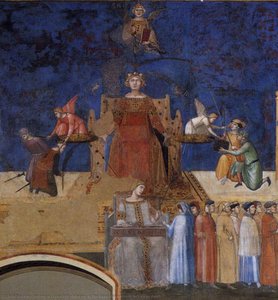
Lorenzetti’s genius lies not only in his technical skill but also in his masterful use of symbolism. The central figure, Justice, holding scales representing fairness and judgment, is positioned above Wisdom, who guides the city towards prosperity. The “cord” that connects them to the citizens underscores the vital link between leadership and the well-being of the people. Notice, too, the plane – a tool for smoothing imperfections – symbolizing the role of governance in creating a harmonious society. The placement of these figures is deliberate, emphasizing the importance of ethical leadership and the consequences of its absence.
The depiction of the countryside itself is laden with meaning. The abundance of crops represents prosperity, while the healthy livestock symbolizes fertility and stability. Conversely, the ravaged landscape in the panel depicting tyranny reflects the devastation caused by corruption and injustice. Every element—from the flowing river to the barren fields—contributes to the fresco’s complex and layered narrative.
A Timeless Message for a Modern World
"The Effects of Good Government in the Countryside (detail)" remains remarkably relevant today. Its message about the importance of civic virtue, responsible leadership, and the dangers of corruption transcends its historical context. It’s a powerful reminder that a thriving society depends on the integrity of its leaders and the active participation of its citizens. Reproductions of this extraordinary fresco offer a unique opportunity to bring this timeless wisdom into our homes and offices, serving as a constant visual prompt for ethical behavior and thoughtful governance.
Ähnliche Kunstwerke
![Legende Des Heiligen Franziskus – [12] – Ekstase Des Heiligen Franziskus — Giotto Di Bondone, Proto-renaissance](/media/artworks/images-thumb/04/ab/04abd6d876609c25d110143ce0fae9c5.jpg)
Biografie des Künstlers
Frühes Leben und Hintergrund
- Name: Ambrogio Lorenzetti
- Geboren: Siena, Italien (ca. 1290)
- Gestorben: 1348 (wahrscheinlich an der Pest)
- Familie: Bruder des Malers Pietro Lorenzetti.
- Frühe Ausbildung: Einzelheiten sind spärlich, aber er erhielt wahrscheinlich eine Ausbildung innerhalb der sienesischer Kunsttradition.
Künstlerischer Stil und Einflüsse
- Sienese Schule: Lorenzetti war eine bedeutende Figur in der Sienese Schule des Malens, bekannt für ihren eleganten und dekorativen Stil.
- Byzantinischer Einfluss: Frühe Werke zeigen den Einfluss byzantinischer Kunst, die durch Frontalität und stilisierte Figuren gekennzeichnet ist.
- Klassische Einflüsse: Er zeigte Interesse an der klassischen Antike, was sich in seinen Studien der Skulptur und der Verwendung klassischer Motive zeigt.
- Naturalismus: Eine wichtige Entwicklung in Lorenzettis Stil war ein Wandel hin zum Naturalismus, der Figuren und Szenen mit größerer Realität darstellt als frühere Generationen. Dies stand im Gegensatz zum stärker stilisierten Ansatz früherer sienesischer Maler.
- Simone Martini: Beeinflusst von Simone Martini, einer weiteren führenden Figur der Sienese Schule.
- Giotto: Einige Gelehrte vermuten eine Verbindung zu Giottos Innovationen in Naturalismus und räumlicher Darstellung.
Hauptwerke und Errungenschaften
- Madonna mit Kind (1319): Ein frühes Werk, das byzantinischen Einfluss zeigt, aber auch seine sich entwickelnde naturalistische Tendenz andeutet.
- Fresken im Palazzo Pubblico, Siena: Seine bedeutendste Leistung ist der Freskenzyklus in der Sala dei Nove ( Saal der Neun), der die Allegorie von guter und schlechter Regierung darstellt und Szenen veranschaulicht, die die Auswirkungen einer guten und schlechten Regierung auf Stadt und Land zeigen.
- Auswirkungen guter Regierung auf Stadt und Land: Eine bemerkenswerte Panorama-Darstellung der blühenden mittelalterlichen Gesellschaft, die als eine Enzyklopädie des täglichen Lebens gilt.
- Allegorie schlechter Regierung und ihre Auswirkungen auf Stadt und Land: Ein deutlicher Kontrast zum Fresko „gute Regierung“, das die Folgen von Korruption und Misswirtschaft veranschaulicht. Es zeigt eines der frühesten Darstellungen einer Sanduhr.
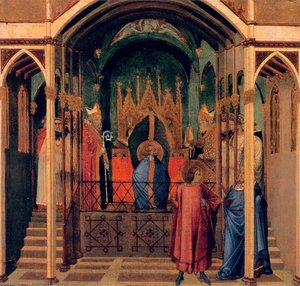
- Investitur des Heiligen Ludwig von Toulouse (1329): Ein Fresko, das seine wachsende Fähigkeit demonstriert, Perspektive und realistische Figuren darzustellen.
- Maestà (ca. 1335): Ein Altarbild, das eine dynamischere Interaktion zwischen der Jungfrau Maria und dem Kind zeigt und eine sich entwickelnde emotionale Ausdruckskraft widerspiegelt.
Entwicklung und Innovation
- Perspektive: Lorenzetti experimentierte mit Perspektive, wenn auch nicht in einer vollständig entwickelten Form; seine Versuche trugen zur Entwicklung der räumlichen Darstellung in der Malerei bei.
- Physiognomie: Er zeigte Interesse an der Physiognomie (der Lehre von den Gesichtszügen zur Bestimmung des Charakters) und verlieh seinen Figuren so psychologische Tiefe.
- Säkular Themen: Seine Fresken im Palazzo Pubblico markierten einen deutlichen Wandel hin zu säkularen Themen in der Kunst, was die wachsende Bedeutung des bürgerlichen Lebens und der Regierung widerspiegelte.
- Individualismus: Lorenzettis Werk demonstrierte ein Maß an künstlerischem Individualismus, das für seine Zeit ungewöhnlich war, da er seine eigene Vision verfolgte, anstatt sich strikt an die Patronage-Anforderungen zu halten.
Historische Bedeutung
- Vorläufer der Renaissance: Lorenzettis Innovationen in Naturalismus, Perspektive und säkularen Themen ebneten den Weg für die italienische Renaissance.
- Einfluss auf spätere Künstler: Seine Arbeit beeinflusste nachfolgende Generationen sienesischer und florentinischer Maler.
- Dokumentation des mittelalterlichen Lebens: Die Fresken im Palazzo Pubblico liefern unschätzbare Einblicke in die mittelalterliche Gesellschaft, Wirtschaft und Regierung.
- Einzigartige künstlerische Vision: Lorenzettis Fähigkeit, byzantinische Traditionen mit aufkommenden naturalistischen Trends zu verbinden, schuf ein einzigartiges und dauerhaftes künstlerisches Erbe.
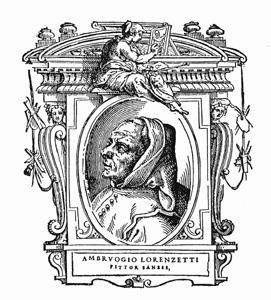
Ambrogio Lorenzetti
1290 - 1348 , Italien
Kurzinfos
- Beeinflusste Künstler:
- Simone Martini
- Byzantinische Kunst
- Klassische Kunstformen
- Bemerkenswerte Werke:
- Allegorie der guten Regierung
- Allegorie der schlechten Regierung
- Madonna mit Kind (1319)
- Einsetzung des Hl. Ludwig von Toulouse
- Geburtsdatum: ca. 1290
- Geburtsort: Siena, Italien
- Künstlerische Richtung: Sieneser Schule, Frührenaissance
- Nationalität: Italienisch
- Sterbedatum: 1348
- Vollständiger Name: Ambrogio Lorenzetti
- Von Künstlern Beeinflusst: ['Italienische Renaissance-Künstler']

