

 Vorschau anzeigen
 Versenden
 Teilen
 Details anzeigen

 Herunterladen
 Ähnliche Objekte
 Röntgenaufnahme
 Diashow
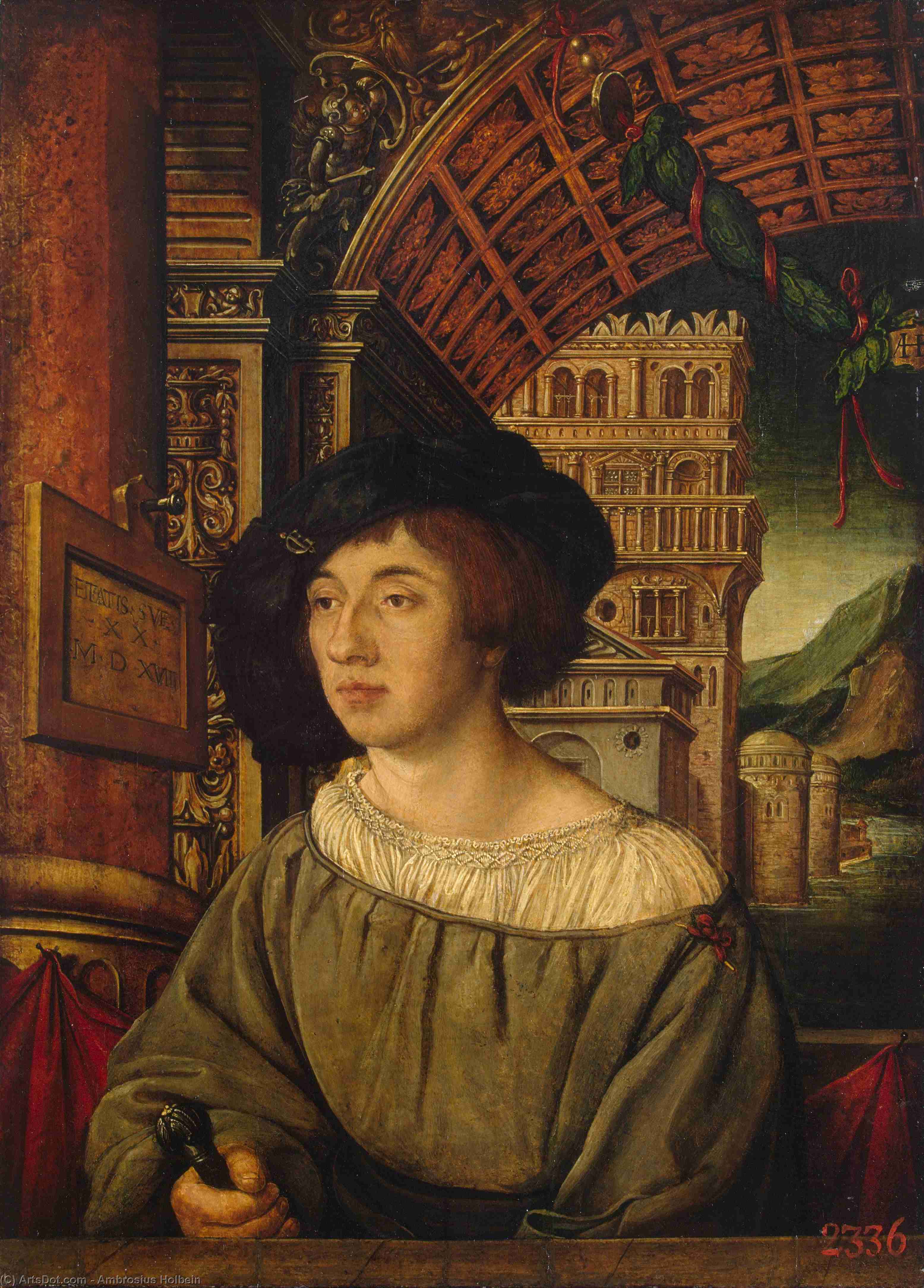
Portrait of a Young Man
 Oil On Panel
- WallArt
- Renaissance Humanism
 1518
1518- Renaissance
 43.0 x 32.0 cm
 Eremitage Museum
 Weiterlesen
Handgefertigte Ölreproduktion
Handgemaltes Ölgemälde auf Leinwand in Ihrer Wunschgröße und mit Rahmen, auf Bestellung von unseren Künstlern angefertigt. ( Druck bestellen Bild kaufen)




P118B $10

P118H $10

P118W $10

P438Z $10

P508JH $12

P508YH $12

P805H $10

P805Z $10

P919BZ $10

P919G $10

P919XJ $10

P959ZH $10

P968JZ $12

W106C $8

W218G $10

W218JH $8

W218Y $10

W307PJ $10

W316G $10

W316PJ $8

W316Y $10

W398PJ $8

W4111J $10

W500HY $15

W500JH $15

W692G $12

W849H $8

W940BG $15

W953PJ $8




Wählen Sie aus unseren vordefinierten Formaten, die den ursprünglichen Proportionen des Kunstwerks entsprechen.

Sie können Ihre eigenen Maße eingeben, um einen bestimmten Rahmen oder Platz auszufüllen. Wenn die gewählte Größe nicht den Proportionen des Originalbildes entspricht, werden wir das Kunstwerk entweder beschneiden oder das Gemälde durch zusätzliche, handgemalte Elemente erweitern. Ein digitales Mockup wird Ihnen zur Genehmigung zugesandt, bevor die Produktion beginnt.
Bitte beachten Sie, dass die Bildschirmvorschau nicht die tatsächliche Beschneidung oder Erweiterung widerspiegelt. Nur das Mockup zeigt die endgültige Komposition exakt an.
Obwohl Sondermaße verfügbar sind, empfehlen wir, eine Größe aus der vordefinierten Liste zu wählen, um die ursprünglichen Proportionen beizubehalten.
Nach der Bestellung wird das ArtsDot.com-Team dem Kunden Anweisungen per E-Mail zusenden und eine Mockup-Vorschau bereitstellen.
Weltweiter Versand () in nur 3 bis 4 Wochen statt der üblichen 5 Wochen. (25 August). Keine Kompromisse bei der Qualität.

Kostenloser weltweiter Expressversand

Hochwertige Leinenleinwand

Umfassender Versicherungsschutz beim Versand

Zollgebühren-Rückerstattungsgarantie

Garantie für exakte Farbtreue

60 Tage Rückgaberecht (nur bei Mängeln)

100% Geld-zurück-Garantie

Mengenrabatt verfügbar
 Die Glasoption ist nur für Größen unter 110 cm verfügbar.

Portrait of a Young Man
Art der Reproduktion
Format der Reproduktion
-


Gesamtpreis
$ 263
Beschreibung des Kunstwerks
A Glimpse into a Renaissance Soul
In the quiet intimacy of this oil-on-wood panel, we encounter more than just a face; we meet a moment frozen in time. The Portrait of a Young Man, believed to be a self-portrait of the gifted Ambrosius Holbein, serves as a poignant fragment of the Northern Renaissance. Executed around 1518 in the vibrant German city of Augsburg, the painting captures a figure poised on the precipice of greatness, yet marked by the tragic brevity of a life cut short. The subject is presented in a formal, dignified pose, clad in somber black attire that is subtly warmed by the earthy tones of a brown shirt. His gaze, directed outward with an unwavering seriousness, establishes an immediate and profound connection with the viewer, inviting us into his contemplative, perhaps even melancholic, inner world.
The mastery of technique displayed in this small-scale work—measuring just 43 x 32 cm—is nothing short of extraordinary. Holbein employs a meticulous approach to realism that defines the era, rendering textures with such precision that one can almost feel the weight of the fabric and the soft velvet lining of his hat. Through the delicate interplay of light and shadow, the artist imparts a sculptural quality to the sitter, giving the flesh a palpable vitality. This careful manipulation of light does not merely illuminate the subject; it breathes life into the very grain of the wood, creating a sense of depth that belies the painting's modest dimensions.
Symbolism and the Intellectual Spirit
Beyond the physical likeness, the composition is rich with the intellectual currents of the 16th century. The background, featuring an ornate ceiling adorned with decorative pinecones, is far from mere ornamentation. In the symbolic language of the Renaissance, the pinecone often represented immortality and the eternal nature of the soul—a fitting motif for a man whose life ended in his mid-twenties. This layer of meaning elevates the portrait from a simple likeness to a profound meditation on existence and legacy.
Furthermore, the presence of scattered books within the scene suggests a life steeped in humanism and scholarly pursuit. These elements work in harmony to portray the young man not just as an individual, but as a representative of a new age of discovery and intellectual ferment. For the collector or the interior designer, this piece offers a sophisticated narrative of wisdom and endurance. It is a work that commands attention through its quiet strength, making it an ideal centerpiece for spaces that value historical depth, classical elegance, and the evocative power of fine art.
Ähnliche Kunstwerke

Über den Künstler
A Glimpse into a Renaissance Life Cut Short: Ambrosius Holbein
Born in the vibrant artistic hub of Augsburg, Germany, in 1494, Ambrosius Holbein emerged from a family already steeped in creative legacy. His father, Hans Holbein the Elder, was a pivotal figure transitioning German art from the intricate detail of the Gothic period towards the burgeoning Renaissance ideals sweeping across Europe. This familial environment wasn’t merely one of proximity to artistry; it was an immersive training ground where young Ambrosius, alongside his younger brother—the more renowned Hans Holbein the Younger—absorbed not only painting techniques but also the skills of goldsmithing, jewelry making, and printmaking. The workshop resonated with a collaborative spirit, evidenced by their inclusion in a panel of their father’s 1504 altar-piece triptych, “The Basilica of St. Paul,” a testament to the Holbein family's unified artistic vision. Augsburg itself provided fertile ground for development; a thriving center of commerce and culture, it exposed Ambrosius to diverse influences that would shape his early style.Early Artistic Training and Familial Influence
The young Holbein received his initial artistic education within the atelier of Hans Holbein the Elder, where he honed skills in meticulous observation and realistic depiction—traits deeply ingrained in his father’s distinctive approach. This formative experience instilled a profound appreciation for detail and realism, characteristics that would permeate Ambrosius's entire oeuvre. Notably, he participated in the creation of “The Basilica of St. Paul,” alongside his brother and father, demonstrating not only technical proficiency but also a shared commitment to upholding the highest standards of artistic excellence. The collaborative spirit fostered within this familial setting undoubtedly contributed to shaping Ambrosius’s artistic sensibilities and establishing him firmly within the traditions of Northern Renaissance art.Basel: A Crucible of Artistic Innovation
Around 1515, Ambrosius's artistic trajectory shifted towards Basel, Switzerland, where he undertook a significant commission to decorate the St. George Monastery’s main hall—a project that showcased his mastery of large-scale decorative painting and cemented his reputation as a skilled craftsman. This undertaking demanded considerable technical prowess and creative vision, reflecting the burgeoning dynamism of Basel's artistic landscape during this period. Furthermore, Ambrosius joined the Basel painters’ guild in 1517, signifying his integration into the city’s professional community and bolstering his access to resources and opportunities for advancement. His subsequent engagement with Herbster’s studio provided invaluable experience and fostered connections within Basel’s artistic milieu—a crucible of innovation where emerging styles challenged established conventions.Notable Achievements: Portraits That Capture Essence
Among Ambrosius Holbein's most enduring achievements are his portraits, particularly “Portrait of a Boy with Blond Hair” and “Portrait of a Boy with Brown Hair,” masterpieces housed in the Basel Kunstmuseum. These works exemplify Holbein’s unparalleled ability to convey not merely physical likeness but also psychological depth—capturing the inner character and spirit of his subjects with remarkable sensitivity. His technique—characterized by subtle shading, precise anatomical rendering, and an astute understanding of human expression—became a hallmark of Basel’s artistic style during this era. Beyond portraiture, Ambrosius explored religious themes with “Death of the Virgin,” demonstrating a command of composition and narrative storytelling that aligns with the broader trends of Renaissance art. His contribution to “The Island of Utopia” and “Signboard for a Schoolmaster” further underscores his versatility across genres and formats—a testament to his artistic talent and enduring legacy.A Legacy Beyond Technique: Influence and Remembrance
Sadly, Ambrosius Holbein’s promising career was tragically curtailed by his untimely death around 1519, at the young age of approximately twenty-five. Despite its brevity, his artistic output played a crucial role in shaping the trajectory of Northern Renaissance art—particularly influencing Hans Holbein the Younger, who would become one of the most celebrated portrait painters of his time. Ambrosius’s meticulous attention to detail and profound understanding of human psychology continue to inspire artists today, securing his place as a pivotal figure among Basel’s illustrators and artists specializing in “small format” works—a testament to his skill, innovation, and enduring impact on the artistic landscape of his era. His work remains an invaluable source of insight into the formative years of Renaissance art and serves as a poignant reminder of the brilliance extinguished too soon.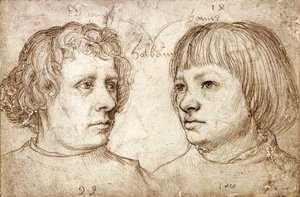
Ambrosius Holbein
1494 - 1519 , Deutschland
Kurzinfos
- Artistic Movement Or Style: Renaissance
- Artists Or Movements Influenced By This Artist: ['Hans Holbein der Jüngere']
- Artists Who Influenced This Artist: ['Hans Holbein der Ältere']
- Date Of Birth: 1494
- Date Of Death: c. 1519
- Full Name: Ambrosius Holbein
- Nationality: Deutsch
- Notable Artworks:
- Das Bildnis eines jungen Mannes mit blondem Haar
- Das Bildnis eines jungen Mannes mit braunem Haar
- Die Insel Utopia
- Place Of Birth: Augsburg, Deutschland
Ähnliche Artikel

The Enduring Legacy of Oil on Canvas: Technique, History & Aesthetic Impact
Explore the rich history & techniques of oil painting – from Renaissance masters to Impressionism. Discover pigments, layering methods, and why this timeless medium endures. Expert insights for artists & art enthusiasts.
Hans Holbein der Jüngere: Realismus, Psychologie und die Meisterschaft des Renaissance-Porträts
Entdecken Sie das Werk von Hans Holbein dem Jüngeren! Erfahren Sie mehr über seinen revolutionären Realismus, die psychologische Tiefe seiner Porträts und seine Meistertechnik. Jetzt lesen!

Öl auf Leinwand: Eine historische und technische Erkundung eines zeitlosen künstlerischen Mediums
Entdecken Sie die faszinierende Welt der Ölmalerei! Von historischen Techniken bis zur modernen Anwendung – wir bieten Expertenwissen, Restaurierungstipps und hochwertige Reproduktionen. Jetzt informieren!
Oil on Board: A Historical Survey of Technique, Aesthetic Qualities & Enduring Appeal
Explore the rich history of oil on board painting! Discover techniques, aesthetic qualities & enduring appeal from early masters to modern practice. Expert insights for collectors and art enthusiasts.

The Enduring Power of Painting: A Historical & Contemporary Exploration of Form and Emotion
Explore the rich history & enduring techniques of oil painting with ArtsDot. Discover masterpieces, learn about art collecting, and find authentic handmade reproductions crafted by skilled artists.

