 Vorschau anzeigen
 Versenden
 Teilen
 Details anzeigen

 Herunterladen
 Ähnliche Objekte
 Röntgenaufnahme
 Diashow
Domenico di Jacopo di Matteo
 Oil On Canvas
- WallArt
- Renaissance Portraiture
 1530
1530 86.0 x 67.0 cm
 Scottish National Gallery
 Weiterlesen
Handgefertigte Ölreproduktion
Handgemaltes Ölgemälde auf Leinwand in Ihrer Wunschgröße und mit Rahmen, auf Bestellung von unseren Künstlern angefertigt. ( Druck bestellen Bild kaufen)




P118B $10

P118H $10

P118W $10

P438Z $10

P508JH $12

P508YH $12

P805H $10

P805Z $10

P919BZ $10

P919G $10

P919XJ $10

P959ZH $10

P968JZ $12

W106C $8

W218G $10

W218JH $8

W218Y $10

W307PJ $10

W316G $10

W316PJ $8

W316Y $10

W398PJ $8

W4111J $10

W500HY $15

W500JH $15

W692G $12

W849H $8

W940BG $15

W953PJ $8




Wählen Sie aus unseren vordefinierten Formaten, die den ursprünglichen Proportionen des Kunstwerks entsprechen.

Sie können Ihre eigenen Maße eingeben, um einen bestimmten Rahmen oder Platz auszufüllen. Wenn die gewählte Größe nicht den Proportionen des Originalbildes entspricht, werden wir das Kunstwerk entweder beschneiden oder das Gemälde durch zusätzliche, handgemalte Elemente erweitern. Ein digitales Mockup wird Ihnen zur Genehmigung zugesandt, bevor die Produktion beginnt.
Bitte beachten Sie, dass die Bildschirmvorschau nicht die tatsächliche Beschneidung oder Erweiterung widerspiegelt. Nur das Mockup zeigt die endgültige Komposition exakt an.
Obwohl Sondermaße verfügbar sind, empfehlen wir, eine Größe aus der vordefinierten Liste zu wählen, um die ursprünglichen Proportionen beizubehalten.
Nach der Bestellung wird das ArtsDot.com-Team dem Kunden Anweisungen per E-Mail zusenden und eine Mockup-Vorschau bereitstellen.
Weltweiter Versand () in nur 3 bis 4 Wochen statt der üblichen 5 Wochen. (26 August). Keine Kompromisse bei der Qualität.

Kostenloser weltweiter Expressversand

Hochwertige Leinenleinwand

Umfassender Versicherungsschutz beim Versand

Zollgebühren-Rückerstattungsgarantie

Garantie für exakte Farbtreue

60 Tage Rückgaberecht (nur bei Mängeln)

100% Geld-zurück-Garantie

Mengenrabatt verfügbar
 Die Glasoption ist nur für Größen unter 110 cm verfügbar.

Domenico di Jacopo di Matteo
Art der Reproduktion
Format der Reproduktion
-


Gesamtpreis
$ 263
Beschreibung des Kunstwerks
A Portrait of Dignified Resolve: Domenico di Jacopo di Matteo by Andrea del Sarto
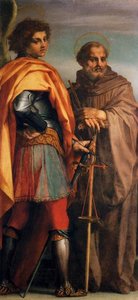
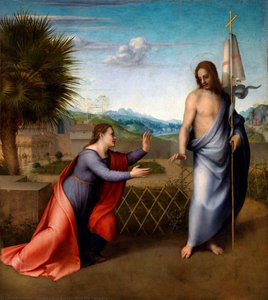
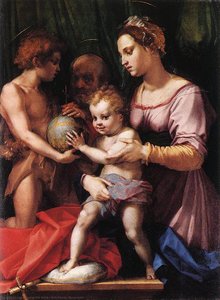
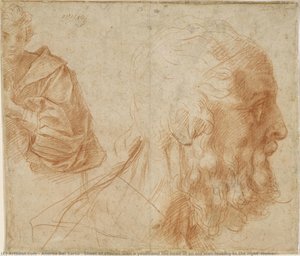
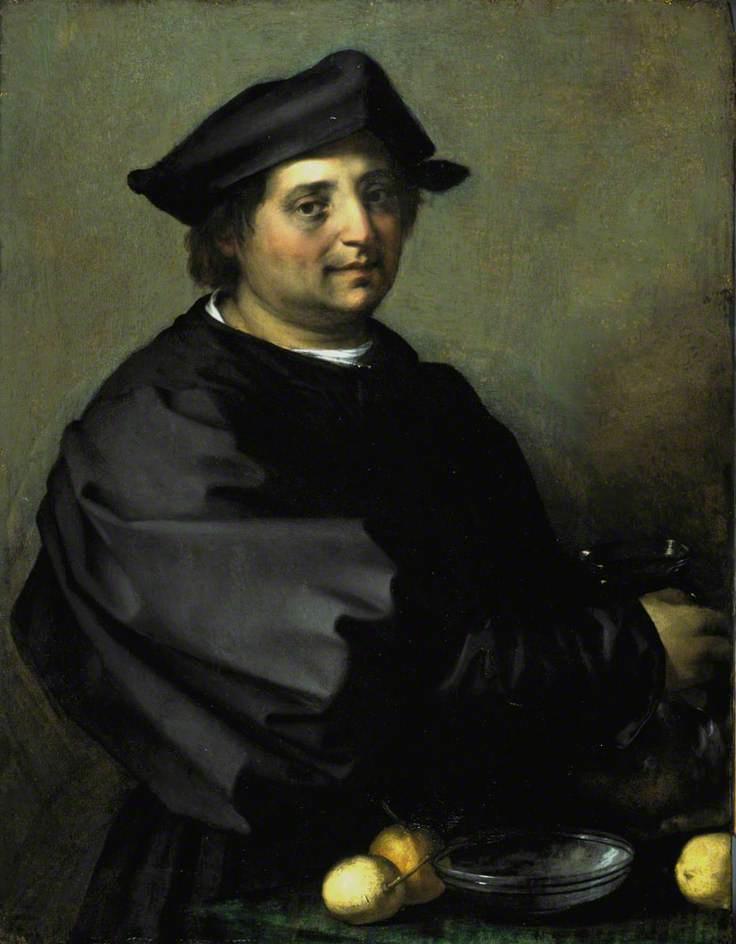
The painting “Domenico di Jacopo di Matteo,” attributed to Andrea del Sarto, stands as a testament to the humanist ideals flourishing in Florence during the High Renaissance. Executed around 1528-1530, this portrait captures a man—likely a prominent patron or noble figure—with an arresting gaze that draws the viewer into its contemplative stillness. Held by the National Galleries of Scotland, it exemplifies del Sarto’s mastery of grisaille fresco technique and embodies the profound emotional depth characteristic of his era.Composition and Technique: Mastering Grisaille
Del Sarto's approach to this commission was revolutionary for its time—he eschewed vibrant color palettes favored by many contemporaries, opting instead for a monochrome scheme executed in grisaille, a technique utilizing shades of white and gray pigment over a primed surface. This deliberate limitation served not as an absence of artistic ambition but rather as a conduit for conveying psychological nuance. The composition centers on the figure’s torso, positioned slightly off-center to create visual balance against the subtle interplay of light and shadow—a hallmark of chiaroscuro—that defines the artwork's aesthetic. Delicate lines delineate folds in the robe and contours of the face, meticulously blending to achieve a remarkable illusion of volume and texture. The artist skillfully renders the fabric’s surface with painstaking detail, mirroring the smooth, polished finish achieved through traditional oil painting methods – a masterful fusion of approaches.Historical Context: Florence at the Crossroads
Florence in 1528-30 was experiencing significant political turbulence as papal influence waned and the Holy Roman Emperor Charles V exerted pressure on Italian states. Amidst this uncertainty, artists like Andrea del Sarto sought to reaffirm humanist values through depictions of dignified individuals—figures embodying intellect, virtue, and moral fortitude. The commission itself reflects the patronage system prevalent during the Renaissance, where wealthy families commissioned artworks to elevate their status and commemorate important events. Del Sarto’s decision to forgo color aligns perfectly with this cultural preoccupation – prioritizing clarity of form and emotional resonance over superficial visual splendor.Symbolism: Fruitful Reflection
The inclusion of apples within the lower right corner is not merely decorative; it carries symbolic weight rooted in Renaissance iconography. Apples traditionally represent knowledge, beauty, and temptation—themes explored extensively by humanist thinkers like Pico della Mirandola. Their placement alongside the man’s figure invites contemplation on these concepts, suggesting a deeper meditation on human potential and moral responsibility. The muted background reinforces this sense of introspection, emphasizing the subject's inner life against the backdrop of external pressures.Emotional Impact: A Window into Renaissance Dignity
“Domenico di Jacopo di Matteo” transcends mere representation; it communicates an enduring feeling of serenity and contemplative seriousness. The man’s direct gaze—a deliberate stylistic choice—commands attention, conveying confidence and intellectual curiosity. More than just a portrait, it is a distillation of humanist ideals – a celebration of human dignity and the pursuit of wisdom. It remains a powerful reminder of the Renaissance fascination with capturing not only outward appearance but also the inner spirit of its subjects.Ähnliche Kunstwerke
Über den Künstler
Early Life and Training
Andrea del Sarto, born July 16, 1486, in Gualfonda, near Florence, was the son of Angelo di Francesco, a carpenter—hence his nickname “Sarto” (German: Schneider). His formative years saw him apprenticed to an goldsmith, followed by instruction under the painter Gian Barile. Notably, he honed his artistic skills under Leonardo da Vinci and Michelangelo Buonarroti, absorbing their stylistic innovations and mastering techniques that would define his distinctive oeuvre. Del Sarto’s early influences included Domenico Ghirlandajo and Masaccio, artists who championed naturalism and anatomical accuracy—principles that profoundly shaped his approach to painting.Artistic Career
Andrea del Sarto established a collaborative workshop with Francesco Franciabigio around 1506, marking the beginning of a prolific artistic partnership. Their initial project was the baptism of christ, commissioned by Zanobi Strozzi for the chapel at his villa in Rovetzano, now housed in the Pinacoteca of the Gallerie Nazionali di Arte Antica (Palazzo Barberini) in Rome, Italy. This fresco demonstrated his mastery of monochromatic grisaille—a technique he would consistently employ throughout his career. He continued to develop his artistic vision by studying Michelangelo’s monumental sculptures and embracing the expressive dynamism characteristic of Florentine Mannerism.Notable Works and Commissions
Andrea del Sarto's artistic output spanned a remarkable range of projects, reflecting his versatility as an artist and decorator. Among his most celebrated achievements were: the holy family, a poignant depiction of the Virgin Mary, Jesus, and John the Baptist—a masterpiece that embodies the humanist ideals of the High Renaissance. cenacolo di andrea del sarto—also known as “The Last Supper”—stands as one of the most iconic representations of this pivotal biblical scene. Located at the Museo del Cenacolo di Andrea Del Sarto in Florence, it showcases his unparalleled skill in capturing human emotion and conveying spiritual depth. Furthermore, he undertook commissions for the Servites monastery, culminating in stories of miracles of saint filippo benizzi—a series of frescoes adorning the loggia dei servi di maria.Legacy and Influence
Andrea del Sarto’s artistic legacy extends far beyond his individual masterpieces. He profoundly influenced subsequent generations of painters, fostering a distinctive style characterized by harmonious compositions, graceful figures, and innovative use of color—elements that blended Renaissance ideals with Mannerist experimentation. His meticulous attention to detail and anatomical accuracy established him as a pioneer in the pursuit of naturalism, cementing his place among the foremost artists of his era. Despite facing challenges during his lifetime—including financial difficulties and rivalry—Andrea del Sarto’s enduring impact on art history testifies to the brilliance of his creative vision and the timeless beauty of his artworks. view more works by Andrea Del Sarto on ArtsDot: [https://ArtsDot.com/@/andrea del sarto](https://ArtsDot.com/@/andrea-del-sarto) explore the Pinacoteca of Gallerie Nazionali di Arte Antica (Palazzo Barberini) on ArtsDot: /de/art/show/art-d3afwr-de/ read more about Andrea Del Sarto's life and works on Wikipedia: [https://fr.wikipedia.org/wiki/andrea_del_sarto](https://fr.wikipedia.org/wiki/andrea-del-sarto)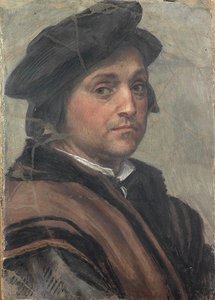
Andrea del Sarto
1486 - 1530 , Italien
Kurzinfos
- Bemerkenswerte Kunstwerke:
- Die Heilige Familie
- Cenacolo di Andrea del Sarto
- Storie di miracoli di San Filippo Benizzi
- Geburtsdatum: 16. Juli 1486
- Geburtsort (Stadt, Land): Florenz, Italien
- Künstler Oder Bewegungen, Die Von Diesem Künstler Beeinflusst Wurden:
- Jacobo del Pontormo
- Franciabigio
- Künstler, Die Diesen Künstler Beeinflussten:
- Leonardo da Vinci
- Michelangelo
- Raffaello
- Künstlerische Bewegung Oder Stil: Hochrenaissance, Manierismus
- Nationalität: Italiener
- Sterbedatum: 29. September 1530
- Vollständiger Name: Andrea del Sarto
Ähnliche Artikel
Andrea del Sarto: Florentinische Eleganz und die Meisterschaft der Renaissance
Entdecken Sie das Werk von Andrea del Sarto, einem Meister der Florentiner Renaissance. Erfahren Sie mehr über seine Fresken, seinen Stil und sein Vermächtnis in diesem umfassenden Artikel. Hochwertige Reproduktionen bei ArtsDot!
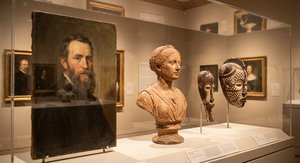
The Enduring Gaze: A Historical & Artistic Exploration of Portraiture Across Cultures
Explore the rich history of portraiture with ArtsDot.com! Discover symbolism, techniques & master artists from antiquity to modern times. Expert insights for art collectors.
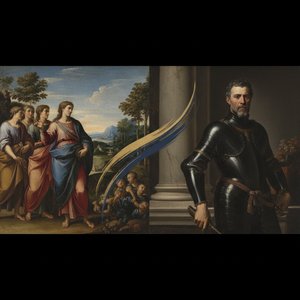
Sebastiano del Piombo: Bridging Venetian Colorism & Roman Grand Manner Portraiture
Explore the captivating art of Sebastiano del Piombo, a Renaissance master bridging Venetian colorism & Roman grandeur. Discover his iconic portraits and lasting influence on art history. Learn more at ArtsDot.
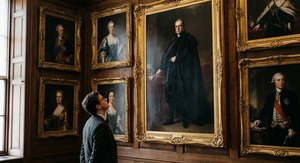
The Grandeur of Presence: Exploring Representations of Stately Bearing in Western Portraiture
Explore the art of stately bearing in Western portraiture with expert analysis of Renaissance & Baroque masterpieces. Discover symbolism, techniques, and the legacy of iconic portraits – a guide for discerning collectors.
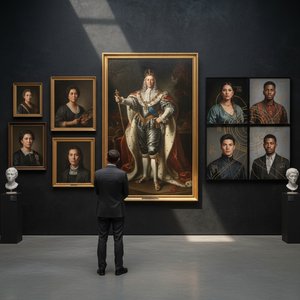
The Enduring Legacy of Formal Portraiture: Power, Identity & Artistic Exploration
Explore the rich history of formal portraiture & its enduring power to capture identity and shape perception. Discover investment-worthy artworks, expert appraisals, and custom reproduction services at ArtsDot.