 Vorschau anzeigen
 Versenden
 Teilen
 Details anzeigen

 Herunterladen
 Ähnliche Objekte
 Röntgenaufnahme
 Diashow
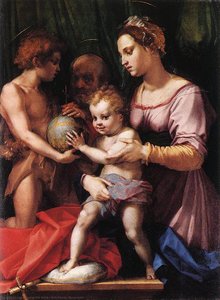
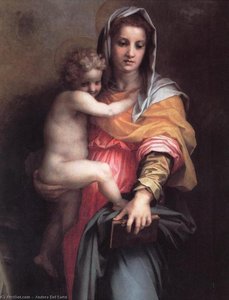
Madonna of the Harpies
 Oil On Canvas
- WallArt
- High Renaissance
 1517
1517 208.0 x 178.0 cm
 Galleria degli Uffizi
 Weiterlesen
Giclée / Kunstdruck
Giclée- oder Leinwanddruck in Museumsqualität mit schneller Produktion und flexiblen Veredelungsoptionen. ( Handgemalte Reproduktion bestellen Bild kaufen)




P118B $10

P118H $10

P118W $10

P438Z $10

P508JH $12

P508YH $12

P805H $10

P805Z $10

P919BZ $10

P919G $10

P919XJ $10

P959ZH $10

P968JZ $12

W106C $8

W218G $10

W218JH $8

W218Y $10

W307PJ $10

W316G $10

W316PJ $8

W316Y $10

W398PJ $8

W4111J $10

W500HY $15

W500JH $15

W692G $12

W849H $8

W940BG $15

W953PJ $8




Wählen Sie aus unseren vordefinierten Formaten, die den ursprünglichen Proportionen des Kunstwerks entsprechen.

Sie können Ihre eigenen Maße eingeben, um ein bestimmtes Format oder einen speziellen Platz einzupassen. Wenn das von Ihnen gewählte Format nicht den Proportionen des Originalbildes entspricht, werden wir das Kunstwerk entweder beschneiden oder das Bild mit einem gespiegelten oder einfarbigen Rand erweitern. Ein digitaler Entwurf wird Ihnen zur Genehmigung zugesandt, bevor die Produktion beginnt.
Bitte beachten Sie, dass die Vorschau auf dem Bildschirm nicht den tatsächlichen Zuschnitt oder die Erweiterung widerspiegelt. Nur der Entwurf zeigt die endgültige Komposition präzise an.
Obwohl Sondermaße verfügbar sind, empfehlen wir die Auswahl eines Maßes aus der vordefinierten Liste, um die ursprünglichen Proportionen zu bewahren.
Weltweiter Versand () innerhalb von 2 Wochen statt der üblichen 4/5 Wochen. (27 August)

Kostenloser weltweiter Expressversand

Hochwertige Leinenleinwand

Umfassender Versicherungsschutz beim Versand

Zollgebühren-Rückerstattungsgarantie

Garantie für exakte Farbtreue

60 Tage Rückgaberecht (nur bei Mängeln)

100% Geld-zurück-Garantie

Mengenrabatt verfügbar
 Die Glasoption ist nur für Größen unter 110 cm verfügbar.

Madonna of the Harpies
Giclée / Kunstdruck
Format der Reproduktion
-


Gesamtpreis
$ 62
Sammlerstück-Beschreibung
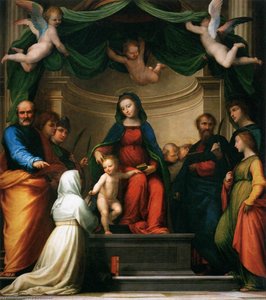
A Renaissance Vision of Devotion: Andrea del Sarto’s Madonna of the Harpies
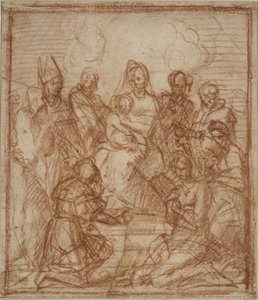
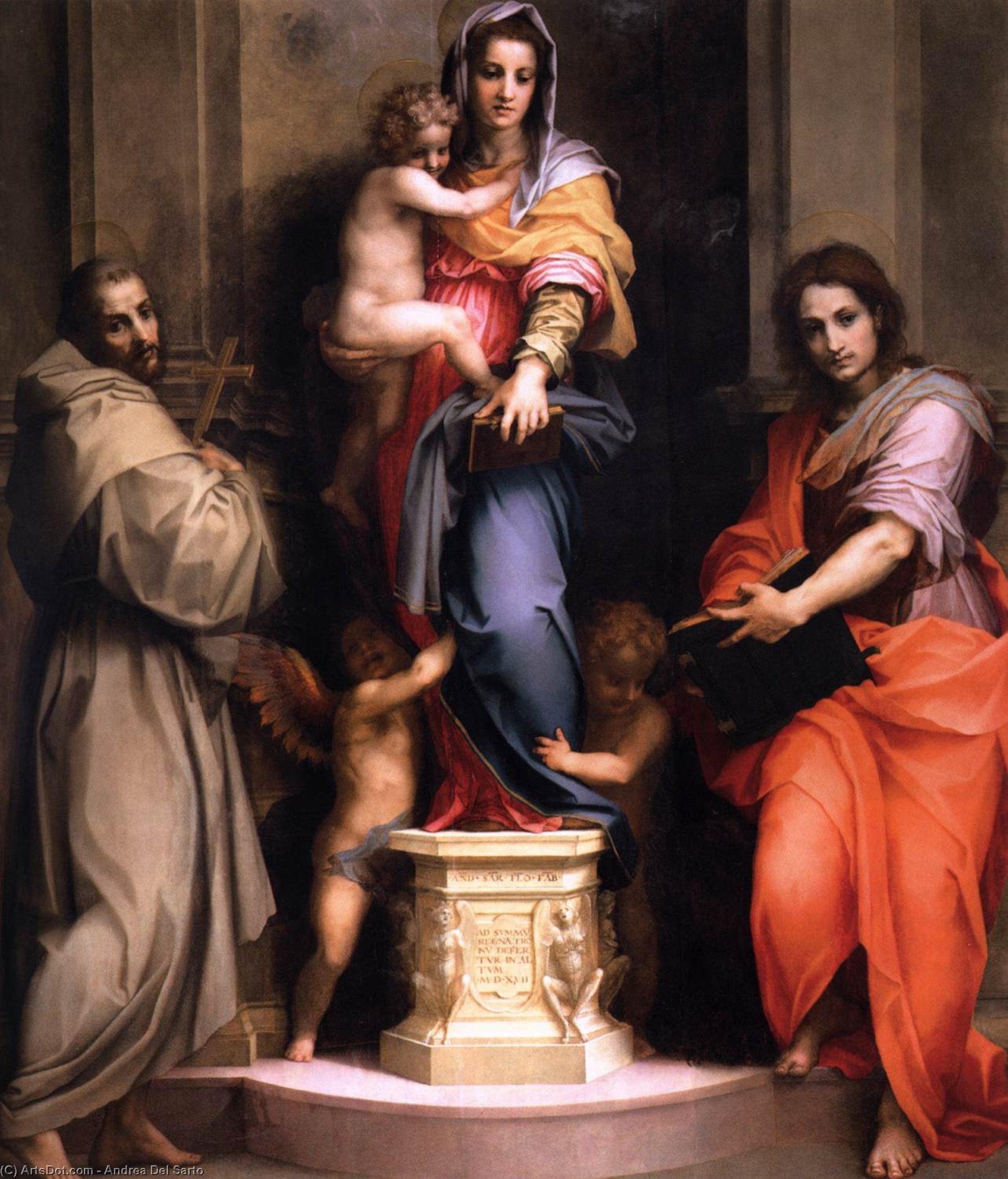
Andrea del Sarto’s “Madonna of the Harpies,” completed in 1517, stands as a testament to the enduring power of Florentine High Renaissance artistry. More than just a depiction of Mary cradling Jesus, this painting embodies a profound exploration of faith and beauty—a harmonious blend meticulously crafted by one of Italy's most influential painters.
Subject Matter & Composition: The scene portrays Mary holding the infant Jesus in serene repose, flanked by two angelic figures. These angels are positioned on either side of Mary’s pedestal, which is adorned with grotesque harpies—monsters symbolizing evil and temptation—a deliberate choice reflecting humanist concerns about reconciling Christian piety with pagan imagery.
- Detailed Observation: The artist's masterful attention to detail captures the tenderness of Mary’s embrace and the ethereal glow surrounding Jesus. Note the subtle drapery folds, conveying a sense of grace and elegance typical of Sarto’s style.
- Architectural Setting: The window behind Mary serves as more than just a visual element; it symbolizes divine illumination and reinforces the painting's spiritual atmosphere.
Style & Technique: Andrea del Sarto employed oil paint on panel, utilizing a technique characterized by smooth gradations of color and meticulous modeling—a hallmark of his approach to fresco painting as well. His palette is restrained yet luminous, favoring muted hues that enhance the overall sense of tranquility.
Historical Context & Symbolism: Created during the apex of Renaissance humanism, “Madonna of the Harpies” reflects a desire to synthesize classical ideals with Christian dogma. The harpies represent the struggle between good and evil—a theme prevalent in Renaissance art—while the angel’s book symbolizes wisdom and divine knowledge.
- Symbolic Significance: Consider the harpies as emblems of earthly trials overcome by faith, mirroring Mary's unwavering devotion.
- Influence on Mannerism: Although firmly rooted in Renaissance principles, Sarto’s work foreshadowed the stylistic developments of Mannerism—characterized by elongated figures and exaggerated poses—demonstrating his artistic foresight.
Emotional Impact & Legacy: “Madonna of the Harpies” transcends mere representation; it evokes a feeling of profound serenity and spiritual contemplation. Its enduring beauty continues to inspire artists and collectors alike, cementing Andrea del Sarto’s place as a cornerstone of Renaissance art history.
Ähnliche Kunstwerke
Über den Künstler
Early Life and Training
Andrea del Sarto, born July 16, 1486, in Gualfonda, near Florence, was the son of Angelo di Francesco, a carpenter—hence his nickname “Sarto” (German: Schneider). His formative years saw him apprenticed to an goldsmith, followed by instruction under the painter Gian Barile. Notably, he honed his artistic skills under Leonardo da Vinci and Michelangelo Buonarroti, absorbing their stylistic innovations and mastering techniques that would define his distinctive oeuvre. Del Sarto’s early influences included Domenico Ghirlandajo and Masaccio, artists who championed naturalism and anatomical accuracy—principles that profoundly shaped his approach to painting.Artistic Career
Andrea del Sarto established a collaborative workshop with Francesco Franciabigio around 1506, marking the beginning of a prolific artistic partnership. Their initial project was the baptism of christ, commissioned by Zanobi Strozzi for the chapel at his villa in Rovetzano, now housed in the Pinacoteca of the Gallerie Nazionali di Arte Antica (Palazzo Barberini) in Rome, Italy. This fresco demonstrated his mastery of monochromatic grisaille—a technique he would consistently employ throughout his career. He continued to develop his artistic vision by studying Michelangelo’s monumental sculptures and embracing the expressive dynamism characteristic of Florentine Mannerism.Notable Works and Commissions
Andrea del Sarto's artistic output spanned a remarkable range of projects, reflecting his versatility as an artist and decorator. Among his most celebrated achievements were: the holy family, a poignant depiction of the Virgin Mary, Jesus, and John the Baptist—a masterpiece that embodies the humanist ideals of the High Renaissance. cenacolo di andrea del sarto—also known as “The Last Supper”—stands as one of the most iconic representations of this pivotal biblical scene. Located at the Museo del Cenacolo di Andrea Del Sarto in Florence, it showcases his unparalleled skill in capturing human emotion and conveying spiritual depth. Furthermore, he undertook commissions for the Servites monastery, culminating in stories of miracles of saint filippo benizzi—a series of frescoes adorning the loggia dei servi di maria.Legacy and Influence
Andrea del Sarto’s artistic legacy extends far beyond his individual masterpieces. He profoundly influenced subsequent generations of painters, fostering a distinctive style characterized by harmonious compositions, graceful figures, and innovative use of color—elements that blended Renaissance ideals with Mannerist experimentation. His meticulous attention to detail and anatomical accuracy established him as a pioneer in the pursuit of naturalism, cementing his place among the foremost artists of his era. Despite facing challenges during his lifetime—including financial difficulties and rivalry—Andrea del Sarto’s enduring impact on art history testifies to the brilliance of his creative vision and the timeless beauty of his artworks. view more works by Andrea Del Sarto on ArtsDot: [https://ArtsDot.com/@/andrea del sarto](https://ArtsDot.com/@/andrea-del-sarto) explore the Pinacoteca of Gallerie Nazionali di Arte Antica (Palazzo Barberini) on ArtsDot: /de/art/show/art-d3afwr-de/ read more about Andrea Del Sarto's life and works on Wikipedia: [https://fr.wikipedia.org/wiki/andrea_del_sarto](https://fr.wikipedia.org/wiki/andrea-del-sarto)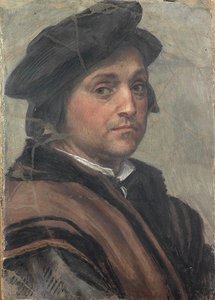
Andrea del Sarto
1486 - 1530 , Italien
Kurzinfos
- Bemerkenswerte Kunstwerke:
- Die Heilige Familie
- Cenacolo di Andrea del Sarto
- Storie di miracoli di San Filippo Benizzi
- Geburtsdatum: 16. Juli 1486
- Geburtsort (Stadt, Land): Florenz, Italien
- Künstler Oder Bewegungen, Die Von Diesem Künstler Beeinflusst Wurden:
- Jacobo del Pontormo
- Franciabigio
- Künstler, Die Diesen Künstler Beeinflussten:
- Leonardo da Vinci
- Michelangelo
- Raffaello
- Künstlerische Bewegung Oder Stil: Hochrenaissance, Manierismus
- Nationalität: Italiener
- Sterbedatum: 29. September 1530
- Vollständiger Name: Andrea del Sarto
Ähnliche Artikel
Andrea del Sarto: Florentinische Eleganz und die Meisterschaft der Renaissance
Entdecken Sie das Werk von Andrea del Sarto, einem Meister der Florentiner Renaissance. Erfahren Sie mehr über seine Fresken, seinen Stil und sein Vermächtnis in diesem umfassenden Artikel. Hochwertige Reproduktionen bei ArtsDot!

Das Familienerbe an die Wand bringen: Wandgemälde als Generationenschatz
Verwandeln Sie Ihre Familiengeschichte in ein beeindruckendes Wandgemälde! Expertenrat & hochwertige Handwerkskunst für einzigartige Kunstwerke, die Generationen verbinden. Entdecken Sie jetzt!

The Enduring Legacy of Fresco Painting: Techniques, History & Contemporary Relevance
Explore the rich history & enduring artistry of fresco painting – from Giotto to Michelangelo! Discover techniques, conservation efforts, & modern applications. Learn how ArtsDot brings this timeless art form to your home.

The Enduring Legacy of Fresco: Technique, History & Artistic Expression Across Cultures
Explore the rich history & enduring legacy of fresco painting! Discover ancient techniques, Giotto's masterpieces, and modern applications. Expert insights for art lovers & professionals.
Kunst, die mit Ihnen lebt: Emotionale Kraft individueller Innenraumfresken
Entdecken Sie die emotionale Kraft individueller Innenraumfresken! Expertenberatung & hochwertige Wandmalerei für Hotels, Wohnräume & mehr. – Ihr Partner für einzigartige Kunst.