

 Vorschau anzeigen
 Versenden
 Teilen
 Details anzeigen

 Herunterladen
 Ähnliche Objekte
 Röntgenaufnahme
 Diashow
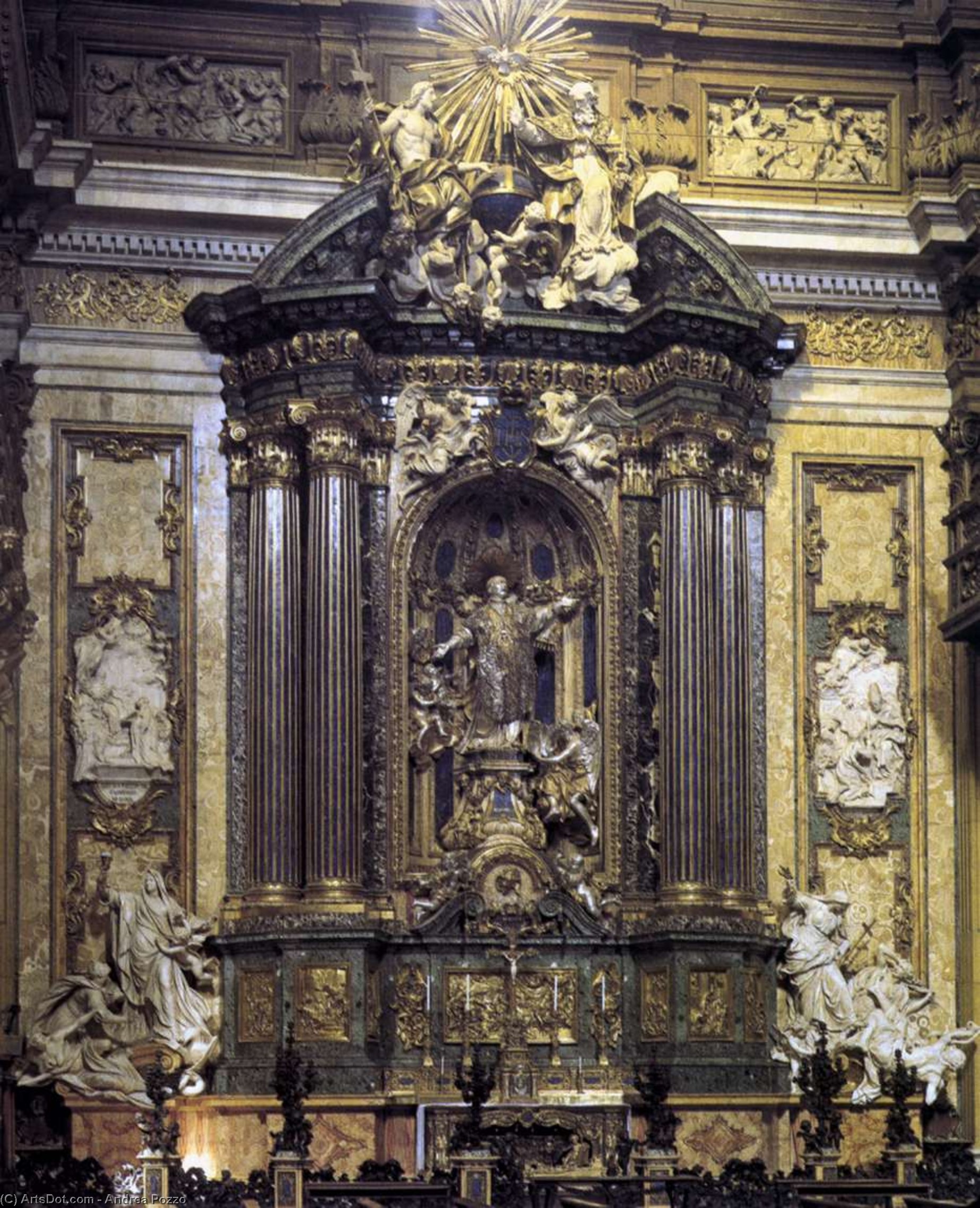
Altar of St Ignatius Loyola


 Weiterlesen
Erwerben Sie ein hochauflösendes, optimiertes digitales Bild, das der Online-Vorschau weit überlegen ist.
Jede Datei wird von unseren hauseigenen Spezialisten mit modernsten Werkzeugen und fachmännischer manueller Retusche sorgfältig vorbereitet. Wir stellen sicher, dass jedes Bild eine außergewöhnliche Klarheit, präzise Farbgenauigkeit und feinste Details aufweist.
Die endgültige Datei wird innerhalb von 72 Stunden per E-Mail zugestellt und ist für den sofortigen Einsatz in professionellen, redaktionellen und Druckumgebungen optimiert. Es handelt sich um dieselbe Qualität, der führende Designstudios, Verlage und Galerien vertrauen.
Digitales Bild
Laden Sie eine hochauflösende Datei für die persönliche Präsentation, den Druck und kreative Projekte herunter. ( Druck bestellen Handgemalte Reproduktion bestellen)
In jeder Bestellung digitaler Bilder enthalten
Professionelle digitale Bereitstellung, garantiert
Wenn Sie sich für ArtsDot.com entscheiden, erhalten Sie nicht nur ein Bild – Sie erhalten ein professionell aufbereitetes digitales Kunstwerk, das mit höchster Präzision erstellt und durch eine Zufriedenheitsgarantie abgesichert wird. Hier ist alles, was automatisch mit Ihrer Bestellung geliefert wird:

Schnelle E-Mail-Zustellung
Ihre hochauflösende digitale Bilddatei wird Ihnen innerhalb von 72 Stunden nach der Bestellung per E-Mail zugestellt – bereit zur sofortigen Verwendung.

KI-optimierte digitale Datei
Ihre Kunstwerke werden professionell mithilfe fortschrittlicher KI-Tools und manueller Bearbeitung optimiert, um maximale Detailtreue, Klarheit und Farbgenauigkeit zu gewährleisten.

Lebenslanger kostenloser Neudruckservice
Datei versehentlich gelöscht oder verloren? Keine Sorge – wir senden sie Ihnen jederzeit kostenlos erneut zu.

Keine Einfuhrgebühren – jemals
Genießen Sie Ihr Kunstwerk sofort ohne Zollgebühren, Einfuhrabgaben oder Versandkosten – digitale Downloads sind immer steuerfrei.

Garantierte Farbtreue
Wir garantieren, dass Ihr digitales Bild mithilfe professioneller Werkzeuge und Farbmanagement die Originalfarben so präzise wie möglich wiedergibt.

60-Tage-Zufriedenheitsgarantie
Sollten Sie mit Ihrem digitalen Bild nicht zufrieden sein, werden wir es überarbeiten oder Ihnen innerhalb von 60 Tagen 100% erstatten – ohne Wenn und Aber.

100% Geld-zurück-Garantie
Nicht zufrieden? Erhalten Sie innerhalb von 60 Tagen nach Erhalt Ihrer digitalen Datei eine vollständige Rückerstattung – ohne Angabe von Gründen.

Rabatte bei Großbestellungen
3 Bilder kaufen, 10% sparen – 5 Bilder kaufen, 15% sparen – Ab 10 Bildern 20% sparen. Ideal für kreative Projekte, Galerien und Agenturen.
Details zum Sammlerstück
A Symphony of Illusion and Faith: The Altar of St Ignatius Loyola
Within the heart of Rome’s Il Gesù church lies a work that transcends mere decoration, becoming instead a profound meditation on faith, perspective, and the very nature of reality – the Altar of St Ignatius Loyola. Completed in 1695 by the masterful Andrea Pozzo, this monumental piece isn't simply an altar; it’s a meticulously crafted stage for divine narrative, a testament to the Baroque era’s obsession with theatricality and illusion. Pozzo, a Jesuit lay brother renowned for his innovative use of quadratura – ‘painted architecture’ – didn’t merely paint on a surface; he created the *impression* of depth, volume, and an entire architectural space that exists only within the confines of the frescoed ceiling.
The altar itself is a study in opulent detail. Crafted from Carrara marble, it's adorned with intricate carvings depicting scenes from the life of St. Ignatius, the founder of the Jesuit order. The central relief sculpture, portraying his martyrdom, commands attention with its dramatic pose and the palpable sense of suffering. Surrounding this focal point are a multitude of angels and cherubs, rendered in exquisite detail, each contributing to the overall narrative tapestry. The use of gold leaf – liberally applied throughout – amplifies the altar’s grandeur, reflecting light and drawing the eye towards its central elements.
The Art of Quadratura: Creating an Illusion of Space
Pozzo's genius lies in his mastery of quadratura, a technique perfected by Italian Renaissance artists but elevated to breathtaking heights by him. He didn’t simply paint a flat ceiling; he painted the *illusion* of a vast, vaulted space above – a space that appears to extend infinitely beyond the confines of the church. This is achieved through a complex interplay of perspective, foreshortening, and architectural detail. The fresco depicts a celestial realm, complete with columns, arches, and windows, all seamlessly integrated into the painted ceiling. Looking closely, one can discern subtle cues – a slightly skewed angle here, a vanishing point cleverly concealed there – that reveal the artistry behind this astonishing illusion.
The effect is profoundly immersive. The viewer feels as though they are standing beneath a genuine dome, bathed in ethereal light. Pozzo’s skill wasn't just technical; it was deeply spiritual. He sought to transport the worshipper into a realm of divine beauty and contemplation, using art as a conduit for faith.
Historical Context: The Jesuit Church and Baroque Grandeur
The Altar of St Ignatius Loyola is inextricably linked to the rise of the Jesuits in 17th-century Rome. The Society of Jesus was instrumental in shaping the artistic landscape of the city, commissioning grand churches and lavish interiors designed to inspire awe and devotion. The Il Gesù church itself, built between 1646 and 1668, became a showcase for Baroque innovation, and Pozzo’s altar served as its crowning achievement. The Baroque style, characterized by dramatic lighting, dynamic movement, and elaborate ornamentation, was intended to evoke strong emotions in the viewer – a desire for religious experience and a sense of connection with the divine.
Furthermore, the commission itself reflects the Jesuit emphasis on education and intellectual pursuits. The intricate details of the altar’s design, combined with its illusionistic perspective, demonstrate a sophisticated understanding of mathematics, geometry, and optics – fields that were central to the Jesuits' commitment to knowledge and reason.
Symbolism and Emotional Impact
Beyond its technical brilliance, the Altar of St Ignatius Loyola is rich in symbolism. The depiction of St. Ignatius’ martyrdom represents sacrifice, faith, and the enduring power of spiritual conviction. The angels and cherubs surrounding the central figure symbolize divine grace and protection. The overall composition evokes a sense of reverence, awe, and profound emotional connection – inviting viewers to contemplate the mysteries of faith and the transformative potential of art.
Today, the Altar remains a breathtaking example of Baroque artistry, a testament to Andrea Pozzo’s genius and the enduring power of illusion. It is more than just an altar; it's a window into a bygone era, offering a glimpse into the spiritual heart of Rome and the extraordinary vision of its most influential artists.
Ähnliche Kunstwerke

Biografie des Künstlers
Frühes Leben und Ausbildung
- Geboren: Trient, Italien (1642)
- Gestorben: 1709
- Pozzos frühes Leben war von künstlerischen Neigungen geprägt. Er studierte Geisteswissenschaften an der örtlichen Jesuitenhochs Schule.
- Mit 17 Jahren begann er seine künstlerische Ausbildung bei einem unbekannten Künstler in Trient.
- Um 1662 zog er in die Werkstatt eines anderen nicht identifizierten Malers, der von Andrea Sacchi ausgebildet worden war und dabei Techniken der römischen Hochbarockkunst erlernte.
- Er reiste nach Como und Mailand und entwickelte seine Fähigkeiten weiter.
Jesuitenorden und künstlerische Entwicklung
- Im Jahr 1665 trat Pozzo als Laienbruder dem Jesuitenorden bei.
- Seine künstlerische Tätigkeit war eng mit den Bedürfnissen des Jesuitenordens verbunden, der Kirchen und Gebäude in Modena, Bologna, Arezzo, Mondovì und Turin dekorierte.
- Frühe Werke zeigten Einflüsse aus der Lombardischen Schule, die sich durch reiche Farben und grafische Chiaroscuro auszeichnete.
- Er entwickelte seine charakteristischen illusionistischen Techniken: falsche Vergoldung, bronzefarbene Statuen, marmorierte Säulen und Trompe-l’œil-Kuppeln auf flachen Decken.
Meisterwerke und Techniken
- Deckenfresko in Sant'Ignazio (Rom): Sein Meisterwerk ist das Langhausdeckengemälde der Kirche Sant'Ignazio in Rom. Dieses Fresko verwendet die Quadratura, um eine Illusion eines riesigen, gewölbten Raumes mit architektonischen Elementen und Figuren zu erzeugen.
- Quadratura: Pozzo war ein Meister der Quadratura und nutzte Perspektive und Verkürzung, um Illusionen von Tiefe und Dreidimensionalität auf flachen Oberflächen zu erzeugen.
- Di Sotto in Su: Er setzte geschickt die "di sotto in su"-Technik (von unten betrachtet) ein, um hoch aufragende architektonische Strukturen zu simulieren.
- Architekturpläne: Pozzo steuerte auch Architekturpläne für den Dom von Ljubljana (1700) bei, inspiriert von Jesuiten kirchen wie Il Gesù und S. Ignazio in Rom.
Einflüsse und historische Bedeutung
- Andrea Sacchi: Pozzos Ausbildung unter einem Schüler von Andrea Sacchi führte ihn an die Prinzipien der römischen Hochbarockkunst heran.
- Peter Paul Rubens: Seine Arbeit in Genua, wo er das Leben Jesu malte, zeigt den Einfluss von Peter Paul Rubbens dynamischen Kompositionen und reichen Farbpaletten.
- Barockzeit: Pozzo wurde zu einer der bemerkenswertesten Figuren der Barockzeit, bekannt für seine prunkvollen Fresken.
- Kunst des Gegenreformationszeitalters: Seine Werke spiegelten oft die Themen und Ziele der Gegenreformation wider und betonten den katholischen Glauben und förderten ein Gefühl der Ehrfurcht und Erhabenheit.
Theoretische Beiträge
- Perspectiva Pictorum et Architectorum (1693, 1700): Pozzo verfasste diese Abhandlung über Perspektive in Malerei und Architektur, kodifizierte seine Techniken und beeinflusste nachfolgende Generationen von Künstlern.
- Gesamtkunst: Er plädierte für die *Gesamtkunst* (total Art) und integrierte Architektur, Malerei und Bildhauerei, um ein vereintes künstlerisches Erlebnis zu schaffen.
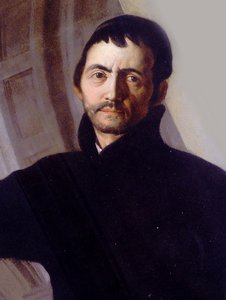
Andrea Pozzo
1642 - 1709 , Italien
Kurzinfos
- Beeinflusste Künstler:
- Andrea Sacchi
- Peter Paul Rubens
- Palma il Giovane
- Bemerkenswerte Werke:
- Sant'Ignazio Decke
- Fresken in San Ignazio
- Triumph des Hl. Ignatius
- Geburtsdatum: 30. November 1642
- Geburtsort: Trient, Italien
- Künstlerische Richtung: Barock
- Nationalität: Italienisch
- Sterbedatum: 31. August 1709
- Vollständiger Name: Andrea Pozzo

