

 Vorschau anzeigen
 Versenden
 Teilen
 Details anzeigen

 Herunterladen
 Ähnliche Objekte
 Röntgenaufnahme
 Diashow
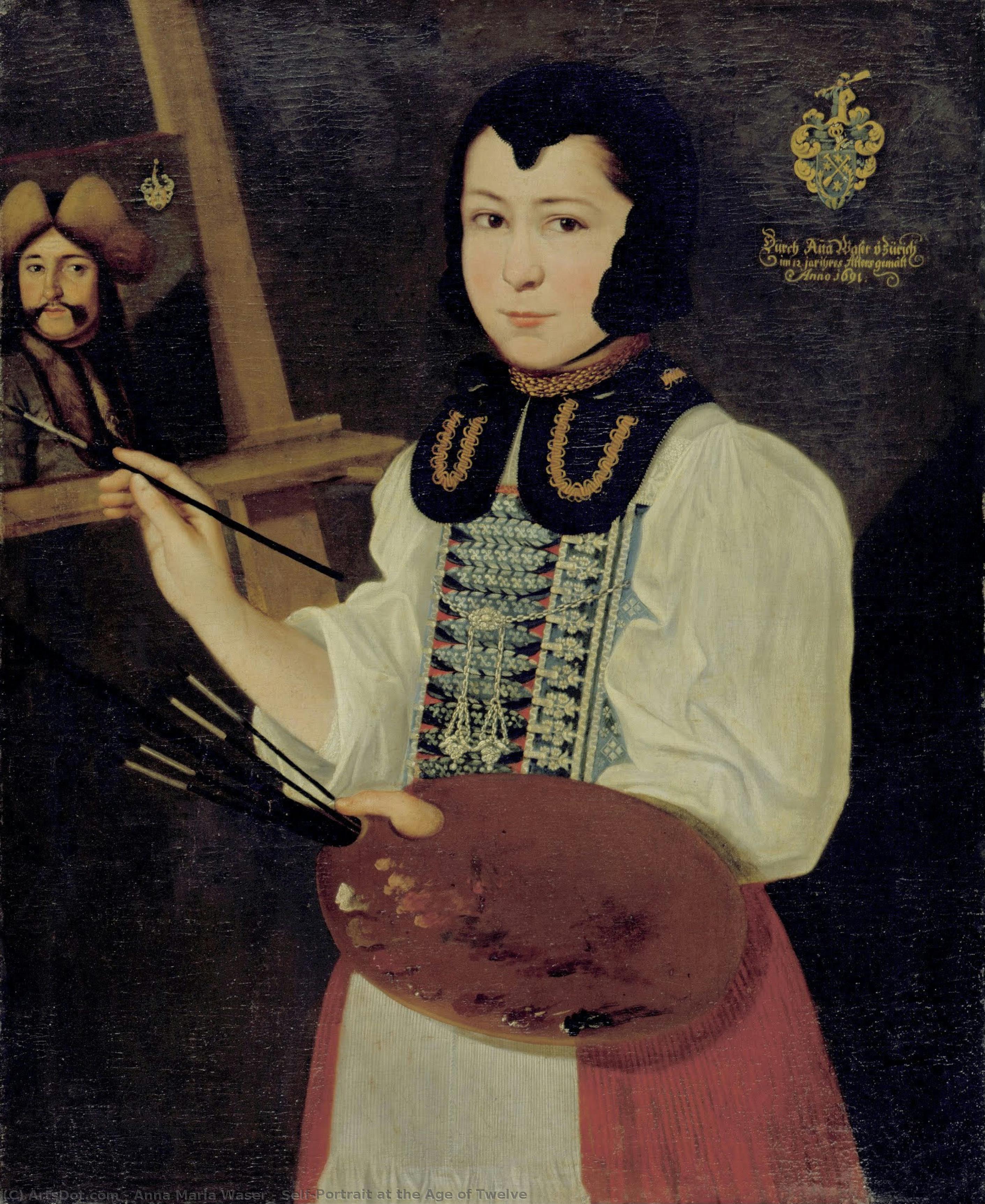
Self-Portrait at the Age of Twelve
 Oil On Canvas
- WallArt
- Baroque Painting
 1691
1691 83.0 x 68.0 cm
 Kunsthaus Zürich
 Weiterlesen
Giclée / Kunstdruck
Giclée- oder Leinwanddruck in Museumsqualität mit schneller Produktion und flexiblen Veredelungsoptionen. ( Handgemalte Reproduktion bestellen Bild kaufen)




P118B $10

P118H $10

P118W $10

P438Z $10

P508JH $12

P508YH $12

P805H $10

P805Z $10

P919BZ $10

P919G $10

P919XJ $10

P959ZH $10

P968JZ $12

W106C $8

W218G $10

W218JH $8

W218Y $10

W307PJ $10

W316G $10

W316PJ $8

W316Y $10

W398PJ $8

W4111J $10

W500HY $15

W500JH $15

W692G $12

W849H $8

W940BG $15

W953PJ $8




Wählen Sie aus unseren vordefinierten Formaten, die den ursprünglichen Proportionen des Kunstwerks entsprechen.

Sie können Ihre eigenen Maße eingeben, um ein bestimmtes Format oder einen speziellen Platz einzupassen. Wenn das von Ihnen gewählte Format nicht den Proportionen des Originalbildes entspricht, werden wir das Kunstwerk entweder beschneiden oder das Bild mit einem gespiegelten oder einfarbigen Rand erweitern. Ein digitaler Entwurf wird Ihnen zur Genehmigung zugesandt, bevor die Produktion beginnt.
Bitte beachten Sie, dass die Vorschau auf dem Bildschirm nicht den tatsächlichen Zuschnitt oder die Erweiterung widerspiegelt. Nur der Entwurf zeigt die endgültige Komposition präzise an.
Obwohl Sondermaße verfügbar sind, empfehlen wir die Auswahl eines Maßes aus der vordefinierten Liste, um die ursprünglichen Proportionen zu bewahren.
Weltweiter Versand () innerhalb von 2 Wochen statt der üblichen 4/5 Wochen. (6 September)

Kostenloser weltweiter Expressversand

Hochwertige Leinenleinwand

Umfassender Versicherungsschutz beim Versand

Zollgebühren-Rückerstattungsgarantie

Garantie für exakte Farbtreue

100 Tage Rückgaberecht (nur bei Mängeln)

100% Geld-zurück-Garantie

Mengenrabatt verfügbar
 Die Glasoption ist nur für Größen unter 110 cm verfügbar.

Self-Portrait at the Age of Twelve
Giclée / Kunstdruck
Format der Reproduktion
-


Gesamtpreis
$ 62
A Window Into Youth: Anna Maria Waser’s “Self-Portrait at the Age of Twelve”
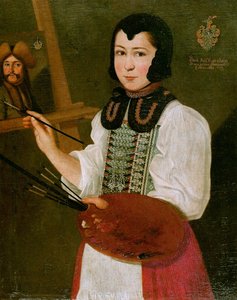
Anna Maria Waser's "Self-Portrait at the Age of Twelve," painted in 1691, isn’t merely a depiction of a young girl; it’s a remarkably poignant and surprisingly mature glimpse into the burgeoning talent of a pioneering Swiss artist. This captivating work, now residing within the Kunsthaus Zürich’s collection, transcends its youthful subject matter to reveal a profound understanding of light, composition, and the very essence of self-representation – qualities that would define Waser's distinguished career.
The painting immediately draws the eye with its intimate scale. Measuring just 83 x 68 centimeters, it feels remarkably personal, as if offering an invitation into a private moment. The young girl, identified as Anna Maria herself, stands before a simple wooden table, upon which rests a palette and brushes – tools of her nascent craft. Her gaze is direct, unwavering, holding the viewer captive with an intensity that belies her age. She’s not posing for the camera; she's engaged in the act of creation itself, radiating a quiet confidence and focused determination.
Waser’s technique is characterized by a remarkable attention to detail and a masterful manipulation of light. The soft, diffused illumination suggests an afternoon sun filtering through a window, casting gentle shadows that subtly define her features and the textures of her clothing. Notice how she renders the brush in her hand – not with stark realism, but with a delicate suggestion of form and movement, hinting at the creative process unfolding before us. The use of oil paints allows for subtle gradations of tone, creating a sense of depth and volume that elevates the portrait beyond a simple likeness.
A Pioneer in a Male-Dominated World
Understanding the historical context is crucial to appreciating Waser’s achievement. In 17th and 18th century Switzerland, the world of art was overwhelmingly dominated by men. Women were largely excluded from formal training and professional opportunities. Anna Maria's journey as a female artist – particularly one who trained alongside male peers – represents a significant challenge to societal norms and a testament to her unwavering dedication. Her appointment as court painter to Count Wilhelm Moritz von Solms-Braunfels in 1699 was a remarkable breakthrough, demonstrating the recognition of her considerable skill.
Her time at Joseph Werner’s workshop in Bern, where she studied alongside male apprentices, provided an invaluable education. While often overlooked in historical accounts, this experience undoubtedly shaped her artistic development, allowing her to hone her skills and develop a unique perspective. The fact that she was the *only* female student within the workshop is itself a powerful statement about the barriers she faced and the determination required to pursue her passion.
Symbolism of Youth and Self-Discovery
The “Self-Portrait at the Age of Twelve” isn’t simply a record of a young girl; it's an exploration of identity and self-discovery. The act of painting, of capturing one’s own image on canvas, is inherently a process of introspection. Waser’s choice to depict herself in this moment – engaged in the creative act – suggests a nascent understanding of her own potential and a desire to define herself through art.
The inclusion of the table with the palette and brushes further reinforces this symbolism. These are not merely tools for creating a portrait; they represent the very instruments of self-expression, the means by which she is forging her artistic identity. The arrow pointing towards the painting itself could be interpreted as an invitation to contemplate the process of creation – the journey from observation to representation.
A Timeless Masterpiece
“Self-Portrait at the Age of Twelve” endures not just for its technical brilliance, but also for its emotional resonance. It’s a remarkably intimate and honest portrayal of a young girl on the cusp of artistic maturity – a testament to the power of observation, the beauty of simplicity, and the enduring legacy of a pioneering Swiss artist. Reproductions of this work offer a captivating window into a pivotal moment in art history, inviting us to contemplate the origins of talent and the transformative potential of self-expression.
Ähnliche Kunstwerke

Über den Künstler
Anna Maria Waser: Eine Pionierin der Schweizer Malerei
Frühes Leben und Ausbildung
- Geboren: 16. Oktober 1678 in Zürich, Schweiz.
- Anna Maria Waser stammte aus einer Familie, die Bildung und Kunst schätzte und ihr frühes Interesse an der Malerei förderte, trotz gesellschaftlicher Normen.
- Ihre anfängliche künstlerische Ausbildung begann bei Johannes Sulzer in Winterthur und legte den Grundstein für ihre weitere Entwicklung.
- Mit vierzehn Jahren zog sie nach Bern, um sich unter der Anleitung von Joseph Werner, einem führenden Schweizer Maler, ausbilden zu lassen.
Künstlerische Entwicklung und Karriere
- Wasers Zeit im Werkstatt von Werner war einzigartig, da sie die einzige weibliche Studentin unter ihren männlichen Kollegen war. Dies bot ihr unschätzbare Möglichkeiten zur Verfeinerung ihrer Fähigkeiten.
- Sie zeigte schnell außergewöhnliches Talent, das sich in frühen Werken wie ihrem Selbstporträt im Alter von zwölf Jahren (1691) manifestierte und Selbstbewusstsein und Meisterschaft demonstrierte.
- Im Jahr 1699 wurde sie als Hofmalerin zu Graf Wilhelm Moritz von Solms-Braunfels ernannt, was wachsende internationale Anerkennung bedeutete.
- Ihre Karriere war nicht ohne Unterbrechungen; familiäre Verpflichtungen riefen sie gelegentlich nach Zürich zurück und beeinflussten die Konsistenz ihrer künstlerischen Produktion.
Bekannte Werke und Stil
- Selbstporträt im Alter von zwölf Jahren (1691): Ein bemerkenswertes frühes Werk, das frühreiftes Talent und Selbstsicherheit demonstriert.
- Wasers Stil ist durch seine Detailgenauigkeit, Realismus und seinen menschlichen Touch in ihren Porträts gekennzeichnet. Sie war auch in der Miniaturmalerei hervorragend.
- Ihre Werke zeigten oft Porträts prominenter Personen und spiegelten ihre Position im aristokratischen Kreis wider.
Einflüsse und künstlerischer Kontext
- Wasers künstlerische Entwicklung wurde von Johannes Sulzer und Joseph Werner beeinflusst, die ihr eine fundierte Ausbildung in Maltechniken vermittelten.
- Sie arbeitete innerhalb der Barocktradition, einem Stil, der im 17. und frühen 18. Jahrhundert vorherrschte, der sich durch Drama, satte Farben und detaillierte Ornamente auszeichnete.
- Der soziale Kontext der Zeit stellte Frauenkünstlern Herausforderungen; Wasers Erfolg war angesichts dieser Einschränkungen besonders bemerkenswert.
Vermächtnis und historische Bedeutung
- Anna Maria Wasers Karriere brach gesellschaftliche Konventionen und ebnete den Weg für zukünftige Generationen von Frauenkünstlern in der Schweiz.
- Ihr Werk wird weiterhin für seine technische Fertigkeit, Authentizität und die aufschlussreiche Darstellung ihrer Sujets geschätzt.
- Ihre Gemälde werden in bedeutenden Sammlungen wie dem Kunsthaus Zürich ausgestellt und sichern ihren Platz in der Schweizer Kunstgeschichte.
- Gestorben: 20. September 1714.
Anna Maria Waser
1678 - 1714 , Schweiz
Kurzinfos
- Artistic Movement Or Style: Barockmalerei
- Artists Who Influenced This Artist:
- Johannes Sulzer
- Joseph Werner
- Date Of Birth: 1678-10-16
- Date Of Death: 1714-09-20
- Full Name: Anna Maria Waser
- Nationality: Schweizerin
- Notable Artworks:
- Selbstbildnis im Alter von zwölf Jahren (1691)
- Porträt von Anna Maria
- Place Of Birth: Zurich, Schweiz
Ähnliche Artikel
Reflecting the Self: A History of Portraiture & Psychological Insight
Explore the fascinating history of self-portraiture from Renaissance masters like Dürer & Rembrandt to modern interpretations. Discover the psychological insights and artistic techniques behind these iconic works. Expert analysis for art enthusiasts.

Barock Meisterwerke: Die 10 prägendsten Kunstwerke für Ihr Zuhause |
Entdecken Sie die 10 prägendsten Meisterwerke des Barock! Caravaggio, Rembrandt & Co. – Erfahren Sie die Geschichten hinter ikonischen Gemälde und finden Sie hochwertige Kunst Reproduktionen für Ihr Zuhause auf .

The Inner Landscape: Exploring Themes of Introspection in Visual Art Across Movements & Eras
Explore the captivating world of introspective art! Discover how artists across eras – from Rembrandt to Kahlo – used self-portraiture to reveal their inner worlds and emotional depths. A journey through art history & psychology.
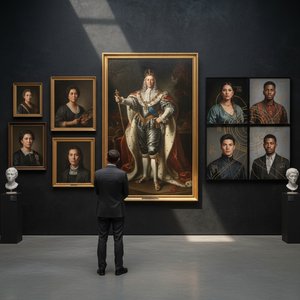
The Enduring Legacy of Formal Portraiture: Power, Identity & Artistic Exploration
Explore the rich history of formal portraiture & its enduring power to capture identity and shape perception. Discover investment-worthy artworks, expert appraisals, and custom reproduction services at ArtsDot.
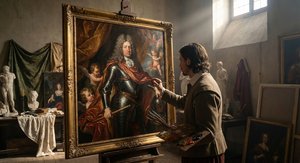
The Grandeur of Baroque Portraiture: Power, Emotion & Artistic Innovation
Explore the grandeur of Baroque portraiture! Discover Rubens, Van Dyck & the masters of 17th-century art. Uncover symbolism, techniques & lasting influence. Expert insights for collectors and enthusiasts.