

 Vorschau anzeigen
 Versenden
 Teilen
 Details anzeigen

 Herunterladen
 Ähnliche Objekte
 Röntgenaufnahme
 Diashow
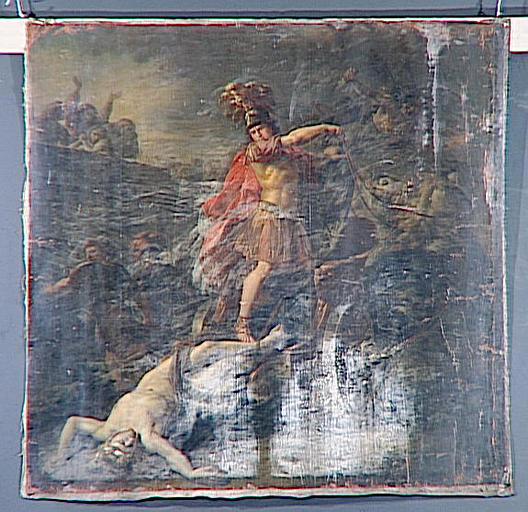
Achille trainant le corps d'Hector devant les murs de Troie et sous les yeux de Priam et d'Hécube, qui implorent le vainqueur


 Weiterlesen
Erwerben Sie ein hochauflösendes, optimiertes digitales Bild, das der Online-Vorschau weit überlegen ist.
Jede Datei wird von unseren hauseigenen Spezialisten mit modernsten Werkzeugen und fachmännischer manueller Retusche sorgfältig vorbereitet. Wir stellen sicher, dass jedes Bild eine außergewöhnliche Klarheit, präzise Farbgenauigkeit und feinste Details aufweist.
Die endgültige Datei wird innerhalb von 72 Stunden per E-Mail zugestellt und ist für den sofortigen Einsatz in professionellen, redaktionellen und Druckumgebungen optimiert. Es handelt sich um dieselbe Qualität, der führende Designstudios, Verlage und Galerien vertrauen.
Digitales Bild
Laden Sie eine hochauflösende Datei für die persönliche Präsentation, den Druck und kreative Projekte herunter. ( Druck bestellen Handgemalte Reproduktion bestellen)
In jeder Bestellung digitaler Bilder enthalten
Professionelle digitale Bereitstellung, garantiert
Wenn Sie sich für ArtsDot.com entscheiden, erhalten Sie nicht nur ein Bild – Sie erhalten ein professionell aufbereitetes digitales Kunstwerk, das mit höchster Präzision erstellt und durch eine Zufriedenheitsgarantie abgesichert wird. Hier ist alles, was automatisch mit Ihrer Bestellung geliefert wird:

Schnelle E-Mail-Zustellung
Ihre hochauflösende digitale Bilddatei wird Ihnen innerhalb von 72 Stunden nach der Bestellung per E-Mail zugestellt – bereit zur sofortigen Verwendung.

KI-optimierte digitale Datei
Ihre Kunstwerke werden professionell mithilfe fortschrittlicher KI-Tools und manueller Bearbeitung optimiert, um maximale Detailtreue, Klarheit und Farbgenauigkeit zu gewährleisten.

Lebenslanger kostenloser Neudruckservice
Datei versehentlich gelöscht oder verloren? Keine Sorge – wir senden sie Ihnen jederzeit kostenlos erneut zu.

Keine Einfuhrgebühren – jemals
Genießen Sie Ihr Kunstwerk sofort ohne Zollgebühren, Einfuhrabgaben oder Versandkosten – digitale Downloads sind immer steuerfrei.

Garantierte Farbtreue
Wir garantieren, dass Ihr digitales Bild mithilfe professioneller Werkzeuge und Farbmanagement die Originalfarben so präzise wie möglich wiedergibt.

60-Tage-Zufriedenheitsgarantie
Sollten Sie mit Ihrem digitalen Bild nicht zufrieden sein, werden wir es überarbeiten oder Ihnen innerhalb von 60 Tagen 100% erstatten – ohne Wenn und Aber.

100% Geld-zurück-Garantie
Nicht zufrieden? Erhalten Sie innerhalb von 60 Tagen nach Erhalt Ihrer digitalen Datei eine vollständige Rückerstattung – ohne Angabe von Gründen.

Rabatte bei Großbestellungen
3 Bilder kaufen, 10% sparen – 5 Bilder kaufen, 15% sparen – Ab 10 Bildern 20% sparen. Ideal für kreative Projekte, Galerien und Agenturen.
Details zum Sammlerstück
A Clash of Titans: Callet’s Dramatic Depiction of Achilles and Hector
Antoine François Callet's "Achille trainant le corps d'Hector devant les murs de Troie et sous les yeux de Priam et d'Hécube, qui implorent le vainqueur" is not merely a historical scene; it’s a visceral embodiment of the Trojan War’s tragic core. Painted in 1784-1785 during a period of immense political and social upheaval in France – a time mirroring the turmoil within the war itself – this monumental canvas captures a pivotal moment of brutal consequence, forever etching the defeat of Troy into the collective memory. Callet masterfully blends elements of Rococo elegance with the burgeoning Neoclassical emphasis on drama and narrative clarity, resulting in an artwork that is both visually arresting and profoundly moving.
The composition immediately commands attention. Achilles, rendered as a figure of immense strength and grim determination, dominates the center of the scene. He drags Hector’s lifeless body behind him, a testament to his victory but also a symbol of unbearable loss. The sheer scale of the dragging corpse underscores the enormity of the conflict and the devastating cost of war. Notice how Callet avoids glorifying violence; instead, he presents it with stark realism, emphasizing the vulnerability of both warriors. The positioning of Achilles – slightly off-center, his gaze fixed ahead – suggests a weary acceptance of his fate, a recognition that victory is often purchased at an exorbitant price.
The Stage of Tragedy: Setting and Figures
Behind Achilles, the walls of Troy rise imposingly, a formidable barrier against which the drama unfolds. The city itself is rendered with a subtle sense of decay, hinting at the impending doom that awaits it. Crucially, Callet doesn’t neglect the human element. Priam, the aged king of Troy, and Hecuba, his grief-stricken queen, are positioned prominently on the elevated platform, their faces etched with despair as they witness the desecration of their son's body. Their pleading gestures – hands raised in supplication – amplify the tragedy and underscore the profound sense of loss felt by the Trojan people. The inclusion of these figures transforms the scene from a simple depiction of military victory into a poignant meditation on mortality, family, and the futility of war.
Adding to the complexity is the presence of other figures scattered throughout the composition. A shadowy figure on the left, possibly representing Fate or Destiny, adds an element of inevitability to the scene. The two individuals in the middle, and the one on the right, likely represent the aftermath of battle and the suffering endured by both sides. Callet’s skillful use of light and shadow further enhances the dramatic effect, creating a sense of depth and atmosphere that draws the viewer into the heart of the tragedy.
Technique and Style: A Masterful Blend
Callet's technical skill is evident in every brushstroke. The artist employs a rich, layered technique characteristic of his era, utilizing impasto – thick application of paint – to create texture and volume, particularly in Achilles’ muscular form and the folds of Hector’s draped clothing. The color palette is predominantly somber, dominated by earthy tones—ochres, browns, and grays—reflecting the grim reality of war and death. However, flashes of red—the blood staining Hector's tunic—provide a stark visual contrast, emphasizing the violence of the scene. The artist’s attention to detail is remarkable, from the intricate folds of the fabric to the subtle expressions on the faces of Priam and Hecuba.
Furthermore, Callet demonstrates a sophisticated understanding of composition, employing diagonal lines—created by Achilles' dragging body—to draw the viewer's eye through the scene. The pyramidal structure of the composition – with Achilles at its apex – reinforces the sense of drama and stability amidst chaos. The overall effect is one of controlled dynamism, capturing both the raw power of the moment and the underlying tragedy.
Symbolism and Emotional Resonance
Beyond its immediate depiction of a historical event, "Achille trainant le corps d'Hector" resonates with profound symbolic meaning. The dragging of Hector’s body represents not only Achilles’ victory but also the irreversible loss of innocence and the destruction of a civilization. The pleas of Priam and Hecuba symbolize the enduring power of grief and the futile attempts to reclaim what has been lost. The entire scene serves as a cautionary tale about the devastating consequences of conflict, reminding us of the human cost of ambition and pride.
Ultimately, Callet’s masterpiece is more than just a painting; it's an enduring testament to the complexities of war, the weight of loss, and the timeless struggle between triumph and tragedy. Its dramatic intensity and emotional depth continue to captivate viewers centuries later, solidifying its place as a cornerstone of French Baroque art.
Ähnliche Kunstwerke
Biografie des Künstlers
Antoine François Callet: Painter of Allegory and Imperial Splendor
Antoine François Callet (1741–1823), often referred to simply as Antoine Callet, stands as a prominent figure in the artistic landscape of late 18th-century France—a painter whose career coincided with pivotal moments in European history, notably the reign of Louis XVI and the Napoleonic era. Primarily celebrated for his monumental ceiling paintings and portraits commissioned by royalty, Callet’s oeuvre embodies the grandeur and intellectual fervor characteristic of Rococo and Neoclassical styles simultaneously. Born in Paris, Callet's early life remains somewhat shrouded in obscurity, though he secured a prestigious position within the Académie Royale de peinture et de sculpture—the Royal Academy of Painting and Sculpture—a testament to his talent and ambition. Crucially, he achieved recognition through winning the grand prix de Rome in 1769, an invaluable opportunity for young artists aspiring to establish themselves as masters of classical art. This scholarship propelled him to Rome where he honed his skills under the tutelage of Francesco Saverio Salviati, absorbing influences from Caravaggio and Bernini—artists whose dramatic chiaroscuro techniques would profoundly impact Callet’s artistic vision. He was accepted by the Académie des beaux arts in 1779, with his entry piece being a portrait of the comte d'Artois, and received with his allegory *Le printemps* (*Spring*) in 1781. He exhibited at the Salon from 1783 onwards. Callet’s prolific output spanned decades, producing a diverse range of works that reflected both personal taste and the demands of his aristocratic patrons. He excelled in portraiture, capturing the likenesses of dignitaries and members of the nobility with meticulous detail and psychological insight—works that offer valuable glimpses into the social dynamics of the period. His portraits are distinguished by their expressive poses and subtle nuances of emotion, reflecting a deep understanding of human psychology. However, Callet’s fame rests principally upon his monumental ceiling paintings, particularly those adorning the Grande Galerie of the Palais du Luxembourg. These ambitious projects showcased his mastery of color, composition, and illusionistic perspective, transforming spaces into immersive narratives imbued with mythological and allegorical symbolism. The Grande Galerie's frescoes are considered masterpieces of Neoclassical art, demonstrating Callet’s ability to synthesize Baroque grandeur with classical ideals. Among his most celebrated commissions were “L’aurore” (Aurora), depicting a radiant dawn symbolizing hope and renewal, and "Allegorie du dix-huit brumaire ou la france sauvée" (Allegory of 18 Brumaire or France Saved), commemorating Napoleon Bonaparte’s coup d’état—a powerful visual statement reflecting the political upheavals of the time. Furthermore, he undertook monumental frescoes for Versailles, including “Allegorie de la bataille d'Austerlitz” (Allegory of the Battle of Austerlitz), portraying a triumphant victory over Austria and cementing his reputation as one of the foremost artists serving Napoleon’s regime. These works exemplify Callet’s commitment to capturing historical events with dramatic flair and conveying complex ideological messages. Callet’s artistic style evolved throughout his career, demonstrating an adaptability that mirrored the broader stylistic shifts occurring in French art during the Enlightenment and Napoleonic periods. While initially influenced by Baroque grandeur—evident in his early portraits—he embraced Neoclassical principles later on, favoring clarity of form and restraint in color palettes. His meticulous attention to detail and masterful handling of pigment contributed significantly to the enduring beauty and intellectual depth of his paintings. Antoine François Callet’s legacy continues to inspire admiration for his artistic achievements and his role as a chronicler of an era defined by political transformation and cultural innovation. He died peacefully in Paris in 1823, leaving behind a remarkable body of work that remains a testament to the artistic brilliance of his time.
Antoine Callet
1741 - 1823 , Frankreich
Kurzinfos
- Artistic Movement Or Style: Rokoko Stil
- Artists Or Movements Influenced By This Artist: ['Louis XVI']
- Artists Who Influenced This Artist: ['Jean Baptiste Rousseau']
- Date Of Birth: Paris, Frankreich (1741)
- Date Of Death: 1823
- Full Name: Antoine François Callet
- Nationality: Französisch
- Notable Artworks:
- L'aurore
- Allegorie du dix-huit brumaire ou la france sauvée
- Allegorie de la bataille d'Austerlitz
- Place Of Birth: Paris

