

 Vorschau anzeigen
 Versenden
 Teilen
 Details anzeigen

 Herunterladen
 Ähnliche Objekte
 Röntgenaufnahme
 Diashow
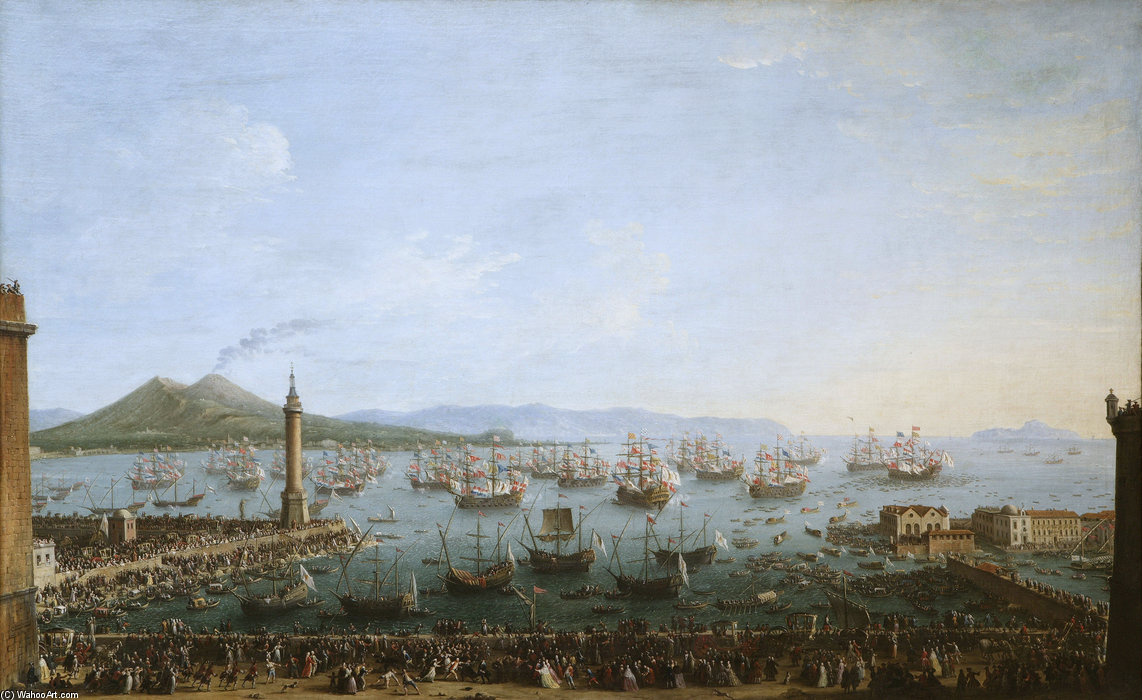
Arrival of Charles III in Naples
 Oil On Canvas
- WallArt
- Baroque
 1759
1759- Early Modern
 128.0 x 205.0 cm
 Museo del Prado
 Weiterlesen
Giclée / Kunstdruck
Giclée- oder Leinwanddruck in Museumsqualität mit schneller Produktion und flexiblen Veredelungsoptionen. ( Handgemalte Reproduktion bestellen Bild kaufen)




P118B $10

P118H $10

P118W $10

P438Z $10

P508JH $12

P508YH $12

P805H $10

P805Z $10

P919BZ $10

P919G $10

P919XJ $10

P959ZH $10

P968JZ $12

W106C $8

W218G $10

W218JH $8

W218Y $10

W307PJ $10

W316G $10

W316PJ $8

W316Y $10

W398PJ $8

W4111J $10

W500HY $15

W500JH $15

W692G $12

W849H $8

W940BG $15

W953PJ $8




Wählen Sie aus unseren vordefinierten Formaten, die den ursprünglichen Proportionen des Kunstwerks entsprechen.

Sie können Ihre eigenen Maße eingeben, um ein bestimmtes Format oder einen speziellen Platz einzupassen. Wenn das von Ihnen gewählte Format nicht den Proportionen des Originalbildes entspricht, werden wir das Kunstwerk entweder beschneiden oder das Bild mit einem gespiegelten oder einfarbigen Rand erweitern. Ein digitaler Entwurf wird Ihnen zur Genehmigung zugesandt, bevor die Produktion beginnt.
Bitte beachten Sie, dass die Vorschau auf dem Bildschirm nicht den tatsächlichen Zuschnitt oder die Erweiterung widerspiegelt. Nur der Entwurf zeigt die endgültige Komposition präzise an.
Obwohl Sondermaße verfügbar sind, empfehlen wir die Auswahl eines Maßes aus der vordefinierten Liste, um die ursprünglichen Proportionen zu bewahren.
Weltweiter Versand () innerhalb von 2 Wochen statt der üblichen 4/5 Wochen. (23 August)

Kostenloser weltweiter Expressversand

Hochwertige Leinenleinwand

Umfassender Versicherungsschutz beim Versand

Zollgebühren-Rückerstattungsgarantie

Garantie für exakte Farbtreue

60 Tage Rückgaberecht (nur bei Mängeln)

100% Geld-zurück-Garantie

Mengenrabatt verfügbar
 Die Glasoption ist nur für Größen unter 110 cm verfügbar.

Arrival of Charles III in Naples
Giclée / Kunstdruck
Format der Reproduktion
-


Gesamtpreis
$ 62
Sammlerstück-Beschreibung
A Grand Spectacle of Maritime Majesty
In the sweeping expanse of Antonio Joli’s Arrival of Charles III in Naples, the viewer is not merely an observer but a participant in a moment of profound historical theater. Painted in 1759, this magnificent oil on canvas captures the electric atmosphere of a Mediterranean port transformed by royal expectation. The scene unfolds across a vast harbor, where the sea itself seems to pulse with the movement of countless vessels—from towering, majestic ships with billowing sails to humble, agile boats navigating the coastal waters. Joli masterfully orchestrates a sense of organized chaos, layering the composition with a multitude of figures that populate the shoreline, their collective gaze directed toward the approaching sovereign. The distant silhouette of a mountain rises against the horizon, providing a stoic, eternal backdrop to the fleeting, high-stakes drama unfolding in the bay.
The technique employed by Joli is a testament to his mastery of the veduta tradition, a style dedicated to the meticulous and often idealized depiction of cityscapes. Through delicate brushwork and a sophisticated command of light, he breathes life into the textures of wood, canvas, and salt spray. The artist utilizes a luminous palette to evoke the shimmering Mediterranean sun, creating a play of light and shadow that lends a three-dimensional depth to the crowded harbor. Each stroke contributes to a sense of atmospheric perspective, where the clarity of the foreground figures gradually softens into the hazy, blue-toned majesty of the distant landscape, inviting the eye to wander through the layers of this maritime epic.
The Intersection of History and Artistry
Beyond its visual splendor, the painting serves as a vital historical document, immortalizing the political transition of Naples under the Bourbon dynasty. As Charles III arrived to claim his kingdom, the painting captured the very essence of 18th-century civic pride and the theatricality of monarchical power. Joli, a Venetian visionary trained in the prestigious Bolognese and Roman schools, brings a sense of classical grandeur to this contemporary event. His ability to blend the documentary precision of a landscape artist with the emotional resonance of a history painter allows the work to transcend simple reportage. There is an undeniable sense of anticipation woven into the fabric of the canvas; one can almost hear the cries of the sailors and the rhythmic lapping of waves against the docks.
For the discerning collector or interior designer, this reproduction offers more than just a window into the past; it provides a commanding focal point for any sophisticated space. The sheer scale and narrative complexity of the piece make it an ideal centerpiece for grand halls, libraries, or formal dining rooms where conversation and elegance are paramount. To hang such a work is to invite the spirit of the Enlightenment into a room—a celebration of discovery, maritime strength, and the enduring allure of the Italian coast. It is a masterpiece that speaks of legacy, capturing a singular moment in time with an everlasting, breathtaking brilliance.
Ähnliche Kunstwerke





Über den Künstler
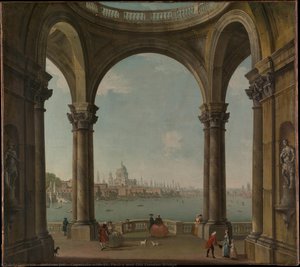
Antonio Joli: Ein venezianischer Visionär des Barocklandschafts
Antonio Francesco Lodovico Joli (1700 – 1777) steht als eine zentrale Figur in der venezianischen Barocklandschaftstradition und wird für seine sorgfältig gestalteten Vedute und Capricci gefeiert, die den Glanz und die Atmosphäre von Städten wie Rom, London und Neapel einfangen. Geboren in Modena, Italien, begann Jolis künstlerischer Weg unter der Anleitung von Raffaello Rinaldi und etablierte ihn fest im einflussreichen Bolognese Stil. Diese frühe Ausbildung trieb ihn zu weiteren Studien nach Rom bei Giovanni Paolo Panini, dessen idealisierte Landschaften Jolis Stil mit einer klassischen Sensibilität und einer Faszination für Ruinen – eine Kennzeichen seines Oeuvres – erfüllten. Die Galleria Accademia di Belle Arti di Venezia erkannte Jolis Talent frühzeitig und nahm ihn als einen seiner Gründer im Jahr 1754 auf. Diese Zugehörigkeit festigte seine Position innerhalb der künstlerischen Landschaft von Venedig und förderte Zusammenarbeiten, die venezianische Kunstgeschichte bereicherten. Sein Wirken blühte während seines Aufenthalts in Dresden und London (1742–1748) auf, wo er als Bühnenbildner für Opernaufführungen tätig war, insbesondere im Teatro San Giovanni Grisostomo und Teatro San Samuele und demonstrierte Vielseitigkeit jenseits der rein visuellen Kunst. Er verband theatralische Illusion mit architektonischer Präzision und schuf immersive Umgebungen, die das Publikum fesselten. Seine künstlerische Begabung erstreckte sich auch nach Madrid (1750–54), wo er das Richmond Haus von John James Heidegger schmückte – eine Auftragsarbeit, die sein Ruf für opulenten Dekor und meisterhafte Ausführung widerspiegelte. Sein Werk verkörpert den Geist der Aufklärung Ästhetik und betont Klarheit von Form und harmonische Komposition währenddessen aber auch eine tiefgreifende Wertschätzung für natürliche Schönheit. Der Künstler achtete auf jedes Detail – wie er Gebäude, Monumente und Stadtansichten darstellte – und spiegelt damit das venezianische Tradition verpflichtet zur Realismus kombiniert mit fantasievoller Verzierung wider. Zu Jolis bedeutendsten Leistungen zählen seine berühmten Gemälde, die London und den Petersdom darstellen. Diese Werke verkörpern die Barockfaszination für das Einfangen flüchtiger Momente und die Übertragung emotionaler Tiefe durch atmosphärische Perspektive und dramatische Beleuchtung. Sein „Westminster vom Fluss“ erfasst die Majestät des Domes gegen einen Hintergrund von nebeligem Themesschiff, während „Capriccio mit St. Paul’s und Alte London Brücke“ eine fantastische Rekonstruktion Londons Skyline präsentiert – ein Zeugnis für Jolis künstlerisches Sehen und technische Können. Diese Gemälde inspirieren weiterhin Bewunderung für ihre Schönheit und Genauigkeit und sichern Joli seinen Platz als zentrale Figur in venezianischer Landschaftsmalerei und Barockkunst weltweit.- Einflussreiche Künstler: Raffaello Rinaldi und Giovanni Paolo Panini prägten seinen Stil durch ihre Beschäftigung mit klassischen Idealen und Ruinen.
- Akademische Anerkennung: Die Galleria Accademia di Belle Arti di Venezia würdigte sein Talent und förderte seine künstlerische Entwicklung.
- Vielseitigkeit: Seine Tätigkeit als Bühnenbildner für Opernproduktion zeigte eine außergewöhnliche künstlerische Kreativität jenseits der Malerei.
Antonio Joli
1700 - 1777 , Italien
Kurzinfos
- Artistic Movement Or Style: Vedute & Capricci Baroque
- Artists Who Influenced This Artist:
- Raffaello Rinaldi
- Giovanni Paolo Pannini
- Date Of Birth: Modena Italien 1700
- Date Of Death: Naples 1777
- Full Name: Antonio Francesco Lodovico Joli
- Nationality: Italienisch
- Notable Artworks:
- Westminster vom Fluss
- Capriccio mit St. Paul's und Alte London Brücke
- Place Of Birth: Modena Italien
Ähnliche Artikel

Barocke Pracht: Wie Sie Opulenz und Emotionen in zeitgenössische Innenräume bringen
Entdecken Sie die Pracht des Barock! Expertenratgeber für luxuriöse Innenräume mit barocken Elementen. Inspiration, Tipps & hochwertige Kunst bei .

The Dramatic Flourish: Exploring the Baroque Movement's Enduring Legacy in Art History
Explore the dramatic world of Baroque art! Discover iconic artists like Caravaggio & Rubens, defining techniques, and its lasting impact on art history. Expert insights for collectors & enthusiasts at ArtsDot.

Barock Meisterwerke: Die 10 prägendsten Kunstwerke für Ihr Zuhause |
Entdecken Sie die 10 prägendsten Meisterwerke des Barock! Caravaggio, Rembrandt & Co. – Erfahren Sie die Geschichten hinter ikonischen Gemälde und finden Sie hochwertige Kunst Reproduktionen für Ihr Zuhause auf .

Jacopo Tintoretto: Die 25 Meisterwerke des venezianischen Dramatikers | ArtsDot
Entdecken Sie die 25 Meisterwerke von Jacopo Tintoretto! Tauchen Sie ein in die dramatische Welt der venezianischen Renaissance. Hochwertige Kunst-Reproduktionen & Inspiration für Ihr Zuhause – jetzt auf ArtsDot.com.

The Visceral Stage: Exploring Dramatic Narratives & Emotional Intensity in Baroque Art
Explore the dramatic world of Baroque art! Discover iconic masters like Caravaggio & Rembrandt, their techniques, and the movement's lasting impact. Expert insights for collectors & enthusiasts at ArtsDot.

