

 Vorschau anzeigen
 Versenden
 Teilen
 Details anzeigen

 Herunterladen
 Ähnliche Objekte
 Röntgenaufnahme
 Diashow
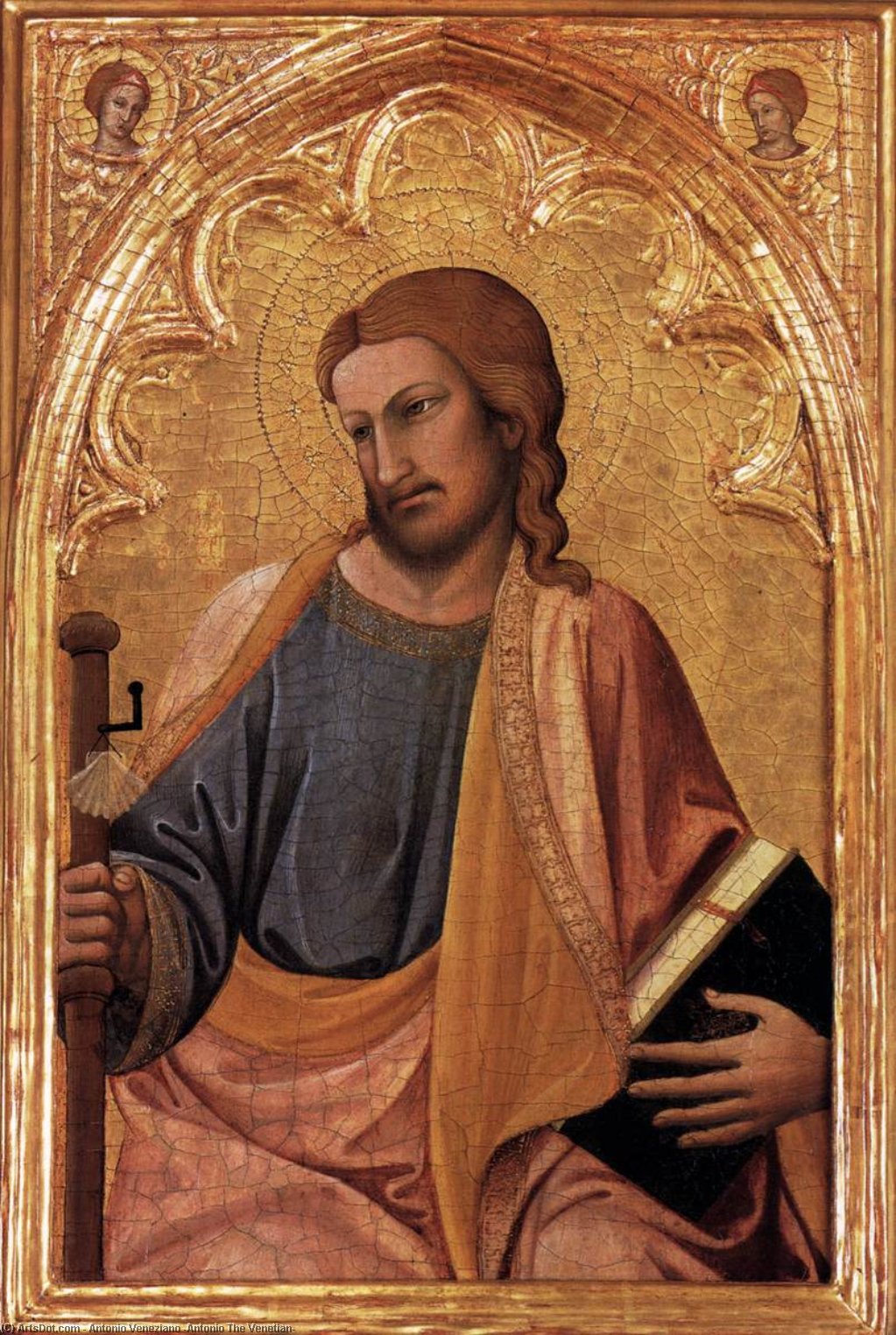
Apostle James the Greater
 Oil On Panel
- Early Renaissance
 1384
1384- Late Medieval
 51.0 x 33.0 cm
 Staatliche Museen zu Berlin
 Weiterlesen
Handgefertigte Ölreproduktion
Handgemaltes Ölgemälde auf Leinwand in Ihrer Wunschgröße und mit Rahmen, auf Bestellung von unseren Künstlern angefertigt. ( Druck bestellen Bild kaufen)




P118B $10

P118H $10

P118W $10

P438Z $10

P508JH $12

P508YH $12

P805H $10

P805Z $10

P919BZ $10

P919G $10

P919XJ $10

P959ZH $10

P968JZ $12

W106C $8

W218G $10

W218JH $8

W218Y $10

W307PJ $10

W316G $10

W316PJ $8

W316Y $10

W398PJ $8

W4111J $10

W500HY $15

W500JH $15

W692G $12

W849H $8

W940BG $15

W953PJ $8




Wählen Sie aus unseren vordefinierten Formaten, die den ursprünglichen Proportionen des Kunstwerks entsprechen.

Sie können Ihre eigenen Maße eingeben, um einen bestimmten Rahmen oder Platz auszufüllen. Wenn die gewählte Größe nicht den Proportionen des Originalbildes entspricht, werden wir das Kunstwerk entweder beschneiden oder das Gemälde durch zusätzliche, handgemalte Elemente erweitern. Ein digitales Mockup wird Ihnen zur Genehmigung zugesandt, bevor die Produktion beginnt.
Bitte beachten Sie, dass die Bildschirmvorschau nicht die tatsächliche Beschneidung oder Erweiterung widerspiegelt. Nur das Mockup zeigt die endgültige Komposition exakt an.
Obwohl Sondermaße verfügbar sind, empfehlen wir, eine Größe aus der vordefinierten Liste zu wählen, um die ursprünglichen Proportionen beizubehalten.
Nach der Bestellung wird das ArtsDot.com-Team dem Kunden Anweisungen per E-Mail zusenden und eine Mockup-Vorschau bereitstellen.
Weltweiter Versand () in nur 3 bis 4 Wochen statt der üblichen 5 Wochen. (29 August). Keine Kompromisse bei der Qualität.

Kostenloser weltweiter Expressversand

Hochwertige Leinenleinwand

Umfassender Versicherungsschutz beim Versand

Zollgebühren-Rückerstattungsgarantie

Garantie für exakte Farbtreue

60 Tage Rückgaberecht (nur bei Mängeln)

100% Geld-zurück-Garantie

Mengenrabatt verfügbar
 Die Glasoption ist nur für Größen unter 110 cm verfügbar.

Apostle James the Greater
Art der Reproduktion
Format der Reproduktion
-


Gesamtpreis
$ 263
A Glimpse into Late Gothic Devotion: Apostle James the Greater
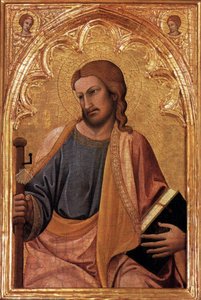
To stand before this depiction of Apostle James the Greater is to step directly into the devotional atmosphere of late 14th-century Venice. Painted in 1384, this work by Antonio Veneziano captures not merely a portrait, but a moment suspended between earthly pilgrimage and divine revelation. The composition immediately draws the eye to the central figures, yet it is the palpable sense of piety that envelops the piece. Veneziano, working within the rich currents of the Venetian Renaissance, imbues his subject with a solemn dignity characteristic of the period, inviting the modern viewer into a profound dialogue with faith and history.
Mastery in Oil on Panel: Technique and Craftsmanship
The technical execution speaks volumes about the skill of Antonio Veneziano. The choice of oil paint on panel allowed for a luminosity and depth rarely achieved in earlier mediums. Observe how the light seems to emanate from within the scene, particularly highlighting the book held by Christ—a tangible representation of sacred knowledge. The background, framed by an intricate gold structure, serves not just as decoration but as a symbolic portal, suggesting the eternal nature of the subject matter against the fleeting reality of the earthly plane. This meticulous handling of pigment and surface texture ensures that even in reproduction, the richness of the original craftsmanship remains breathtaking.
Symbolism and Spiritual Weight
The iconography here is deeply resonant. The presence of Apostle James, accompanied by a staff or cane, speaks to his role as a traveler, a witness, and a guide on the path of faith. Contrasting this earthly support with the divine authority suggested by Christ holding scripture creates a beautiful tension—the journey toward enlightenment. The gold framework itself is an ancient symbol of heavenly glory, elevating the narrative from a simple portrait to an object of profound spiritual contemplation. It asks us to consider our own journeys and the texts that guide our lives.
A Touch for the Modern Sanctuary
For the discerning collector or designer seeking art with genuine historical gravity, this piece offers unparalleled depth. Whether adorning a formal study, a chapel niche, or a grand hall, its quiet intensity commands attention without shouting. Reproducing such an artwork allows one to bring the sophisticated narrative power of the late Gothic period into contemporary life. It is more than decoration; it is a curated piece of sacred history, imbued with the enduring grace of Venetian artistry.
Artistic Context and Legacy
Antonio Veneziano’s career places him at a fascinating crossroads—influenced by the robust traditions emanating from Florence yet operating within the unique chromatic sensibility of Venice. His work embodies that transition, retaining the devotional intensity of earlier styles while hinting at the burgeoning naturalism of the Renaissance. Owning or displaying a reproduction of this Apostle James is to own a piece of art history that bridges eras, connecting the viewer directly to the artistic pulse of 14th-century Italy.
Ähnliche Kunstwerke

Über den Künstler
The Venetian Legacy of Antonio Veneziano
To encounter the works of Antonio Veneziano, known to history as Antonio the Venetian, is to step into a world where the spiritual and the terrestrial converge through the delicate language of late Gothic and early Renaissance art. Born in the maritime splendor of Venice around 1400, his life and artistry served as a vital bridge between the medieval traditions of devotion and the burgeoning humanism of the Italian Renaissance. While the biographical shadows cast by time obscure many specific details of his early years, his presence is indelibly etched into the sacred spaces of Italy’s most venerable cities, from the lagoons of Venice to the hallowed halls of Siena and Pisa.
The foundation of Veneziano’s mastery was laid under the guidance of Taddeo Gaddi, a formidable figure in the Florentine tradition. This apprenticeship provided him with more than just technical proficiency; it infused his Venetian sensibilities with the structural clarity and narrative depth characteristic of the Florentine school. Through this connection, he learned to manipulate light and form to serve theological truths, a skill that would later allow him to navigate the complex demands of ecclesiastical commissions across the Italian peninsula.
A Journey Through Sacred Spaces
Veneziano’s career was defined by a remarkable mobility, as his reputation for excellence led him far beyond the borders of his native Venice. His travels took him into the heart of Tuscany and Umbria, where he engaged with some of the most significant religious projects of his era. In Siena, he undertook the monumental task of decorating chapels within the Siena Cathedral, creating fresco cycles that breathed life into sacred narratives for the local faithful. These works were not merely decorations but immersive spiritual experiences designed to guide the viewer through complex biblical histories.
One of his most profound historical contributions occurred in Pisa, specifically within the Campo Santo. Between 1384 and 1387, Antonio was entrusted with completing the frescoes of Saint Ranieri, a task originally begun by Andrea da Firenze. This period of intense creativity showcased his ability to handle large-scale compositions and his growing command over perspective and symbolic depth. Though much of this magnificent work suffered during the ravages of World War II, the historical record preserves the memory of an artist capable of transforming cold stone into a vibrant, breathing testament to faith.
Technique, Symbolism, and Artistic Spirit
The artistry of Antonio Veneziano is characterized by a profound sense of piety and a meticulous attention to the symbolic weight of his subjects. Whether working in fresco or on wood panels, he possessed a unique ability to imbue his figures with a solemn dignity that commanded reverence. His use of light was particularly evocative; in works such as his depiction of Apostle James the Greater, one can observe how luminosity seems to emanate from within the sacred subjects themselves, suggesting a divine presence that transcends the physical medium.
His technical repertoire included several key elements that defined his stylistic identity:
- Mastery of Medium: His skill in painting on wood panels allowed for a richness of color and a depth of texture that captured the light in ways that earlier, flatter Gothic styles could not.
- Iconographic Depth: He utilized intricate gold frameworks and symbolic objects—such as the staff of a pilgrim or sacred scriptures—to create a layered dialogue between the viewer and the divine.
- Collaborative Spirit: Much like the great masters of the Venetian school, Veneziano embraced the collaborative nature of Renaissance workshops, working alongside contemporaries like Andrea Vanni to decorate the ceilings of Pisa Cathedral.
Ultimately, the significance of Antonio Veneziano lies in his role as a cultural conduit. By blending the decorative elegance of the late Gothic period with the emerging structural innovations of the Renaissance, he helped shape a visual language that would eventually define the glory of Italian art. His legacy remains a testament to an era when every brushstroke was an act of devotion and every painted surface a window into the eternal.
Kurzinfos
- Artistic Movement Or Style: Renaissance
- Artists Or Movements Influenced By This Artist: ['Giovanni Antonio Canal']
- Artists Who Influenced This Artist: ['Taddeo Gaddi']
- Date Of Birth: Venice
- Date Of Death: Living
- Full Name: Antonio Veneziano
- Nationality: Italian
- Notable Artworks: ['Virgin and St. John in grief']
- Place Of Birth: Italy
Ähnliche Artikel

James Abbott McNeill Whistler: Die 25 Meisterwerke für Ihr Zuhause | ArtsDot
Entdecken Sie die 25 Meisterwerke von James Abbott McNeill Whistler! Von den berühmten Nocturnes bis zu ikonischen Porträts – erleben Sie Ästhetizismus, Impressionismus & Tonalismus. Hochwertige Reproduktionen auf ArtsDot.com.

Sir Alfred James Munnings: Die 25 Meisterwerke des Pferdebildes | ArtsDot
Entdecken Sie die 25 Meisterwerke von Sir Alfred James Munnings! Erleben Sie seine beeindruckenden Pferdebilder, geprägt vom Impressionismus und Realismus. Hochwertige Kunstdrucke & Reproduktionen auf ArtsDot.com – für elegante Wandkunst & stilvolles Interieurdesign.
Öl auf Holz: 10 Meisterwerke, die Kunstgeschichte veränderten |
Entdecken Sie die 10 legendärsten Gemälde auf Holz – von Renaissance bis Impressionismus! Erfahren Sie die Geschichten der Künstler & ihre Meisterwerke. Hochwertige Reproduktionen bei .

Oil on Panel: A Historical Survey of Technique, Support & Aesthetic Evolution
Explore the rich history of oil on panel painting! Discover Renaissance techniques, support structures & aesthetic evolution. Expert insights for art collectors and enthusiasts.
Öl auf Holz: Eine historische Untersuchung von Technik, Trägermaterial und ästhetischer Wirkung
Entdecken Sie die faszinierende Welt der Ölmalerei auf Holz! Expertenwissen zu Technik, Geschichte und Restaurierung von Meisterwerken. Für Kunstliebhaber & Sammler.

