

 Vorschau anzeigen
 Versenden
 Teilen
 Details anzeigen

 Herunterladen
 Ähnliche Objekte
 Röntgenaufnahme
 Diashow
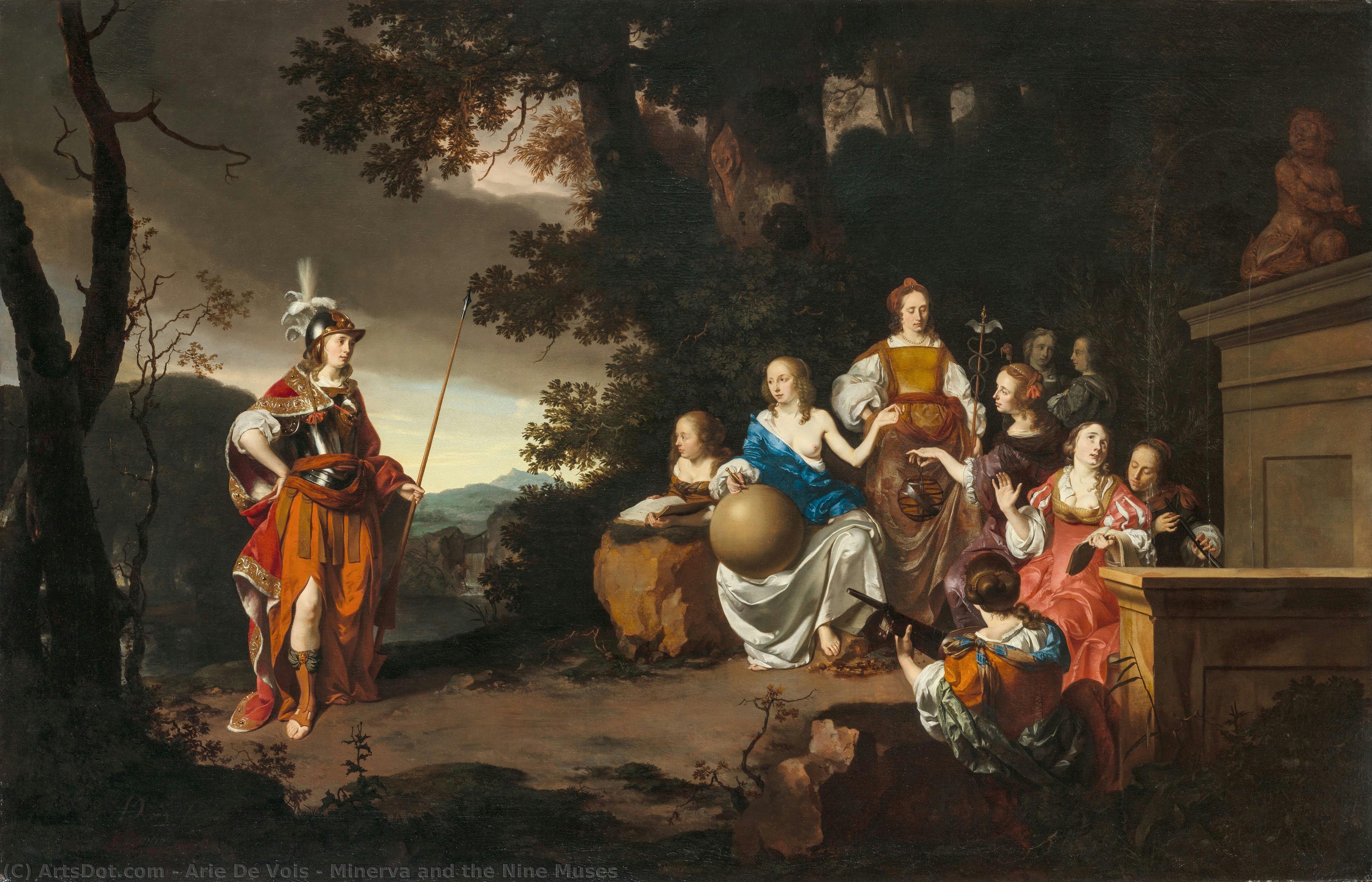
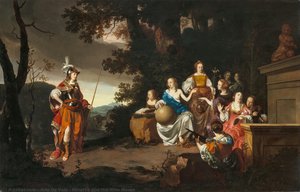
Minerva and the Nine Muses


 Weiterlesen
Erwerben Sie ein hochauflösendes, optimiertes digitales Bild, das der Online-Vorschau weit überlegen ist.
Jede Datei wird von unseren hauseigenen Spezialisten mit modernsten Werkzeugen und fachmännischer manueller Retusche sorgfältig vorbereitet. Wir stellen sicher, dass jedes Bild eine außergewöhnliche Klarheit, präzise Farbgenauigkeit und feinste Details aufweist.
Die endgültige Datei wird innerhalb von 72 Stunden per E-Mail zugestellt und ist für den sofortigen Einsatz in professionellen, redaktionellen und Druckumgebungen optimiert. Es handelt sich um dieselbe Qualität, der führende Designstudios, Verlage und Galerien vertrauen.
Digitales Bild
Laden Sie eine hochauflösende Datei für die persönliche Präsentation, den Druck und kreative Projekte herunter. ( Druck bestellen Handgemalte Reproduktion bestellen)
In jeder Bestellung digitaler Bilder enthalten
Professionelle digitale Bereitstellung, garantiert
Wenn Sie sich für ArtsDot.com entscheiden, erhalten Sie nicht nur ein Bild – Sie erhalten ein professionell aufbereitetes digitales Kunstwerk, das mit höchster Präzision erstellt und durch eine Zufriedenheitsgarantie abgesichert wird. Hier ist alles, was automatisch mit Ihrer Bestellung geliefert wird:

Schnelle E-Mail-Zustellung
Ihre hochauflösende digitale Bilddatei wird Ihnen innerhalb von 72 Stunden nach der Bestellung per E-Mail zugestellt – bereit zur sofortigen Verwendung.

KI-optimierte digitale Datei
Ihre Kunstwerke werden professionell mithilfe fortschrittlicher KI-Tools und manueller Bearbeitung optimiert, um maximale Detailtreue, Klarheit und Farbgenauigkeit zu gewährleisten.

Lebenslanger kostenloser Neudruckservice
Datei versehentlich gelöscht oder verloren? Keine Sorge – wir senden sie Ihnen jederzeit kostenlos erneut zu.

Keine Einfuhrgebühren – jemals
Genießen Sie Ihr Kunstwerk sofort ohne Zollgebühren, Einfuhrabgaben oder Versandkosten – digitale Downloads sind immer steuerfrei.

Garantierte Farbtreue
Wir garantieren, dass Ihr digitales Bild mithilfe professioneller Werkzeuge und Farbmanagement die Originalfarben so präzise wie möglich wiedergibt.

60-Tage-Zufriedenheitsgarantie
Sollten Sie mit Ihrem digitalen Bild nicht zufrieden sein, werden wir es überarbeiten oder Ihnen innerhalb von 60 Tagen 100% erstatten – ohne Wenn und Aber.

100% Geld-zurück-Garantie
Nicht zufrieden? Erhalten Sie innerhalb von 60 Tagen nach Erhalt Ihrer digitalen Datei eine vollständige Rückerstattung – ohne Angabe von Gründen.

Rabatte bei Großbestellungen
3 Bilder kaufen, 10% sparen – 5 Bilder kaufen, 15% sparen – Ab 10 Bildern 20% sparen. Ideal für kreative Projekte, Galerien und Agenturen.
Ähnliche Kunstwerke







Biografie des Künstlers
A Life Captured in Shadow and Light
The name Arie de Vois resonates within the annals of the Dutch Golden Age as a poignant symbol of artistic brilliance interrupted by the fragility of life. Born in Leiden around 1632, De Vois emerged during an era of unparalleled creative explosion, a time when the burgeoning merchant classes of the Netherlands sought to immortalize their status through the medium of oil and canvas. While his biographical timeline is marked by a certain tragic brevity, his presence in the art historical record remains indelible. As the son of Alewijn de Vois, an organist at the Pieterskerk in Leiden, he was raised amidst the profound musical and spiritual textures of his home city, a setting that likely nurtured his early sensitivity to atmosphere and rhythm.
Though some accounts suggest a life cut short in his youth, other historical records point to a more enduring, albeit complex, career that extended into the latter half of the 17th century. This duality adds a layer of mystery to his legacy, suggesting an artist whose influence may have lingered long after his initial period of activity. His journey through the artistic hubs of Utrecht and Leiden allowed him to absorb the very essence of Dutch mastery, weaving together the technical rigor of his mentors with a personal, serene elegance that would become his hallmark.
The Mastery of Influence and Technique
To understand the soul of De Vois’s work, one must look toward the giants upon whose shoulders he stood. His training was a tapestry of the finest instruction available in the Low Countries. In Utrecht, he became a pupil of Nikolaus Knüpfer, a master who also shared his classroom with the legendary Jan Steen. From Knüpfer, De Vois likely inherited a command over composition and the ability to imbue even the simplest subject with narrative weight. Upon returning to Leiden, his studies under Abraham van den Tempel further refined his aesthetic, steering him toward a more polished and sophisticated approach to portraiture.
The influence of Rembrandt Harmensz van Rijn is perhaps the most palpable thread in De Vois’s stylistic fabric. One can observe the echoes of the great master in De Vois’s meticulous use of chiaroscuro—that dramatic, breathing interplay between deep shadow and piercing light. However, where Rembrandt often embraced a rugged, textured spontaneity, De Vois moved toward a more restrained and tranquil palette. He favored muted tones of ochre, umber, and sienna, creating atmospheres of contemplative calm. His technique was not merely about the replication of form, but about the capture of a psychological state, using light to draw the viewer into the quiet, inner lives of his subjects.
Legacy of the Serene Portrait
The surviving works of Arie de Vois serve as intimate windows into the social and moral fabric of 17th-century Dutch life. His portraits were far more than mere documentation; they were carefully constructed statements of identity, character, and lineage. In pieces such as Jacob Dream, we encounter a profound sense of peace, where the subtle rendering of emotion suggests a subject lost in deep thought. Conversely, works like the Portrait of Hadriaan Beverland with a Prostitute demonstrate his ability to navigate much more complex and provocative psychological landscapes, utilizing juxtaposition to create tension and narrative intrigue.
De Vois’s significance lies in his ability to balance the formal requirements of the Dutch Guild of St. Luke—of which he was an active and esteemed member, even serving as dean—with a deeply personal artistic voice. His career, marked by both professional prestige and the quietude of his compositions, represents a vital branch of the Golden Age tradition. He remains a master of the understated, an artist who proved that the most profound human truths are often found not in grand gestures, but in the softest light falling across a face, or the silent gaze of a sitter caught in a moment of eternal reflection.
arie de vois
1632 - 1635 , Netherlands
Kurzinfos
- Artistic Movement Or Style: Dutch Golden Age Art
- Date Of Birth: Leiden, Netherlands (1632)
- Full Name: Arie de Vois
- Nationality: Dutch
- Notable Artworks:
- Jacob Dream
- Portrait of Hadriaan Beverland with a Prostitute
- Place Of Birth: Leiden

