

 Vorschau anzeigen
 Versenden
 Teilen
 Details anzeigen

 Herunterladen
 Ähnliche Objekte
 Röntgenaufnahme
 Diashow
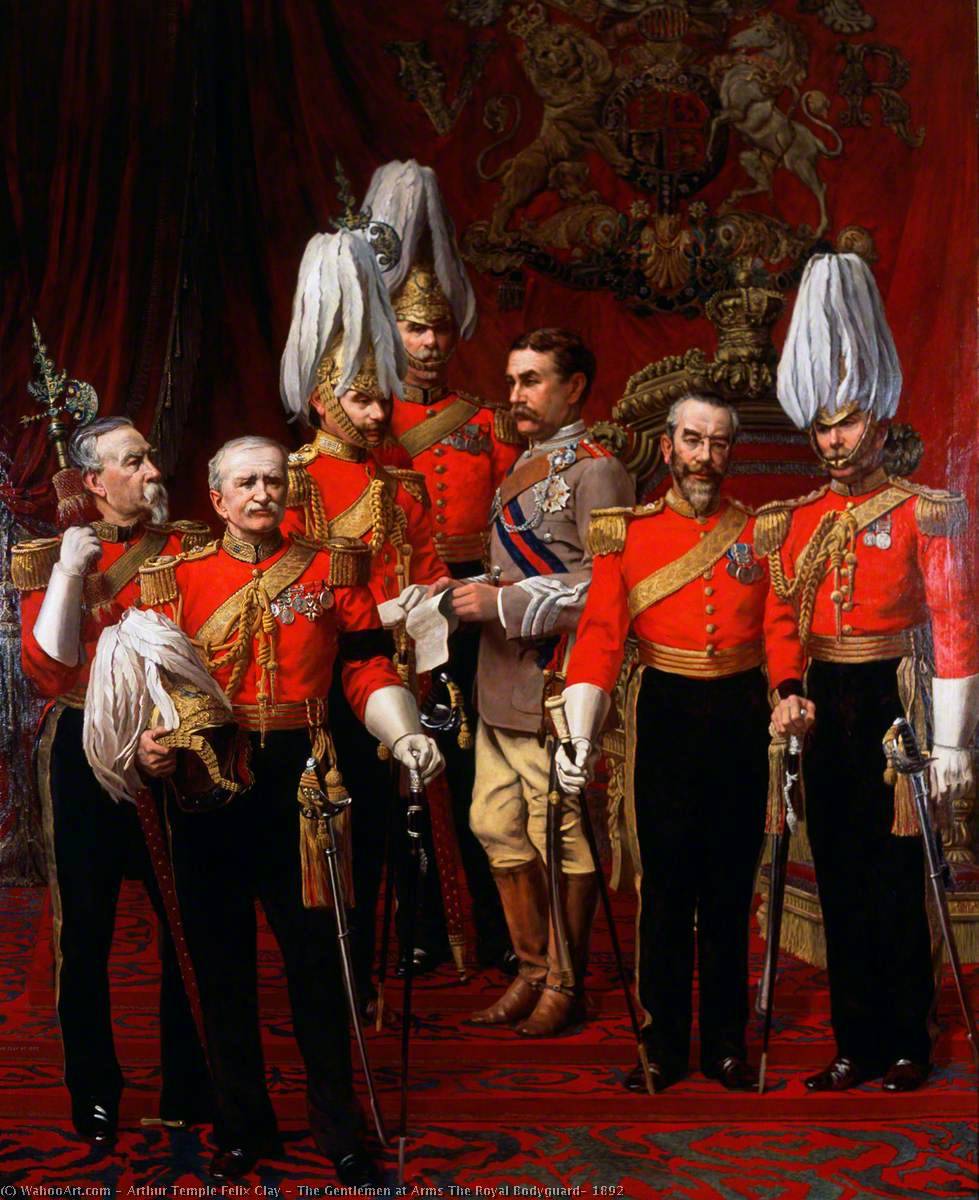
The Gentlemen at Arms The Royal Bodyguard, 1892
 1892
1892 350.0 x 261.0 cm
 Ministerium der Verteidigung
 Weiterlesen
Erwerben Sie ein hochauflösendes, optimiertes digitales Bild, das der Online-Vorschau weit überlegen ist.
Jede Datei wird von unseren hauseigenen Spezialisten mit modernsten Werkzeugen und fachmännischer manueller Retusche sorgfältig vorbereitet. Wir stellen sicher, dass jedes Bild eine außergewöhnliche Klarheit, präzise Farbgenauigkeit und feinste Details aufweist.
Die endgültige Datei wird innerhalb von 72 Stunden per E-Mail zugestellt und ist für den sofortigen Einsatz in professionellen, redaktionellen und Druckumgebungen optimiert. Es handelt sich um dieselbe Qualität, der führende Designstudios, Verlage und Galerien vertrauen.
Digitales Bild
Laden Sie eine hochauflösende Datei für die persönliche Präsentation, den Druck und kreative Projekte herunter. ( Druck bestellen Handgemalte Reproduktion bestellen)
In jeder Bestellung digitaler Bilder enthalten
Professionelle digitale Bereitstellung, garantiert
Wenn Sie sich für ArtsDot.com entscheiden, erhalten Sie nicht nur ein Bild – Sie erhalten ein professionell aufbereitetes digitales Kunstwerk, das mit höchster Präzision erstellt und durch eine Zufriedenheitsgarantie abgesichert wird. Hier ist alles, was automatisch mit Ihrer Bestellung geliefert wird:

Schnelle E-Mail-Zustellung
Ihre hochauflösende digitale Bilddatei wird Ihnen innerhalb von 72 Stunden nach der Bestellung per E-Mail zugestellt – bereit zur sofortigen Verwendung.

KI-optimierte digitale Datei
Ihre Kunstwerke werden professionell mithilfe fortschrittlicher KI-Tools und manueller Bearbeitung optimiert, um maximale Detailtreue, Klarheit und Farbgenauigkeit zu gewährleisten.

Lebenslanger kostenloser Neudruckservice
Datei versehentlich gelöscht oder verloren? Keine Sorge – wir senden sie Ihnen jederzeit kostenlos erneut zu.

Keine Einfuhrgebühren – jemals
Genießen Sie Ihr Kunstwerk sofort ohne Zollgebühren, Einfuhrabgaben oder Versandkosten – digitale Downloads sind immer steuerfrei.

Garantierte Farbtreue
Wir garantieren, dass Ihr digitales Bild mithilfe professioneller Werkzeuge und Farbmanagement die Originalfarben so präzise wie möglich wiedergibt.

60-Tage-Zufriedenheitsgarantie
Sollten Sie mit Ihrem digitalen Bild nicht zufrieden sein, werden wir es überarbeiten oder Ihnen innerhalb von 60 Tagen 100% erstatten – ohne Wenn und Aber.

100% Geld-zurück-Garantie
Nicht zufrieden? Erhalten Sie innerhalb von 60 Tagen nach Erhalt Ihrer digitalen Datei eine vollständige Rückerstattung – ohne Angabe von Gründen.

Rabatte bei Großbestellungen
3 Bilder kaufen, 10% sparen – 5 Bilder kaufen, 15% sparen – Ab 10 Bildern 20% sparen. Ideal für kreative Projekte, Galerien und Agenturen.
Ähnliche Kunstwerke








Biografie des Künstlers
Arthur Temple Felix Clay: The Architect of Courtroom Drama
Arthur Temple Felix Clay (1842-1928) wasn’t merely a painter; he was a meticulous observer, a keen student of human behavior, and ultimately, an architect of psychological realism on canvas. Born in London into a family steeped in shipping and finance – his father, George Clay, was a prominent merchant – Clay initially pursued a path of academic study at Trinity College, Cambridge, graduating with a Bachelor of Arts in Economics. However, the allure of capturing fleeting moments and complex emotions proved too strong to resist, leading him down the path of art. His career unfolded against the backdrop of Victorian England, a period defined by rapid industrialization, social upheaval, and a burgeoning fascination with law and justice – themes that would become central to his artistic output.
Clay’s early work demonstrated an interest in landscape painting, reflecting the prevailing trends of the time. Yet, it was his foray into courtroom scenes that truly distinguished him. He possessed an uncanny ability to distill the tension, anxiety, and subtle power dynamics inherent in legal proceedings onto canvas. These weren't romanticized depictions of justice; rather, they were brutally honest portrayals of individuals grappling with uncertainty, fear, and the weight of their circumstances. His subjects – lawyers, witnesses, jurors – were rendered with remarkable detail, capturing not just their physical appearances but also the flicker of emotion in their eyes, the nervous fidgeting of hands, and the subtle shifts in posture that betrayed their inner turmoil.
Influences on Clay’s work are complex and layered. While he admired the realism of artists like John Everett Millais, his approach was distinctly more focused on psychological insight. The influence of photography is also evident – Clay meticulously observed and documented scenes before committing them to canvas, striving for a level of accuracy that mirrored photographic representation. Furthermore, his experience as a magistrate—a role he held for many years—provided him with invaluable firsthand knowledge of the legal system and its impact on individuals. This intimate understanding fueled his artistic explorations, allowing him to create works that resonated with both intellectual depth and emotional resonance.
The Clay Baronetcy and Family Legacy
Arthur Temple Felix Clay’s lineage was inextricably linked to wealth and influence. He inherited the title of 4th Baronet Clay of Fulwell Lodge in 1878, a testament to his family's long-standing prominence within British society. The Clay Baronetcy, established in 1841 for William Clay, a Member of Parliament and Secretary to the Board of Control, represented a significant legacy of political and economic power. This aristocratic background undoubtedly shaped Clay’s perspective and informed his artistic choices, providing him with access to certain social circles and experiences that would later enrich his work.
His family history is particularly noteworthy due to the existence of the Clay Baronetcy, which was created in 1841 for William Clay. The title has been passed down through several generations, including Sir William Dickason Clay, Sir George Clay, and Sir Arthur Temple Felix Clay. The family’s involvement in shipping and finance further cemented their position within the British economy during the Victorian era.
Technique and Artistic Style
Clay was a master of watercolor and oil painting, though he is perhaps best known for his meticulously rendered courtroom scenes executed in watercolor. His technique involved layering thin washes of color to create subtle gradations of tone and texture, capturing the nuances of light and shadow with remarkable precision. He employed a limited palette—primarily muted blues, greens, browns, and grays—to evoke a sense of realism and gravitas. His compositions were often carefully constructed, utilizing perspective and spatial relationships to draw the viewer into the scene and create a feeling of immediacy.
A key element of Clay’s style was his ability to convey psychological depth through subtle visual cues. He avoided dramatic gestures or overt expressions of emotion, instead relying on the careful observation of body language, facial expressions, and the arrangement of objects within the frame to communicate the inner states of his subjects. His paintings are not merely representations of events; they are explorations of human experience—a testament to his artistic sensitivity and profound understanding of the complexities of the human psyche.
Major Works and Historical Significance
Among Clay’s most celebrated works is “The Court of Criminal Appeal,” a large-scale watercolor depicting a scene from within the Law Courts. This painting, now housed in a prominent collection, exemplifies his ability to capture the atmosphere of legal proceedings with remarkable detail and psychological insight. He also produced numerous portraits, including a striking depiction of Sir William Hardman, QC, which remains a significant example of Victorian courtroom art.
Clay’s work holds considerable historical significance as it provides a rare glimpse into the social and cultural landscape of late 19th-century England. His paintings offer valuable insights into the workings of the legal system, the anxieties of individuals facing legal challenges, and the broader themes of justice, power, and morality. His meticulous observation and artistic skill have ensured that his work continues to be studied and appreciated by art historians and enthusiasts alike, cementing his place as a pivotal figure in Victorian painting.
arthur temple felix clay
1842 - 1928
Kurzinfos
- Artistic Movement Or Style: Landscape & Portrait Painting
- Artists Who Influenced This Artist: ['None],\n "Artists or movements influenced by this artist": [None']
- Date Of Birth: 1842-12-09
- Date Of Death: 1928-05-27
- Full Name: Arthur Temple Felix Clay
- Nationality: British
- Notable Artworks:
- Courtroom Paintings
- Yeoman of the Guard
- Place Of Birth: Hertford Street, Westminster, England

