


 Vorschau anzeigen
 Versenden
 Teilen
 Details anzeigen

 Herunterladen
 Ähnliche Objekte
 Röntgenaufnahme
 Diashow
 Statistiken
Johan Arnold Zoutman (1724-93), Vice Admiral, August Christian Hauck, 1770
 Neoclassicism
 1770
1770 83.0 x 68.0 cm
 Weiterlesen
Handgefertigte Ölreproduktion
Handgemaltes Ölgemälde auf Leinwand in Ihrer Wunschgröße und mit Rahmen, auf Bestellung von unseren Künstlern angefertigt. ( Zu Druck wechseln Zum digitalen Bild wechseln)




P118B $10

P118H $10

P118W $10

P438Z $10

P508JH $12

P508YH $12

P805H $10

P805Z $10

P919BZ $10

P919G $10

P919XJ $10

P959ZH $10

P968JZ $12

W106C $8

W218G $10

W218JH $8

W218Y $10

W307PJ $10

W316G $10

W316PJ $8

W316Y $10

W398PJ $8

W4111J $10

W500HY $15

W500JH $15

W692G $12

W849H $8

W940BG $15

W953PJ $8




Wählen Sie aus unseren vordefinierten Formaten, die den ursprünglichen Proportionen des Kunstwerks entsprechen.

Sie können Ihre eigenen Maße eingeben, um einen bestimmten Rahmen oder Platz auszufüllen. Wenn die gewählte Größe nicht den Proportionen des Originalbildes entspricht, werden wir das Kunstwerk entweder beschneiden oder das Gemälde durch zusätzliche, handgemalte Elemente erweitern. Ein digitales Mockup wird Ihnen zur Genehmigung zugesandt, bevor die Produktion beginnt.
Bitte beachten Sie, dass die Bildschirmvorschau nicht die tatsächliche Beschneidung oder Erweiterung widerspiegelt. Nur das Mockup zeigt die endgültige Komposition exakt an.
Obwohl Sondermaße verfügbar sind, empfehlen wir, eine Größe aus der vordefinierten Liste zu wählen, um die ursprünglichen Proportionen beizubehalten.
Nach der Bestellung wird das ArtsDot.com-Team dem Kunden Anweisungen per E-Mail zusenden und eine Mockup-Vorschau bereitstellen.
Weltweiter Versand () in nur 3 bis 4 Wochen statt der üblichen 5 Wochen. (14 September). Keine Kompromisse bei der Qualität.

Kostenloser weltweiter Expressversand

Hochwertige Leinenleinwand

Umfassender Versicherungsschutz beim Versand

Zollgebühren-Rückerstattungsgarantie

Garantie für exakte Farbtreue

100-Tage-Rückgaberecht (nur bei Mängeln)

100% Geld-zurück-Garantie

Mengenrabatt verfügbar
 Die Glasoption ist nur für Größen unter 110 cm verfügbar.

Johan Arnold Zoutman (1724-93), Vice Admiral, August Christian Hauck, 1770
Art der Reproduktion
Format der Reproduktion
-


Gesamtpreis
$ 263
Ähnliche Kunstwerke
Über den Künstler
The Quiet Legacy of August Christian Hauck
In the tapestry of late eighteenth-century art, few names evoke the intimate elegance of the Dutch Golden Age's twilight as subtly as August Christian Hauck. Born on March 3, 1742, Hauck emerged during a transformative era when the rigid structures of classical portraiture began to soften under the influence of burgeoning Romantic sensibilities. Though often remembered in historical records as a teacher, his true vocation lay within the delicate application of pigment to canvas, capturing the essence of an era defined by both maritime prestige and domestic grace. His life, which concluded on January 28, 1801, spanned a period of profound transition, and his work remains a window into the refined social fabric of the Netherlands.
Hauck’s artistic identity was deeply intertwined with the cultural landscape of his time. While some historical accounts suggest a German Romantic lineage, much of the evidence points to his role as a Dutch painter and educator, a man whose hands were as skilled at guiding students as they were at rendering the fine textures of lace and skin. His technique possessed a remarkable ability to balance formal dignity with a sense of living presence. This is perhaps most evident in his portraiture, where he moved beyond mere likeness to capture the psychological weight of his subjects, imbuing them with a quiet, enduring vitality that transcends the centuries.
Mastery of Portraiture and Narrative Detail
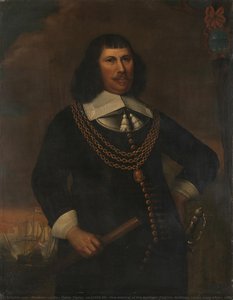
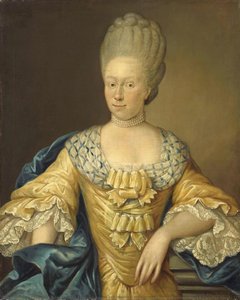
The brilliance of Hauck’s oeuvre lies in his meticulous attention to detail and his ability to weave narrative elements into the very fabric of his compositions. He was a master of the pendant—the creation of paired portraits that spoke to one another across the space of a room. His works, such as the poignant depictions of Johan Arnold Zoutman and his wife, Adriana Johanna van Heusden, serve as profound studies in companionship and status. In these pieces, Hauck does not merely paint faces; he paints legacies.
Through his brush, one can observe the following hallmarks of his mastery:
- Textural Realism: An extraordinary command over the rendering of diverse materials, from the heavy, authoritative folds of naval uniforms to the delicate, translucent quality of fine linens.
- Symbolic Depth: The use of subtle props—such as a roll of paper depicting ships off a coast—to communicate the maritime triumphs and professional identities of his subjects.
- Atmospheric Light: A sophisticated use of light that creates a sense of three-dimensional space, pulling the viewer into the intimate settings of the Dutch elite.
His ability to integrate these elements allowed him to elevate portraiture from simple documentation to a form of visual storytelling. When he painted the high-ranking officials or the refined ladies of his era, he was documenting not just their physical forms, but the very atmosphere of prestige and stability that characterized the late 18th century.
Historical Significance and Enduring Impression
Though the passage of time often obscures the names of artists who worked outside the most radical avant-garde movements, the historical significance of August Christian Hauck remains anchored in his contribution to the continuity of European portrait traditions. He acted as a bridge between the formalist traditions of the mid-century and the more emotive, atmospheric approaches that would eventually define the Romantic movement. His work provided a sense of permanence during a period of immense political and social upheaval across Europe.
Today, the legacy of Hauck is preserved through significant collections, including the British Museum and various Dutch archives, where his ability to capture the human spirit continues to resonate. To look upon a Hauck painting is to experience a moment of stillness; it is an invitation to contemplate the dignity of the individual and the quiet beauty of a world captured in the amber of oil and canvas. His life’s work remains a testament to the power of the observant eye and the enduring allure of classical grace.
Ähnliche Artikel

Das bleibende Erbe der Ölmalerei: Technik, Geschichte und zeitgenössische Praxis
Entdecken Sie die faszinierende Geschichte der Ölmalerei – von den frühen Techniken bis zur modernen Kunst. Expertenwissen, detaillierte Analysen und Inspiration für Sammler & Kunstliebhaber.
Öl auf Leinwand: Die 10 Meisterwerke, die Kunst für immer veränderten |
Entdecken Sie die 10 legendärsten Öl auf Leinwand Meisterwerke! Von Van Gogh bis Monet – erfahren Sie die Geschichten hinter ikonischen Gemälden und lassen Sie sich von Kunstgeschichte inspirieren. Hochwertige Reproduktionen für Ihr Zuhause finden Sie auf .

The Enduring Legacy of Oil on Canvas: Technique, History & Aesthetic Impact
Explore the rich history & techniques of oil painting – from Renaissance masters to Impressionism. Discover pigments, layering methods, and why this timeless medium endures. Expert insights for artists & art enthusiasts.

The Enduring Power of Painting: A Historical & Contemporary Exploration of Form and Emotion
Explore the rich history & enduring techniques of oil painting with ArtsDot. Discover masterpieces, learn about art collecting, and find authentic handmade reproductions crafted by skilled artists.

Öl auf Leinwand: Eine historische und technische Erkundung eines zeitlosen künstlerischen Mediums
Entdecken Sie die faszinierende Welt der Ölmalerei! Von historischen Techniken bis zur modernen Anwendung – wir bieten Expertenwissen, Restaurierungstipps und hochwertige Reproduktionen. Jetzt informieren!