 Vorschau anzeigen
 Versenden
 Teilen
 Details anzeigen

 Herunterladen
 Ähnliche Objekte
 Röntgenaufnahme
 Diashow
 Statistiken
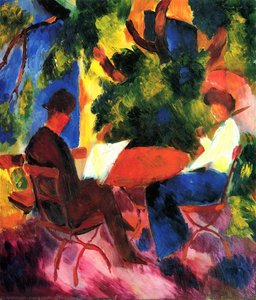
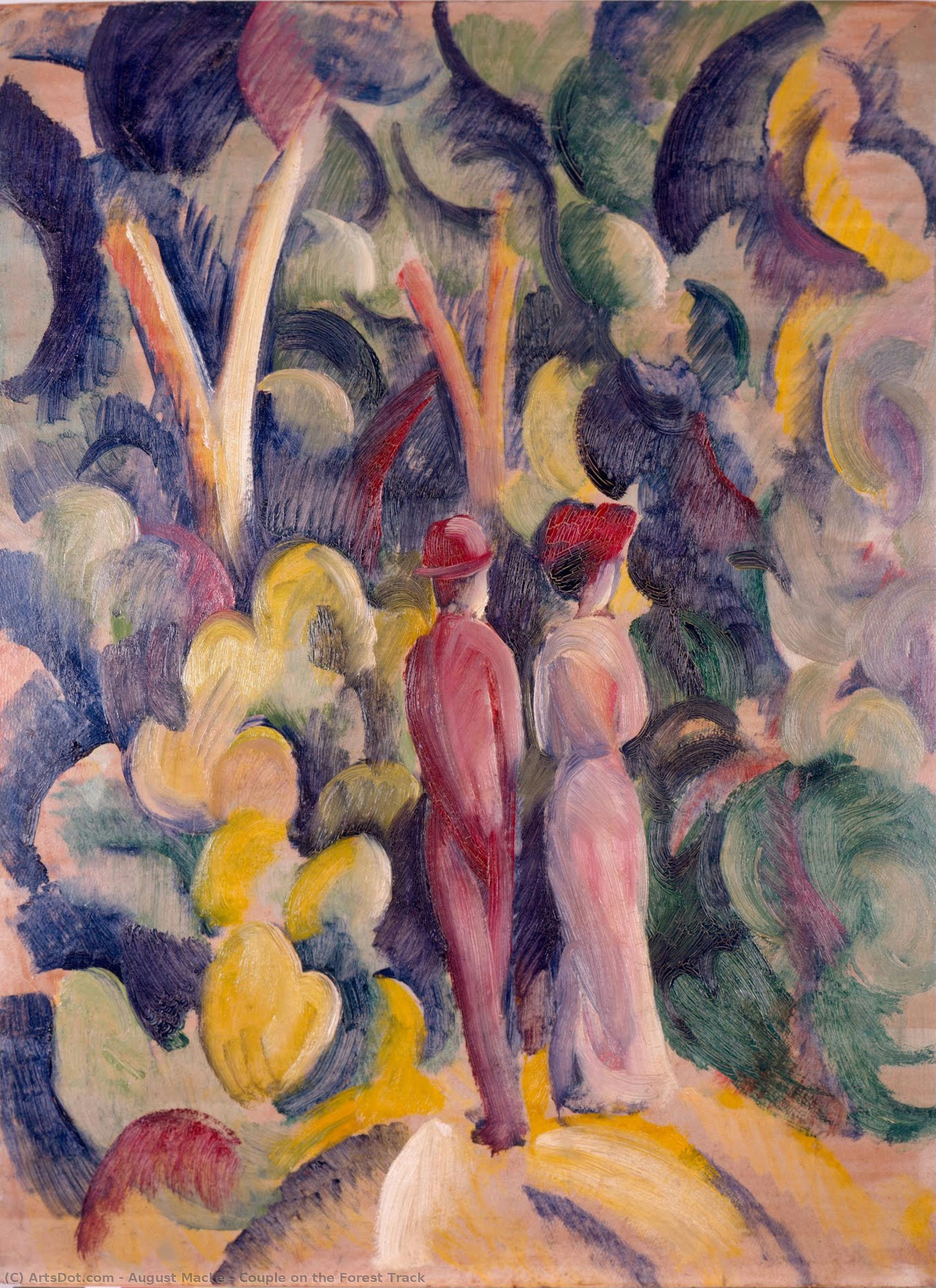
Couple on the Forest Track
 Oil On Canvas
- WallArt
- Expressionism
 1913
1913- 19th Century
 61.0 x 81.0 cm
 Lehmbruck Museum
 Weiterlesen
Giclée / Kunstdruck
Giclée- oder Leinwanddruck in Museumsqualität mit schneller Produktion und flexiblen Veredelungsoptionen. ( Handgemalte Reproduktion bestellen Zum digitalen Bild wechseln)




P118B $10

P118H $10

P118W $10

P438Z $10

P508JH $12

P508YH $12

P805H $10

P805Z $10

P919BZ $10

P919G $10

P919XJ $10

P959ZH $10

P968JZ $12

W106C $8

W218G $10

W218JH $8

W218Y $10

W307PJ $10

W316G $10

W316PJ $8

W316Y $10

W398PJ $8

W4111J $10

W500HY $15

W500JH $15

W692G $12

W849H $8

W940BG $15

W953PJ $8




Wählen Sie aus unseren vordefinierten Formaten, die den ursprünglichen Proportionen des Kunstwerks entsprechen.

Sie können Ihre eigenen Maße eingeben, um ein bestimmtes Format oder einen speziellen Platz einzupassen. Wenn das von Ihnen gewählte Format nicht den Proportionen des Originalbildes entspricht, werden wir das Kunstwerk entweder beschneiden oder das Bild mit einem gespiegelten oder einfarbigen Rand erweitern. Ein digitaler Entwurf wird Ihnen zur Genehmigung zugesandt, bevor die Produktion beginnt.
Bitte beachten Sie, dass die Vorschau auf dem Bildschirm nicht den tatsächlichen Zuschnitt oder die Erweiterung widerspiegelt. Nur der Entwurf zeigt die endgültige Komposition präzise an.
Obwohl Sondermaße verfügbar sind, empfehlen wir die Auswahl eines Maßes aus der vordefinierten Liste, um die ursprünglichen Proportionen zu bewahren.
Weltweiter Versand () innerhalb von 2 Wochen statt der üblichen 4/5 Wochen. (9 September)

Kostenloser weltweiter Expressversand

Hochwertige Leinenleinwand

Umfassender Versicherungsschutz beim Versand

Zollgebühren-Rückerstattungsgarantie

Garantie für exakte Farbtreue

100-Tage-Rückgaberecht (nur bei Mängeln)

100% Geld-zurück-Garantie

Mengenrabatt verfügbar
 Die Glasoption ist nur für Größen unter 110 cm verfügbar.

Couple on the Forest Track
Giclée / Kunstdruck
Format der Reproduktion
-


Gesamtpreis
$ 62
August Macke’s ‘Couple on the Forest Track’: A Moment of Contemplation in a Tumultuous Era
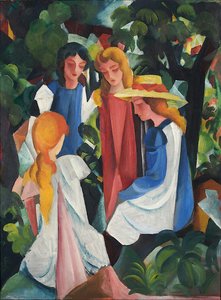
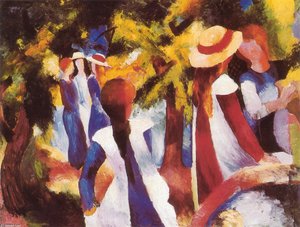
“Couple on the Forest Track,” painted in 1913 by August Macke, is more than just a depiction of two women amidst a woodland scene; it's a poignant encapsulation of the anxieties and aspirations simmering beneath the surface of early 20th-century Europe. Created during a period of immense social and political upheaval – a mere year before the outbreak of World War I – the painting speaks to a yearning for tranquility, observation, and perhaps even escape, rendered with Macke’s signature expressive brushwork and vibrant color palette. Measuring 61 x 81 cm, this intimate canvas invites viewers into a world where the natural beauty of the forest is intertwined with a subtle sense of unease.
A Symphony of Color and Broken Brushstrokes
Macke’s artistic journey was one defined by a restless pursuit of innovation. Initially influenced by Impressionism and Post-Impressionism, particularly the work of Gauguin and Van Gogh, he quickly developed his own distinctive style – a bold synthesis that would later be recognized as a key element in the burgeoning movement of German Expressionism. “Couple on the Forest Track” exemplifies this approach perfectly. The painting’s technique is characterized by broken color, applied with loose, gestural brushstrokes to build form and atmosphere. This deliberate fragmentation of pigment creates a shimmering effect, particularly noticeable in the dappled light filtering through the trees, contributing significantly to the work's textural richness. The artist skillfully employs pointillistic techniques, layering small dots of color to achieve depth and luminosity – a technique that adds to the painting’s dynamic energy.
Subject and Symbolism: Lost in the Woods
The central figures—two women in striking red hats—are placed towards the right side of the composition, drawing the viewer's eye into the depths of the forest. Their posture suggests a moment of quiet contemplation, perhaps an observation of something beyond the immediate view. The ambiguity surrounding their activity – are they simply enjoying the scenery, or are they engaged in a deeper, more significant encounter? – adds to the painting’s enigmatic quality. The dense, stylized trees themselves become symbolic representations of the unknown, mirroring the uncertainties and anxieties that permeated European society at the time. The forest, traditionally associated with mystery and introspection, becomes a space for both solace and potential danger.
Historical Context and Emotional Resonance
Painted in 1913, “Couple on the Forest Track” is inextricably linked to the historical context of its creation. Germany was experiencing rapid industrialization, social unrest, and a growing sense of nationalistic fervor – all factors that contributed to the volatile atmosphere leading up to World War I. Macke’s work reflects this tension, capturing a fleeting moment of serenity amidst a period of impending doom. The painting's emotional impact is profound; it evokes a feeling of quietude punctuated by an underlying current of unease, mirroring the anxieties felt by many Europeans on the cusp of war. Macke’s use of color and form isn’t merely aesthetic; it’s a deeply expressive response to the world around him.
Material and Technique Details
- Artist: August Macke
- Year: 1913
- Medium: Oil on Canvas
- Size: 61 x 81 cm
- Style: Post-Impressionism, Expressionism (proto)
- Technique: Broken Color, Pointillistic Elements, Loose Brushwork
Ähnliche Kunstwerke


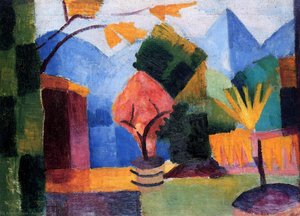
Über den Künstler
Frühes Leben und künstlerische Karriere
August Robert Ludwig Macke, ein renommierter deutscher Expressionist, wurde am 3. Januar 1887 in Meschede, Westfalen geboren. Sein künstlerischer Werdegang begann an der Kunstakademie Düsseldorf (1904-1906) unter Adolf Maennchen. Mackes Stil wurde von französischem Impressionismus und Postimpressionismus geprägt, später beeinflusst durch den Fauvismus.Künstlerische Einflüsse und Stil
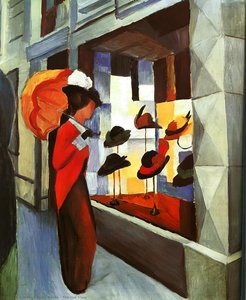
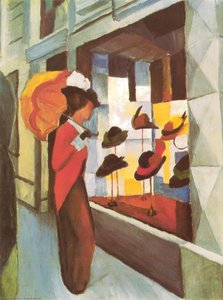
Macke traf 1912 in Paris Robert Delaunay, was ihn dem chromatischen Kubismus, auch Orphismus genannt, näherbrachte. Dieser Einfluss zeigt sich in seinem Gemälde Shops Windows, einer persönlichen Interpretation von Delaunays Stil kombiniert mit der Simultaneität von Bildern, die man im italienischen Futurismus findet. Macke war Teil der deutschen Expressionisten-Gruppe Der Blaue Reiter (Die Blaue Reiter), zusammen mit Wassily Kandinsky, Franz Marc und Paul Klee. Seine Gemälde, wie z.B. Bathing Girls with Town in the Background (100 x 80 cm, Staatsgalerie Moderner Kunst, München), zeigen seinen einzigartigen Stil, der durch lebendige Farben und kühne Linienführung gekennzeichnet ist.Bemerkenswerte Werke und Vermächtnis
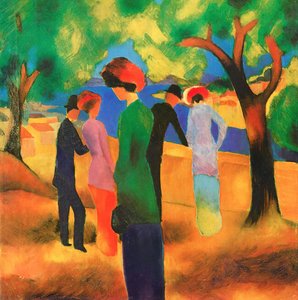
- Woman in a Green Jacket (1913, Museum Ludwig Köln), ein Paradebeispiel des Expressionismus.
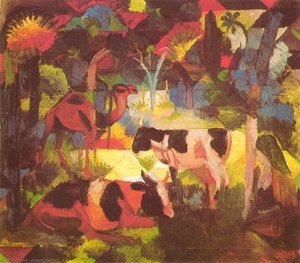
- Landscape with Cows and Camel (1914, Kunsthaus Zürich), ein typisches Beispiel für Mackes Stil.
- Türkisches Café (1914), ein Meisterwerk, das seinen luministischen Ansatz während seiner letzten Periode zeigt.
Tragisches Ende und bleibender Einfluss
Mackes Leben wurde abrupt beendet, als er am 26. September 1914 an der Front in Champagne, Frankreich, starb. Sein letztes Gemälde, Abschied, fängt die Stimmung der Trauer ein, die sich während des Ersten Weltkriegs über Europa legte. Erkunden Sie weitere Werke von August Macke und der deutschen Expressionismus-Bewegung auf ArtsDot: * Woman in a Green Jacket * Franz Marc's Fighting Forms (zeigt die Zusammenarbeit innerhalb der Gruppe Der Blaue Reiter) * August Mackes Künstlerseite auf ArtsDot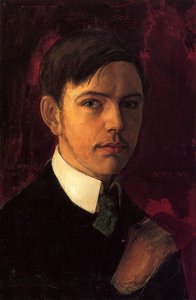
August Macke
1887 - 1914 , Deutschland
Kurzinfos
- Bemerkenswerte Werke:
- Frau in einem grünen Kleid
- Türkisches Café
- Landschaft mit Kühen und Kamel
- Einflüsse:
- Robert Delaunay
- Franz Marc
- Paul Klee
- Geburtsdatum: 3. Januar 1887
- Geburtsort: Meschede, Deutschland
- Künstlerische Bewegung: Expressionismus, Orphismus
- Nationalität: Deutsch
- Sterbedatum: 26. September 1914
- Vollständiger Name: August Macke
Ähnliche Artikel
Impressionistische Landschaften: Die 10 Meisterwerke, die eine Epoche prägten | ArtsDot
Entdecken Sie die 10 Meisterwerke des Impressionismus! Von Monet bis Renoir – erleben Sie die Geschichte, Technik und zeitlose Schönheit ikonischer Landschaftsbilder. Hochwertige Kunstdrucke auf ArtsDot.com. Jetzt entdecken!

Paul Cézanne: Die 25 Meisterwerke des Impressionismus | ArtsDot
Entdecken Sie die 25 Meisterwerke von Paul Cézanne! Tauchen Sie ein in die Welt des Impressionismus und Postimpressionismus. Erfahren Sie mehr über seine Stillleben, Landschaften & berühmten Gemälde – jetzt hochwertige Kunstdrucke auf ArtsDot.com.
August Macke: Ausdrucksstarke Visionen von Harmonie und Moderne
Entdecken Sie das faszinierende Werk von August Macke! Erfahren Sie mehr über seine Rolle im Expressionismus, Der Blaue Reiter und seinen einzigartigen Stil. Jetzt lesen & hochwertige Reproduktionen finden.

Evocations of Place: A Historical Journey Through Landscape Art
Explore the rich history of landscape art with ArtsDot. Discover renowned artists, movements like Impressionism & Romanticism, and expert guidance for collecting timeless pieces. Find your perfect serene escape today!
Pierre-Auguste Renoir: Die 25 Meisterwerke des Impressionismus für Ihr Zuhause | ArtsDot
Entdecken Sie die 25 schönsten Meisterwerke von Pierre-Auguste Renoir! Tauchen Sie ein in die Welt des Impressionismus, erleben Sie berühmte Gemälde wie 'Bal au moulin de la Galette' und finden Sie hochwertige Kunstdrucke für Ihr Zuhause. Jetzt auf ArtsDot.com!