

 Versenden
 Teilen
 Details anzeigen

 Herunterladen
 Ähnliche Objekte
 Diashow
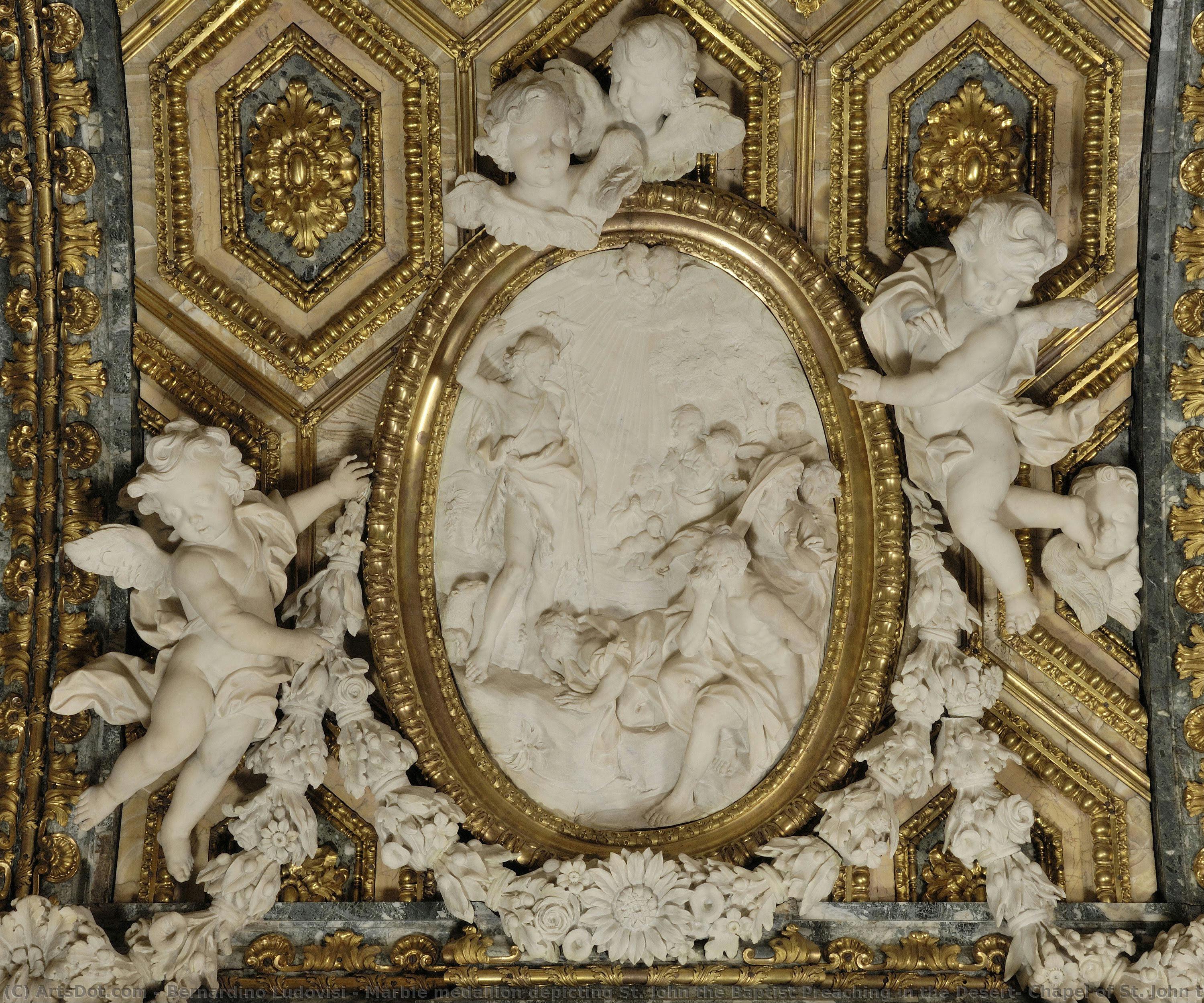
Marble medallion depicting St. John the Baptist Preaching in the Desert, Chapel of St. John the Baptist


 Weiterlesen
Giclée / Kunstdruck
Giclée- oder Leinwanddruck in Museumsqualität mit schneller Produktion und flexiblen Veredelungsoptionen. ( Handgemalte Reproduktion bestellen Bild kaufen)




































Wählen Sie aus unseren vordefinierten Formaten, die den ursprünglichen Proportionen des Kunstwerks entsprechen.

Sie können Ihre eigenen Maße eingeben, um ein bestimmtes Format oder einen speziellen Platz einzupassen. Wenn das von Ihnen gewählte Format nicht den Proportionen des Originalbildes entspricht, werden wir das Kunstwerk entweder beschneiden oder das Bild mit einem gespiegelten oder einfarbigen Rand erweitern. Ein digitaler Entwurf wird Ihnen zur Genehmigung zugesandt, bevor die Produktion beginnt.
Bitte beachten Sie, dass die Vorschau auf dem Bildschirm nicht den tatsächlichen Zuschnitt oder die Erweiterung widerspiegelt. Nur der Entwurf zeigt die endgültige Komposition präzise an.
Obwohl Sondermaße verfügbar sind, empfehlen wir die Auswahl eines Maßes aus der vordefinierten Liste, um die ursprünglichen Proportionen zu bewahren.
Weltweiter Versand () innerhalb von 2 Wochen statt der üblichen 4/5 Wochen. (27 August)

Kostenloser weltweiter Expressversand

Hochwertige Leinenleinwand

Umfassender Versicherungsschutz beim Versand

Zollgebühren-Rückerstattungsgarantie

Garantie für exakte Farbtreue

60 Tage Rückgaberecht (nur bei Mängeln)

100% Geld-zurück-Garantie

Mengenrabatt verfügbar
 Die Glasoption ist nur für Größen unter 110 cm verfügbar.

Marble medallion depicting St. John the Baptist Preaching in the Desert, Chapel of St. John the Baptist
Giclée / Kunstdruck
Format der Reproduktion
-


Gesamtpreis
$ 62
A Celestial Vision in Marble and Gold
In the hallowed quietude of the Chapel of St. John the Baptist, there exists a fragment of divine revelation captured in stone and light. The Marble medallion depicting St. John the Baptist Preaching in the Desert is not merely a decorative element, but a profound window into the spiritual fervor of the mid-eighteenth century. Created around 1750 by the Roman master Bernardino Ludovisi, this exquisite piece presents a central scene of prophetic intensity, framed within a luminous gold background that seems to radiate an eternal, heavenly glow. The composition draws the eye inward toward the marble medallion, where the rugged reality of the desert meets the ethereal grace of the celestial realm.
The artistry of Ludovisi shines through in the delicate interplay between the permanence of marble and the fluid movement of the surrounding figures. As one gazes upon the work, a host of angels descends from the heavens, their forms positioned with a rhythmic elegance that guides the viewer's soul toward the central figure of the Baptist. The presence of tender cherubs, peering from the periphery, adds a layer of innocent sweetness to the otherwise solemn scene, creating a balanced emotional landscape that oscillates between awe and intimacy. This mastery of composition ensures that the piece serves as a captivating focal point for any space, offering a sense of profound peace and historical depth.
The Mastery of Ludovisi: A Fusion of Naturalism and Mannerism
To understand the technical brilliance of this medallion, one must look to the unique stylistic lineage of Bernardino Ludovisi. An artist deeply rooted in the Roman tradition, Ludovisi possessed the rare ability to synthesize the restrained naturalism of Leonardo da Vinci and Raphael with the dramatic, almost artificial elegance characteristic of Mannerism. In this work, we see the fruits of that synthesis: the anatomical precision of the figures reflects a deep respect for nature, yet their arrangement possesses a sophisticated, stylized grace reminiscent of Michelangelo or El Greco.
The technique employed in the marble carving demonstrates an extraordinary command over texture and light. The sculptor has managed to imbue the cold stone with a sense of breath and vitality, making the desert scene feel palpable. For the discerning collector or interior designer, this piece represents more than just a reproduction of a historical relic; it is an invitation to bring the intellectual sophistication of the Italian Baroque into a contemporary setting. Whether placed in a grand library or a curated gallery space, the medallion acts as a conversation piece that bridges the gap between the classical past and modern aesthetic sensibilities.
Symbolism and the Eternal Call
Beyond its physical beauty, the medallion carries a heavy weight of symbolic meaning. St. John the Baptist, the precursor to Christ, stands as a symbol of preparation, repentance, and the voice crying out in the wilderness. The desert setting serves as a metaphor for spiritual solitude and the stripping away of worldly distractions to find truth. By surrounding this rugged scene with gold and angelic beings, Ludovisi elevates the earthly struggle of the saint into a cosmic event, suggesting that even in the most desolate landscapes, the divine is ever-present.
For those seeking to decorate a space with art that inspires contemplation, this piece offers an unparalleled emotional impact. It evokes a sense of timelessness and reverence, making it an ideal choice for environments designed for reflection, such as study halls, private chapels, or luxury residential suites. Owning a high-quality reproduction of such a masterpiece allows one to inhabit a world of beauty and devotion, surrounding oneself with the enduring legacy of Roman sculptural excellence.
Ähnliche Kunstwerke
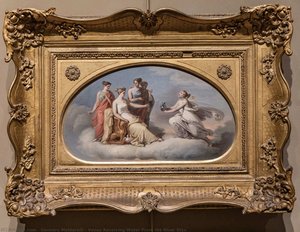
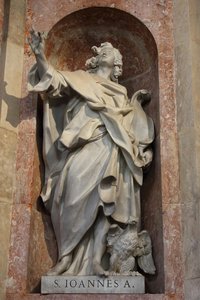
![Leben Des Heiligen Johannes Des Evangelisten - [01] - St. Johann Auf Patmos — Giotto Di Bondone, Frührenaissance](/media/artworks/images-thumb/6e/49/6e49d55b6f8149eba22f9e0a7e269655.jpg)
Über den Künstler
Frühes Leben und Wirken
Bernardino Ludovisi, auch bekannt als Bernardo, war ein italienischer Bildhauer, der 1693 in Rom geboren wurde. Er verbrachte den Großteil, wenn nicht gar seine gesamte künstlerische Laufbahn in der Ewigen Stadt und verkörperte damit meisterhaft das Bild eines arbeitenden Bildhauers der Mitte des 18. Jahrhunderts.Bemerkenswerte Werke und Stil
Ludovisi ist vor allem für seine Statue des Heiligen Johannes des Täufers beim Predigen in der Wüste bekannt, die im Jahr 1750 für die Kapelle des Heiligen Johannes des Täufers geschaffen wurde. Dieses Meisterwerk offenbart sein außergewöhnliches Geschick, das Wesen religiöser Figuren einzufangen, und spiegelt jene intellektuelle Raffinesse wider, die so charakteristisch für den Manierismus ist.Künstlerische Einflüsse und Beiträge
- Ludovisis Werk war vom zurückhaltenden Naturalismus von Leonardo da Vinci und Raffael beeinflusst, doch er verkörperte zugleich auch die kunstvolleren, fast künstlichen Qualitäten des Manierismus, wie man sie in den Werken von Michelangelo und El Greco findet.
- Seine Beiträge zur Entwicklung der italienischen Bildhauerei zeigen sich deutlich in seinen Marmorskulpturen, die eine harmonische Verbindung von Schlichtheit und Raffinesse eingehen und so den Weg für zahlreiche moderne Bildhauer ebneten.
Vermächtnis und Erinnerung
Obwohl er bereits im Jahr 1749 verstarb, lebt das Erbe Ludovisis durch seine bedeutenden Werke weiter, darunter die Darstellung des Heiligen Johannes des Täufers beim Predigen in der Wüste. Dieses Stück ist ein eindrucksvolles Zeugnis seines Könnens als Bildhauer und seines wesentlichen Beitrags zur italienischen Kunstgeschichte.Entdecken Sie mehr von Bernardino Ludovisis Werk
- Besuchen Sie die Bernardino Ludovisi Seite von ArtsDot, um weitere Informationen über sein Leben und seine Werke zu erhalten.
- Entdecken Sie andere italienische Künstler, wie etwa Luigi Broggini, der für seine Marmorskulpturen bekannt ist, die Einfachheit und Eleganz vereinen.
- Erfahren Sie mehr über die Kunstbewegung des Manierismus und deren Einfluss auf die italienische Bildhauerei.
Verwandte Kunstwerke und Künstler
- Michelangelo Buonarroti: Auferstandener Christus (Santa Maria sopra Minerva, Rom, Italien, Marmor)
- Gregorio di Lorenzo di Giovanni: Segnender Pilgerchristus (Biennale Internazionale dell'Antiquariato di Firenze, Florenz, Italien, Skulptur)
- Gregorio di Lorenzo di Giovanni: Segnender Pilgerchristus
- Luigi Broggini: Ein renommierter italienischer Bildhauer, bekannt für seine Marmorskulpturen.
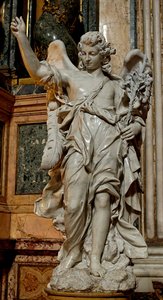
Bernardino Ludovisi
1693 - 1749 , Italien
Kurzinfos
- Artistic Movement Or Style: Genre, Porträtmalerei
- Artists Or Movements Influenced By This Artist: ['Anthony van Dyck']
- Artists Who Influenced This Artist: ['Rembrandt']
- Date Of Birth: Januar 1634
- Date Of Death: Dezember 1693
- Full Name: Nicolaes Maes
- Nationality: Niederländisch
- Notable Artworks:
- Stillleben mit Nautilusbecher
- Pronkstilleven
- Place Of Birth: Dordrecht, Niederlande
Ähnliche Artikel

John Constable: Die 25 Meisterwerke des englischen Landschaftsgenies – ArtsDot
Entdecken Sie die 25 Meisterwerke von John Constable! Erleben Sie englische Landschaftsmalerei vom Hay Wain bis zur Stour Valley. Hochwertige Reproduktionen & Kunst für Ihr Zuhause auf ArtsDot.com.

John Singer Sargent: Die 25 Meisterwerke des Porträts – Kunst für Ihr Zuhause | ArtsDot
Entdecken Sie die 25 Meisterwerke von John Singer Sargent! Tauchen Sie ein in die Welt der Porträtmalerei, des Impressionismus & der Belle Époque. Hochwertige Kunstdrucke & Reproduktionen für Ihr Zuhause – jetzt auf ArtsDot.com!

Golden Glow: How to Use Metallic Gold Artworks to Elevate Your Home Decor with Timeless Luxury
Discover how to elevate your home with the timeless elegance of metallic gold artworks. From sculptural metal pieces to gilded oil paintings, learn expert interior design tips for integrating luxurious gold accents into your space with sophistication and grace.
The Allure of Gold in Art History: Symbolism, Technique & Cultural Significance
Explore the rich history of gold in art! Discover symbolism, techniques & cultural significance from ancient civilizations to Klimt's masterpieces. Expert insights for collectors at ArtsDot.

El Greco: Die 25 Meisterwerke – Kunst für Ihr Zuhause | ArtsDot
Entdecken Sie die 25 bedeutendsten Meisterwerke von El Greco! Erleben Sie die spirituelle Tiefe und den dramatischen Stil des griechischen Malers. Hochwertige Kunstdrucke & Inspiration für Ihr Zuhause auf ArtsDot.com.

