

 Vorschau anzeigen
 Versenden
 Teilen
 Details anzeigen

 Herunterladen
 Ähnliche Objekte
 Röntgenaufnahme
 Diashow
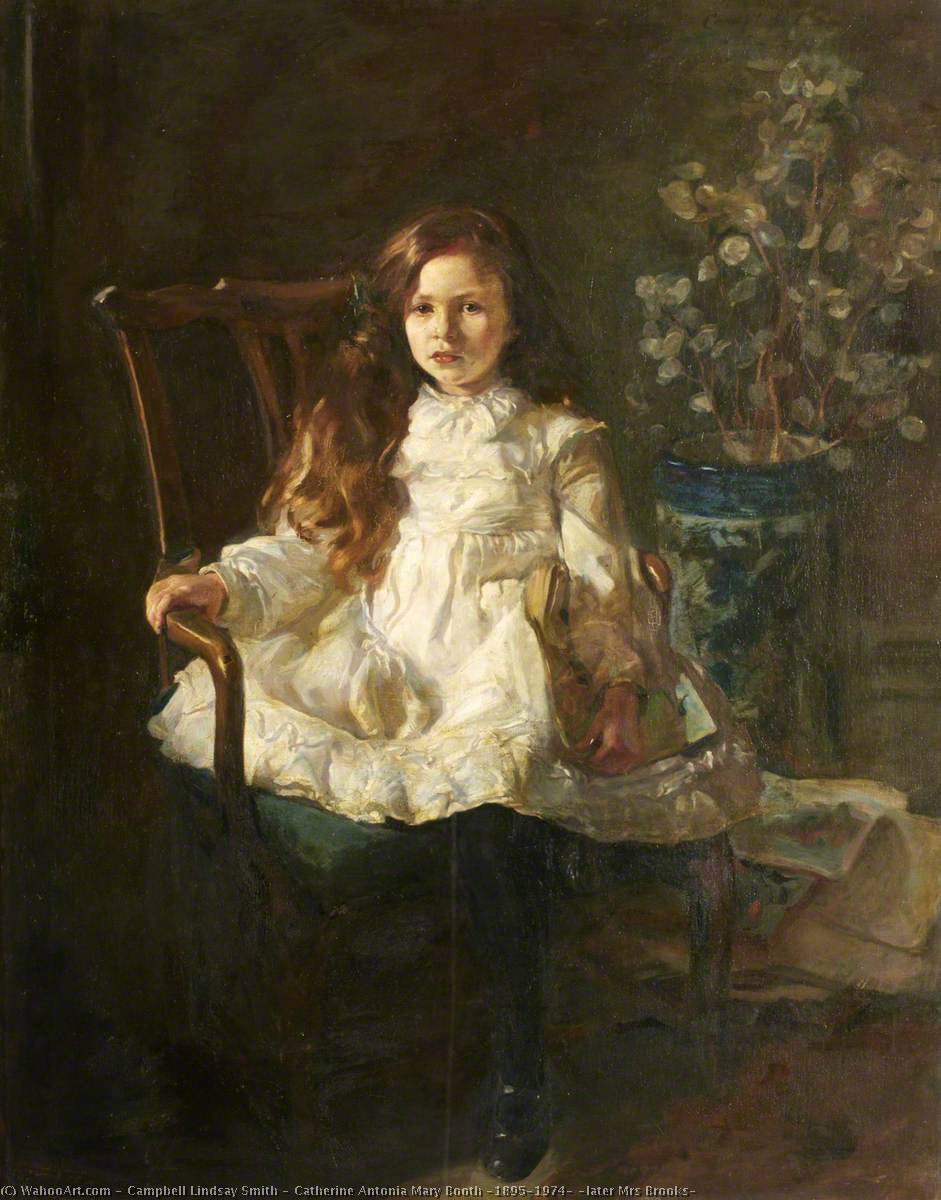
Catherine Antonia Mary Booth (1895–1974) (later Mrs Brooks)
 1900
1900 142.0 x 112.0 cm
 Mintlaw Discovery Centre
 Weiterlesen
Erwerben Sie ein hochauflösendes, optimiertes digitales Bild, das der Online-Vorschau weit überlegen ist.
Jede Datei wird von unseren hauseigenen Spezialisten mit modernsten Werkzeugen und fachmännischer manueller Retusche sorgfältig vorbereitet. Wir stellen sicher, dass jedes Bild eine außergewöhnliche Klarheit, präzise Farbgenauigkeit und feinste Details aufweist.
Die endgültige Datei wird innerhalb von 72 Stunden per E-Mail zugestellt und ist für den sofortigen Einsatz in professionellen, redaktionellen und Druckumgebungen optimiert. Es handelt sich um dieselbe Qualität, der führende Designstudios, Verlage und Galerien vertrauen.
Digitales Bild
Laden Sie eine hochauflösende Datei für die persönliche Präsentation, den Druck und kreative Projekte herunter. ( Druck bestellen Handgemalte Reproduktion bestellen)
In jeder Bestellung digitaler Bilder enthalten
Professionelle digitale Bereitstellung, garantiert
Wenn Sie sich für ArtsDot.com entscheiden, erhalten Sie nicht nur ein Bild – Sie erhalten ein professionell aufbereitetes digitales Kunstwerk, das mit höchster Präzision erstellt und durch eine Zufriedenheitsgarantie abgesichert wird. Hier ist alles, was automatisch mit Ihrer Bestellung geliefert wird:

Schnelle E-Mail-Zustellung
Ihre hochauflösende digitale Bilddatei wird Ihnen innerhalb von 72 Stunden nach der Bestellung per E-Mail zugestellt – bereit zur sofortigen Verwendung.

KI-optimierte digitale Datei
Ihre Kunstwerke werden professionell mithilfe fortschrittlicher KI-Tools und manueller Bearbeitung optimiert, um maximale Detailtreue, Klarheit und Farbgenauigkeit zu gewährleisten.

Lebenslanger kostenloser Neudruckservice
Datei versehentlich gelöscht oder verloren? Keine Sorge – wir senden sie Ihnen jederzeit kostenlos erneut zu.

Keine Einfuhrgebühren – jemals
Genießen Sie Ihr Kunstwerk sofort ohne Zollgebühren, Einfuhrabgaben oder Versandkosten – digitale Downloads sind immer steuerfrei.

Garantierte Farbtreue
Wir garantieren, dass Ihr digitales Bild mithilfe professioneller Werkzeuge und Farbmanagement die Originalfarben so präzise wie möglich wiedergibt.

60-Tage-Zufriedenheitsgarantie
Sollten Sie mit Ihrem digitalen Bild nicht zufrieden sein, werden wir es überarbeiten oder Ihnen innerhalb von 60 Tagen 100% erstatten – ohne Wenn und Aber.

100% Geld-zurück-Garantie
Nicht zufrieden? Erhalten Sie innerhalb von 60 Tagen nach Erhalt Ihrer digitalen Datei eine vollständige Rückerstattung – ohne Angabe von Gründen.

Rabatte bei Großbestellungen
3 Bilder kaufen, 10% sparen – 5 Bilder kaufen, 15% sparen – Ab 10 Bildern 20% sparen. Ideal für kreative Projekte, Galerien und Agenturen.
Ähnliche Kunstwerke








Biografie des Künstlers
Campbell Lindsay Smith: A Scottish Portraitist of the Early 20th Century
Campbell Lindsay Smith (1879-1915) emerges from the misty landscapes of late Victorian and early Edwardian Scotland as a quietly significant figure in portraiture. His work, characterized by an intimate understanding of light, texture, and psychological nuance, offers a glimpse into the lives and sensibilities of his era – particularly through his evocative depictions of prominent figures like Professor John Harrower and Lady Geddes. While not achieving widespread fame during his tragically short lifetime, Smith’s paintings possess a timeless quality, revealing a talent for capturing both outward appearance and inner character with remarkable sensitivity.
Born in Kelly Castle, Arbirlot, Forfarshire, in 1879, Smith's artistic journey began within a family steeped in Scottish heritage. His father, Major General John Smith, served in the Bengal Army, exposing him to diverse cultures and broadening his perspective – an influence subtly reflected in the quiet dignity of many of his subjects. Early training at the Royal Academy Schools provided a foundational understanding of technique, but it was through independent study and observation that Smith truly honed his distinctive style. He demonstrated a particular aptitude for capturing the subtleties of human expression, evident in the way he rendered the fleeting emotions conveyed by a glance or a gesture.
The Art of Portraiture: Technique and Influence
Smith’s portraiture is distinguished by a masterful command of light and shadow, reminiscent of the Northern European masters. He employed a layered approach to paint application, building up tones gradually to create a sense of depth and volume. His brushwork is often loose and expressive, particularly in capturing the texture of fabrics and the play of light on skin. Unlike some of his contemporaries who embraced bold, theatrical styles, Smith favored a more restrained palette – typically muted earth tones and subtle blues and greens – allowing his subjects’ personalities to emerge organically.
The influence of Walter Lindsay of Balgavie, a prominent Scottish artist and family member, is subtly present in Smith's work. Lindsay’s emphasis on capturing the essence of his subjects through careful observation and psychological insight clearly resonated with Smith. Furthermore, the artistic milieu of Edinburgh during this period – a vibrant center for art and intellectual discourse – undoubtedly shaped his development. The works of artists like John Lavery and Sir John Everett Millais, both prominent figures in British portraiture at the time, likely served as sources of inspiration.
Notable Works and Commissions
Among Smith’s most celebrated portraits are those of Professor John Harrower (a distinguished scholar and antiquarian) and Lady Geddes. These works exemplify his ability to convey not only physical likeness but also a sense of the subject's character, intellect, and social standing. His paintings often depict subjects engaged in quiet contemplation or involved in everyday activities – scenes that reveal a deep appreciation for the beauty of ordinary life. While specific details about commissions are scarce, it’s believed he worked extensively with members of Scottish society, capturing the faces of prominent academics, industrialists, and local dignitaries.
The Stirling Smith Art Gallery & Museum in Scotland holds several examples of his work, offering a valuable opportunity for viewers to appreciate the breadth and depth of his artistic talent. His paintings are characterized by an understated elegance and a remarkable ability to capture the essence of his subjects – a testament to his skill as a portraitist and a keen observer of human nature.
A Tragic End and Lasting Legacy
Campbell Lindsay Smith’s life was tragically cut short in 1915 during World War I. Serving with the Gordon Highlanders, he fell in action near Kortevilde, Belgium, at the age of 36. Despite his untimely death, Smith's artistic legacy endures through his evocative portraits and his contribution to the rich tapestry of Scottish art history. His paintings offer a poignant reminder of the lives and times of those who lived through a period of profound social and political change – a testament to the enduring power of portraiture to capture both the beauty and the complexity of the human experience.
Further research into his life reveals connections to other notable figures, including Walter Lindsay of Balgavie, highlighting a network of artistic influence within Scottish society. His work continues to be studied and appreciated for its quiet dignity, technical skill, and profound understanding of the human spirit.
campbell lindsay smith
1879 - 1915
Kurzinfos
- Artistic Movement Or Style: Portraiture
- Date Of Birth: 1879
- Date Of Death: 1915
- Full Name: Campbell Lindsay Smith
- Nationality: Scottish
- Notable Artworks:
- Moored boats along a quayside
- bridge
- Place Of Birth: Kelly Castle, Forfarshire

