

 Vorschau anzeigen
 Versenden
 Teilen
 Details anzeigen

 Herunterladen
 Ähnliche Objekte
 Röntgenaufnahme
 Diashow
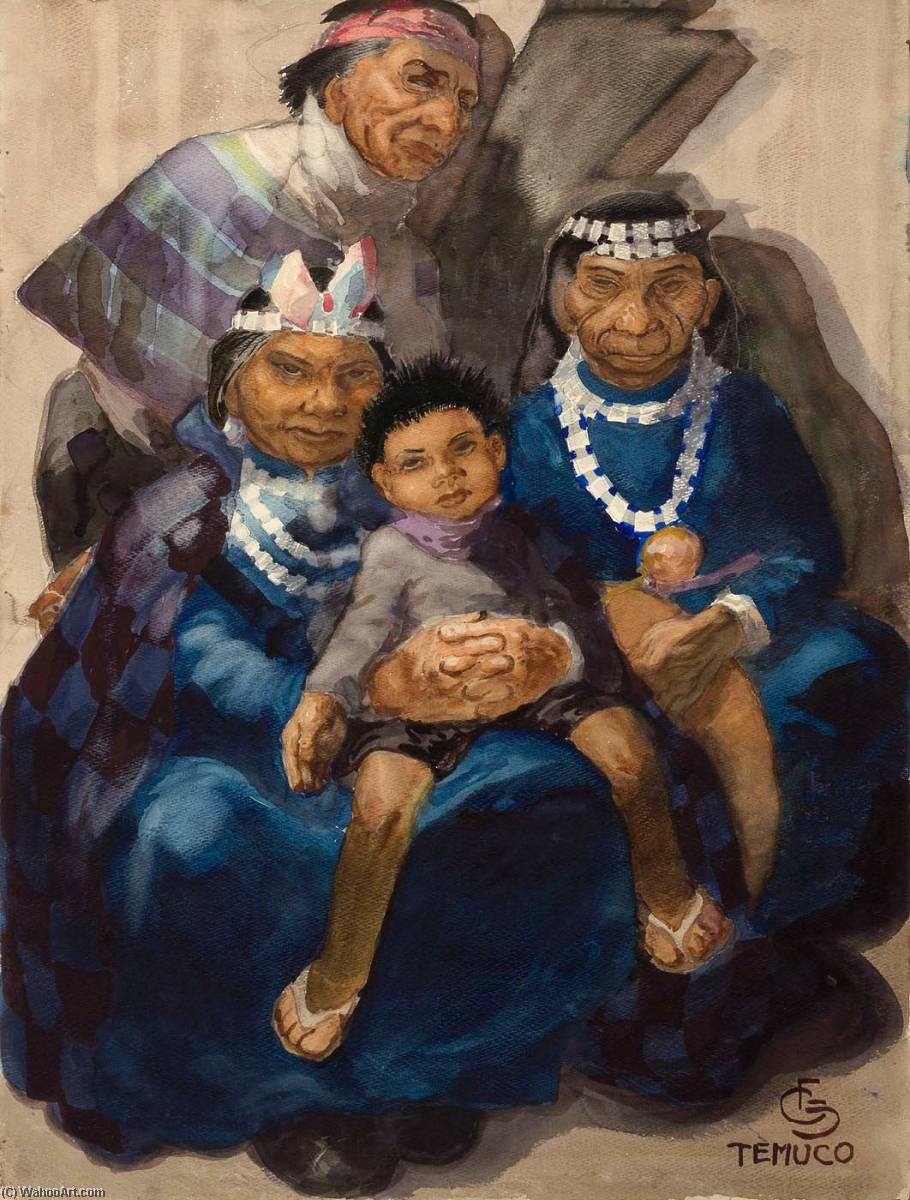
Araucanians, Southern Chile
 59.0 x 43.0 cm
 Weiterlesen
Erwerben Sie ein hochauflösendes, optimiertes digitales Bild, das der Online-Vorschau weit überlegen ist.
Jede Datei wird von unseren hauseigenen Spezialisten mit modernsten Werkzeugen und fachmännischer manueller Retusche sorgfältig vorbereitet. Wir stellen sicher, dass jedes Bild eine außergewöhnliche Klarheit, präzise Farbgenauigkeit und feinste Details aufweist.
Die endgültige Datei wird innerhalb von 72 Stunden per E-Mail zugestellt und ist für den sofortigen Einsatz in professionellen, redaktionellen und Druckumgebungen optimiert. Es handelt sich um dieselbe Qualität, der führende Designstudios, Verlage und Galerien vertrauen.
Digitales Bild
Laden Sie eine hochauflösende Datei für die persönliche Präsentation, den Druck und kreative Projekte herunter. ( Druck bestellen Handgemalte Reproduktion bestellen)
In jeder Bestellung digitaler Bilder enthalten
Professionelle digitale Bereitstellung, garantiert
Wenn Sie sich für ArtsDot.com entscheiden, erhalten Sie nicht nur ein Bild – Sie erhalten ein professionell aufbereitetes digitales Kunstwerk, das mit höchster Präzision erstellt und durch eine Zufriedenheitsgarantie abgesichert wird. Hier ist alles, was automatisch mit Ihrer Bestellung geliefert wird:

Schnelle E-Mail-Zustellung
Ihre hochauflösende digitale Bilddatei wird Ihnen innerhalb von 72 Stunden nach der Bestellung per E-Mail zugestellt – bereit zur sofortigen Verwendung.

KI-optimierte digitale Datei
Ihre Kunstwerke werden professionell mithilfe fortschrittlicher KI-Tools und manueller Bearbeitung optimiert, um maximale Detailtreue, Klarheit und Farbgenauigkeit zu gewährleisten.

Lebenslanger kostenloser Neudruckservice
Datei versehentlich gelöscht oder verloren? Keine Sorge – wir senden sie Ihnen jederzeit kostenlos erneut zu.

Keine Einfuhrgebühren – jemals
Genießen Sie Ihr Kunstwerk sofort ohne Zollgebühren, Einfuhrabgaben oder Versandkosten – digitale Downloads sind immer steuerfrei.

Garantierte Farbtreue
Wir garantieren, dass Ihr digitales Bild mithilfe professioneller Werkzeuge und Farbmanagement die Originalfarben so präzise wie möglich wiedergibt.

60-Tage-Zufriedenheitsgarantie
Sollten Sie mit Ihrem digitalen Bild nicht zufrieden sein, werden wir es überarbeiten oder Ihnen innerhalb von 60 Tagen 100% erstatten – ohne Wenn und Aber.

100% Geld-zurück-Garantie
Nicht zufrieden? Erhalten Sie innerhalb von 60 Tagen nach Erhalt Ihrer digitalen Datei eine vollständige Rückerstattung – ohne Angabe von Gründen.

Rabatte bei Großbestellungen
3 Bilder kaufen, 10% sparen – 5 Bilder kaufen, 15% sparen – Ab 10 Bildern 20% sparen. Ideal für kreative Projekte, Galerien und Agenturen.
Ähnliche Kunstwerke








Biografie des Künstlers
Carl Folke Sahlin: A Window into Vanishing Worlds
The art of Carl Folke Sahlin, a Swedish-born artist who spent much of his career in Miami, Florida, offers more than just visually arresting watercolors. It’s a poignant and remarkably detailed chronicle of indigenous cultures on the brink of transformation during the first half of the 20th century. Born in Stockholm in 1885, Sahlin wasn't initially destined for a life immersed in ethnographic painting; he began his career as an illustrator and advertising executive in New York and Chicago, experiences that honed his technical skills but ultimately led him to seek a deeper connection with the world beyond the urban landscape.
A pivotal moment arrived in 1940 when Sahlin, seeking respite from the bustle of American life, relocated to Miami. It was here, amidst the burgeoning subtropical environment and a surprising influx of South American immigrants, that his artistic focus shifted dramatically. He began a relentless journey through Central and South America – Ecuador, Peru, Panama, Mexico – driven by an almost obsessive desire to document the lives and traditions of the indigenous peoples he encountered. This wasn’t simply sightseeing; Sahlin sought genuine participation in their daily routines, immersing himself in their communities, learning their languages (to varying degrees), and patiently observing their customs before committing them to watercolor.
Sahlin's artistic style is immediately recognizable. He eschewed the romanticized depictions often associated with early ethnographic art, favoring a remarkably realistic approach. His paintings aren’t idealized portraits; they capture the grit, the weariness, and the quiet dignity of individuals living in challenging circumstances. He employed a vibrant palette, utilizing bold colors to convey not just appearance but also emotion and atmosphere. The use of loose brushstrokes and layered washes creates a sense of movement and immediacy, as if the viewer is witnessing these scenes unfold before their eyes. His meticulous attention to detail – from the intricate patterns of woven textiles to the weathered faces of his subjects – speaks volumes about his respect for the cultures he portrayed.
Thematic Focus: Rituals, Labor, and Everyday Life
Sahlin’s work isn't defined by grand narratives or heroic figures. Instead, it focuses on the everyday realities of indigenous communities. He frequently depicted scenes of ritualistic ceremonies – dances, festivals, religious processions – capturing the energy and symbolism of these events with remarkable sensitivity. Equally compelling are his portrayals of labor: men and women engaged in traditional crafts, farming, fishing, or simply tending to their families. These images offer a rare glimpse into the rhythms of life for communities often overlooked by mainstream historical accounts.
A particularly notable aspect of Sahlin’s work is his consistent representation of indigenous attire. He meticulously researched and accurately depicted the complex and culturally significant garments worn by different groups, recognizing that clothing was far more than mere fabric; it was a powerful symbol of identity, status, and tradition. His paintings are veritable encyclopedias of South American dress, offering invaluable insights into the diverse cultural heritage of the region.
Influences and Artistic Development
While Sahlin’s artistic style is distinctly his own, it's clear that he was influenced by a number of sources. His early training as an illustrator instilled in him a strong command of technique and composition. The work of European watercolorists, particularly the Impressionists, likely informed his use of color and brushwork. However, Sahlin’s most significant influence undoubtedly came from his own experiences – his immersion in indigenous cultures and his genuine desire to document their lives with respect and accuracy.
His time in Miami also played a crucial role in shaping his artistic development. The city's vibrant immigrant community provided him with a constant source of inspiration, while the Blue Dome Fellowship, a local arts organization, offered him a supportive network of fellow artists. Sahlin’s work evolved over time, becoming increasingly focused on capturing the nuances of indigenous culture and reflecting his deep appreciation for these vanishing worlds.
Legacy and Historical Significance
Carl Folke Sahlin's paintings represent a vital contribution to our understanding of South American indigenous cultures during a period of profound change. His meticulous documentation offers a valuable record of traditions that were rapidly disappearing as a result of colonization, globalization, and modernization. His work stands as a testament to the importance of ethnographic art in preserving cultural heritage and fostering cross-cultural dialogue.
Sahlin’s paintings are now housed in collections around the world, including the Smithsonian American Art Museum and the National Gallery in Stockholm. They continue to be exhibited and studied, reminding us of the rich diversity of human experience and the urgent need to protect vulnerable cultures from being lost forever. His legacy lies not just in his beautiful artwork but also in his unwavering commitment to documenting the lives of those often marginalized by history.
carl folke sahlin
1885 - 1976
Kurzinfos
- Artistic Movement Or Style: Ethnographic art
- Artists Or Movements Influenced By This Artist: ['None specified']
- Artists Who Influenced This Artist: ['None specified']
- Date Of Birth: 1885
- Date Of Death: 1976
- Full Name: Carl Folke Sahlin
- Nationality: Swedish
- Notable Artworks:
- Women in Regional Costume
- The Alcaldes of Pisac
- Cowboys in Costume
- Place Of Birth: Stockholm, Sweden

